New here? Just sign up with Google — your account includes Matilda, our gift book, forever.
📚
Garden Heights Academy
Members sign in to continue.
Fantastic Mr. Fox · Garden Heights Academy
Part 5
for Fantastic Mr. Fox · Part 5 · Chapters 11–12
a story by Roald Dahl
30 min6 Parts
This workbook is built on a solid pedagogical foundation, effectively integrating content and language learning based on the CLIL framework (Content and Language Integrated Learning), elevated by our unique 5th C — Connection — and an integrated Standardized Test section that weaves every SAT & TOEFL question type right into the novel, so learners build real test skills easily, naturally, and with fun.
💭 Before You Read · Just for Fun
No right or wrong answers — just think or chat about it: Who is the kindest neighbor you have ever had? Have you ever shared something when you had very little yourself — how did it feel? And what makes a guest feel truly welcome in your home?
What Happens in Part 5
One of the young foxes carries the three hens all the way back through the tunnel. When Mrs. Fox sees the food, she is amazed and delighted — the starving family finally enjoys a wonderful meal, and everyone is grateful to clever Mr. Fox. But the story now grows bigger. As the foxes keep digging, they meet Badger, a kind neighbor who has also been digging underground. Badger and many other animals are starving too, because the farmers’ siege has frightened the whole wood. Instead of keeping the food for himself, the generous Mr. Fox invites Badger and all the hungry families to share a great feast.
What We Will Learn
Literary Element
What It Means
Dialogue
The words that characters say to one another in a story
Character Trait
A word that describes what a character is like, such as brave or generous
Theme: Friendship & Sharing
How Dahl shows that sharing and helping others is part of the story’s message
Chapter Summary
Chapter
Title & Key Events
Ch.11
A Surprise for Mrs. Fox — a young fox brings the hens home; Mrs. Fox is amazed; the starving family enjoys a wonderful meal at last
Ch.12
Badger — the digging foxes meet Badger, who is also starving; Mr. Fox generously invites Badger and the other hungry animals to a feast
Copyright Notice
Independent study guide by Garden Heights Academy. Not affiliated with or endorsed by Roald Dahl or the Roald Dahl Story Company. No text from the novel is reproduced. Students should read the original book. Reference text: This workbook follows Roald Dahl’s classic text (the standard Puffin edition sold worldwide). Revised 2023 UK editions change some wording and may not match the vocabulary studied here.
Part 1
Vocabulary
Study 10 key words from Chapters 11–12, then answer each question.
🧠Knowledge Bank · Animals of an English Wood
Science · Woodland AnimalsAn English wood is full of burrowing animals. Badgers dig deep homes called setts, with rooms for sleeping and rooms for their young. Rabbits dig tangled tunnels named warrens. Moles push through the soil eating worms, and weasels slip along hunting mice. Foxes live among them all. These diggers share the same dark, safe world beneath the roots. Each one has claws and a body shaped for moving earth. When Mr Fox tunnels to his neighbors, he is visiting a whole hidden town of animals. Real woodland really does hide this busy underground community of hard-working diggers.
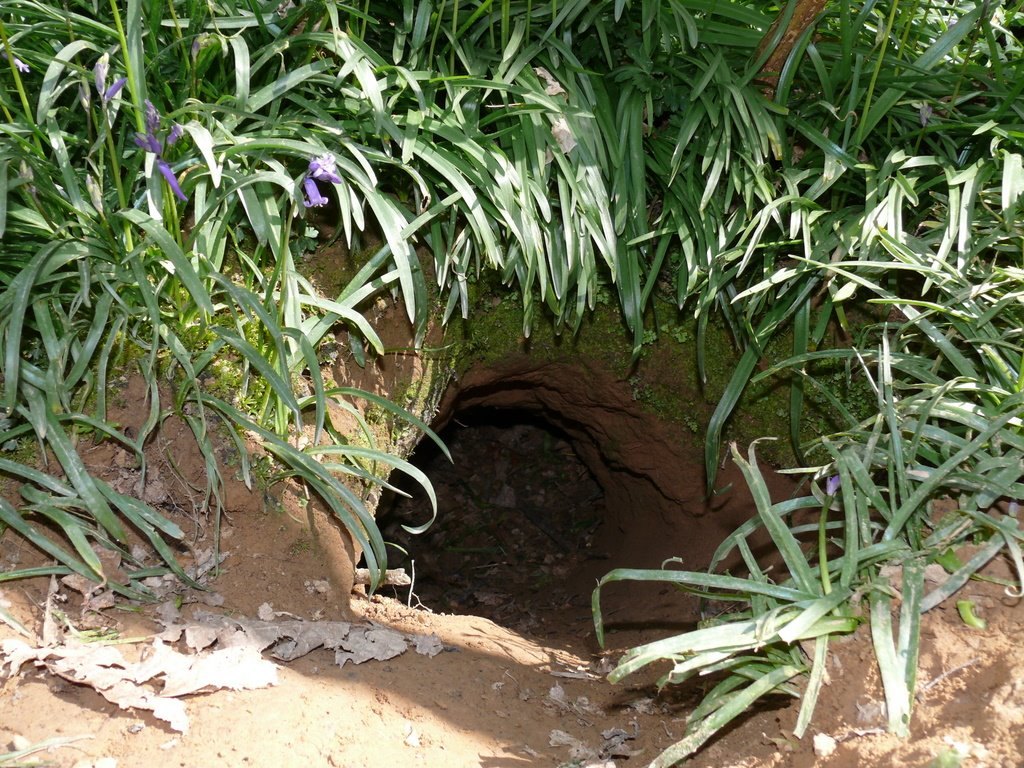
Visual AidThe door of a badger sett
Photograph of the entrance to a badger sett, a dome-shaped hole in an earth bank half hidden among bluebells in a spring wood, released by its photographer to the public domain. The Knowledge Bank explains that badgers dig deep homes called setts, with rooms for sleeping and rooms for their young, and that rabbits, moles, weasels, and foxes share the same dark, safe world beneath the roots of an English wood. This is one doorway into that hidden town. The badger itself is out of sight, as badgers usually are by day, and the picture shows one entrance of what may be a much larger home. Notice the smooth, rounded shape of the hole — a badger’s broad body wears it into a dome.
Entrance to a badger sett among bluebells; photograph by Hildesvini, released under CC0. Source: Wikimedia Commons, CC0.
ⓘ Vocabulary words are selected to help you understand and complete this workbook. Some may not appear verbatim in the novel.
delightedadj.Ch.11
Very pleased and happy
“Mrs. Fox was delighted when she saw the three plump hens.”
amazedadj.Ch.11
Very surprised, often in a good way
“She was amazed that her husband had found food while they were trapped.”
gratefuladj.Ch.11
Feeling thankful for something someone has done
“The whole family was grateful to clever Mr. Fox.”
feastn.Ch.11
A large, special meal with plenty of food
“After days of hunger, the family sat down to a real feast.”
neighborn.Ch.12
Someone who lives near you
“Badger turned out to be a friendly neighbor living under the same wood.”
introducev.Ch.12
To make people known to each other for the first time
“Mr. Fox stopped to introduce himself to the surprised Badger.”
generousadj.Ch.12
Happy to share and give to others
“Mr. Fox was generous, offering to share his food with every hungry animal.”
invitev.Ch.12
To ask someone to come to an event or meal
“He decided to invite Badger and the others to a great underground feast.”
anxiousadj.Ch.12
Worried or nervous about something
“Badger looked anxious, unsure whether they would all be caught.”
politeadj.Ch.12
Having good manners; behaving in a kind, respectful way
“Badger was very polite, thanking Mr. Fox again and again.”
🧠Knowledge Bank question
1According to the Knowledge Bank, a badger's deep home is called ___.Ch.11
2True or False: To be “grateful” means to feel thankful for something someone has done.Ch.11
3Mr. Fox was happy to share his food with every hungry animal. Which word describes someone who shares and gives to others?Ch.12
4Fill in each blank with the correct word.Ch.11
Word choices:amazedfeastpoliteneighbor- some words will not be used
Mrs. Fox was that her husband had found food while they were trapped.
The starving family sat down at last to a wonderful .
5True or False: A “neighbor” is someone who lives far away in another country.Ch.12
6Mr. Fox asked Badger and the other animals to come to his great feast. Which word means to ask someone to come?Ch.12
7Badger looked worried and nervous, unsure if they would all be safe. Which word describes how he felt?Ch.12
8True or False: To “introduce” people means to make them known to each other for the first time.Ch.12
9Fill in each blank with the correct word.Ch.12
Word choices:politegenerousamazedfeast- some words will not be used
Badger was very , thanking Mr. Fox again and again with good manners.
Mr. Fox was , offering to share with every hungry animal.
10When you are very surprised, often in a good way, you are —Ch.11
Part 2
Comprehension
How well do you understand Chapters 11–12?
🧠Knowledge Bank · Watching the Story Grow
Reading Skill · Rising ActionA good story grows as it goes. Small events pile up and lead to bigger ones. In Part 5, one lucky tunnel reaches Boggis’s chicken house, and suddenly the foxes have food, friends, and a plan for more. This building-up of events is called rising action. Each step raises the excitement a little higher, like climbing stairs. Good readers feel the story gathering speed and ask, ‘What will this lead to next?’ Notice how one success opens the door to another. When you sense the events growing bigger and closer together, you are watching a writer build toward the climax.
🧠Knowledge Bank question
1The Knowledge Bank says rising action feels like ___.Ch.11
2True or False: When Mrs. Fox sees the food, she is amazed and the hungry family enjoys a wonderful meal.Ch.11
3Which new character do the foxes meet while they are digging in Chapter 12?Ch.12
4True or False: Badger and the other animals of the wood are also hungry and starving.Ch.12
5Put the events from Chapters 11–12 in the correct order. Write 1–4 (1 = first).Ch.11–12
Mrs. Fox is amazed, and the family enjoys a wonderful meal.
Mr. Fox invites Badger and the other hungry animals to share a great feast.
A young fox carries the three hens back to Mrs. Fox.
While digging on, the foxes meet Badger, who is also starving.
6True or False: Mr. Fox decides to keep all the food only for his own family.Ch.12
7Why are Badger and the other animals of the wood starving?Ch.12
8What does Mr. Fox do when he learns that Badger and the others are hungry?Ch.12
9True or False: In Part 5 the story grows from one family’s survival into a tale about animals helping one another.Ch.11–12
10How does Badger behave toward Mr. Fox when they meet?Ch.12
Part 3
Literary Elements
Understanding HOW and WHY Dahl writes Chapters 11–12 the way he does.
🧠Knowledge Bank · The Word Feast
Language · ConnotationDahl calls the meal a feast, not just a dinner. Both words mean food, but a feast feels huge, happy, and shared. The warm feeling hidden inside a word is called its connotation. Feast carries joy and plenty; a word like scraps would carry sadness instead. Dahl chooses cozy, generous words here so the underground meal glows with comfort, even while danger waits above. Writers weigh not only what a word means but how it makes us feel. As you read, ask whether a word feels warm or cold. That hidden feeling is the word’s connotation.
Visual AidThe feeling hidden inside a word
Chart for the Knowledge Bank on connotation. The scale runs from cold to warm feeling, and the three words on it are the ones the Knowledge Bank contrasts, scraps carrying sadness, dinner carrying little, and feast carrying joy and plenty; the red card is the Knowledge Bank’s point about why Dahl chose feast. The positions show feeling, not any measurement. Notice that the words all mean food — the Knowledge Bank says the difference is entirely in how they make us feel.
Scraps, dinner and feast on a scale of feeling, as described in the Knowledge Bank. Drawn for Garden Heights Academy.
📚 Literary Devices in This Part · definitions & examples
Dialogue is the words that characters say to one another in a story. When Mr. Fox and Badger talk underground — introducing themselves and arranging the feast — that conversation is dialogue.A character trait is a word that describes what a character is like, such as brave, greedy, or generous. In Part 5 we see Mr. Fox’s trait of generosity when he shares his food with everyone.Theme is the big idea or message of a story. Alongside cleverness, Part 5 adds a warm theme: friendship and sharing. Mr. Fox does not just save himself — he helps his neighbors, turning his good luck into everyone’s good luck.
The questions below are mixed — not grouped by device. Decide which device each one is about.
🧠Knowledge Bank question
1According to the Knowledge Bank, the warm feeling hidden inside a word is its ___.Ch.12
2True or False: A character trait is the exact words a character speaks aloud to others.Ch.11–12
3Fill in the blanks with the correct words.Ch.12
Word choices:themesharingrhymesetting- some words will not be used
The big idea or message of a story is its . Part 5 adds the warm idea of friendship and .
4When Mr. Fox shares his food with all the hungry animals, which character trait is he showing?Ch.12
5True or False: One theme of Part 5 is that sharing and helping others is important, not just being clever.Ch.11–12
6Fill in the blanks with the correct words.Ch.12
Word choices:dialogueBadgerrhymesetting- some words will not be used
The spoken words between characters are called . Here, Mr. Fox uses it to introduce himself to .
7By sharing his food with Badger and the others, what theme (big idea) is Dahl adding to the story?Ch.12
8True or False: Dialogue is the words that characters say to one another in a story.Ch.12
9Fill in the blanks with the correct words.Ch.12
Word choices:traitgenerousrhymesetting- some words will not be used
A word that sums up what a character is like is a character . Mr. Fox’s sharing shows that he is .
10Even while starving, Badger speaks politely and thanks Mr. Fox. What is Dahl letting DIALOGUE do in this scene?Ch.12
Part 4
Think Deeper
Four deeper challenges — no single-word recall. Read, weigh the evidence, and reason it through.
🧠Knowledge Bank · A Hero Who Shares
Social-Emotional · SharingMr Fox could have kept every stolen bird for his own family. Instead he shares the food with Badger and all the hungry animals below ground. This is what makes him a true hero, not just a clever thief. Sharing turns a lonely escape into a warm gathering. When people share what they have, everyone is stronger and no one is left starving. Dahl wants us to see the difference between the greedy farmers, who hoard, and the fox, who gives. A full storehouse means little if you keep it all alone. Real riches grow when good things are shared with a community.
1Claim: “Mr. Fox shares his good fortune with the other trapped animals.” — choose the two details that best prove it.Claim & Evidence
2Shows Mr. Fox’s generosity, or just a detail of the digging? Tap each item to sort it — tap again to switch sides. You can keep tapping to change your answer.Sort into two
◄ His generosityJust a detail ►
3Match each cause to its result. For each cause, pick its result.Cause & Effect
The foxes reach Bunce’s storehouse→
They meet Badger underground→
Mr. Fox has more than enough→
The animals join together→
🧠Knowledge Bank question
4Fill both blanks to complete the reasoning.Build the Argument
The Knowledge Bank says sharing is what makes Mr Fox , because a full storehouse .
Part 5
Standardized Test · Author’s Purpose & Passage Structure
Part 5 studies how nonfiction is BUILT — Text Structure & Purpose (what job each paragraph and sentence does) — together with Vocabulary in Context and Factual Detail, in the styles the SAT and TOEFL use. Read the passage (the highlighted words are tested below), then choose the answer best supported by the text.
Read the passage — the highlighted words are tested — then answer. Tap an answer, then tap it again to confirm.
SATWords in Context — a word's meaning in this passage
SATInference — a conclusion the passage implies
SATText Structure & Purpose — how the passage is built, and why
TOEFLFactual Information — a fact stated in the passage
TOEFLVocabulary — a tested word's meaning here
Inside a Badger's Underground Sett
The European badger is one of nature's greatest builders. Instead of digging a single hole, badgers construct a network of tunnels and rooms called a sett. Some setts are enormous, with dozens of entrances, and some are truly ancient, passed down through many generations of badgers, each family working to expand the home it inherited. Inside, a sett is carefully organized, with separate chambers for sleeping and for raising cubs, and badgers are famously clean: they drag old bedding out into the open air and carry fresh, dry grass back in. Several badger families may live in one great sett, and they cooperate to keep the tunnels safe and tidy. A generous badger family may even share the sett with neighbors: rabbits, and sometimes foxes, have been found living quietly in its unused corners. Beneath a peaceful field there may be a whole hidden village: built by one species, and shared, corner by corner, with others.
Original passage written for Garden Heights — not a quotation from the novel.
1A generous family is one that ___.SAT · Words in Context
2The passage most strongly suggests that a badger sett can feel like a hidden village because it —SAT · Inference
3According to the passage, what exactly is a sett?TOEFL · Factual Information
4A neighbor is someone who lives ___.SAT · Words in Context
5According to the passage, how do badgers keep their sett fresh?TOEFL · Factual Information
6In the passage, the word “cooperate” is closest in meaning to —TOEFL · Vocabulary
7Why does the author mention that some setts are truly ancient?SAT · Text Structure & Purpose
8According to the passage, which animals may share a large sett with badgers?TOEFL · Factual Information
9Which choice best describes how the passage is organized?SAT · Text Structure & Purpose
10The author’s main purpose in this passage is to show that —SAT · Text Structure & Purpose
Part 6 · Optional
Creative Writing
A bonus challenge to practice your English.
About This Section
This writing task is optional and not part of your auto-graded score. Feedback checks length, spelling, and grammar only.
Writing Task — Part 5 “A Surprise for Mrs. Fox”
Imagine you are Mrs. Fox at the moment the food arrives, or Badger meeting kind Mr. Fox for the first time. What do you say and feel? Write at least 40 words.
You can start with: “I had given up all hope of food, when suddenly there it was in front of me, and I could only say…”
0 / 40 words minimum
🗣 Teach It · Just for Fun (optional)
No right or wrong — close the screen and tell someone nearby what happened in this part. Can’t find anyone? Tell yourself out loud. The moment you teach it, you truly understand it.
Part 5 Complete!
You finished Chapters 11–12 of Fantastic Mr. Fox.
Here are your auto-graded results:
-
points out of 100
Teach it to someone
The best last step is to teach it. In your own words, explain what happened — retell a favorite scene, teach a character’s big choice, or sum up the main idea for a parent, friend, or classmate. When you can teach it clearly, you truly own it.
SAT® is a registered trademark of College Board, which is not affiliated with, and does not endorse, these materials. TOEFL® is a registered trademark of ETS. These materials are not endorsed or approved by ETS. Garden Heights is an independent provider of test-style reading practice.