New here? Just sign up with Google — your account includes Matilda, our gift book, forever.
Fish in a Tree · Garden Heights
Part 5
for Fish in a Tree · Part 5 · Chapters 26–31
8 Parts40 min
What Happens in Part 5
Ally’s father is a soldier deployed far from home, and during a video call she proudly shares how she is starting to learn to read. The same struggle runs in the family: her brother Travis, who left school early, is quietly desperate because his boss wants him to read repair manuals for his job, and he cannot — a painful sign that Travis may share Ally’s undiagnosed dyslexia. Working with Ally, Mr. Daniels gives her an exercise that leaves her with a small slip of paper reading, in effect, ‘anything is possible,’ and she keeps it in her pocket like a talisman. But the road is not smooth. One day a substitute teacher, meaning to be kind, announces in front of the whole class that Ally may draw instead of write — singling her out — and Shay pounces, mocking her cruelly. Humiliated and discouraged, Ally nearly quits her after-school sessions altogether. Mr. Daniels, realizing what happened, apologizes and gently reassures her that setbacks are part of learning, not proof of failure. Ally chooses to keep going, and soon after she solves a tricky logic puzzle entirely on her own — hard proof, when she needs it most, that her mind is powerful. Slowly, unevenly, and against real resistance, Ally is beginning to believe in herself.
The family echo, the ‘anything is possible’ motif, and a setback that tests resolve
Cross-Curricular
Great minds who learned differently
Chapter Summary
Ch.
What happens
Chapters 26–28
Family and a Slip of Paper — Ally shares her progress with her deployed father; Travis’s struggle with repair manuals echoes her own; she keeps a ‘anything is possible’ note close.
Chapters 29–31
Setback and Proof — a substitute singles Ally out and Shay mocks her; she nearly quits, but Mr. Daniels reassures her, and she then solves a logic puzzle alone — proof of her mind.
Part 1
Vocabulary
Study 10 key words from Chapters 26–31, then answer each question.
🧠Knowledge Bank · Words of Perseverance
Lexical Semantics · Words of Perseverance
Five words, and only one of the five is good news. Deployed means sent away on military duty, and Ally’s father is deployed overseas, which is the pressure sitting under everything else in this part. A setback is a problem that slows progress, and the substitute’s words are a painful one. To discourage is to take away someone’s confidence, which is exactly what the mockery is designed to do. To persevere is to keep going despite hardship, and Ally chooses to. Logic is careful, step-by-step reasoning, and she solves the puzzle with nothing else at all. Notice which two words end the list. Hunt spends three words knocking Ally down, then gives her the two she gets up with — one of which nobody at that school ever thought to measure.
deployedadj.Ch.26
Sent away on military duty
“Ally’s father was deployed overseas.”
setbackn.Ch.29
A problem that slows progress
“The substitute’s words were a painful setback.”
discouragev.Ch.29
To take away someone’s confidence
“The mockery tried to discourage her.”
perseverev.Ch.31
To keep going despite hardship
“Ally chose to persevere.”
logicn.Ch.31
Careful, step-by-step reasoning
“She solved the puzzle with pure logic.”
talismann.Ch.28
An object kept for luck or comfort
“The note became a kind of talisman.”
reassurev.Ch.30
To restore someone’s confidence
“Mr. Daniels moved to reassure her.”
resiliencen.Ch.31
The ability to recover from hardship
“Her resilience began to grow.”
humiliatedadj.Ch.29
Made to feel ashamed
“Ally felt humiliated before the class.”
proofn.Ch.31
Evidence that something is true
“The solved puzzle was proof of her mind.”
ⓘ The vocabulary words in this list are selected to help you understand and complete this workbook. Some may not appear verbatim in the original novel.
🧠Knowledge Bank question
1According to the Knowledge Bank, which two words does Ally get up with?Ch.26
2A ‘setback’ is something that helps you move ahead.Ch.29
3To ‘discourage’ someone is to take away their ___.Ch.29
4To ‘persevere’ is to give up quickly.Ch.31
5Fill in each blank with the correct word.Ch.31
Word choices:logicperseveresetbacksneer- some words will not be used
Ally chose to instead of quitting.
She solved the puzzle with pure .
6A ‘talisman’ is an object kept for ___.Ch.28
7To ‘reassure’ someone is to restore their confidence.Ch.30
8‘Resilience’ is the ability to ___ from hardship.Ch.31
9Fill in each blank with the correct word.Ch.29
Word choices:humiliateddiscourageprooflogic- some words will not be used
Ally felt in front of the class.
The mockery was meant to her.
10‘Proof’ is evidence that something is ___.Ch.31
Part 2
Comprehension
Show you understood what happens in Chapters 26–31.
🧠Knowledge Bank · Falling Down and Getting Up
Narrative Causality · Falling Down and Getting Up
Part 5 raises a specific threat, answers it through character action, and leaves an altered aftermath. Ally’s father is a soldier deployed far from home, and during a video call she proudly shares how she is starting to learn to read. The same struggle runs in the family: her brother Travis, who left school early, is quietly desperate because his boss wants him to read repair manuals for his job, and he cannot — a painful sign that Travis may share Ally’s undiagnosed dyslexia. Working with Ally, Mr. Daniels gives her an exercise that leaves her with a small slip of paper reading, in effect, ‘anything is possible,’ and she keeps it in her pocket like a talisman. But the road is not smooth. That progression explains how “Falling Down and Getting Up” produces lasting consequence.
Visual AidThe shape of Part 5
Diagram for the Knowledge Bank on this part’s events. Cards 1 to 4 are the run of scenes in order, card 5 is the low point, and card 6 is what comes right after it. Notice where Hunt has placed the puzzle. Putting the proof of Ally’s mind immediately after the worst moment is the whole argument of the part: a bad day does not erase what you are.
The sequence of Part 5, as described in the Knowledge Bank. Drawn for Garden Heights Academy.
🧠Knowledge Bank question
1The Knowledge Bank explains that Travis is quietly desperate because ___.Ch.26
2Travis is desperate because his job requires him to ___.Ch.27
3Ally is the only person in her family who struggles with reading.Ch.27
4Ally keeps a slip of paper in her pocket that says, in effect, ___.Ch.28
5Write the numbers 1–5 in the boxes to show the correct order of events. Number 1 = what happens first.Chapters 26–31
Travis reveals he cannot read the repair manuals.
A substitute singles Ally out, and Shay mocks her.
Discouraged, Ally nearly quits her sessions.
Ally shares her reading progress with her deployed dad.
Ally solves a logic puzzle alone, proving her mind.
6The substitute teacher singles Ally out in front of the class.Ch.29
7After the humiliation, Ally almost ___.Ch.29
8Mr. Daniels helps by ___.Ch.30
9Ally solves the logic puzzle only with a lot of help.Ch.31
10The logic-puzzle win matters because it is ___ that Ally’s mind is strong.Ch.31
Part 3
Literary Elements
Understanding HOW and WHY Lynda Mullaly Hunt tells the story across Chapters 26–31.
🧠Knowledge Bank · ‘Anything Is Possible’
Narrative Technique · ‘Anything Is Possible’
Part 5 layers motif, parallel, and setback so that an ordinary detail carries later significance. Watch the little slip of paper Ally carries in her pocket, its message that anything is possible. It is a motif — a small image the book returns to again and again — and it works like a heartbeat under the story. Every time Ally’s courage falters, the paper is there, a physical reminder in her own hand that the impossible thing (reading) might be possible after all. Hunt ties it back to the ‘Sketchbook of Impossible Things’ from Part 1: what once meant fantasy (flying wheelchairs) is turning into belief (I could learn to read). Keep an eye on this phrase; by the last page it will have traveled from a teacher’s exercise, to Ally’s pocket, to Ally’s own true opinion of herself — and finally to something she can offer someone else. That authorial design makes “‘Anything Is Possible’” a lesson in deliberate irony.
Visual AidWhere the phrase travels
Diagram for the Knowledge Bank on the motif. The five cards are the places the same three words turn up, from the Sketchbook in Part 1 to a gift Ally makes of them at the end. Notice the distance between card 1 and card 5 rather than the cards between: the phrase itself never changes, and what moves is whose hand it is in. Cards 4 and 5 lie ahead of this part — this is where to look, not what has happened yet.
The journey of the ‘anything is possible’ motif, as described in the Knowledge Bank. Drawn for Garden Heights Academy.
Motif
The ‘anything is possible’ slip — a small image the book keeps returning to.
Parallel
Travis’s reading struggle echoes Ally’s — two family members, one hidden difference.
Setback
The substitute’s blunder and Shay’s mockery — a low point that tests Ally’s resolve.
🧠Knowledge Bank question
1According to the Knowledge Bank, the slip of paper in Ally's pocket is ___.Ch.28
2Fill in each blank with the correct literary term.Ch.28
Word choices:motifparallelsettingrhyme- some words will not be used
The ‘anything is possible’ note is a recurring .
Travis’s struggle echoing Ally’s is a .
3A motif is a small image or idea a story returns to again and again.Ch.28
4Travis’s reading struggle echoing Ally’s is a ___.Ch.27
5Hunt shows the substitute setback to teach that growth is ___.Ch.29
6A parallel draws a meaningful likeness between two characters or events.Ch.27
7The logic-puzzle win right after the setback shows the pattern of ___.Ch.31
8Fill in each blank with the correct literary term.Ch.29
Word choices:setbackmotifnarratorparallel- some words will not be used
The substitute blunder and Shay’s mockery are a .
The ‘anything is possible’ note is a recurring .
9Mr. Daniels tells Ally the setback proves she is hopeless.Ch.30
10The clearest sign of Ally’s growing resilience is that she ___.Ch.31
Part 4
Think Deeper
Four deeper challenges — no single-word recall. Read, weigh the evidence, and reason it out.
🧠Knowledge Bank · Great Minds Who Learned Differently
Dyslexia & Achievement · Great Minds Who Learned Differently
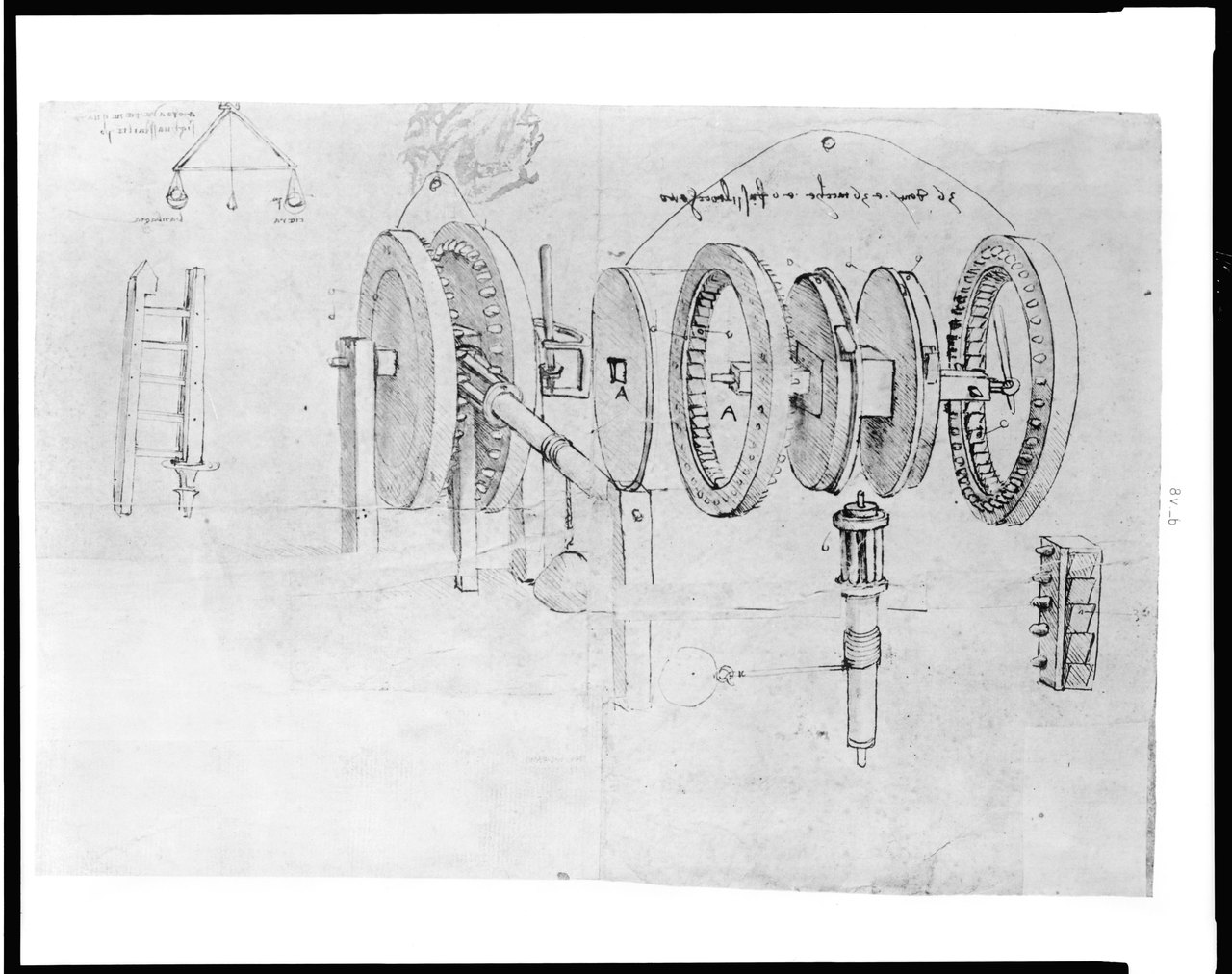
As Ally begins to believe in herself, it helps to know that some of history’s most brilliant people learned differently, and many are believed to have had dyslexia or similar differences. The inventor Thomas Edison was called ‘addled’ and pulled from school by a teacher who thought him hopeless; he went on to hold over a thousand patents. Albert Einstein was a late talker who struggled in the rote-memory schooling of his day, yet reimagined the universe. Leonardo da Vinci wrote in mirror-image and left work unfinished, but few minds have ranged so widely. In our own time, dyslexic thinkers have become award-winning film directors, entrepreneurs, architects, and scientists. One caution belongs with that list. None of these people succeeded because of dyslexia, and reading did not stop being hard for them — the point is narrower and truer: a brain that struggles with print is not a brain that struggles with thinking.
Visual AidA page written the wrong way round
A page from the notebooks of Leonardo da Vinci, showing a geared machine drawn from several sides. The Knowledge Bank explains that Leonardo wrote in mirror-image and left much of his work unfinished, and that few minds have ever ranged so widely. Hold the writing up to a mirror and it reads normally. The Knowledge Bank is careful about what this proves: not that difficulty makes genius, only that a mind which handles print unusually can still be an extraordinary mind.
A page from Leonardo da Vinci's notebooks; Library of Congress. Source: Wikimedia Commons, public domain.
Think back over these chapters. A girl beams into a screen and tells her soldier father, oceans away, that she is learning to read — and later watches her grown brother go quiet and ashamed because a stack of repair manuals might as well be written in stone. She keeps a scrap of paper in her pocket like a lucky charm: anything is possible. Then a substitute, trying to be nice, announces Ally’s difference to the whole room, and a mean girl turns it into a weapon, and the scrap of paper suddenly feels like a lie. She almost stops. But a kind teacher says the right thing, and days later a hard puzzle falls apart in her hands — solved, alone — and the paper feels true again.
Original passage written for Garden Heights — not a quotation from the novel.
1Claim: “Part 5 argues that real growth includes setbacks, and resilience — not perfection — is what carries Ally forward.” — choose the two details that best prove it.Claim & Evidence
2The setback, or The resilience? Tap each detail to sort it — tap again to switch sides. You can keep tapping to change your answer.Sort into two
◄ The setbackThe resilience ►
3Match each cause to its result. For each cause, pick its result.Cause & Effect
Ally shares progress with her dad→
Travis can’t read the manuals→
The substitute and Shay wound Ally→
Ally solves the puzzle alone→
🧠Knowledge Bank question
4Fill both blanks to complete the reasoning.Build the Argument
The Knowledge Bank argues that the list of famous names must be read carefully because , which shows that .
Part 5
Standardized Test
Reading passage · Great Minds Who Learned Differently · SAT & TOEFL-style practice
Read the passage — the highlighted words are tested — then answer. Tap an answer, then tap it again to confirm.
SATCentral Ideas — the passage's main point
SATDetail — a fact stated in the passage
SATWords in Context — a word's meaning in this passage
SATInference — a conclusion the passage implies
TOEFLFactual Information — a fact stated in the passage
TOEFLNegative Factual — the statement the passage does NOT support
TOEFLVocabulary — a tested word's meaning here
Famous Minds That Learned Differently
As Ally starts to believe in herself, history offers her good company. Some of the most creative and accomplished people who ever lived are thought to have had dyslexia or to have learned in strikingly different ways. Thomas Edison, who would go on to hold more than a thousand patents, met an early setback when a teacher called him ‘addled’ and judged him hopeless. Albert Einstein was slow to speak as a child and chafed against the memorize-and-repeat schooling of his time, yet he reimagined space, time, and light. Leonardo da Vinci filled his notebooks with mirror-writing and left many projects unfinished, but few human minds have ever ranged so far.
It would be unfair, of course, to promise that everyone with dyslexia will be famous. But the pattern is real and worth understanding. The same brain differences that make reading a struggle often come paired with unusual strengths — seeing patterns others miss, thinking in three dimensions, imagining boldly, and solving problems in unexpected ways. In our own time, dyslexic thinkers have become celebrated film directors, inventors, architects, entrepreneurs, and scientists. The lesson for a reader like Ally is not that struggle guarantees greatness, but something quieter and truer: a mind that reads with difficulty can still be a powerful and original mind. Again and again, people who learned differently have chosen to persevere and have changed the world — which means Ally’s difference is not a ceiling on her future but simply one feature of a mind that may yet do remarkable things.
Original passage written for Garden Heights — not a quotation from the novel.
1What is the main idea of the passage?SAT · Central Ideas
2As a boy, Thomas Edison was called ___.TOEFL · Factual Information
3How many patents did Edison go on to hold?SAT · Detail
4Albert Einstein was slow as a child to ___.TOEFL · Factual Information
5Leonardo da Vinci filled his notebooks with ___.SAT · Detail
6The passage warns it would be unfair to promise that everyone with dyslexia will be ___.TOEFL · Negative Factual
7Reading trouble often pairs with strengths like ___.TOEFL · Factual Information
8In the passage, setback most nearly means ___.SAT · Words in Context
9In the passage, persevere most nearly means ___.TOEFL · Vocabulary
10The lesson for Ally is that her difference is ___.SAT · Inference
Part 6 · Optional
Creative Writing
A bonus challenge to practice your English. Take your time and have fun with it.
About This Section
This writing task is optional and is not part of your auto-graded score. The feedback below checks only the basics — length, spelling, and grammar — not whether your ideas are right or wrong. It is meant for classroom discussion and creative practice, so feel free to use your imagination!
Writing Task — Part 5 “Getting Back Up”
After a humiliating setback, Ally almost quits — but chooses to keep going. Write about a time you faced a setback or embarrassment but decided not to give up. What knocked you down, what made you continue, and what happened? 6–10 sentences. End with what the experience taught you about resilience.
You can start with: “It would have been easy to quit right then, but instead...”
0 / 40 words minimum
🗣 Teach It · Just for Fun (optional)
No right or wrong — close the screen and tell someone nearby what happened in this part. Can’t find anyone? Tell yourself out loud. The moment you teach it, you truly understand it.
Part 5 Complete!
You finished Chapters 26–31 of Fish in a Tree.
Here are your auto-graded results:
-
points out of 100
Teach it to someone
The best last step is to teach it. In your own words, explain what happened — retell a favorite scene, teach a character’s big choice, or sum up the main idea for a parent, friend, or classmate. When you can teach it clearly, you truly own it.
Independent study guide by Garden Heights. Not affiliated with or endorsed by Lynda Mullaly Hunt. Contains original analysis only; no text from the novel is reproduced. Reference text: This workbook follows Lynda Mullaly Hunt’s classic text (the standard Puffin edition sold worldwide). Revised 2023 UK editions change some wording and may not match the vocabulary studied here.
SAT® is a registered trademark of College Board, which is not affiliated with, and does not endorse, these materials. TOEFL® is a registered trademark of ETS. These materials are not endorsed or approved by ETS. Garden Heights is an independent provider of test-style reading practice.