
Part 3
Two years of free eggs go straight into the Loskis' trash, and Juli is standing there when she learns it.
The snake and eggsIn Chapter 5 Bryce Loski is sent to fetch his sister Lynetta and is shown the Baker brothers' boa constrictor swallowing raw eggs — the image he keeps coming back to. Soon afterwards Juli brings over a free carton from her own hens across the street.
Rick's refusalRick Loski refuses them, pointing at the loose chickens and the state of the Baker yard and warning about salmonella, a bacteria that can cause food poisoning. Unwilling to repeat any of that aloud, Bryce takes every carton to the trash and tells Juli the family is enjoying them.
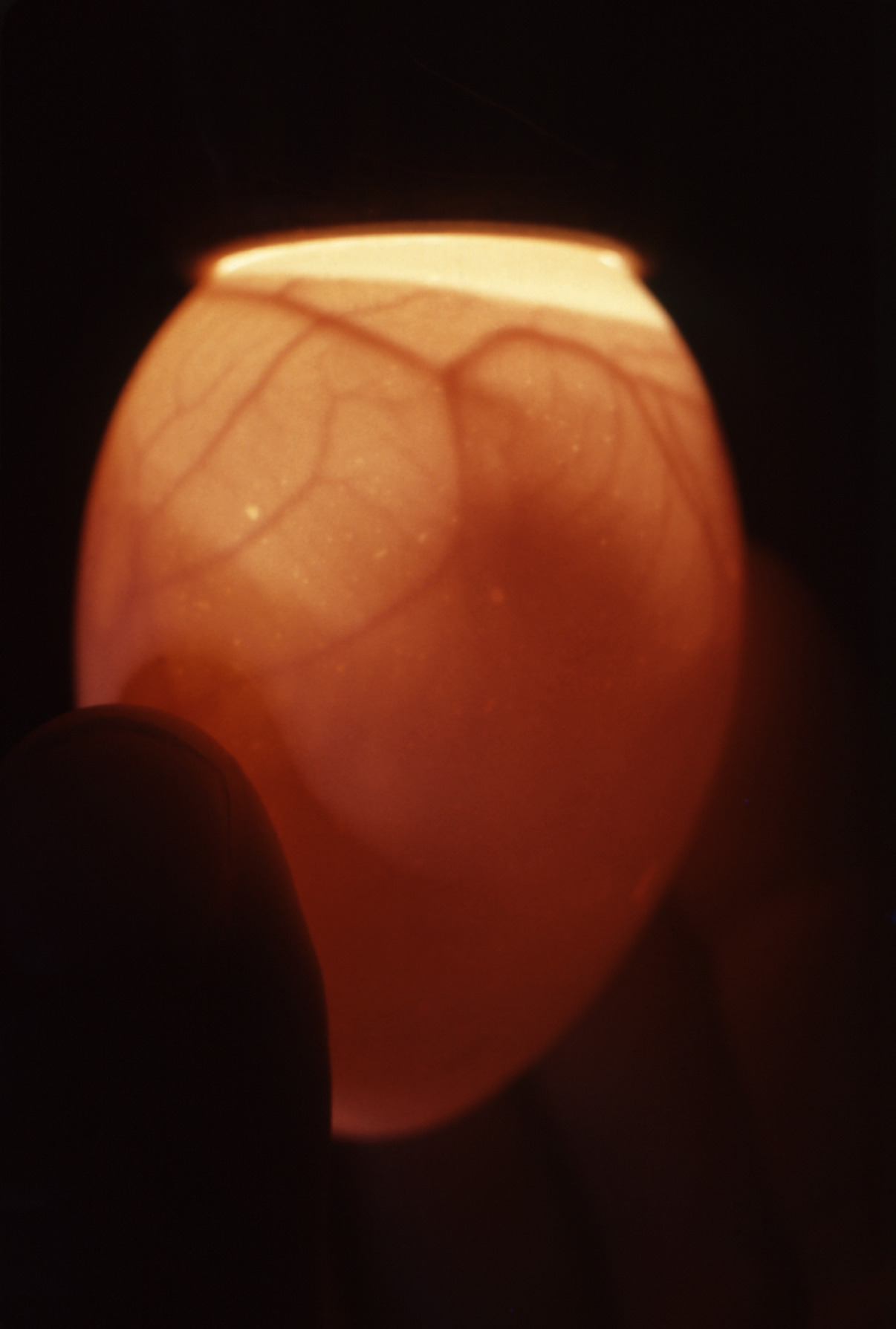
Hatching them herselfChapter 6 replays the same stretch from Juli's side: borrowing the incubator, turning the eggs, candling them nightly by holding a bright light behind each shell, and hatching chicks she names alphabetically. The bird called Clyde turns out to be a hen and becomes Clydette.
What the answer costThe surplus goes to the neighbors. Mrs. Stueby insists on paying while the Loskis pay nothing at all. Learning where two years of cartons actually went humiliates Juli, and the reason Bryce finally gives her — her own yard — hurts more than the waste does.
| Section | What you will practice |
|---|---|
| Vocabulary | Words for eggs and for hiding things: incubate, sanitary, surplus, deceive, gratitude… |
| Literary Elements | Dramatic irony, a secret that runs for two years, and a gift refused in private |
| Cross-Curricular | Food science — how a hen makes an egg and what actually makes one safe to eat |
| Ch. | What happens |
|---|---|
| 5 | Brawk, Brawk, Brawk! — Bryce narrates. Sent to fetch his sister Lynetta from the garage where Skyler Brown’s band practices, Bryce is shown the Baker brothers’ boa constrictor being fed raw eggs, which it cracks by winding itself around a piano leg. The sight stays with him. Not long after, Juli is at his door with a carton from her own hens. Rick Loski decides nothing is really free, points at the loose chickens and the state of the Baker yard, and refuses the eggs over the risk of salmonella — a bacteria that can cause food poisoning. Rather than repeat any of that to Juli, Bryce takes each carton straight to the trash and tells her the family is enjoying them. He keeps that up for about two years — until she is standing there when the eggs go in the garbage. |
| 6 | The Eggs — Juli narrates the same stretch from her side. She borrows an incubator — a warm box that holds eggs at a steady temperature — turns the eggs by hand, candles them nightly to watch the embryos — the chicks at their earliest stage — grow, and hatches chicks she names in alphabetical order; the one called Clyde turns out to be a hen and becomes Clydette. With no rooster in the flock the hens simply lay, and soon there are far more eggs than the Bakers can eat. Juli takes the surplus to the neighbors — Mrs. Stueby insists on paying, and the Loskis get theirs free every week for two years. Learning where those cartons actually went humiliates her, and the reason given hurts worse than the waste. |
ⓘ The vocabulary words in this list are selected to help you understand and complete this workbook. Some may not appear verbatim in the original novel.
- Juli learns that the eggs have been going straight into the Loskis’ trash.
- Juli borrows an incubator and candles the eggs while the embryos develop.
- Juli carries a free carton across the street nearly every week for two years.
- The hens begin laying more eggs than the Baker family can possibly eat.
- The chicks hatch for the science fair, and the flock turns out to be all hens.
Think back over these two chapters. A girl borrows an incubator, turns a dozen eggs by hand for three weeks, and holds a light behind each shell at night to watch something take shape. The chicks hatch. The birds grow, the eggs start coming, and because there are more than one family can eat she carries the extras around the neighborhood. One neighbor pays her. The house across the street takes its carton free, every week, for about two years, and thanks her at the door each time. Behind that door a father has already decided what kind of people keep chickens in a yard like that, and a boy who does not agree and does not argue walks each carton to the garbage. Nobody tests anything. Nobody asks anything. Then one afternoon the timing is wrong, and two years of politeness end in a few seconds.
A hen does not need a rooster in order to lay; she needs a working system and about twenty-five hours. The cycle begins in her ovary, where a yolk that has been building for roughly ten days is released into a long tube. As it travels, thick clear protein is wrapped around it in layers, and that protein is the albumen. Membranes go on next, and the egg then spends close to twenty hours in the shell gland, where calcium is laid down grain by grain.
The finished shell is not a sealed box. It is drilled through with thousands of pores too small to see, which let a developing chick trade gases with the air and which can also let bacteria in. A hen answers that problem herself, coating each egg moments before laying it with a damp film that dries into a thin protective layer called the cuticle. Fertilized eggs held warm for about twenty-one days become chicks, while unfertilized ones simply stay eggs.
What happens after collection decides how safe an egg is. Washing makes a shell more sanitary but also strips that natural coating, so American producers wash and then refrigerate, while many European countries do neither and leave the coating in place. Both systems work; mixing them does not, because a washed egg left in a warm kitchen is perishable in a way an unwashed one is not. Cartons carry a pack date and a sell-by date, and a household with a surplus of eggs has to decide quickly what to do with them. Thorough cooking handles what refrigeration cannot, which is the small chance that bacteria were inside from the beginning.
This writing task is optional and is not part of your auto-graded score. The feedback below checks only the basics — length, spelling, and grammar — not whether your ideas are right or wrong. It is meant for classroom discussion and creative practice, so feel free to use your imagination!
Writing Task — Part 3 “The Carton at the Door”
For two years Juli hands over eggs and Bryce throws them away rather than repeat what his father said. Write about a time somebody kept an uncomfortable truth from you — or a time you kept one from somebody else — because saying it out loud felt worse than hiding it. 6–10 sentences. End by naming what finally happened when the truth came out, and whether the silence had actually helped anyone.
No right or wrong — close the screen and tell someone nearby what happened in this part. Can’t find anyone? Tell yourself out loud. The moment you teach it, you truly understand it.


Part 3 Complete!
You finished Chapters 5–6 of Flipped.
Here are your auto-graded results:
The best last step is to teach it. In your own words, explain what happened — retell a favorite scene, teach a character’s big choice, or sum up the main idea for a parent, friend, or classmate. When you can teach it clearly, you truly own it.
Independent study guide by Garden Heights. Not affiliated with or endorsed by Wendelin Van Draanen. Contains original analysis only; no text from the novel is reproduced. Reference text: This workbook follows Wendelin Van Draanen’s classic text (the standard Puffin edition sold worldwide). Revised 2023 UK editions change some wording and may not match the vocabulary studied here.