New here? Just sign up with Google — your account includes Matilda, our gift book, forever.
The Giver · Garden Heights Academy
Part 4
for The Giver · Part 4 · Chapters 10–12
a novel by Lois Lowry
35 min5 Parts
This workbook is built on a solid pedagogical foundation, effectively integrating content and language learning based on the CLIL framework (Content and Language Integrated Learning), elevated by our unique 5th C — Connection — and an integrated Standardized Test section that weaves every SAT & TOEFL question type right into the novel, so learners build real test skills easily, naturally, and with fun.
What Happens in Part 4
In the Annex the old Receiver becomes The Giver, and hands Jonas snow, sunshine, pain and the color red.
The annex roomJonas reports to the Annex behind the House of the Old, where the doors lock and the speaker can be switched off — privileges no other citizen has. The old Receiver is tired and heavy-eyed. He tells Jonas that the title now belongs to Jonas, and that he should be called The Giver.
Memories of the worldHis task is to transmit the memories of everything the Community surrendered: whole generations of human experience, held by one person so that nobody else has to carry them. Jonas lies face down, The Giver rests hands on his back, and the first memory arrives.
Snow, sled, sunburnIt is snow — cold, weightless flakes and a thrilling ride downhill on a sled, both unknown in a Community of flat land and Sameness. Then comes warm sunshine, and after it the sting of sunburn: Jonas's first real sensation of pain, small but entirely new.
The apple was redJonas begins to perceive color, at first in flickers he cannot hold. He learns that the apple that changed, and Fiona's hair, are crimson — and that the Community gave up color long ago, along with sunshine, hills and real choice, when it settled on Sameness.
What We Will Learn
Focus
What It Means
Plot (Training Begins)
Jonas meets the Giver and receives his first memories
Science
Snow, weather, and the colors the Community erased
Vocabulary
Words for memory, the senses, and color
Chapter Summary
Chapter
Key Events
Ch.10
Jonas meets the old Receiver, who asks to be called The Giver, and learns his task
Ch.11
The Giver transmits the memory of snow and sledding, then warmth and the pain of sunburn
Ch.12
Jonas begins to see color, realizing the apple and Fiona’s hair are red
💭 Before You Read · Warm-Up (not scored)
There are no wrong answers here — just think, guess, and talk:
What is your very earliest memory? Why do you think THAT moment stayed?
If you could place one of your memories directly into a friend’s mind, which would you give — and why?
Predict: in a world with no snow, no color, and no pain, why might receiving wonderful memories be dangerous?
Copyright Notice
This is an independent study guide created by Garden Heights Academy to support reading comprehension and literary analysis. It contains original analysis questions and does not reproduce any text from the novel. The Giver is a work by Lois Lowry. This guide is not affiliated with, authorized by, or endorsed by the author or any associated rights holders. Students should read the original book, available from libraries and booksellers.
Part 1
Vocabulary
Study 10 key words from Chapters 10–12, then answer each question.
🧠Knowledge Bank · Why a Sled Runs Downhill
Physics · Friction and Sliding
A sled works because snow is unusually cooperative. Two forces decide whether it moves: gravity pulling it down the slope, and friction resisting that pull where the runners meet the surface. Snow keeps friction low partly because pressure and rubbing melt a microscopically thin film of water beneath the runner, so the sled slides on liquid rather than crystals. That is also why very cold snow, near minus thirty, feels slow and squeaky — too cold for the film to form easily. Steeper slopes convert the sled’s stored potential energy into motion faster, and speed then rises until air resistance balances the pull. Steering relies on the same physics in reverse: tipping a runner on edge increases friction on one side and turns the sled. Engineers who design bobsleds spend most of their effort on runner shape and polish, because the winning margin lies in a surface a rider can barely feel.
Visual AidWhy a sled runs downhill
Diagram of the two forces the Knowledge Bank names, with the detail that decides the outcome drawn separately: a microscopically thin film of meltwater under the runner, so the sled slides on liquid rather than on crystals. The slope, the sled and the arrows are schematic — nothing here is to scale, the film is far thinner than any line can show, and steering is left out entirely. The drawing explains a physical system, not the hill in the story. Notice that the same physics runs backward: tipping a runner on edge raises friction on one side, which is how a sled is turned rather than merely aimed.
Friction, meltwater films and sliding on snow, as set out in the Knowledge Bank and in standard physics references. Drawn for Garden Heights Academy.
transmitv.Ch.10
To pass something on
“The Giver would transmit memories to Jonas.”
memoryn.Ch.10
Something remembered from the past
“Each memory felt completely real.”
sensationn.Ch.11
A physical feeling
“The cold was a brand-new sensation.”
vividadj.Ch.11
Bright, clear, and lifelike
“The memories were vivid and real.”
perceivev.Ch.12
To notice or see
“Jonas began to perceive color.”
crimsonn.Ch.12
A deep red color
“The apple flashed a crimson red.”
annexn.Ch.10
A room or building added onto another
“The Giver lived in the Annex.”
generationsn.Ch.10
All the people across many ages
“Memories of generations were stored.”
thrillingadj.Ch.11
Very exciting
“Sledding was a thrilling new feeling.”
wisdomn.Ch.10
Knowledge gained from experience
“Memories give the Receiver wisdom.”
ⓘ The vocabulary words in this list are selected to help you understand and complete this workbook. Some may not appear verbatim in the original novel.
🧠Knowledge Bank question
1According to the Knowledge Bank, what makes a sled's thrilling ride down a hill possible?Ch.10
2True or False: A “sensation” is a physical feeling.Ch.11
3Bright, clear, and lifelike means ___.Ch.11
4True or False: To “perceive” something is to fail to notice it.Ch.12
5Fill in each blank with the correct word.Ch.10–11
Word choices:transmitmemoryvividwisdom- some words will not be used
The Giver would each to Jonas in detail.
6True or False: “Crimson” is a shade of deep red.Ch.12
7Knowledge gained from long experience is ___.Ch.10
8True or False: “Generations” means all the people across many ages.Ch.10
9Fill in the blanks with the correct words.Ch.10–12
Word choices:perceivecrimsonthrillingannex- some words will not be used
Jonas met the Giver in the and began to the color .
10A room or building added onto another is an ___.Ch.10
Part 2
Comprehension
How well do you understand Chapters 10–12?
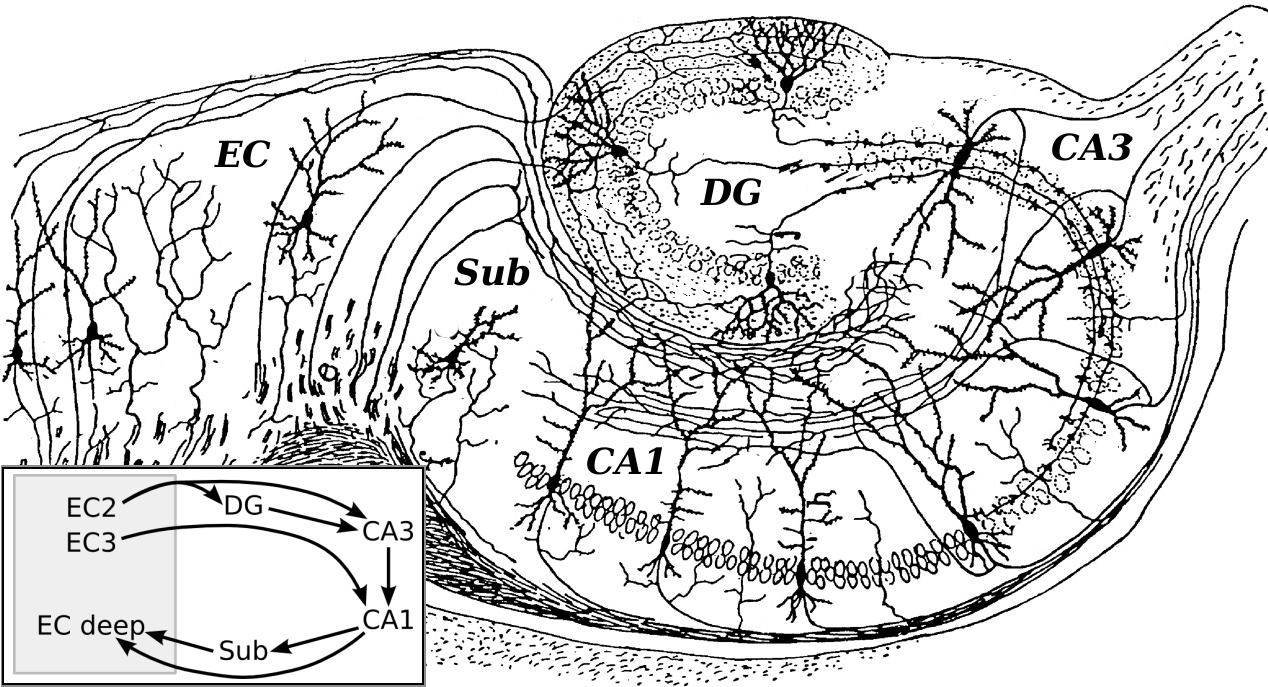
🧠Knowledge Bank · Where Personal Memories Form
Neuroscience · The Hippocampus
Not all memory is the same system. Neuroscientists separate episodic memory, your record of specific experienced events, from semantic memory, your store of general facts, and from procedural memory, the skills your hands keep. The evidence came from a patient known for decades as H.M., who had both hippocampi removed in 1953 to control seizures. Afterward he could still hold a conversation, still improve at tracing a shape in a mirror, and still recall his childhood — but he could form almost no new episodic memories, meeting the same doctor as a stranger for years. The hippocampus — a seahorse-shaped structure deep in the brain — it turned out, does not store old memories; it binds new experiences into ones the cortex — the brain’s outer layer — can later keep. Because episodic memory is what supplies the feeling of having lived through something, a person cut off from it can hold a fact about the past while losing every sense of having lived.
Visual AidThe structure that files a new memory
Photograph of Santiago Ramón y Cajal’s ink drawing of the hippocampus, made around 1911 from tissue he studied under a microscope, and still the picture neuroscientists reach for. This is the structure the Knowledge Bank describes through the patient known as H.M.: remove both of these and a person keeps childhood, keeps conversation, keeps learned skills, and stops being able to file anything new. Cajal drew what he could see in stained slices, so the layers are real while the tidiness is his; and this is a rodent hippocampus, not a human one. Notice that nothing here stores a memory. The wiring only binds one.
Santiago Ramón y Cajal, drawing of the neural circuitry of the rodent hippocampus, c. 1911; modified reproduction. Source: Wikimedia Commons, file "CajalHippocampus (modified).png", public domain.
🧠Knowledge Bank question
1The Knowledge Bank explains that the case of H.M. showed the hippocampus —Ch.10
2What will the Giver pass to Jonas?Ch.10
3What is Jonas’s very first memory?Ch.11
4True or False: Jonas feels real cold and a thrill he has never known before.Ch.11
5Write the numbers 1–5 in the boxes to show the correct order of events in Part 4.Ch.10–12
The Giver transmits the memory of snow and a sled.
Jonas realizes he is starting to see the color red.
The Giver later gives the painful memory of sunburn.
Jonas feels the thrill of sledding for the first time.
Jonas meets the old Receiver, now called The Giver.
6True or False: The Community has snow and sunshine every day.Ch.11
7What painful memory does the Giver transmit?Ch.11
8What does Jonas realize about the apple and Fiona’s hair?Ch.12
9True or False: The Community gave up color as part of Sameness.Ch.12
10Fill in the blanks.Ch.10–12
Word choices:memoriescolormoneyrules- some words will not be used
The Giver transmits to Jonas, who begins to see .
Part 3
Literary Elements
Understanding HOW and WHY Lois Lowry creates certain feelings across Chapters 10–12.
🧠Knowledge Bank · Writing That Reaches the Body
Literary Craft · Sensory Imagery
Imagery is language that recruits the senses, and skilled writers rarely stop at sight. Touch, temperature and smell reach a reader faster because those senses are processed with less filtering, which is why a page about cold air stinging a face is more physical than a page describing a view. Poets call a phrase that fuses two senses synesthesia — a sharp taste, a warm color — and it works because perception genuinely overlaps in the brain. Lowry gives Part 4 an unusual job: describing sensations to a narrator who has no vocabulary for them. The prose therefore leans on comparison and on verbs rather than on adjectives, letting motion carry what naming cannot. Watch how often a new sensation arrives as a surprise before it arrives as a word. That ordering is the point, because it reproduces in the reader the experience of meeting something for which no one has yet supplied a name.
📚 Literary Devices in This Part · definitions & examples
Sensory imagery makes us feel the snow, sun, and color Jonas experiences.Color is a symbol of life, beauty, and individuality.Vivid memories contrast with Jonas’s gray, controlled world.
The questions below are mixed — not grouped by device. Decide which device each one is about.
🧠Knowledge Bank question
1According to the Knowledge Bank, why does Lowry lean on comparison and verbs in Part 4?Ch.10–12
2A symbol stands for a bigger idea than itself.Ch.10–12
3Fill in each blank with the correct word.Ch.10–12
Word choices:sensory imagerycolorcontrastsetting- some words will not be used
Words that make us feel snow and sun are
The sharp difference between memory and the gray Community is a .
4Why does Lowry describe the memories so vividly?Ch.10–12
5The vivid memories contrast sharply with Jonas’s gray world.Ch.10–12
6Fill in each blank with the correct word.Ch.10–12
Word choices:contrastsensory imagerycolormood- some words will not be used
In the novel, ___ stands for life, beauty, and individuality
Vivid memory set against the gray Community creates .
7Imagery that appeals to sight, sound, and touch is called —Ch.10–12
8In the novel, color mainly works as a —Ch.10–12
9Fill in each blank with the correct word.Ch.10–12
Word choices:sensory imagerycontrastcolorplot- some words will not be used
Snow you can almost feel is an example of
Bright memory beside the gray world is a sharp .
10Seeing red for the first time mostly makes Jonas feel —Ch.10–12
Part 4
Think Deeper
Four deeper challenges — no single-word recall. Read, weigh the evidence, and reason it through.
🧠Knowledge Bank · What Color Actually Is
Optics · Light and Wavelength
Sunlight looks white but arrives as a mixture of wavelengths, and Isaac Newton proved it in the 1660s by splitting a beam with a prism and then recombining the colors back into white. An apple is red because its skin absorbs most wavelengths and reflects the long ones toward your eye; the redness is a relationship between surface, light and observer, not a paint layer on the fruit. Change the light and the relationship changes, which is why fabrics can match under a shop’s lamps and clash outdoors. The brain compensates with constancy, silently correcting for the color of the illumination so a white page looks white at noon and at dusk. This is why color is such a good test of shared reality. Two people can agree on every measurable wavelength and still be having different experiences, and neither has any way to step outside their own eyes to compare.
1Claim: “The Giver’s memories open Jonas to a world the Community erased.” — choose the two details that best prove it.Claim & Evidence
2What the memories bring back, or just a fact about the task? Tap each item to sort it — tap again to switch sides. You can keep tapping to change your answer.Sort into two
◄ What the memories bring backA fact about the task ►
3Match each cause to its result. For each cause, pick its result.Cause & Effect
Jonas becomes the Receiver→
The old man transmits memories→
The first memory is of snow→
More memories arrive→
🧠Knowledge Bank question
4Fill both blanks to complete the reasoning.Build the Argument
The Knowledge Bank argues that color makes a revealing test of shared reality because , which shows that .
Part 5
Standardized Test
Inference & Author’s Purpose — SAT & TOEFL-style practice
Read the passage — the highlighted words are tested — then answer. Tap an answer, then tap it again to confirm.
SATWords in Context — a word's meaning in this passage
SATInference — a conclusion the passage implies
SATRhetorical Purpose — why the author put a sentence there
TOEFLFactual Information — a fact stated in the passage
TOEFLInsert Text — where a sentence best fits
How the Brain Stores Memory
Close your eyes and think of a snowy day — where does that picture live? Scientists say a memory is not kept in one drawer of the brain. Instead, when something happens, your senses each store a piece of it: the sight in one region, the sound in another, the cold on your skin in a third. To recall the day, your brain relights all of those pieces at the same time, like switching on strings of lights together. That is why a single smell of hot cocoa can suddenly bring back an entire winter afternoon, vivid enough to feel present.
Memories tied to strong emotions burn brightest of all. The brain marks joyful and painful moments as valuable — worth keeping — because both kinds teach lessons that keep us safe and wise, and a remembered sensation such as heat or cold against the skin can return with surprising force. And memory is not only private. Long before writing, families and whole peoples survived by passing remembered knowledge along: which plants heal, where the river floods, what happened the last time a hard winter came. Shared memory is how humans connect one life to the next — a treasure no single person could ever gather alone.
Memory also changes each time it is used. Scientists have found that recalling an event can quietly rewrite it, so two people who stood side by side may remember the same day in different ways. Sleep helps decide what stays: as we rest, the brain replays the hours just past and files its most useful moments for keeping. Far from a fixed recording, memory is a living story the mind keeps retelling to itself.
Original passage written for Garden Heights — not a quotation from the novel.
1According to the passage, where is a memory kept?TOEFL · Factual Information
2In the passage, “vivid” most nearly means —SAT · Words in Context
3In the passage, a “sensation” is —SAT · Words in Context
4Why can one smell bring back a whole afternoon?TOEFL · Factual Information
5The passage suggests that memories tied to strong feeling are —SAT · Inference
6Why does the brain keep painful memories as well as happy ones?SAT · Inference
7As used in the passage, “valuable” means —SAT · Words in Context
8The author mentions healing plants and flooding rivers mainly to —SAT · Rhetorical Purpose
9The author calls shared memory ‘a treasure’ mainly to stress that it is —SAT · Rhetorical Purpose
10Insert Text (TOEFL). Look at the four squares [1]–[4] in the excerpt below. They show where this sentence could be added: “Because memory is scattered this way, losing one small area need not erase an entire life.”
A memory is not kept in a single spot. [1] Instead, its pieces spread across many parts of the brain. [2] A sound sits in one area, a smell in another. [3] Recalling the memory lights all these parts at once. [4]
Where would the sentence fit best?TOEFL · Insert Text
Part 6 · Optional
Creative Writing
A bonus challenge to practice your English. Take your time and have fun with it.
About This Section
This writing task is optional and is not part of your auto-graded score. The feedback below checks only the basics — length, spelling, and grammar — not whether your ideas are right or wrong. It is meant for classroom discussion and creative practice, so feel free to use your imagination!
Writing Task — Part 4 “A Memory to Keep”
Jonas receives vivid memories of snow, sunshine, and color. Write about a vivid memory of your own using the senses — what you saw, heard, smelled, and felt. Why is this memory special to you? Write at least 40 words.
You can start with: “One memory I can picture as if it were yesterday is…”
0 / 40 words minimum
🗣 Teach It · Just for Fun (optional)
No right or wrong — close the screen and tell someone nearby what happened in this part. Can’t find anyone? Tell yourself out loud. The moment you teach it, you truly understand it.
Part 4 Complete!
You finished Chapters 10–12 of The Giver.
Here are your auto-graded results:
-
points out of 100
Teach it to someone
The best last step is to teach it. In your own words, explain what happened — retell a favorite scene, teach a character’s big choice, or sum up the main idea for a parent, friend, or classmate. When you can teach it clearly, you truly own it.
Independent study guide by Garden Heights Academy. Not affiliated with or endorsed by the author or any rights holders. Contains original analysis only; no text from the novel is reproduced.
SAT® is a registered trademark of College Board, which is not affiliated with, and does not endorse, these materials. TOEFL® is a registered trademark of ETS. These materials are not endorsed or approved by ETS. Garden Heights is an independent provider of test-style reading practice.