New here? Just sign up with Google — your account includes Matilda, our gift book, forever.
Hatchet · Garden Heights
Part 1
for Hatchet · Part 1 · Chapters 1–2
8 Parts40 min
What Happens in Part 1
Thirteen-year-old Brian Robeson sits in the cramped cockpit of a small bush plane — a single-engine Cessna — flying north over the endless Canadian wilderness to spend the summer with his father in the oil fields. He is a passenger in more ways than one. His mind keeps circling back to what he calls only ‘the Secret’: he saw his mother with another man, and he blames that betrayal for his parents’ recent divorce. The hatchet his mother gave him as a parting gift rides awkwardly on his belt, a small, unwanted reminder of a love that now feels complicated. The bush pilot, a quiet man, lets Brian briefly hold the controls, and for a moment the boy feels the strange, buzzing life of the plane in his hands. Then everything changes. The pilot begins to rub his shoulder and belch, his face twisting; without warning he suffers a massive heart attack. His body stiffens, his foot kicks the rudder, and then he is dead, leaving Brian utterly alone thousands of feet above a trackless forest with only the droning engine, a dead man beside him, and a radio he does not know how to use.
Third-person limited view, ominous foreshadowing, and the flashback of the Secret
Cross-Curricular
Bush planes — how small aircraft open up remote country
Chapter Summary
Ch.
What happens
Chapter 1
Alone in the Air — Brian flies north in a bush plane toward his father, weighed down by the Secret and the divorce; the pilot lets him hold the controls, then begins to feel a strange pain.
Chapter 2
The Pilot Dies — the pilot suffers a fatal heart attack; Brian is left alone at the controls of a droning plane over the wilderness, forced to grab the wheel and think.
Part 1
Vocabulary
Study 10 key words from Chapters 1–2, then answer each question.
✈️Knowledge Bank · Flying into the Bush
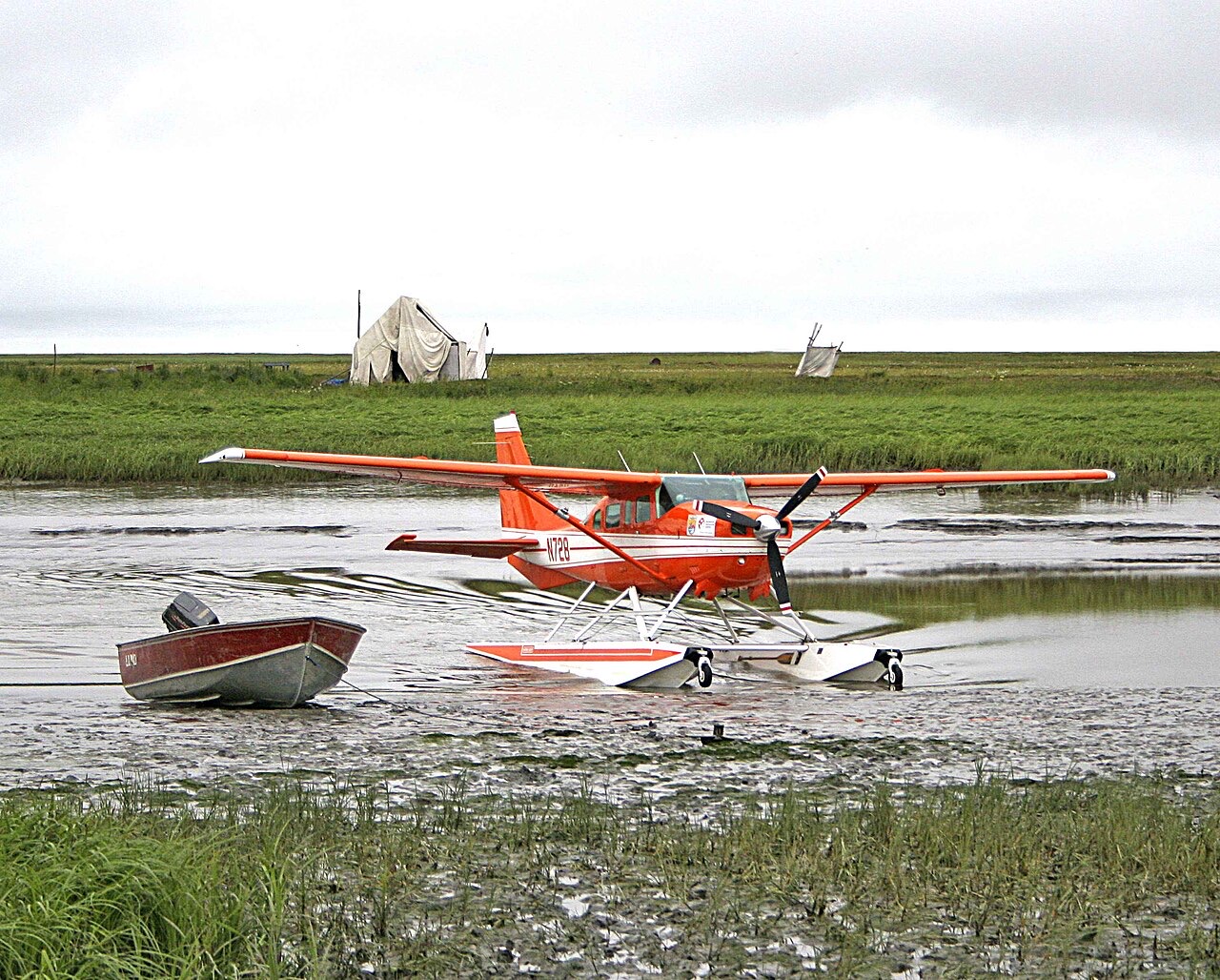
Aviation & Geography · The Cessna and the NorthBrian’s journey begins in a bush plane — a small, rugged aircraft built to land on lakes, gravel bars, and rough clearings where there are no runways. Across the Canadian north, thousands of lakes and endless spruce forest stretch for hundreds of miles with almost no roads, so for many far-flung communities the bush plane is the only link to the outside world; pilots often fly low and navigate by reading the land itself — a river’s bend, a lake’s shape, a ridgeline. The single-engine Cessna Brian rides is typical of the type: one propeller, a cramped cockpit for a pilot and a passenger or two, and a panel of instruments that report altitude (height above the ground), heading, and fuel. This is the exact setting that makes his whole story possible — a land so vast and empty that one crash can strand a boy deep in the wilderness, farther from help than he could ever hope to walk.
wildernessn.Ch.1
Wild, empty land far from people
“The bush plane crossed hundreds of miles of wilderness.”
altituden.Ch.1
Height above the earth
“At that altitude the lakes looked like scattered coins.”
cockpitn.Ch.1
The space where a pilot sits and steers
“Brian was crammed into the small cockpit beside the pilot.”
throttlen.Ch.1
A lever that controls engine power
“He nudged the throttle and the engine roared louder.”
ruddern.Ch.2
A moving part that steers a plane or boat
“The dying pilot’s foot jammed against the rudder.”
dronen.Ch.1
A low, steady humming sound
“The engine’s drone filled every second of the flight.”
wincev.Ch.1
To flinch from sudden pain
“The pilot began to wince and rub his aching shoulder.”
instrumentn.Ch.2
A dial or gauge that gives information
“Brian stared at each instrument, understanding none of them.”
divorcen.Ch.1
The legal ending of a marriage
“The divorce had pulled his parents into separate homes.”
seepv.Ch.2
To flow slowly through small openings
“Cold fear began to seep into Brian’s chest.”
ⓘ The vocabulary words in this list are selected to help you understand and complete this workbook. Some may not appear verbatim in the original novel.
1‘Wilderness’ is land that is ___.Ch.1
2‘Altitude’ means how deep something lies underground.Ch.1
3The ‘cockpit’ is the place where the ___ sits.Ch.1
4A ‘drone’ is a sudden, sharp banging noise.Ch.1
5Fill in each blank with the correct word.Ch.2
Word choices:rudderthrottlewildernesscargo- some words will not be used
The pilot’s foot slipped and jammed the .
Brian pushed the to change the engine’s power.
6To ‘wince’ is to ___.Ch.1
7An ‘instrument’ on the panel is a ___.Ch.2
8To ‘seep’ is to ___.Ch.2
9Fill in each blank with the correct word.Ch.1
Word choices:divorcedronealtitudehatchet- some words will not be used
The steady of the engine never stopped.
His parents’ still weighed on his mind.
10The ‘throttle’ controls how much power the engine makes.Ch.1
Part 2
Comprehension
Show you understood what happens in Chapters 1–2.
💉Knowledge Bank · A Heart Attack at the Controls
Science · The Body Under AttackThe disaster that strands Brian is a heart attack — a sudden blockage of the blood supply to the heart muscle, usually by a clot in one of the coronary arteries. It brings crushing pain in the chest that spreads to the shoulder and left arm, shortness of breath, and a cold sweat — exactly the signs Brian watches the pilot show, rubbing his shoulder and grimacing, moments before he slumps forward. A heart attack can strike a healthy-looking adult without warning, and in the cramped cockpit of a bush plane there is no paramedic, no defibrillator, and no roadside to pull onto. That leaves Brian as the plane’s only conscious passenger — the rare, real emergency that aviation calls a ‘sole survivor’ situation, in which an untrained person must somehow keep a plane flying and bring it down. Nothing he does in these few minutes can restart the pilot’s heart. Grasping what is happening — and why it cannot be undone — is what turns his story from bad luck he might reverse into a sudden catastrophe he can only try to survive.
1Brian is flying north to spend the summer with his ___.Ch.1
2What kind of aircraft is Brian riding in?Ch.1
3Brian tells the pilot everything about the Secret during the flight.Ch.1
4The ‘Secret’ that haunts Brian is that ___.Ch.1
5Write the numbers 1–5 in the boxes to show the correct order of events. Number 1 = what happens first.Chapters 1–2
Brian is left alone at the controls of the plane.
Brian boards the bush plane to fly north.
The pilot rubs his shoulder and winces in pain.
The pilot suffers a heart attack and dies.
The pilot lets Brian briefly hold the controls.
6The pilot lets Brian hold the controls for a short time.Ch.1
7The gift Brian’s mother gave him for the trip is a ___.Ch.1
8What suddenly happens to the pilot in Chapter 2?Ch.2
9After the pilot dies, Brian knows exactly how to use the radio.Ch.2
10By the end of Part 1, Brian is ___.Ch.2
Part 3
Literary Elements
Understanding HOW and WHY Gary Paulsen tells the story across Chapters 1–2.
✍️Knowledge Bank · Clues Planted Early: Foreshadowing
Literary Craft · Foreshadowing & MotifPaulsen loads these opening chapters with foreshadowing — small hints an author drops early to prepare the reader for what is coming. The pilot casually rubbing his shoulder, the belch and the wince, the single tool riding on Brian’s belt, the empty forest sliding past the window: each detail is quietly loaded with a meaning we feel only later. Woven through it all is a motif — an image or idea the author returns to on purpose — which Paulsen calls ‘the Secret’: Brian’s memory of his mother and the divorce, surfacing again and again like a wound that will not close. Notice how the writer keeps Brian’s outer journey (the flight, the crash) separate from his inner one (the Secret he carries), so the two can slowly braid together. Learning to spot foreshadowing and motif turns a plain adventure into a puzzle the careful reader helps solve — and rewards you when an early, easy-to-miss detail suddenly matters.
Third-person limited
The narrator says ‘he,’ yet we hear only Brian’s thoughts and see only what he sees.
Foreshadowing
The pilot’s rubbed shoulder and belching hint at the deadly heart attack to come.
Flashback
Brian’s mind jumps back to the Secret and the divorce, coloring the present with the past.
1Because the narrator says ‘he’ but reveals only Brian’s thoughts, the point of view is ___.Ch.1
2Fill in each blank with the correct literary term.Ch.1
Word choices:foreshadowingflashbacksettingrhyme- some words will not be used
The pilot’s aching shoulder is a piece of .
Brian’s memory of the Secret is a .
3Foreshadowing gives the reader early hints about what may happen later.Ch.1
4The pilot rubbing his shoulder mainly serves as ___.Ch.2
5When Brian’s mind jumps back to the Secret, Paulsen is using a ___.Ch.1
6In third-person limited, we can hear the private thoughts of every character.Ch.1
7Paulsen keeps the Secret returning during the flight to show that Brian’s ___ struggle is already underway.Ch.1
8Fill in each blank with the correct literary term.Ch.2
Word choices:third-person limitedforeshadowingnarratorclimax- some words will not be used
Seeing only Brian’s thoughts marks a view.
The pilot’s ache is quiet .
9A flashback shows an event from earlier than the current moment of the story.Ch.1
10The strongest clue that the pilot’s death is coming is his ___.Ch.2
Part 4
Think Deeper
Four deeper challenges — no single-word recall. Read, weigh the evidence, and reason it out.
🧠Knowledge Bank · Fight, Flight, or Freeze
Psychology · The Body’s AlarmWhen Brian grasps that he is alone above the wilderness, his body floods with the fight-or-flight response — a rush of adrenaline that speeds the heart, sharpens the senses, and readies a person to act in an emergency. Scientists add a third reaction the older name leaves out: freeze, when fear locks a person in place, unable to move or think. Across these chapters Brian swings among all three — panic that nearly paralyzes him, then flashes of cold, quick thinking that keep the plane level. Researchers who study survivors find that living through a crisis rarely depends on being fearless; it depends on managing fear — slowing the breath, narrowing attention to one small task at a time, refusing to surrender to panic. That is the quiet lesson buried under the whole novel, and the reason Brian’s story is really about the mind: courage is not the absence of terror but what a person chooses to do while afraid.
Picture the little plane as a loud, trembling box of glass and metal, crawling across a sky above a forest so wide it has no edge. Inside it a boy turns a secret over and over in his mind, half-hating his mother, half-missing her, the hatchet she gave him pressing against his hip. Beside him a quiet man flies the plane and, almost casually, rubs his shoulder and shifts in his seat — a small thing, easy to miss. Then the man’s face goes wrong, his body locks, and he is gone, and the boy is alone with a corpse and a machine he cannot control, thousands of feet above country that does not care whether he lives. Everything Brian relied on has been taken in a single minute.
Original passage written for Garden Heights — not a quotation from the novel.
1Claim: “Part 1 shows that Brian is dangerously unprepared for what is about to happen to him.” — choose the two details that best prove it.Claim & Evidence
2A warning sign of danger, or An ordinary detail of the trip? Tap each detail to send it left or right.Sort into two
◄ A warning sign of dangerAn ordinary detail of the trip ►
3Match each cause to its result. For each cause, pick its result.Cause & Effect
The pilot lets Brian hold the controls→
The pilot suffers a heart attack→
Brian cannot work the radio→
The Secret keeps returning to his mind→
4Fill both blanks to complete the reasoning.Build the Argument
Paulsen gives the pilot small aches and a belch before the attack , which shows that .
Part 5
Standardized Test
Reading passage · Bush Planes and the Far North · SAT & TOEFL-style practice
🎯 You already have the skills from the sections above — this is just a fun way to meet real SAT & TOEFL-style questions. Read the passage (the highlighted words are tested below), then answer the questions below. Tap an answer to select it, then tap it again to confirm — you can change your choice until you confirm.
The little plane that carries Brian has a special job. It is a bush plane: a small, rugged aircraft built to fly into remote country far from paved runways and control towers. In much of northern Canada and Alaska there are no roads at all, only forest, muskeg, and thousands of lakes. For the oil crews, trappers, and doctors who live and work there, the bush plane is not a luxury but a lifeline, often the only practical way to reach places that would take days to hike.
Bush planes are designed for exactly this hard duty. They are usually single-engine aircraft, light and strong, able to take off and land in surprisingly short distances. Many are fitted with oversized tires for rough gravel bars, with skis for snow, or, most famously, with pontoon floats so they can land directly on the countless northern lakes. A skilled pilot can set one down on a strip of water, a sandbar, or a clearing that no ordinary plane could ever use. That flexibility is why a single small aircraft can matter so much to so many people.
That usefulness, however, comes with real risk. Bush flying often means long distances over empty country, changeable weather, and little or no help if something goes wrong. Pilots frequently fly alone, navigating by landmarks and experience as much as by instruments. If an engine fails or a pilot is incapacitated — as happens to Brian’s pilot — there may be no second crew member, no nearby airport, and no quick rescue. The same aircraft that opens up the wilderness can, in one unlucky moment, strand a person deep inside it, hundreds of miles from the nearest human being.
Original passage written for Garden Heights — not a quotation from the novel.
1What is the main idea of the passage?SAT · Central Ideas
2A ‘bush plane’ is built to fly into ___.TOEFL · Factual Information
3In much of the far north there are no ___.SAT · Detail
4For northern workers, the bush plane is described as a ___.TOEFL · Factual Information
5Most bush planes have how many engines?SAT · Detail
6Floats are fitted to a bush plane so it can land on ___.TOEFL · Factual Information
7A major risk of bush flying is having ___ if something goes wrong.SAT · Inference
8In the passage, instruments most nearly means ___.SAT · Words in Context
9In the passage, incapacitated most nearly means ___.TOEFL · Vocabulary
10Which event from Part 1 does this passage BEST help explain?SAT · Text Connections
Part 6 · Optional
Creative Writing
A bonus challenge to practice your English. Take your time and have fun with it.
About This Section
This writing task is optional and is not part of your auto-graded score. The feedback below checks only the basics — length, spelling, and grammar — not whether your ideas are right or wrong. It is meant for classroom discussion and creative practice, so feel free to use your imagination!
Writing Task — Part 1 “Suddenly on Your Own”
The pilot dies and Brian must handle a crisis with no adult to help. Write about a time you had to handle something difficult on your own, sooner than you expected. What happened, how did you feel, and what did you do first? 6–10 sentences. End with what the moment taught you about yourself.
You can start with: “I did not think I was ready, but there was no one else...”
0 / 40 words minimum
🗣 Teach It · Just for Fun (optional)
No right or wrong — close the screen and tell someone nearby what happened in this part. Can’t find anyone? Tell yourself out loud. The moment you teach it, you truly understand it.

Part 1 Complete!
You finished Chapters 1–2 of Hatchet.
Here are your auto-graded results:
-
points out of 100
Your Writing
Your writing was checked automatically for length, spelling, grammar, and whether you included the key parts of the scene. Scroll back to Part 5 anytime to read your feedback and improve your work.
Independent study guide by Garden Heights. Not affiliated with or endorsed by Gary Paulsen. Contains original analysis only; no text from the novel is reproduced. Reference text: This workbook follows Gary Paulsen’s classic text (the standard Puffin edition sold worldwide). Revised 2023 UK editions change some wording and may not match the vocabulary studied here.