New here? Just sign up with Google — your account includes Matilda, our gift book, forever.
Hatchet · Garden Heights
Part 5
for Hatchet · Part 5 · Chapters 11–13
8 Parts40 min
What Happens in Part 5
A tougher Brian learns to spear fish and hunt birds — until a moose attack and a tornado nearly destroy everything.
The new BrianA different person is emerging from the ordeal — a tougher, sharper Brian who thinks less about being rescued and more about staying alive. His senses have grown keen; he notices, plans, and works, patiently fashioning a bow and arrows and a fish spear through many failures.
First fish, first birdHe learns to read how water bends a fish's image and finally spears his first meal. He discovers the ruffed grouse he calls foolbirds — so camouflaged and still they are nearly invisible until they explode into flight — and in time takes his first bird, a huge step toward feeding himself.
The moose attackJust as he begins to feel some mastery, the wilderness reminds him who is truly in charge. A cow moose, for no clear reason, attacks him in the shallows of the lake, battering him again and again and cracking his ribs, leaving him bruised and badly shaken.
The tornadoThat same night a tornado roars across the lake, ripping his shelter apart, scattering fire and tools, and hurling him about. Soaked and nearly broken, Brian notices something strange: the storm has lifted and turned the sunken tail of the plane so it rises from the water — a change he does not yet understand but will soon mean everything.
The ‘new Brian’ as a dynamic character, vivid simile, and storm foreshadowing
Cross-Curricular
Primitive hunting tools — the bow, the arrow, and the fish spear
Chapter Summary
Ch.
What happens
Chapters 11–12
The New Brian — a tougher Brian makes a bow and a fish spear, learns to spear fish, finds the ‘foolbirds,’ and takes his first bird.
Chapter 13
Moose and Tornado — a moose attacks and cracks his ribs; that night a tornado wrecks his camp and shifts the sunken plane in the lake.
Part 1
Vocabulary
Study 10 key words from Chapters 11–13, then answer each question.
🏹Knowledge Bank · Bows, Spears, and Bending Light
Physics · Primitive Hunting ToolsThe ‘new Brian’ arms himself with two ancient weapons, and both work on real physics. A bow is a kind of spring: as Brian bends the springy wood and draws the string, he stores energy in the flexed limbs, and releasing the string dumps that stored energy into the arrow all at once, far faster than an arm could throw. A fish spear is simpler, but using it exposes a trick of light. When Brian first jabs at fish in the shallows, he misses again and again, because water bends light in a way that fools the eye — an effect called refraction. Light rays change direction as they pass from water into air, so the fish appears to sit higher and closer to the surface than it truly does. The real fish is deeper, and slightly off from where it seems. Brian solves the puzzle the way spear-fishers always have: he learns to aim low, correcting for the bent image below the surface until spear and fish finally meet.
Visual AidWhy the fish is not where it looks
Structure diagram of the trick of light the Knowledge Bank names refraction. Light from the fish bends where it leaves the water, but the eye assumes light travels straight, so it places the fish along the dashed line — higher and nearer than the real one. The angles are exaggerated and nothing is to scale; a real scene adds ripples, depth, and a moving target. The fix at the bottom is the whole lesson Brian teaches himself at the shallows: aim low, below where the fish appears to be.
Refraction at a water surface as described in standard optics introductions and by the U.S. National Oceanic and Atmospheric Administration. Drawn for Garden Heights Academy.
fashionv.Ch.11
To make or shape by hand
“Brian would fashion a bow from a springy branch.”
refractionn.Ch.11
The bending of light passing through water
“Refraction made the speared fish seem to jump aside.”
camouflagen.Ch.12
Coloring that hides a thing in its surroundings
“The foolbird’s camouflage made it nearly invisible.”
quarryn.Ch.12
An animal that is hunted
“The still bird was a hard quarry to find.”
keenadj.Ch.11
Sharp and quick to notice
“His senses had grown keen after weeks alone.”
masteryn.Ch.12
Great skill and control
“He began to feel a small mastery over the lake.”
tumultn.Ch.13
Loud, violent confusion
“The tornado filled the night with tumult.”
batterv.Ch.13
To strike hard again and again
“The moose began to batter him in the shallows.”
campn.Ch.13
A place set up for shelter
“The storm scattered his fire and wrecked his camp.”
persistv.Ch.11
To keep trying despite failure
“He had to persist through many missed throws.”
ⓘ The vocabulary words in this list are selected to help you understand and complete this workbook. Some may not appear verbatim in the original novel.
🧠Knowledge Bank question
1According to the Knowledge Bank, Brian keeps missing the fish because refraction makes each fish appear ___.Ch.11
2‘Refraction’ is the bending of light as it passes through water.Ch.11
3‘Camouflage’ is coloring that helps an animal ___.Ch.12
4A person’s ‘quarry’ is the animal that they hunt.Ch.12
5Fill in each blank with the correct word.Ch.13
Word choices:tumultbatterfashionthrottle- some words will not be used
The storm filled the night with .
The moose began to Brian in the water.
6Senses that are ‘keen’ are ___.Ch.11
7‘Mastery’ means great ___.Ch.12
8To ‘persist’ is to ___.Ch.11
9Fill in each blank with the correct word.Ch.11
Word choices:refractioncamouflagekeenquarry- some words will not be used
Water bends light, an effect called .
The bird’s made it hard to see.
10To ‘batter’ something is to strike it hard again and again.Ch.13
Part 2
Comprehension
Show you understood what happens in Chapters 11–13.
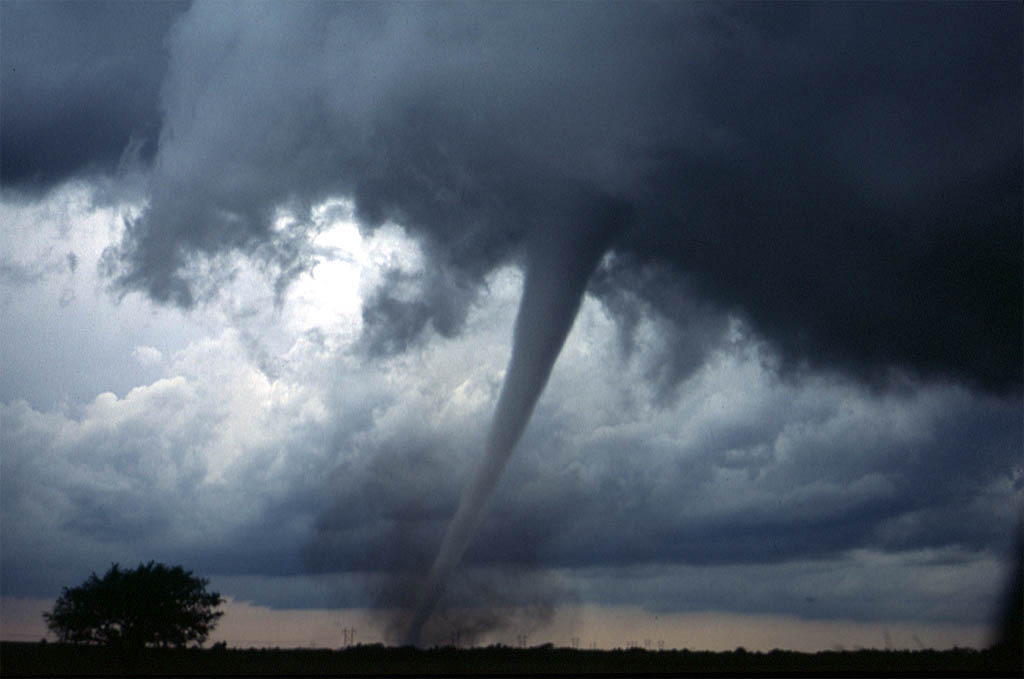
🌪️Knowledge Bank · How a Tornado Is Born
Meteorology · The Storm That Struck the LakeThe storm that tears Brian’s camp apart is a tornado, and its violence comes from a collision in the sky. Tornadoes usually form when a mass of warm, moist air near the ground is trapped beneath cooler, drier air above it. The warm air is lighter, so it wants to rise, and when it finally punches upward through the cold layer it can build a towering thunderstorm. If the winds at different heights blow at different speeds, they set the rising air spinning, tilting a horizontal roll of wind up into a vertical, whirling column. That funnel can drop to the ground with almost no warning, packing winds strong enough to flatten trees and hurl water and debris. The strange stillness and heavy sky Brian notices beforehand are the storm gathering its breath. What the tornado does to him is cruel — it wrecks his shelter and scatters his fire — yet, by lifting the drowned plane’s tail above the surface, the same storm hands him an unlooked-for gift.
Visual AidA funnel on the ground
Photograph of a tornado near Anadarko, Oklahoma, on May 3, 1999, taken by scientists of a NOAA storm-research team. The pale tube is the condensation funnel; the darker smudge at the ground is dust and debris the winds have picked up. This is the finished product of the collision the Knowledge Bank explains — warm, moist air punching up through a colder layer and set spinning by winds of different speeds. A still photograph cannot show the spin, the roar, or the speed. And it is a prairie tornado in daylight: the storm that wrecks Brian’s camp comes over forest, in the dark, and no camera ever saw it.
Tornado near Anadarko, Oklahoma, May 3, 1999; photograph by Daphne Zaras, NOAA National Severe Storms Laboratory. Source: Wikimedia Commons, File:A tornado near Anadarko, Oklahoma, on May 3, 1999.jpg, public domain.
🧠Knowledge Bank question
1The Knowledge Bank explains that the rising air inside a thunderstorm begins to spin when ___.Ch.11
2Brian keeps missing the fish at first because water ___.Ch.11
3Brian names the ruffed grouse ‘foolbirds.’Ch.12
4The foolbirds are hard to catch mainly because they are ___.Ch.12
5Write the numbers 1–5 in the boxes to show the correct order of events. Number 1 = what happens first.Chapters 11–13
A moose attacks him and cracks his ribs.
He learns to spear fish and takes his first bird.
A tornado wrecks his camp and shifts the sunken plane.
He fashions a bow and a fish spear.
A tougher ‘new Brian’ begins to observe and plan.
6The moose attacks Brian for a clear and obvious reason.Ch.13
7The moose attack leaves Brian with ___.Ch.13
8The tornado does what to Brian’s camp?Ch.13
9The storm has no effect at all on the sunken plane.Ch.13
10By the end of Part 5, the storm has secretly given Brian ___.Ch.13
Part 3
Literary Elements
Understanding HOW and WHY Gary Paulsen (author) tells the story across Chapters 11–13.
⚖️Knowledge Bank · Sharpening Action with Simile
Literary Craft · SimileWatch how Paulsen makes the fast, physical scenes of Part 5 leap off the page, and you will often find a simile at work — a comparison that links two unlike things using the words ‘like’ or ‘as.’ When a hidden grouse finally erupts from the brush, he does not merely say it flew up; he compares the sudden blast of wings to something exploding, so the reader feels Brian’s shock at the burst. A simile works by borrowing a feeling from something familiar and lending it to something new: we all know the jolt of an explosion, so tying that image to the bird makes an unfamiliar moment instantly vivid. Notice that Paulsen saves his strongest comparisons for moments of speed, danger, or surprise — the strike of the spear, the rush of the storm, the panic of an animal — because a well-chosen simile can freeze a split-second of action and let us feel every part of it. A single small word like ‘as’ can carry a surprising amount of power.
Dynamic character
The ‘new Brian’ who observes and acts — a character changed in important ways by his ordeal.
Simile
A comparison using ‘like’ or ‘as,’ as when the foolbirds burst up as if the ground itself exploded.
Foreshadowing
Small signs — odd stillness, a strange sky — that warn of the coming tornado.
🧠Knowledge Bank question
1The Knowledge Bank explains that Gary Paulsen (author) saves his strongest similes for ___.Ch.11
2Fill in each blank with the correct literary term.Ch.12
Word choices:similedynamic characterrhymeindex- some words will not be used
Saying the birds burst up as if the ground exploded is a .
Brian, changed by his ordeal, is a .
3A dynamic character changes in important ways during a story.Ch.11
4A comparison using ‘like’ or ‘as’ is called a ___.Ch.12
5The odd stillness and strange sky before the storm are ___.Ch.13
6A simile compares two things using ‘like’ or ‘as.’Ch.12
7Paulsen marks Brian’s change by contrasting the old Brian with the ___ Brian.Ch.11
8Fill in each blank with the correct literary term.Ch.13
Word choices:foreshadowingdynamic characternarratorclimax- some words will not be used
The strange sky before the storm is .
The changed Brian is a .
9Foreshadowing plants hints of events that come later.Ch.13
10The clearest proof Brian is a dynamic character is that he now ___.Ch.11
Part 4
Think Deeper
Four deeper challenges — no single-word recall. Read, weigh the evidence, and reason it out.
💪Knowledge Bank · Confidence and Its Limits
Psychology · Competence, Humility, and the WildBy Part 5 Brian has changed so much that Paulsen calls him a ‘new’ person. He can make tools, read the water, and take food, and with that skill comes a growing sense of mastery — the quiet confidence of someone who is finally good at staying alive. Psychologists know how important this feeling is: believing you can handle challenges, sometimes called self-efficacy, is one of the strongest supports of resilience. But the wilderness answers his confidence with a warning. A cow moose, for no reason Brian can understand, drives him under and cracks his ribs; a tornado erases his camp in minutes. The lesson is not that his skill is worthless, but that competence must be paired with humility. Nature can never be fully controlled or predicted, and the survivor who grows careless or proud is the one most likely to be hurt. Brian is learning to hold two truths at once: he is genuinely capable now, and he must still stay watchful.
Watch the boy who kneels by the water now — he is not the one who cried on the shore weeks ago. His eyes move differently; they notice the shape of a fish, the stillness of a hidden bird, the color of the sky. He has made a bow with his own hands, and a spear, and he has learned the trick of the bending water, and tonight he will eat because he was patient and clever. For a moment he almost feels like a match for this place. Then the wilderness answers. A moose drives him under and cracks his ribs for no reason he can name, and that same darkness a great wind comes screaming across the lake and tears his little world to pieces. He is battered, soaked, and nearly beaten. And out in the black water, unseen, the storm has swung the drowned tail of the plane up into the air, laying disaster and deliverance in the same rough hand.
Original passage written for Garden Heights — not a quotation from the novel.
1Claim: “Part 5 shows that Brian has been remade by the wilderness into a capable woodsman.” — choose the two details that best prove it.Claim & Evidence
2The old Brian’s way, or The new Brian’s way? Tap each detail to sort it — tap again to switch sides. You can keep tapping to change your answer.Sort into two
◄ The old Brian’s wayThe new Brian’s way ►
3Match each cause to its result. For each cause, pick its result.Cause & Effect
Brian studies how water bends light→
Brian fashions a bow and spear→
A cow moose charges him→
A tornado roars across the lake→
🧠Knowledge Bank question
4Fill both blanks to complete the reasoning.Build the Argument
The Knowledge Bank argues that Brian's new confidence is not enough by itself because , which shows that .
Part 5
Standardized Test
Reading passage · The Bow, the Arrow, and the Spear · SAT & TOEFL-style practice
Read the passage — the highlighted words are tested — then answer. Tap an answer, then tap it again to confirm.
SATCentral Ideas — the passage's main point
SATDetail — a fact stated in the passage
SATInference — a conclusion the passage implies
SATWords in Context — a word's meaning in this passage
SATText Connections — how two parts of the text relate
TOEFLFactual Information — a fact stated in the passage
TOEFLVocabulary — a tested word's meaning here
The Ancient Art of the Bow
When Brian shapes a bow and a fish spear, he is picking up the oldest tools human beings ever used to feed themselves. For most of human history — long before metal, guns, or stores — people lived by the spear and, later, the bow and arrow. These weapons let a hunter strike prey from a distance, a giant leap forward: a person could bring down food without closing to arm's reach of tooth and hoof. These simple tools carried our ancestors through tens of thousands of years.
To fashion them well is much harder than it appears. A bow must be cut from wood that is springy and strong, so it can bend far and then snap back without breaking. Arrows have to be nearly straight, or they wobble and fly wide of the mark. A fish spear needs points that are sharp and slightly springy so they can grip a slippery, thrashing fish. Every part must be right, because in the wilderness a tool that fails at the wrong moment can mean going hungry another day.
Yet the hardest lesson is not in the making but in the aiming, and it nearly defeats Brian at the water's edge. When he first tries to spear a fish, he misses again and again, because his quarry is not truly where it appears to be. Light bends as it passes from water into air, an effect called refraction, so the fish's image is shifted from its real position. Every spear-fisher in history has learned the same correction: aim below and ahead of the image to strike the actual fish. Add the need for stillness, patience, and a fast, sure thrust, and it is clear why primitive hunting demands real skill.
Original passage written for Garden Heights — not a quotation from the novel.
1What is the passage mainly about?SAT · Central Ideas
2The bow and spear let a hunter strike prey ___.TOEFL · Factual Information
3A good bow must be cut from wood that is springy and ___.SAT · Detail
4Arrows that are not nearly straight will ___.TOEFL · Factual Information
5A fish spear needs points that are sharp and ___.SAT · Detail
6Brian first misses the fish because its image is ___.SAT · Inference
7To hit the fish, a spear-fisher must aim ___.TOEFL · Factual Information
8In the passage, fashion most nearly means ___.SAT · Words in Context
9In the passage, quarry most nearly means ___.TOEFL · Vocabulary
10How does this passage best help explain Brian’s story?SAT · Text Connections
Part 6 · Optional
Creative Writing
A bonus challenge to practice your English. Take your time and have fun with it.
About This Section
This writing task is optional and is not part of your auto-graded score. The feedback below checks only the basics — length, spelling, and grammar — not whether your ideas are right or wrong. It is meant for classroom discussion and creative practice, so feel free to use your imagination!
Writing Task — Part 5 “Getting Better by Failing”
Brian misses the fish many times before he learns to aim through the bending water. Write about a skill you got better at only through repeated failure and practice. What was hard at first, what kept going wrong, and what finally made it click? 6–10 sentences. End with how it felt to finally succeed.
You can start with: “I failed at it more times than I can count, until...”
0 / 40 words minimum
🗣 Teach It · Just for Fun (optional)
No right or wrong — close the screen and tell someone nearby what happened in this part. Can’t find anyone? Tell yourself out loud. The moment you teach it, you truly understand it.
Part 5 Complete!
You finished Chapters 11–13 of Hatchet.
Here are your auto-graded results:
-
points out of 100
Teach it to someone
The best last step is to teach it. In your own words, explain what happened — retell a favorite scene, teach a character’s big choice, or sum up the main idea for a parent, friend, or classmate. When you can teach it clearly, you truly own it.
Independent study guide by Garden Heights. Not affiliated with or endorsed by Gary Paulsen. Contains original analysis only; no text from the novel is reproduced. Reference text: This workbook follows Gary Paulsen’s classic text (the standard Puffin edition sold worldwide). Revised 2023 UK editions change some wording and may not match the vocabulary studied here.
SAT® is a registered trademark of College Board, which is not affiliated with, and does not endorse, these materials. TOEFL® is a registered trademark of ETS. These materials are not endorsed or approved by ETS. Garden Heights is an independent provider of test-style reading practice.