Hatchet cover
Garden Heights

Hatchet

This workbook is for Garden Heights members. Sign in to continue.

Sign in with Google →
New here? Just sign up with Google — your account includes Matilda, our gift book, forever.
Hatchet · Garden Heights

Part 7

for Hatchet · Part 7 · Chapters 17–18
8 Parts40 min
What Happens in Part 7

Brian poles his rough raft out to the half-sunken plane and faces the hardest physical trial of the whole ordeal. To reach the survival pack he must get inside the flooded fuselage, and the only way in is underwater, through the aluminum skin of the plane. Diving again and again, holding his breath in the cold, he works at the metal — and then disaster nearly ruins everything: while cutting his way in, he loses his grip on the hatchet, and it sinks away into the dark water. For a sick moment all seems lost, because the hatchet is the tool that made his whole survival possible. But the new Brian does not panic; he dives down, gropes along the bottom, and recovers it — a quiet proof of how far he has come. At last he cuts an opening, reaches inside, and drags out the heavy survival pack. Back on shore, trembling with cold and excitement, he opens it like a treasure chest: sleeping bag, cooking gear, matches, a first-aid kit, and — wonder of wonders — packaged food, real food, which after weeks of fish and berries nearly overwhelms him. Among the gear he finds an emergency transmitter, a small radio meant to call for help. He flips its switch, but nothing seems to happen; unsure whether it is broken or even working, he sets it aside and turns, for now, to the miracle of a real meal.

What We Will Learn
SectionWhat you will practice
VocabularyRescue-gear words: submerge, grope, transmitter, provisions, perseverance
Literary ElementsThe dive as climax, sharp irony, and the tension of suspense
Cross-CurricularEmergency survival kits and rescue transmitters — how they call for help
Chapter Summary
Ch.What happens
Chapter 17Into the Plane — Brian rafts out and dives to cut into the fuselage; he loses the hatchet in the water, then dives again and recovers it.
Chapter 18The Survival Pack — he hauls out the pack, finds food, matches, and gear, and switches on an emergency transmitter without knowing if it works.
Part 1
Vocabulary
Study 10 key words from Chapters 17–18, then answer each question.
🎒Knowledge Bank · Inside a Survival Kit
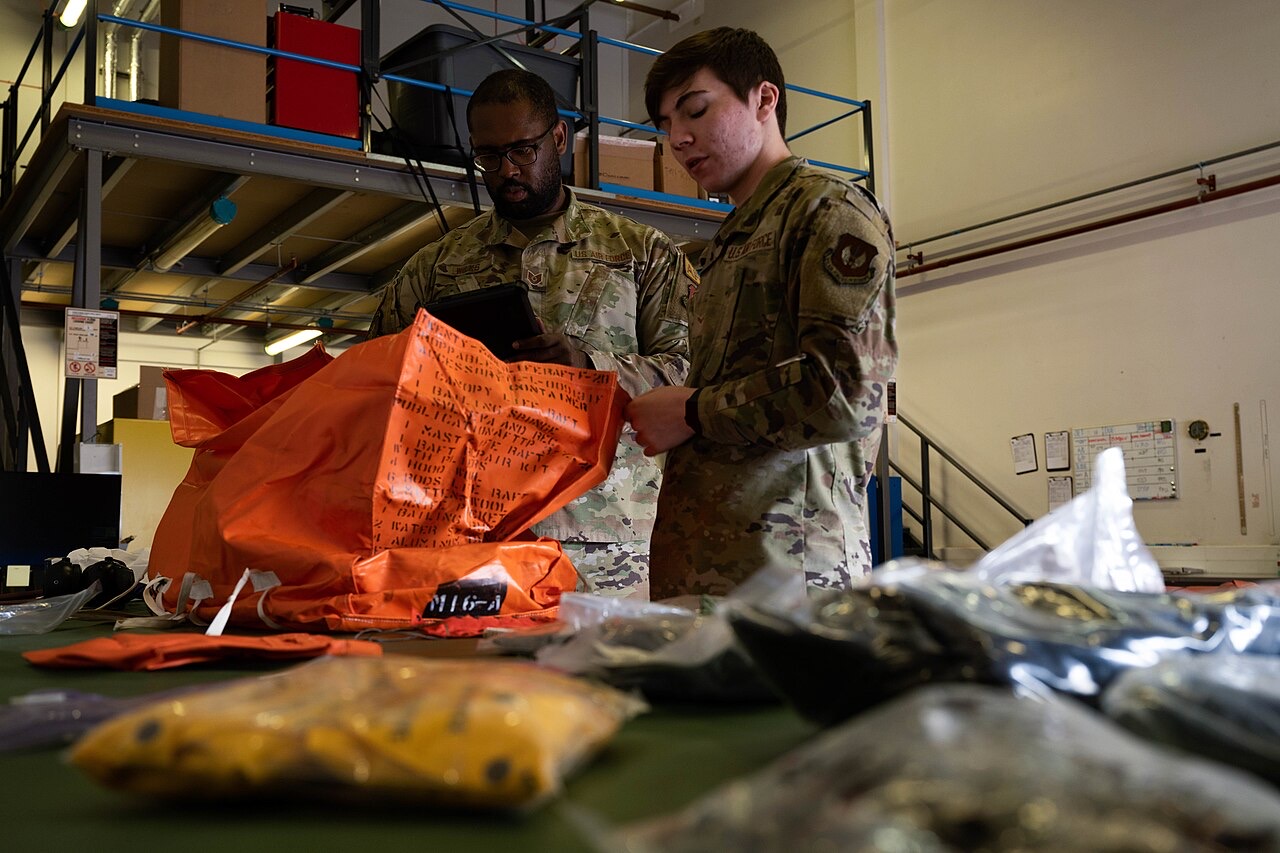
Preparedness · What a Survival Pack HoldsThe pack Brian fights so hard to reach is a real thing that bush planes carry: a survival kit, packed for exactly the disaster he is living. Every item earns its place by answering one of the body’s ranked needs. There are usually waterproof matches and a fire-starter, because warmth comes first; a foil sleeping bag to hold body heat; and concentrated, long-lasting provisions such as freeze-dried food that give energy for little weight. A good kit also holds a first-aid supply, a knife, fishing line and hooks, a signaling mirror, and — most precious of all in Brian’s case — an emergency radio to call for rescue. Notice the logic: the kit does not try to carry everything, only the few tools that buy the most survival for the least bulk, often with backups in case one fails. For weeks Brian improvised every one of these needs from the forest by hand; now, in one waterproof bag, he holds the concentrated foresight of people who planned ahead for trouble.
submergev.Ch.17
To go under the surface of water
“Brian had to submerge to reach the sunken door.”
gropev.Ch.17
To feel about blindly with the hands
“He had to grope along the dark lake bottom.”
transmittern.Ch.18
A device that sends a radio signal
“The transmitter might be calling for help in silence.”
provisionsn.Ch.18
A supply of food and gear
“The pack was full of provisions he badly needed.”
perseverancen.Ch.17
Steady effort despite difficulty
“Only sheer perseverance got him inside the plane.”
recoverv.Ch.17
To get back something lost
“He dived to recover the fallen hatchet.”
aluminumn.Ch.17
A light metal used in aircraft
“He cut slowly through the plane’s aluminum skin.”
treasuren.Ch.18
Something greatly valued
“The pack felt like a chest of treasure.”
overwhelmv.Ch.18
To overcome with strong feeling
“The taste of real food began to overwhelm him.”
switchv.Ch.18
To turn a device on or off
“He would switch on the strange little radio.”

ⓘ The vocabulary words in this list are selected to help you understand and complete this workbook. Some may not appear verbatim in the original novel.

1To ‘submerge’ is to go ___.Ch.17
2To ‘grope’ is to feel about blindly with the hands.Ch.17
3A ‘transmitter’ is a device that sends a ___.Ch.18
4‘Provisions’ are a supply of food and gear.Ch.18
5Fill in each blank with the correct word.Ch.17
Word choices:perseverancerecoverswitchthrottle- some words will not be used
Only steady got him into the plane.
He dived again to the lost hatchet.
6‘Aluminum’ is a ___ metal used in aircraft.Ch.17
7To ‘overwhelm’ someone is to ___.Ch.18
8To ‘switch’ a device is to ___.Ch.18
9Fill in each blank with the correct word.Ch.18
Word choices:transmitterprovisionsgropesubmerge- some words will not be used
He turned on the small and heard nothing.
The pack held the that could save him.
10To ‘recover’ something is to get back what was lost.Ch.17
Part 2
Comprehension
Show you understood what happens in Chapters 17–18.
📡Knowledge Bank · A Silent Call for Help
Technology · The Emergency TransmitterThe little radio Brian finds and switches on is an emergency locator transmitter, and it explains how he is finally saved. Many aircraft carry one, and it has a single job: after a crash it broadcasts a steady distress signal on a frequency that rescuers monitor. What confuses Brian is that he hears nothing when he turns it on, so he assumes it is broken. But a transmitter does not need to make a sound he can hear; it sends out invisible radio waves that travel silently through the air, to be picked up by passing planes or, today, by satellites that listen for exactly this call. Somewhere far off, a pilot — a fur buyer in the story — receives that signal and follows it straight to Brian’s lake. It is a quiet lesson in how technology works: the most important machine in the book does its life-saving work without a single sound Brian can detect, calling for help through waves he can never hear.
1How does Brian get out to the half-sunken plane?Ch.17
2To reach the pack, Brian must get inside the flooded ___.Ch.17
3Brian loses his hatchet in the water during the dive.Ch.17
4What does Brian do after losing the hatchet?Ch.17
5Write the numbers 1–5 in the boxes to show the correct order of events. Number 1 = what happens first.Chapters 17–18
  • He hauls the survival pack back to shore.
  • Brian poles the raft out to the plane.
  • He switches on the emergency transmitter.
  • He loses the hatchet, then dives to recover it.
  • He dives to cut into the flooded fuselage.
6The survival pack turns out to be empty and useless.Ch.18
7What in the pack most overwhelms Brian after weeks in the wild?Ch.18
8The small radio Brian finds in the pack is an emergency ___.Ch.18
9Brian is sure the transmitter is working when he turns it on.Ch.18
10Recovering the lost hatchet mainly shows that Brian is now ___.Ch.17
Part 3
Literary Elements
Understanding HOW and WHY Gary Paulsen tells the story across Chapters 17–18.
📈Knowledge Bank · The Peak of the Story: Climax
Literary Craft · Climax and IronyPart 7 contains the climax of the novel — the moment of greatest tension, where everything the story has been building toward finally comes to a head. Diving into the cold, dark, flooded plane is the hardest and most dangerous thing Brian attempts, and it demands every scrap of skill and nerve he has earned. A story’s climax is the turning point where the central problem is met head-on, and Paulsen stages it perfectly: alone on a raft he built himself, Brian must go under again and again, past a dead pilot, tearing at metal, to seize the pack. Paulsen sharpens the scene with irony when the hatchet — the one tool that made all of Brian’s survival possible — slips from his hand and sinks at the very instant he needs it most. That near-loss makes us hold our breath, and Brian’s calm dive to recover it shows how far he has come. Only after a climax does a story’s tension finally begin to fall.
Climax
The underwater dive for the pack — the point of highest tension, where the new Brian is fully tested.
Irony
The hatchet that made survival possible is nearly lost at the very moment Brian needs it most.
Suspense
The held-breath tension of the dive — will Brian reach the pack, and recover the sinking blade?
1The underwater dive for the pack, the point of highest tension, is the story’s ___.Ch.17
2Fill in each blank with the correct literary term.Ch.17
Word choices:ironyclimaxrhymeindex- some words will not be used
The dive for the pack is the story’s .
Nearly losing the life-saving hatchet is .
3The climax is the point of highest tension in a story.Ch.17
4That the life-saving hatchet is nearly lost when Brian needs it most is ___.Ch.17
5The held-breath tension of whether Brian will reach the pack is ___.Ch.17
6Irony often involves a sharp or unexpected reversal.Ch.17
7By recovering the hatchet with his own skill, Brian shows he has himself become ___.Ch.17
8Fill in each blank with the correct literary term.Ch.17
Word choices:suspenseclimaxnarratorrhyme- some words will not be used
The tense wait through each dive is .
The dive itself is the story’s .
9Suspense keeps a reader uncertain and eager about what will happen.Ch.17
10The climax proves how far Brian has come because the old Brian could ___.Ch.17
Part 4
Think Deeper
Four deeper challenges — no single-word recall. Read, weigh the evidence, and reason it out.
🦮Knowledge Bank · Holding Your Breath Under Pressure
Physiology & Psychology · The Limits of a DiveBrian’s dives into the plane are a test of both body and mind. When a person holds their breath, the body has only the oxygen already in the lungs and blood, and it burns through that supply steadily — which is why free-divers can stay down only a short time before they must surface. Fear makes this far worse. Panic spikes the heart rate and makes the muscles work harder, burning oxygen faster and shortening the precious seconds a diver has. The single greatest skill of any breath-hold diver, therefore, is not big lungs but a calm mind: slowing down, moving smoothly, and refusing to waste air on fear. Look at how Brian behaves when the hatchet sinks. Weeks earlier, panic would have ruled him; now he goes down deliberately, feels along the bottom, and recovers the blade. His body has grown tougher, but the deeper change is mental — he has learned that under pressure, the person who survives is the one who can master fear and stay calm.

Watch him now, balanced on a raft he built with his own raw hands, staring down at the drowned plane that once carried him out of the sky. To get what he needs he has to go under, into the cold and the dark, into the metal shell where a dead man still waits — and he does it, again and again, breath held, fingers tearing at aluminum. Then the worst thing: the hatchet, his hatchet, slips loose and vanishes into the black water beneath him. Weeks ago that would have finished him. But the boy who dives after it is not that boy. He goes down calm, feels along the bottom, and closes his hand around the blade that made him. When at last he drags the heavy pack up onto the shore and tears it open — food, matches, warmth, a voice to the world — he is trembling not because he is weak, but because he has won.

Original passage written for Garden Heights — not a quotation from the novel.
1Claim: “Part 7 proves that Brian has truly become a survivor who stays calm and capable under pressure.” — choose the two details that best prove it.Claim & Evidence
2A danger Brian faces in the dive, or A reward Brian gains? Tap each detail to send it left or right.Sort into two
◄ A danger Brian faces in the diveA reward Brian gains ►
3Match each cause to its result. For each cause, pick its result.Cause & Effect
Brian poles the raft to the plane
The hatchet slips from his grip
Brian dives back down calmly
Brian cuts an opening at last
4Fill both blanks to complete the reasoning.Build the Argument
Paulsen makes Brian lose the hatchet at the very climax and then recover it himself , which shows that .
Part 5
Standardized Test
Reading passage · Survival Kits and Rescue Transmitters · SAT & TOEFL-style practice
🎯 You already have the skills from the sections above — this is just a fun way to meet real SAT & TOEFL-style questions. Read the passage (the highlighted words are tested below), then answer the questions below. Tap an answer to select it, then tap it again to confirm — you can change your choice until you confirm.

When Brian drags the survival pack onto the shore and opens it, he holds the modern answer to the disaster he has survived. A survival kit is a bundle of chosen tools packed ahead of time to keep a person alive after an accident far from help. Most kits contain the same core items Brian finds: a way to make fire, a way to stay warm, a first-aid kit, cooking gear, and long-lasting food. Bush planes often carry such kits by law, because a crash or breakdown can strand travelers in the wilderness, just as it stranded Brian.

The most important item in an aircraft’s kit, though, is the one Brian understands least. Small planes carry a device called an emergency locator transmitter, or ELT, designed to switch on automatically in a crash and send out a steady radio signal for help. The signal itself is silent to human ears; the device does not beep or flash in any obvious way. Instead it broadcasts on a special frequency that rescuers know to listen for. This is why Brian, flipping the switch and hearing nothing, cannot tell whether the transmitter is broken, dead, or quietly doing its job.

In Brian’s time that signal could be picked up by aircraft within range, and today it can also be caught by satellites orbiting overhead, which relay the crash location to rescue teams. The whole point of such a device is that it keeps calling for help even when the survivor cannot. His fire, his spear, and his hatchet depend on his own strength and skill; the transmitter works on its own, invisibly, reaching across enormous distances that no woodcraft could cross. Without knowing it, by simply flipping that switch, Brian may have already set his own rescue in motion.

Original passage written for Garden Heights — not a quotation from the novel.
1What is the passage mainly about?SAT · Central Ideas
2A survival kit is packed ahead of time to ___.TOEFL · Factual Information
3Which item is a core part of most survival kits?SAT · Detail
4Bush planes often carry survival kits because ___.SAT · Inference
5The letters ELT stand for emergency locator ___.TOEFL · Factual Information
6The signal from an ELT is ___ to human ears.SAT · Detail
7Brian cannot tell if the transmitter works because it ___.TOEFL · Inference
8Today an ELT signal can also be picked up by ___.TOEFL · Factual Information
9In the passage, distances most nearly means ___.SAT · Words in Context
10How does this passage best help explain the end of Brian’s story?SAT · Text Connections
Part 6 · Optional
Creative Writing
A bonus challenge to practice your English. Take your time and have fun with it.
About This Section

This writing task is optional and is not part of your auto-graded score. The feedback below checks only the basics — length, spelling, and grammar — not whether your ideas are right or wrong. It is meant for classroom discussion and creative practice, so feel free to use your imagination!

Writing Task — Part 7 “Not Giving Up”

Brian keeps diving even after he loses the hatchet, refusing to give up. Write about a time you kept going after something went badly wrong and you wanted to quit. What was the setback, why did you want to stop, and what made you push on? 6–10 sentences. End with what you gained by not quitting.

You can start with: “Everything seemed to go wrong at once, but I could not stop...”
0 / 40 words minimum
🗣 Teach It · Just for Fun (optional)

No right or wrong — tell someone nearby what happened in this part. Can’t find anyone? Tell yourself out loud. The moment you teach it, you truly understand it.


Garden Heights

Part 7 Complete!

You finished Chapters 17–18 of Hatchet.

Here are your auto-graded results:

-
points out of 100
Your Writing

Your writing was checked automatically for length, spelling, grammar, and whether you included the key parts of the scene. Scroll back to Part 5 anytime to read your feedback and improve your work.

Move on to Part 8 →

Independent study guide by Garden Heights. Not affiliated with or endorsed by Gary Paulsen. Contains original analysis only; no text from the novel is reproduced. Reference text: This workbook follows Gary Paulsen’s classic text (the standard Puffin edition sold worldwide). Revised 2023 UK editions change some wording and may not match the vocabulary studied here.