Hoot cover
Garden Heights

Hoot

This workbook is for Garden Heights members. Sign in to continue.

Sign in with Google →
New here? Just sign up with Google — your account includes Matilda, our gift book, forever.
Hoot · Garden Heights

Part 1

for Hoot · Part 1 · Chapters 1–3
8 Parts40 min
What Happens in Part 1

Coconut Cove, Florida. Roy Eberhardt is the new kid at Trace Middle School, hauled south by his father’s government job and still measuring this flat green place against the mountains he left. On the bus, Dana Matherson squeezes Roy’s head against the window — and that is how Roy spots a boy his own age sprinting past, barefoot, carrying nothing, running away from school instead of toward it. Meanwhile a vacant lot on the edge of town, staked out for a Mother Paula’s All-American Pancake House, keeps getting hit: survey stakes yanked from the sand, air let out of truck tires, and finally alligators waiting in the portable toilets. The bald foreman, Curly, wants it stopped; Officer David Delinko wants a suspect and volunteers unpaid patrols to find one. Nobody mentions the holes in the dirt more than once. On Friday Roy sees the runner again, hits Dana back, and bolts off the bus into a chase that ends with a golf ball to the head, a bus suspension from Miss Hennepin, and an apology letter he writes with one firm condition attached.

What We Will Learn
SectionWhat you will practice
VocabularyBuilding-site and landscape words: foreman, stake, burrow, scrub, drain…
Literary ElementsTwo alternating storylines, comic exaggeration, and planted questions
Cross-CurricularFlorida wetlands and scrub — what development physically removes
Chapter Summary
Ch.What happens
1A Runner and a Report — Dana Matherson pins Roy’s head to the bus window, and Roy glimpses a barefoot boy running hard away from school; across town Officer Delinko writes up a vacant lot where every survey stake has been pulled, and stumbles into holes the foreman refuses to discuss.
2The Chase — Friday brings the runner back; Dana grabs Roy’s throat, Roy swings back and bolts off the bus, and the chase ends on a golf course with a ball to the head. Miss Hennepin bans Roy from the bus and orders an apology letter.
3Six Uninvited Guests — the lot is hit again: air let out of the tires, stakes gone, and alligators waiting in the portable toilets. Delinko volunteers unpaid patrols, while at home Roy writes an apology with a condition attached.
Part 1
Vocabulary
Study 10 key words from Chapters 1–3, then answer each question.
📚Knowledge Bank · The Words of a Building Site
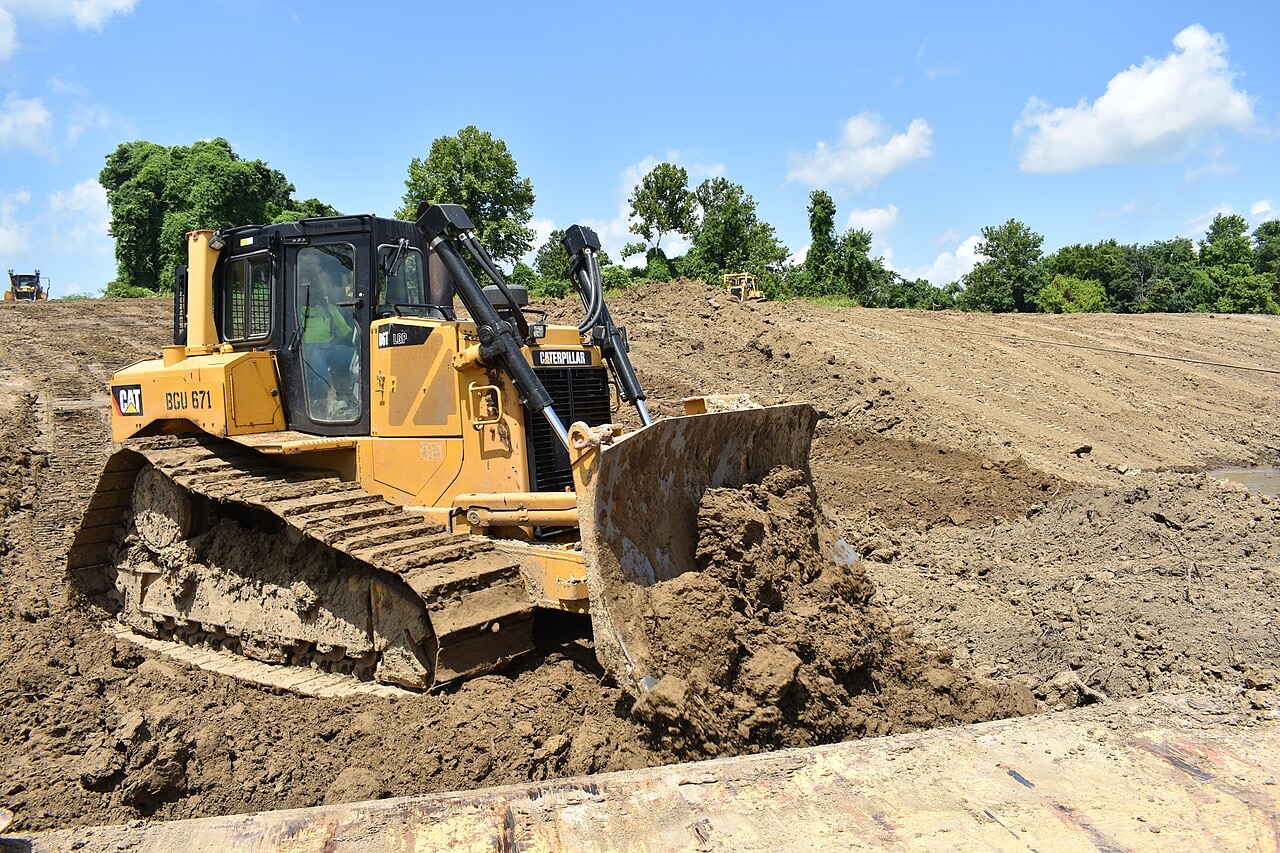
Geography & Land Use · Development TermsA building lot carries its own vocabulary, and Part 1 uses that vocabulary without stopping to explain it. A parcel is a measured piece of land with recorded boundaries. Before machines arrive, a survey crew marks those boundaries with wooden stakes driven into the dirt; the wood is cheap, yet the stakes carry the whole plan, so pulling them up erases where every wall, pipe, and parking space belongs. Clearing means scraping off palmetto, grass, and roots. Grading reshapes whatever is left so that rain runs where the plan wants it to run. Trucked-in sand and crushed rock, called fill, raise the surface above the flood line. A foreman is the worker who keeps that sequence moving on schedule, which explains why lost days upset him more than lost lumber. Damage done on purpose to another person’s property is vandalism. Every one of these words sounds neutral and technical, and yet together they describe a landscape being replaced — the process a town simply calls development.
foremann.Ch.1
The worker who supervises a crew on a job
“A bald foreman met the patrol car at the gate.”
staken.Ch.1
A pointed post driven into the ground to mark a spot
“Someone had yanked every survey stake out of the dirt.”
burrown.Ch.1
A hole or tunnel an animal digs for shelter
“The officer stepped into a shallow burrow beside the stakes.”
vandalismn.Ch.1–3
Damage done to property on purpose
“Reports of vandalism kept the pancake-house crew idle.”
scrubn.Ch.1–3
Dry sandy land covered with low shrubs and stunted trees
“Behind the fence the dry scrub baked in the flat sunlight.”
drainv.Ch.1–3
To carry standing water away from land
“Crews drain wet ground before they pour a foundation.”
trespassv.Ch.2
To enter someone’s land without permission
“The chase made Roy trespass across a fenced building site.”
culpritn.Ch.3
The person responsible for a crime or a piece of mischief
“Delinko had no culprit, no witness, and a growing file.”
relocatev.Ch.1
To move to a new place to live or work
“His father’s job had made the family relocate again.”
peculiaradj.Ch.1
Strange in a way that stands out
“A barefoot runner in the morning heat looked peculiar.”

ⓘ The vocabulary words in this list are selected to help you understand and complete this workbook. Some may not appear verbatim in the original novel.

1The worker who supervises a crew on a job is a ___.Ch.1
2A hole or tunnel an animal digs for shelter is a ___.Ch.1
3To ‘trespass’ is to enter land with the owner’s permission.Ch.2
4Dry sandy land covered with low shrubs and stunted trees is ___.Ch.1–3
5Fill in each blank with the correct word.Ch.1–3
Word choices:burrowculpritscrubdrain- some words will not be used
The officer stepped into a shallow beside the stakes.
Behind the fence the dry baked in the flat sunlight.
6A ‘stake’ is a pointed post driven into the ground to mark a spot.Ch.1
7The person responsible for a crime or a piece of mischief is the ___.Ch.3
8To ‘drain’ land means to carry standing water away from it.Ch.1–3
9Fill in the blanks with the correct words.Ch.1
Word choices:vandalismforemanrelocatepeculiar- some words will not be used
The bald met the patrol car at the gate.
Reports of kept the pancake-house crew idle.
10Strange in a way that stands out is ___.Ch.1
Part 2
Comprehension
Show you understood what happens in Chapters 1–3.
📋Knowledge Bank · How Wet Land Becomes a Parking Lot
Environmental Science · Drainage and FillBuilding on low, wet ground is mostly a water problem, and the fix follows a fixed order. Crews first cut ditches and canals so that drainage pulls standing water off the site and lowers the water held inside the soil. The dried ground can then be scraped clean and packed down. Loads of sand and crushed limestone are spread and rolled until the pad sits above the flood line, and pavement finally seals the surface. Each step changes how rain behaves. On undisturbed land a summer downpour spreads out, sinks in, and slowly feeds the shallow aquifer underneath. On a finished lot the same rain runs off hot asphalt into a pipe and leaves within minutes, carrying oil and grit along with it. The loose sandy layer that animals dug into now lies buried beneath compacted fill, and the low places that held water for months each year are gone. Habitat loss here is not only a count of acres cleared; it is a rebuilt hydrology.
1What is Roy doing when he first notices the running boy?Ch.1
2What makes the running boy look strange to Roy?Ch.1
3What is going to be built on the vacant lot Officer Delinko visits?Ch.1
4What damage does Curly show the officer on his first visit?Ch.1
5Write the numbers 1–5 in the boxes to show the correct order of events in Chapters 1–3. Number 1 = what happens first.Ch.1–3
  • Officer Delinko inspects the yanked survey stakes at the pancake-house lot.
  • Miss Hennepin bans Roy from the bus and demands an apology letter.
  • Delinko finds alligators inside the site’s portable toilets.
  • Dana clamps Roy’s head to the bus window and Roy sees the barefoot runner.
  • On Friday Roy hits back at Dana and bolts off the bus after the boy.
6Curly promises the officer that the animals living in the holes will be protected.Ch.1
7How does Roy’s Friday chase end?Ch.2
8Dana is punished by the school for choking Roy on the bus.Ch.2–3
9What does Officer Delinko find in the portable toilets in Ch.3?Ch.3
10Delinko offers to watch the construction site on extra shifts without being paid.Ch.3
Part 3
Literary Elements
Understanding HOW and WHY Carl Hiaasen tells the story across Chapters 1–3.
🧠Knowledge Bank · Two Stories on One Map
Literary Craft · Alternating StorylinesHiaasen builds Part 1 from two threads that never explain each other. One follows Roy on a school bus and through the lunchroom of a new school; the other follows a foreman and a patrol officer around a fenced lot on the edge of town. The chapters alternate, and the reader, not any character, is the only one holding both halves at once. Because the narration stays close to whoever is on stage, each thread keeps a gap: Roy cannot know why survey stakes keep disappearing, and the officer cannot know that a barefoot boy runs past that fence. Hiaasen also writes crime as comedy. Softened tires and alligators lowered into a portable toilet are deliberate exaggeration, and the deadpan tone treats absurd events as ordinary paperwork. That humor is a delivery system rather than decoration, since it keeps a serious argument about land readable. Meanwhile two unexplained puzzles quietly braid into one growing suspense.
Alternating storylines
Chapters trade between Roy’s bus and school troubles and the sabotage at the fenced lot — two problems the reader suspects are one.
Comic exaggeration
Flattened tires, gators in a toilet, a bald man called Curly — Hiaasen plays crime as farce and still lands a serious point.
Planted questions
A barefoot runner and a field of filled-in holes are promises: the book will explain them, but not yet.
1Part 1 keeps switching between two settings in order to ___.Ch.1–3
2Fill in each blank with the correct literary term.Ch.1–3
Word choices:storylinesexaggerationrhymepreface- some words will not be used
Part 1 braids two separate .
Gators in a portable toilet are comic .
3The alligators in the portable toilets mainly work as ___.Ch.3
4By the end of Ch.3 the narrator has explained who the barefoot boy is.Ch.1–3
5Because Part 1 is written to be funny, the damage at the building site is not meant to be taken seriously.Ch.1–3
6Roy’s homesickness for Montana works early on to ___.Ch.1–3
7Fill in the blank with the correct literary term.Ch.1–3
Word choices:plantedansweredquotedrandom- some words will not be used
The barefoot runner is a question.
8The story stays inside one character’s viewpoint for all of Chapters 1–3.Ch.1–3
9Opening with a bully and a bus, rather than with the vandalism, lets Hiaasen ___.Ch.1–3
10Chapters 1–3 mainly work to ___.Ch.1–3
Part 4
Think Deeper
Four deeper challenges — no single-word recall. Read, weigh the evidence, and reason it out.
💡Knowledge Bank · Whose Land Is a Vacant Lot?
Civics & Ethics · Weighing Land DecisionsA vacant lot raises a question with two honest answers. Legally the ground belongs to whoever holds the title, and a new restaurant promises wages, tax money, and somewhere for families to eat on a Sunday. Ecologically the same acre may already be occupied by animals that cannot be asked to move along. Reasoning well about such a choice means separating three things: what is owned, what can be measured, and what is irreversible. Wages and pancake sales can be counted this year, while the loss of a dry sandy ridge shows up slowly and somewhere else, which is exactly why that loss is easy to discount. A useful habit is to ask who receives the benefit and who absorbs the cost, because they are seldom the same people. Notice too that Part 1 hands the reader no villain, only a foreman with a deadline and an officer with an empty report. Judging a land decision fairly asks less for outrage than for patient evidence.

Think back over these chapters. A boy pinned against a bus window sees another boy running barefoot through somebody’s yard, fast and unbothered, headed nowhere near a school. Across town a bald foreman waves a patrol officer toward a fenced field where every marker post has been yanked out of the sand, and where the officer’s boot keeps finding holes he is told not to worry about. Days later the tires are soft, the stakes are gone again, and something heavy shifts inside a portable toilet. Nobody has been seen, nothing valuable has been taken, and the trouble keeps arriving anyway. Two puzzles, one town — and a reader who can already feel the seam between them.

Original passage written for Garden Heights — not a quotation from the novel.
1Claim: “Hiaasen makes an ordinary building lot feel like a crime scene before anyone commits a crime.” — choose the two details that best prove it.Claim & Evidence
2Land as a building site, or Land as a habitat? Tap each detail to send it left or right.Sort into two
◄ Land as a building siteLand as a habitat ►
3Match each cause to its result. For each cause, pick its result.Cause & Effect
Dana clamps Roy’s head against the bus window
Someone pulls the survey stakes out overnight
Roy bolts off the bus to chase the runner
Alligators turn up in the site’s portable toilets
4Fill both blanks to complete the reasoning.Build the Argument
Hiaasen splits Part 1 between a school bus and a fenced lot because , which shows that .
Part 5
Standardized Test
Reading passage · What Development Removes · Words in Context & Central Ideas · SAT & TOEFL-style practice
🎯 You already have the skills from the sections above — this is just a fun way to meet real SAT & TOEFL-style questions. Read the passage (the highlighted words are tested below), then answer the questions below. Tap an answer to select it, then tap it again to confirm — you can change your choice until you confirm.

Southern Florida can look empty to a newcomer: flat, hot, and covered with grass, palmetto, and low pine. That emptiness is misleading. Much of the peninsula is a shallow wetland system, where water slides across limestone in a sheet only inches deep. Drier ridges rise a few feet above that water, and on their sandy high ground grows scrub — a tough community of stunted oak, saw palmetto, and open patches of bare sand. Wetland and scrub sit side by side, and many Florida animals need both.

When a lot is developed, the first thing changed is water. Crews cut ditches and canals so that drainage carries standing water away, leaving ground firm enough to build on. Next comes fill: truckloads of sand and crushed rock spread across the surface to raise the pad above the flood line. Bulldozers scrape off the palmetto and grass, and the loose sandy layer animals once dug into is buried or hauled away. A parking lot poured over that fill does not merely cover habitat; it removes the shape of the land that made the habitat possible.

The second, quieter loss is fragmentation. A road, a wall, or a canal can split one large area of scrub into small separated pieces. Animals that once crossed open ground to find food or mates will not cross four lanes of traffic. Small fragments also dry at the edges, heat up, and fill with plants carried in by people, so a surviving patch slowly stops working like scrub at all. Biologists therefore measure not only how many acres remain, but how well those acres stay connected.

Original passage written for Garden Heights — not a quotation from the novel.
1What is the main idea of the passage?SAT · Central Ideas
2According to the passage, scrub grows on ___.TOEFL · Factual Information
3What does the passage say crews change first?TOEFL · Factual Information
4In the passage, drainage means ___.SAT · Words in Context
5In the passage, fill is ___.TOEFL · Vocabulary
6In the passage, fragmentation means ___.SAT · Words in Context
7What happens at the edges of small habitat fragments?TOEFL · Factual Information
8The passage suggests that a paved lot is hard to restore because ___.SAT · Inference
9Why do biologists study how acres are connected?SAT · Inference
10Which detail from Part 1 does this passage BEST explain?TOEFL · Factual Information
Part 6 · Optional
Creative Writing
A bonus challenge to practice your English. Take your time and have fun with it.
About This Section

This writing task is optional and is not part of your auto-graded score. The feedback below checks only the basics — length, spelling, and grammar — not whether your ideas are right or wrong. It is meant for classroom discussion and creative practice, so feel free to use your imagination!

Writing Task — Part 1 “Empty, or Just Unread”

Roy first reads flat Florida as empty — nothing to see, nothing worth missing. Write about a place you once thought was boring or empty until you looked at it more closely. What did you notice the second time? 6–10 sentences. End with the detail that changed your mind.

You can start with: “The first time I looked, there was nothing there at all...”
0 / 40 words minimum
🗣 Teach It · Just for Fun (optional)

No right or wrong — close the screen and tell someone nearby what happened in this part. Can’t find anyone? Tell yourself out loud. The moment you teach it, you truly understand it.


Garden Heights

Part 1 Complete!

You finished Chapters 1–3 of Hoot.

Here are your auto-graded results:

-
points out of 100
Your Writing

Your writing was checked automatically for length, spelling, grammar, and whether you included the key parts of the scene. Scroll back to Part 5 anytime to read your feedback and improve your work.

Move on to Part 2 →

Independent study guide by Garden Heights. Not affiliated with or endorsed by Carl Hiaasen. Contains original analysis only; no text from the novel is reproduced. Reference text: This workbook follows Carl Hiaasen’s classic text (the standard Puffin edition sold worldwide). Revised 2023 UK editions change some wording and may not match the vocabulary studied here.