New here? Just sign up with Google — your account includes Matilda, our gift book, forever.
Hoot · Garden Heights
Part 5
for Hoot · Part 5 · Chapters 13–15
8 Parts40 min
What Happens in Part 5
In the den — his father’s room for serious talks — Roy finally explains the running boy, holding back the few details a grown-up could use to find him, and opens a bird guide to the burrowing owl page. Mr. Eberhardt promises the boy no trouble but names the hard fact: the pancake company owns that lot. Roy’s mother calls the hospital lie wrong and still tells him to trust his own best judgment. The next day every door closes. Garrett phones for gossip; Lonna Leep turns Roy off the porch before he can reach Beatrice; Dana swings at him and drives his fist into a fiberglass birdfeeder. At the junkyard, Mullet Fingers reports the company’s form-letter answer to Beatrice’s letter, then leads Roy to a sunken crab boat where he lifts a fish out of the water barehanded — and invites him along on that night’s mission. Roy says no. Then he thinks about the buried burrows, decides that legal and right are two different things, and builds a plan out of Dana’s craving for cigarettes: an address, a chase, a bargain. At the trailer, Curly’s rat traps snap, Curly tackles the intruder, and the escaping boy hands over Roy’s name — and Officer Delinko, watching the lot on his own time, arrests a clacking runner whose borrowed name does not fool him.
What We Will Learn
Section
What you will practice
Vocabulary
Words for standing by or stepping in: bystander, provoke, intimidate, decoy, leverage…
Literary Elements
Comic reversal, braided plots, and a hero who out-thinks a bully
Cross-Curricular
The bystander effect — and what changes when one person speaks
Chapter Summary
Ch.
What happens
13
The Den — Roy finally explains the running boy to his father, holding back the few details a grown-up could use to track him down, and opens a bird guide to the burrowing owl page. His father promises the boy no trouble but names the hard fact: the pancake company owns that lot. Roy’s mother calls the hospital lie wrong and still tells him to trust his own best judgment.
14
Doors That Do Not Open — Garrett phones fishing for gossip; Lonna Leep turns Roy off the porch before he can reach Beatrice; Dana swings at him and drives his fist into a fiberglass birdfeeder. At the junkyard, Mullet Fingers reports the company’s form-letter reply, shows Roy a sunken crab boat where he lifts a fish out barehanded, and invites him along that night — Roy says no.
15
A Plan With Somebody Else’s Name On It — Roy decides that legal and right are two different things, then aims Dana’s craving for cigarettes at the construction trailer. A rat trap snaps in the dark, Curly tackles the intruder, and the escaping boy hands over Roy’s name — then a clacking runner is caught by Officer Delinko, who does not believe the name he is given.
Part 1
Vocabulary
Study 10 key words from Chapters 13–15, then answer each question.
📚Knowledge Bank · Words for Standing By
Psychology · Bystander LanguageResearchers who study hallway and playground cruelty describe four roles, and the labels matter. The person doing harm is the aggressor, the person harmed is the target, anyone watching is a bystander, and a bystander who decides to act becomes an upstander, a word invented for exactly that choice. Two verbs explain how the harm travels. To provoke is to bait somebody into a reaction, which conveniently shifts the blame onto whoever reacts; to intimidate is to let fear finish the job, so a threat never has to be repeated aloud. A fifth term, reinforcer, names the onlooker who laughs, films, or drifts closer, handing the aggressor an audience without ever throwing a punch. Naming these roles is not vocabulary for its own sake. Once students can name what they are doing while they watch, standing silent stops feeling neutral and starts feeling like a decision, which is why anti-bullying programs teach the words before they teach the strategies.
bystandern.Ch.13–15
A person who is present while something happens but does not act
“Every bystander on the bus studied the floor instead.”
provokev.Ch.13–15
To stir someone into anger or action on purpose
“Roy knew exactly which gesture would provoke Dana.”
intimidatev.Ch.13–15
To frighten someone into obeying or staying quiet
“A bully needs a crowd in order to intimidate anyone.”
retaliatev.Ch.13–15
To strike back after being hurt or insulted
“Dana swung to retaliate and hit a birdfeeder instead.”
accomplicen.Ch.13–15
A person who helps another carry out a wrong
“Roy refused to be an accomplice in the night raid.”
decoyn.Ch.13–15
Something used to pull attention away from a real target
“One loud decoy can empty a guarded lot for a while.”
leveragen.Ch.13–15
An advantage that gives a person power in a bargain
“A secret about cigarettes became Roy’s leverage.”
sanctuaryn.Ch.13–15
A protected place where something is safe
“The sunken crab boat served as a private sanctuary.”
consciencen.Ch.13–15
The inner sense of right and wrong
“His conscience kept the buried burrows in mind all evening.”
schemen.Ch.13–15
A clever, secret plan
“The whole scheme depended on one bully’s habit.”
ⓘ The vocabulary words in this list are selected to help you understand and complete this workbook. Some may not appear verbatim in the original novel.
1A person who is present while something happens but does not act is a ___.Ch.13–15
2To ‘provoke’ someone means to calm that person down.Ch.13–15
3To frighten someone into obeying or staying quiet is to ___.Ch.13–15
4To strike back after being hurt or insulted is to ___.Ch.13–15
5Fill in each blank with the correct word.Ch.13–15
Word choices:decoyleveragesanctuaryaccomplice- some words will not be used
One loud can empty a guarded lot for a while.
A secret about cigarettes became Roy’s .
6Having ‘leverage’ in a bargain means being the physically stronger person.Ch.13–15
7A ‘sanctuary’ is a protected place where something is safe.Ch.13–15
8The inner sense of right and wrong is your ___.Ch.13–15
9Fill in the blanks with the correct words.Ch.13–15
Word choices:accomplicebystanderconsciencescheme- some words will not be used
Roy refused to be an in the night raid.
The whole depended on one bully’s habit.
10A clever, secret plan is a ___.Ch.13–15
Part 2
Comprehension
Show you understood what happens in Chapters 13–15.
📋Knowledge Bank · Why Onlookers Freeze
Social Science · Diffusion of ResponsibilityPsychologists have measured what happens when trouble unfolds in front of a crowd. In laboratory experiments from the 1960s, and in school studies ever since, help arrives fastest when one person witnesses an emergency and slowest when many do. The pattern has a name, the bystander effect, and it runs partly on diffusion of responsibility: the quiet arithmetic in which each watcher assumes somebody else will step in first. Two other brakes work at the same time. Onlookers scan one another for cues, so a hallway of calm faces signals that nothing serious is happening, and nobody wants to be the single person who overreacts — a trap researchers call pluralistic ignorance. The fear of becoming the next target supplies a third brake. Understanding the mechanism explains the repair: cruelty is a performance that needs an audience, and studies of recorded school incidents find that most stop within seconds once one classmate objects, changes the subject, or simply walks the target away. A crowd is not powerless, only unassigned.
1Where does Roy finally explain the whole story of the running boy?Ch.13
2What does Roy bring with him to show his father?Ch.13
3Roy tells his father every detail, including where the running boy is hiding.Ch.13
4What hard fact does Roy’s father point out about the lot?Ch.13
5Write the numbers 1–5 in the boxes to show the correct order of events in Chapters 13–15. Number 1 = what happens first.Ch.13–15
Dana swings at Roy and strikes a fiberglass birdfeeder.
Officer Delinko catches a clacking runner near the trailer.
Mullet Fingers lifts a fish out barehanded at the sunken boat.
Roy explains the running boy to his father in the den.
Lonna Leep turns Roy away from the Leep front porch.
6Dana injures his own hand when he tries to hit Roy outside his house.Ch.14
7What reply did the pancake company send to Beatrice’s letter about the owls?Ch.14
8How does Roy get Dana to the construction trailer?Ch.15
9Roy agrees to come along on the night mission when Mullet Fingers invites him.Ch.14
10What conclusion finally pushes Roy to act in Ch.15?Ch.15
Part 3
Literary Elements
Understanding HOW and WHY Carl Hiaasen tells the story across Chapters 13–15.
🧠Knowledge Bank · Outsmarting the Bully on the Page
Literary Craft · Comic ReversalNovelists rarely defeat a bully with a bigger fist, because a won fistfight only proves that force decides things. Hiaasen prefers reversal, a device in which the aggressor’s own momentum becomes the punishment. Dana throws a punch and the punch finds a plastic birdfeeder; Dana chases a promise of cigarettes and the promise walks him onto a guarded lot. Each time the reader laughs at the result and also absorbs an argument: brute strength is clumsy, and thinking travels farther. The comedy carries a second job. Humor deflates a threat that has genuinely frightened Roy, and the reader, for a dozen chapters, so a boy who once seemed unbeatable shrinks to ordinary size. Notice too that three storylines stay braided across these chapters, the narration cutting between family talk, junkyard friendship, and a nighttime stakeout until one choice knots them together — a structure called convergence. Shape, not speech, delivers this novel’s verdict.
Comic reversal
Dana’s punch lands on a birdfeeder, and later his own appetite marches him into a trap — the bully’s force keeps rebounding onto the bully.
Braided plots
Owls, bully, and stakeout run on three tracks here — Hiaasen keeps twisting them together until one quiet decision touches all three.
Dramatic irony
Readers know who sent the intruder and why; Curly is certain he has finally caught his vandal — and the gap does the comedy.
1Dana’s punch landing on a birdfeeder is an example of ___.Ch.14
2Fill in each blank with the correct literary term.Ch.13–15
Word choices:reversalconvergencerhymeepilogue- some words will not be used
Dana’s swollen fist is a comic .
Three braided storylines move toward .
3Hiaasen cuts between the den, the junkyard, and the trailer mainly to ___.Ch.13–15
4The humor in these chapters makes Dana feel less frightening than he did before.Ch.14–15
5Readers know Roy sent the intruder while Curly does not. That gap is ___.Ch.15
6In craft terms, what does the bird guide in the den work as?Ch.13
7The hidden boat is described mainly to slow the plot down for a chapter.Ch.14
8Fill in each blank with the correct literary term.Ch.13–15
Word choices:ironysymbolsequelchorus- some words will not be used
The borrowed name creates dramatic .
The buried burrow works as a of what is at stake.
9Roy’s refusal to join the night raid removes him from the story for good.Ch.14–15
10Chapters 13–15 mainly work to ___.Ch.13–15
Part 4
Think Deeper
Four deeper challenges — no single-word recall. Read, weigh the evidence, and reason it out.
💡Knowledge Bank · When a Trick Replaces a Punch
Ethics · Means and EndsRoy’s plan avoids violence, which feels like progress, and it also arranges for another child to be arrested. Weighing that fairly means separating three questions ethicists keep apart. First the intention: Roy wants to shield a friend and a row of burrows, not to enjoy Dana’s ruin. Second the means: he uses deception and somebody else’s craving as tools, though Dana still chooses every step himself, including the hand on the doorknob. Third the consequences: a real charge lands on a boy who was already failing, while the person Roy is protecting stays hidden. One useful test asks whether the plan could be explained out loud to the same parents who told Roy to use his best judgment; the honest answer is probably no, and that hesitation counts as evidence. Research on stopping cruelty points elsewhere anyway — telling an adult, refusing to be an audience, standing beside the target — because a clever trap ends one night while an ally changes a school. Ethics weighs not only what a plan accomplishes but what it trains.
Think back over these chapters. A boy sits in his father’s den with a bird guide open on his knees, arguing his case with a picture instead of a shout. The next afternoon every door closes: a mother turns him off a porch, a bully swings and hits a plastic birdfeeder, and a barefoot friend lifts a silver fish out of the shallows beside a sunken boat and lets it slip away again. That night a rat trap snaps in the weeds, a flashlight swings across a fence line, and a running boy is caught giving somebody else’s name.
Original passage written for Garden Heights — not a quotation from the novel.
1Claim: “Chapters 13–15 turn Roy from a boy who watches into a boy who acts.” — choose the two details that best prove it.Claim & Evidence
2Standing by (watching), or Stepping in (acting)? Tap each detail to send it left or right.Sort into two
◄ Standing by (watching)Stepping in (acting) ►
3Match each cause to its result. For each cause, pick its result.Cause & Effect
Roy opens a bird guide in the den→
Lonna Leep blocks the front doorway→
Roy ducks under a wild punch→
Roy names a hiding place for cigarettes→
4Fill both blanks to complete the reasoning.Build the Argument
Hiaasen has Roy beat Dana with a WHISPERED ADDRESS rather than a fist because , which shows that .
Part 5
Standardized Test
Reading passage · The Crowd That Watches · Central Ideas & Words in Context · SAT & TOEFL-style practice
🎯 You already have the skills from the sections above — this is just a fun way to meet real SAT & TOEFL-style questions. Read the passage (the highlighted words are tested below), then answer the questions below. Tap an answer to select it, then tap it again to confirm — you can change your choice until you confirm.
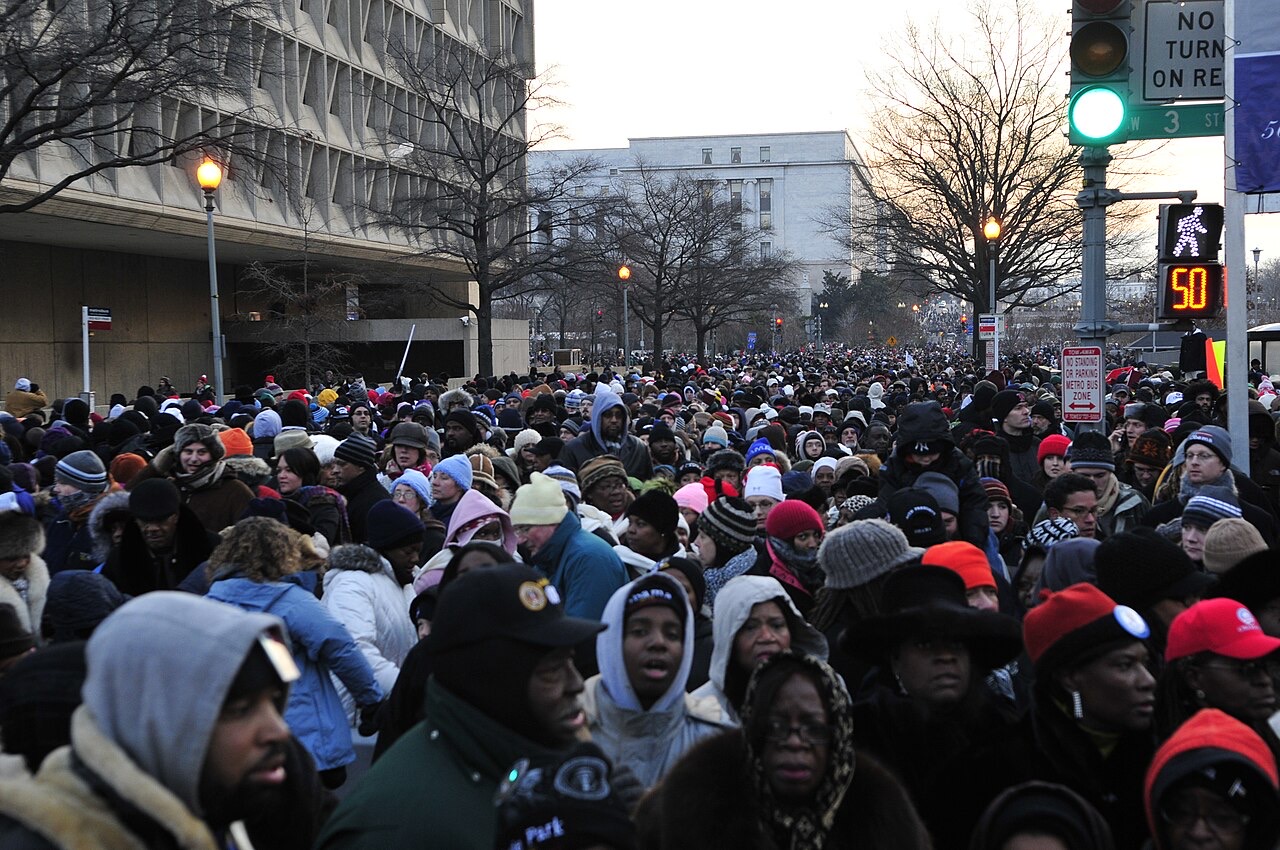
In 1968 two psychologists ran a now-famous study in which students filling out forms heard someone in the next room seem to suffer a seizure. Nearly every student who believed the emergency was theirs alone went for help, while fewer than half of those who thought four other people could also hear it did anything at all. The researchers named the pattern diffusion of responsibility: when a duty is shared by many, each person feels only a fraction of it. Later work carried the question out of the laboratory and into school hallways, where the same arithmetic shapes who steps in.
Two further brakes hold a crowd still. Onlookers read one another for cues, so a ring of calm faces can make even an alarming scene look ambiguous, and nobody wants to be the one person who overreacts in public. A third brake is plain self-interest: whoever speaks up may become the next target, and everybody standing nearby knows it. Silence, then, is rarely approval; far more often it is a group of individuals each waiting for a signal that never comes.
That mechanism also points toward the repair. Because bullying is a performance staged for spectators, taking away the audience takes away most of the reward, and video studies of playground incidents find that a majority end within roughly ten seconds once a single peer objects, changes the subject, or leads the target away. Training programs therefore teach small scripts rather than heroics, since one witness who chooses to intervene gives everyone else permission to move. The bystander effect is not a verdict on human character; it is a problem of assignment.
Original passage written for Garden Heights — not a quotation from the novel.
1What is the main idea of the passage?SAT · Central Ideas
2In the 1968 study, which students were most likely to go for help?TOEFL · Factual Information
3In the passage, diffusion names the way ___.SAT · Words in Context
4According to the passage, a ring of calm faces makes an alarming scene ___.TOEFL · Factual Information
5In the passage, ambiguous means ___.TOEFL · Vocabulary
6What third brake on acting does the passage name?TOEFL · Factual Information
7In the passage, intervene means ___.SAT · Words in Context
8What do video studies of playground incidents find?TOEFL · Factual Information
9Calling the bystander effect ‘a problem of assignment’ suggests that ___.SAT · Inference
10Which moment in Chapters 13–15 does this passage BEST explain?SAT · Inference
Part 6 · Optional
Creative Writing
A bonus challenge to practice your English. Take your time and have fun with it.
About This Section
This writing task is optional and is not part of your auto-graded score. The feedback below checks only the basics — length, spelling, and grammar — not whether your ideas are right or wrong. It is meant for classroom discussion and creative practice, so feel free to use your imagination!
Writing Task — Part 5 “The Room Where Nobody Moved”
These chapters are full of people deciding whether to act: a father listening in a den, a crowd watching a bully, a boy who finally does something about it. Write about a time you saw something wrong and had to decide whether to speak. What made it hard, and what did you do? 6–10 sentences. End with what you would do if that same moment came around again.
You can start with: “I still remember how quiet the room went, and I remember what I did about it...”
0 / 40 words minimum
π£ Teach It · Just for Fun (optional)
No right or wrong — close the screen and tell someone nearby what happened in this part. Can’t find anyone? Tell yourself out loud. The moment you teach it, you truly understand it.

Part 5 Complete!
You finished Chapters 13–15 of Hoot.
Here are your auto-graded results:
-
points out of 100
Your Writing
Your writing was checked automatically for length, spelling, grammar, and whether you included the key parts of the scene. Scroll back to Part 5 anytime to read your feedback and improve your work.
Independent study guide by Garden Heights. Not affiliated with or endorsed by Carl Hiaasen. Contains original analysis only; no text from the novel is reproduced. Reference text: This workbook follows Carl Hiaasen’s classic text (the standard Puffin edition sold worldwide). Revised 2023 UK editions change some wording and may not match the vocabulary studied here.