
Part 1
Little James Henry Trotter once lived happily by the sea — until, in a few dreadful seconds, both his parents were eaten by an escaped rhinoceros. Orphaned at four, James is sent to live with his two horrible aunts, Aunt Sponge and Aunt Spiker, on a bleak hilltop. They are cruel and vain: they force James into back-breaking labor, lock him away, beat him, and never once let him leave the garden or make a friend. For three miserable years the only living thing he has for company is an ancient peach tree that has never grown a single peach. Then, weeping in the bushes, James meets a mysterious little old man who presses on him a bag of tiny, glowing green crystals brimming with magic. But as James races back to the house, he trips on the tree’s roots; the bag bursts, and the precious crystals sink away into the soil beneath the old peach tree.
| Section | What you will practice |
|---|---|
| Vocabulary | Words of hardship and hope: tragic, miserable, cruel, ancient, barren, magic… |
| Literary Elements | Characterization, simile, and mood |
| Cross-Curricular | How a peach grows from blossom to fruit, and what makes cruelty so harmful |
| Ch. | What happens |
|---|---|
| 1 | A Terrible Beginning — James’s parents are eaten by a rhinoceros; he is sent to his aunts. |
| 2–3 | Life with the Aunts — cruel Aunt Sponge and Aunt Spiker; the barren old peach tree. |
| 4 | The Old Man — a stranger gives James a bag of glowing green magic crystals and instructions. |
| 5 | The Spill — James trips; the crystals burst free and sink into the soil under the peach tree. |
- James trips and the crystals sink into the soil by the peach tree.
- James’s parents are eaten by an escaped rhinoceros.
- Beneath the old tree, the magic begins to stir underground.
- A mysterious old man gives James a bag of magic crystals.
- James is sent to live with his cruel aunts on the hill.
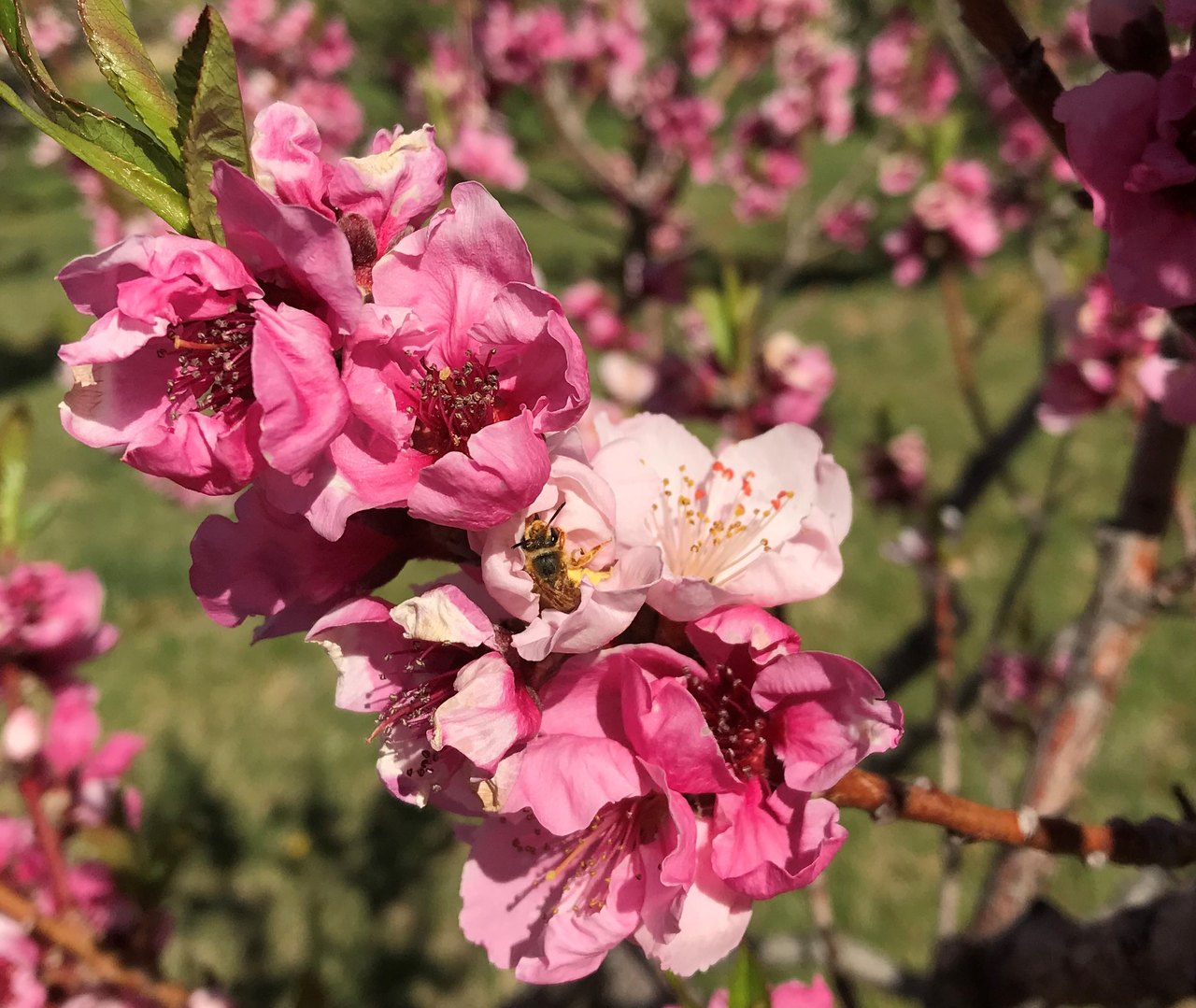
Every peach begins as a flower. In spring, a peach tree is covered in pink blossoms, and each one stays open for only a few days. Inside every flower sits a sticky center that must be visited before any fruit can begin to grow. Insects such as bees crawl from flower to flower, carrying a yellow dust called pollen; when they pollinate a blossom, its center can begin to swell into a tiny green fruit. The petals fall away, and where each flower stood, a young peach slowly forms. Through the warm months the fruit grows larger, drinking water and food carried up from the roots deep in the soil. Growing takes patience, for a peach may sit on its branch for three or four months before it is ready. As it fills with sugar, the green skin turns golden and red and the flesh softens: the peach begins to ripen. Only then is it sweet enough to eat. A tree that gets no water, or is never pollinated, may stay barren all year — which is why the ancient tree in James's garden had gone so long without a single peach.
This writing task is optional and is not part of your auto-graded score. The feedback below checks only the basics — length, spelling, and grammar — not whether your ideas are right or wrong. It is meant for classroom discussion and creative practice, so feel free to use your imagination!
Writing Task — Part 1 “A Glimmer of Hope”
At his lowest moment, James is handed a bag of magic crystals full of promise. Write about a time something gave you hope when you were feeling down. What was it, and how did it change how you felt? Write at least 40 words.
No right or wrong — close the screen and tell someone nearby what happened in this part. Can’t find anyone? Tell yourself out loud. The moment you teach it, you truly understand it.


Part 1 Complete!
You finished Chapters 1–5 of James and the Giant Peach.
Here are your auto-graded results:
The best last step is to teach it. In your own words, explain what happened — retell a favorite scene, teach a character’s big choice, or sum up the main idea for a parent, friend, or classmate. When you can teach it clearly, you truly own it.
Independent study guide by Garden Heights. Not affiliated with or endorsed by Roald Dahl. Contains original analysis only; no text from the novel is reproduced. Reference text: This workbook follows Roald Dahl’s classic text (the standard Puffin edition sold worldwide). Revised 2023 UK editions change some wording and may not match the vocabulary studied here.