New here? Just sign up with Google — your account includes Matilda, our gift book, forever.
James and the Giant Peach · Garden Heights
Part 2
for James and the Giant Peach · Part 2 · Chapters 6–10
8 Parts40 min
What Happens in Part 2
The magic works. On the barren old tree a single peach begins to swell — and keeps growing, past the size of a melon, a barrel, a cart, until it is as huge as a house. Aunt Sponge and Aunt Spiker stop quarrelling long enough to marvel at it — then turn greedy, charging the crowds an admission fee to gawk at the giant peach. That night they force James out to clean up the litter, forbidding him to touch the fruit. Alone in the moonlight, James notices a tunnel bored into the peach’s side. He crawls in, nibbling the sweet walls, and peers through a little door in the great stone at its center. Inside sits a room full of enormous, human-sized creatures — a Grasshopper, a Centipede, an Earthworm, a Ladybird, a Spider, and more — who greet him warmly: they have been waiting for him, and now he is one of them.
What We Will Learn
Section
What you will practice
Vocabulary
Words of growth and meeting: swell, marvel, greedy, admission, tunnel, creature…
Literary Elements
Personification, hyperbole, and imagery
Cross-Curricular
What makes an insect an insect, and why turning wonders into money reveals character
Chapter Summary
Ch.
What happens
6–7
The Peach Grows — a peach swells on the old tree until it is as big as a house.
8
Admission — the greedy aunts charge crowds to see the giant peach.
9
The Tunnel — at night James finds a hole and crawls inside the peach.
10
The Creatures — James meets the giant insects, who welcome him as one of their own.
Part 1
Vocabulary
Study 10 key words from Chapters 6–10, then answer each question.
🧠Knowledge Bank · Built to Leap
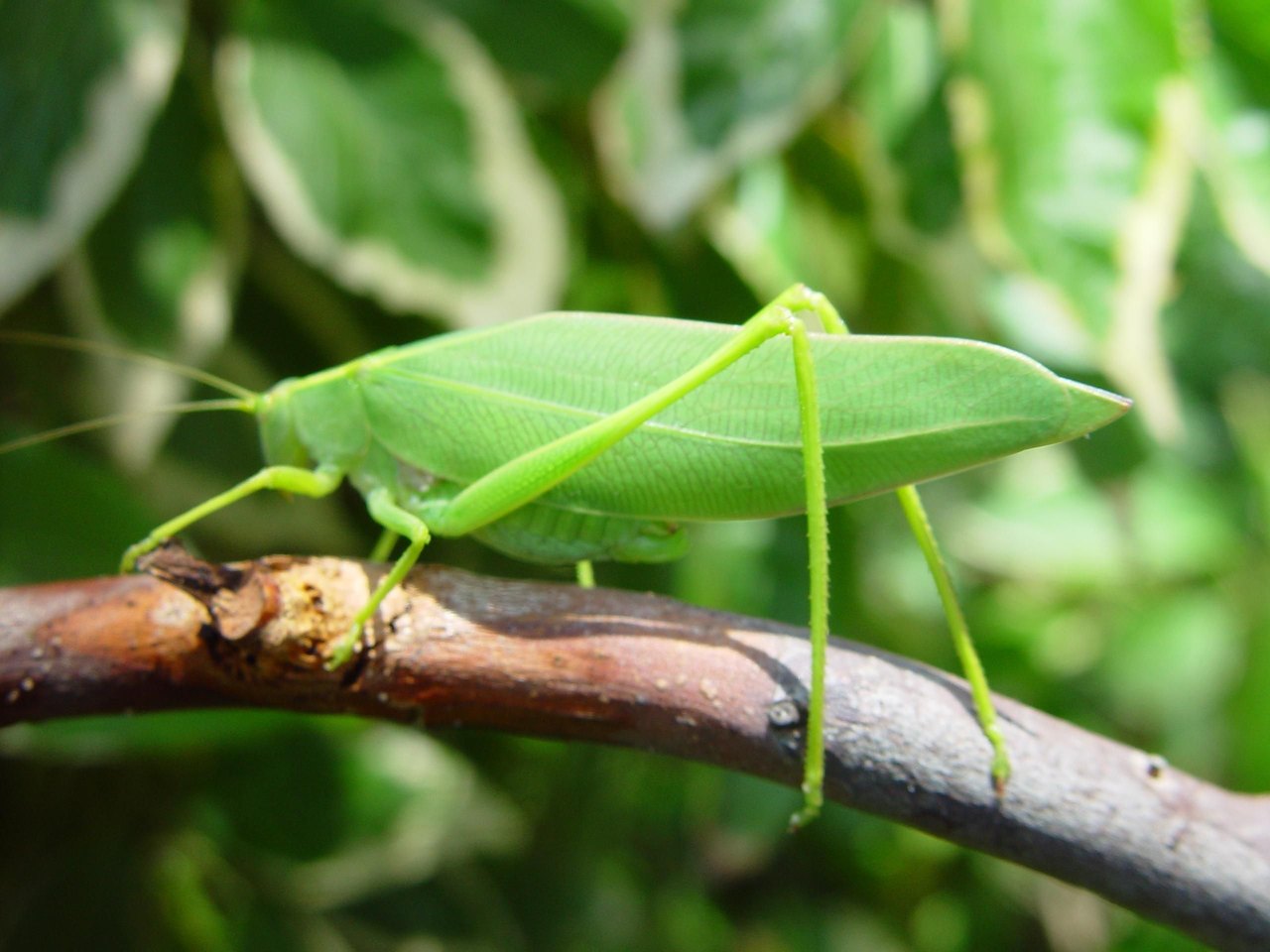
Entomology · Chapters 6–10The Old-Green-Grasshopper is drawn straight from a real garden athlete. A grasshopper’s back legs are enormous compared with its body, packed with coiled muscle that works like a stretched spring; when it lets go, the insect can launch itself twenty times its own length, sailing over grass that would tower above a person of the same size. Grasshoppers are plant-eaters, using strong jaws to chew leaves and stems, which is why farmers watch them warily. And their music is stranger than it sounds: many grasshoppers make their chirping by rubbing a rough patch on a leg against a hardened wing, a trick called stridulation. So when Dahl gives his Grasshopper a fine singing voice, he is only exaggerating something true. The gentle giant James befriends is, in real life, a leaping, leaf-munching, leg-fiddling marvel of the summer meadow.
swellv.Ch.6
To grow bigger
“The peach began to swell on the tree.”
marvelv.Ch.7
To be filled with wonder
“The aunts marvelled at its size.”
greedyadj.Ch.8
Wanting far more than one needs
“The greedy aunts smelled money.”
admissionn.Ch.8
The price paid to enter
“They charged an admission fee.”
tunneln.Ch.9
A passage bored through something
“A tunnel led into the peach.”
peerv.Ch.9
To look closely
“James peered through the little door.”
terrifiedadj.Ch.10
Very frightened
“At first James was terrified.”
creaturen.Ch.10
A living being
“Giant creatures sat inside.”
enormousadj.Ch.10
Very large; huge
“Each insect was enormous.”
companionn.Ch.10
A friend or comrade
“They became his companions.”
1To ‘swell’ is to —Ch.6
2To ‘marvel’ at something is to —Ch.7
3Fill in each blank with the correct word.Ch.8
Word choices:greedyadmissionmarveltunnel- some words will not be used
The aunts wanted to make money from the peach.
They charged an fee to everyone who came.
4An ‘admission’ is —Ch.8
5To be ‘terrified’ is to be very frightened.Ch.10
6To ‘peer’ is to —Ch.9
7Fill in each blank with the correct word.Chs. 9–10
Word choices:tunnelcreaturecompanionpeer- some words will not be used
James crawled along a juicy into the peach.
Each giant turned to welcome him.
8A ‘companion’ is —Ch.10
9Something ‘enormous’ is —Ch.10
10A ‘creature’ is a lifeless lump of stone.Ch.10
Part 2
Comprehension
Show you understood what happens in Chapters 6–10.
🧠Knowledge Bank · Reading Between the Lines
Reading Skill · Chapters 6–10Sometimes a book tells you exactly what happens; more often it leaves a gap and trusts you to fill it. Making that leap is called an inference — a smart guess built from clues in the text plus what you already know about the world. When James squeezes through the tunnel in the peach and finds a room full of giant creatures who greet him warmly, Dahl never stops to write that James feels safe at last. He does not have to. From the creatures’ kind words and James’s eager questions, you infer that this frightened, lonely boy has finally found company that truly wants him. Good readers are like detectives: they notice small details and combine them into a bigger meaning the author only hinted at. Practice asking two questions as you read — what does the text actually say, and what does that make me realize?
1What begins to happen to the old peach tree?Ch.6
2How large does the peach finally grow?Ch.7
3Fill in each blank with the correct word.Ch.8
Word choices:admissiontouchfortunecrowds- some words will not be used
The aunts charged an fee to see the peach.
They forbade James to the giant fruit.
4How do Aunt Sponge and Aunt Spiker make money from the peach?Ch.8
5The aunts let James play near the peach whenever he likes.Ch.8
6How does James get inside the peach?Ch.9
7What does James find at the center of the peach?Ch.10
8Write the numbers 1–5 in the boxes to show the correct order of events in Part 2. Number 1 = what happens first.Chs. 6–10
James meets the giant insects inside the stone.
A peach on the old tree swells up bigger and bigger.
The aunts charge crowds an admission fee to see the peach.
At night James crawls into a tunnel in the peach.
The peach grows as enormous as a whole house.
9How do the giant insects treat James?Ch.10
10The giant insects want to catch and eat James.Ch.10
Part 3
Literary Elements
Understanding HOW and WHY Roald Dahl tells the story across Chapters 6–10.
🧠Knowledge Bank · When Insects Speak
Author’s Craft · Chapters 6–10 The moment a Centipede complains about his boots or a Ladybird frets politely, Dahl is using personification — giving human thoughts, voices, and feelings to creatures that cannot really talk. By letting the insectsspeak, Dahl turns animals that many children fear or squash into distinct characters , each with a personality: the grumbling Centipede, the gentle Grasshopper, the worried Earthworm. Personification does more than amuse; it invites us to imagine the inner life of small things, so we start to care about a bug the way we would about a person. Notice that Dahl keeps a clever balance — his creatures speak like people yet still eat, move, and worry in ways true to their kind. That blend of the real and the imagined is what makes them feel alive, and it is a tool any writer can use to breathe spirit into the voiceless .
📚 Literary Devices in This Part · definitions & examples
Personification gives human qualities to animals or things (the talking insects). Hyperbole is wild exaggeration for effect (a peach the size of a house). Imagery is sensory description that paints a picture (the juicy tunnel walls).
1Giving the insects human speech and feelings is an example of —Ch.10
2Hyperbole is wild exaggeration used for effect.Ch.7
3Fill in each blank with the correct word.Chs. 7–10
Word choices:personificationhyperbolesettingrhyme- some words will not be used
A peach that grows as big as a house is bold .
Insects that talk, argue, and feel show .
4Language that helps us see, smell, and taste the juicy tunnel is called —Ch.9
5Because the insects talk like people, they are examples of personification.Ch.10
6Fill in the blank with the correct word.Ch.9
Word choices:imageryhyperboleindex- some words will not be used
Describing the sweet, dripping walls of the tunnel is rich .
7Why does Dahl make the peach grow to such an impossible size?Ch.7
8Making the Grasshopper and Centipede speak and quarrel like people mainly makes them feel —Ch.10
9Fill in the blank with the correct word.Ch.10
Word choices:personificationrhymeplot- some words will not be used
Giving an animal human speech and feelings is called .
10The giant, sweet-smelling peach and its glowing room mainly create a feeling of —Chs. 9–10
Part 4
Think Deeper
Four deeper challenges — no single-word recall. Read, weigh the evidence, and reason it through.
🧠Knowledge Bank · A Family You Choose
Critical Thinking · Chapters 6–10 For his whole sad life so far, James has been surrounded by people who share his house but not his heart. Inside the peach, everything changes — not because these strange creatures are related to him, but because they choose to welcome him. This is the idea of found family : the truth that belonging is built from kindness and trust, not only from blood. For the first time, James is not a servant or a nuisance but a friend, and you can feel him begin to unfold like a flower in the sun. Dahl gently suggests that a family is less a fact you are born into than a bond you slowly grow. As the peach breaks loose and rolls toward the sea, James is no longer traveling alone — he is surrounded, at last, by belonging .
1Claim: “The aunts see the peach only as a way to make money.” — choose the two details that best prove it.Claim & Evidence
2The aunts’ world, or James’s new world? Tap each detail to send it left or right.Sort into two
◄ The auntsJames’s new world ►
3Match each cause to its result. For each cause, pick its result.Cause & Effect
The magic crystals reach the tree→
The giant peach draws big crowds→
James crawls up the tunnel→
James looks terrified of the insects→
4Fill both blanks to complete the reasoning.Build the Argument
Crawling into the peach turns out to be the best thing James ever does because , which shows that .
Part 5
Standardized Test
What Makes an Insect · SAT & TOEFL-style practice
🎯 You already have the skills from the sections above — this is just a fun way to meet real SAT & TOEFL-style questions. Read the passage (the highlighted words are tested below), then answer the questions below. Tap an answer to select it, then tap it again to confirm — you can change your choice until you confirm.
The creatures in the peach — the grasshopper, the centipede, the ladybird — are the sort of small animals we loosely call ‘bugs.’ True insects share a clear plan. Scientists have named more kinds of insects than of any other animal on Earth, and yet nearly every one of them is built to the same simple design. Every insect’s body is divided into three parts, or segments: a head, a middle, and a back section. It has six legs, no more and no fewer, and usually a pair of feelers called antennae that help it touch, smell, and taste the world around it.
An insect also wears its skeleton on the outside. Instead of bones within, it has a hard shell called an exoskeleton that guards its soft insides like a suit of armor. Because that shell cannot stretch, a growing insect must split it open and climb out wearing a new, larger one underneath. This shell is one reason real insects stay small: a giant insect’s shell would be far too heavy to carry. That, of course, is exactly the impossible wonder Dahl gives us — insects grown as large as a boy.
Original passage written for Garden Heights — not a quotation from the novel.
1According to the passage, how many body segments does a true insect have?TOEFL · Factual Information
2In the passage, “segments” are —SAT · Words in Context
3How many legs does a true insect have?SAT · Detail
4In the passage, “antennae” are feelers that help an insect —TOEFL · Vocabulary
5Where does an insect carry its skeleton?TOEFL · Factual Information
6In the passage, an “exoskeleton” is —SAT · Words in Context
7According to the passage, why do real insects stay small?SAT · Detail
8What is the passage mainly about?SAT · Central Ideas
9How does the passage connect to Part 2?SAT · Text Connections
10Prose Summary (TOEFL).The passage explains the body plan that makes an animal a true insect. This TOEFL task lists six sentences; choose the THREE that best capture the passage’s main ideas. The other three do not belong — they state minor details or ideas the passage does not present.TOEFL · Prose Summary
Part 6 · Optional
Creative Writing
A bonus challenge to practice your English. Take your time and have fun with it.
About This Section
This writing task is optional and is not part of your auto-graded score. The feedback below checks only the basics — length, spelling, and grammar — not whether your ideas are right or wrong. It is meant for classroom discussion and creative practice, so feel free to use your imagination!
Writing Task — Part 2 “A New Friend”
James crawls into the peach and finds friends who welcome him as one of their own. Write about meeting a new friend, or a time you felt welcomed somewhere new. How did it feel to belong? Write at least 40 words.
You can start with: “I will never forget the first time I…”
0 / 40 words minimum
🗣 Teach It · Just for Fun (optional)
No right or wrong — close the screen and tell someone nearby what happened in this part. Can’t find anyone? Tell yourself out loud. The moment you teach it, you truly understand it.

Part 2 Complete!
You finished Chapters 6–10 of James and the Giant Peach.
Here are your auto-graded results:
-
points out of 100
Your Writing
Your writing was checked automatically for length, spelling, grammar, and whether you included the key parts of the scene. Scroll back to Part 5 anytime to read your feedback and improve your work.
Independent study guide by Garden Heights. Not affiliated with or endorsed by Roald Dahl. Contains original analysis only; no text from the novel is reproduced. Reference text: This workbook follows Roald Dahl’s classic text (the standard Puffin edition sold worldwide). Revised 2023 UK editions change some wording and may not match the vocabulary studied here.