New here? Just sign up with Google — your account includes Matilda, our gift book, forever.
James and the Giant Peach · Garden Heights
Part 3
for James and the Giant Peach · Part 3 · Chapters 11–16
8 Parts40 min
What Happens in Part 3
The creatures welcome James for good. The Centipede explains that the same little green crystals James spilled had wriggled past them in the garden — that magic is what made them all grow giant. Kind Miss Spider spins soft silk hammocks so everyone can sleep, and James tugs off the Centipede’s forty-two boots. Then the Ladybird announces they are about to depart the hillside forever: up top, the Centipede gnaws clean through the stem, and the great peach breaks loose. It rolls, gathering terrible momentum, and thunders down the hill — straight over Aunt Sponge and Aunt Spiker, flattening them. On it hurtles, across fields, roads, and towns, until it reaches the white cliffs and shoots off the edge. Down it drops into the sea; it submerges for a moment, then bobs back to the surface and floats — a peach-raft carrying James and his friends out onto the wide ocean.
What We Will Learn
Section
What you will practice
Vocabulary
Words of the escape: depart, gnaw, momentum, hurtle, flatten, submerge…
Literary Elements
Poetic justice, onomatopoeia, and climax
Cross-Curricular
Why the peach rolls and floats, and the wonder of spider silk
Chapter Summary
Ch.
What happens
11–13
New Friends — the insects explain the magic; Miss Spider spins silk beds.
14
Break Free — the Centipede gnaws the stem and the peach rolls loose.
15
The Roll — the peach flattens the aunts and hurtles across the land.
16
Into the Sea — the peach drops off the cliff, sinks, then floats.
Part 1
Vocabulary
Study 10 key words from Chapters 11–16, then answer each question.
🧠Knowledge Bank · The Many-Legged Hunter
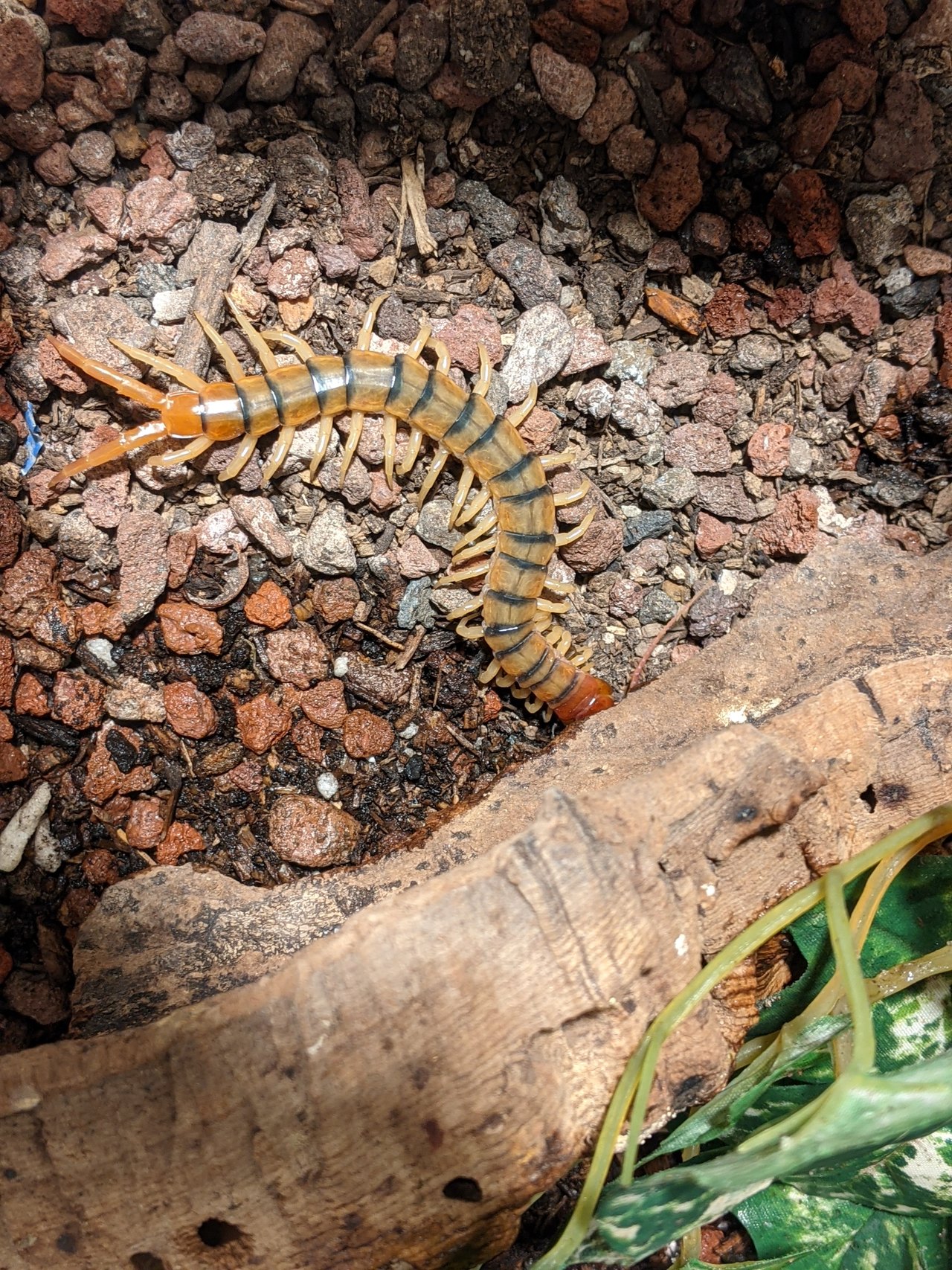
Entomology · Chapters 11–16The Centipede boasts endlessly about his legs, and a real centipede would understand the pride. The name means hundred feet, though most kinds carry far fewer — and never a tidy hundred, since a centipede always has an odd number of leg pairs. Unlike the leaf-eating Grasshopper, a centipede is a swift night hunter, racing after tiny prey on legs that ripple in waves so smooth it seems to pour across the ground. Its front pair has been reshaped over ages into curved claws that deliver a venom to stun each catch. Gardeners often welcome them, because a centipede eats the pests that spoil roots and leaves. So when Dahl’s Centipede gnaws through the peach’s stem to set it free, he is doing something a real centipede could never manage — yet the choice fits, because in life this creature is fast, fearless, and armed with a hunter’s hungry jaws.
departv.Ch.14
To leave; to go away
“They were about to depart forever.”
gnawv.Ch.14
To bite and chew away
“The Centipede gnawed through the stem.”
momentumn.Ch.14
The force of a moving object
“The rolling peach gained momentum.”
hurtlev.Ch.15
To move very fast
“The peach hurtled down the hill.”
flattenv.Ch.15
To crush flat
“It flattened everything in its path.”
submergev.Ch.16
To go under the water
“The peach submerged for a moment.”
surfacen.Ch.16
The top of the water
“It bobbed back to the surface.”
hammockn.Ch.13
A hanging bed of cloth or silk
“Miss Spider spun a silk hammock.”
spinv.Ch.13
To make thread or silk
“Spiders spin silk from their bodies.”
escapev.Ch.14
To get free
“At last they escaped the cruel aunts.”
1To ‘depart’ is to —Ch.14
2To ‘gnaw’ something is to —Ch.14
3Fill in each blank with the correct word.Chs. 14–15
Word choices:momentumhurtledepartflatten- some words will not be used
As it rolled, the peach gained great .
It would anything that lay in its path.
4To ‘hurtle’ is to —Ch.15
5To ‘submerge’ is to go under the water.Ch.16
6To ‘spin’ silk is to —Ch.13
7Fill in each blank with the correct word.Chs. 13–16
Word choices:hammocksurfaceescapegnaw- some words will not be used
Miss Spider spun a soft silk for each of them.
After sinking, the peach rose back to the .
8The ‘surface’ of the water is —Ch.16
9‘Momentum’ is —Ch.14
10To ‘escape’ is to get free from something.Ch.14
Part 2
Comprehension
Show you understood what happens in Chapters 11–16.
🧠Knowledge Bank · Putting Events in Order
Reading Skill · Chapters 11–16Exciting chapters can rush by so fast that the events blur together, which is why skilled readers slow down and track sequence — the order in which things happen. In these chapters one action triggers the next like falling dominoes: the Centipede chews the stem, the peach breaks free, it rolls downhill, it flattens the two aunts, it crashes through fences and towns, and finally it plunges into the sea. Miss one link and the whole chain stops making sense. Words such as first, then, suddenly, and at last are signposts an author plants to mark the order for you. Try retelling a wild scene in just five steps, each beginning with one of those signal words. When the pieces sit in the right line, the entire runaway journey suddenly makes perfect sense.
1How did the insects become so enormous?Ch.12
2What does Miss Spider make for everyone to sleep in?Ch.13
3Fill in each blank with the correct word.Ch.14
Word choices:CentipedestemfreeSpider- some words will not be used
The gnaws through the peach’s stem.
At once the great peach breaks and rolls away.
4How does the peach break loose from the tree?Ch.14
5The rolling peach flattens Aunt Sponge and Aunt Spiker.Ch.15
6What does the peach roll across on its way to the sea?Ch.15
7What happens when the peach reaches the cliff?Ch.16
8Write the numbers 1–5 in the boxes to show the correct order of events in Part 3. Number 1 = what happens first.Chs. 11–16
The peach hurtles across fields, roads, and towns.
The Centipede gnaws through the stem and the peach breaks free.
The peach drops off the cliff and floats on the sea.
The peach rolls over the aunts and flattens them.
Miss Spider spins silk hammocks for everyone.
9What does the peach do after it sinks into the sea?Ch.16
10The insects are sad to leave the aunts’ hillside behind.Ch.14
Part 3
Literary Elements
Understanding HOW and WHY Roald Dahl tells the story across Chapters 11–16.
🧠Knowledge Bank · Words You Can Hear
Author’s Craft · Chapters 11–16When Dahl wants you to hear the peach smashing through the countryside, he uses onomatopoeia — words that imitate the very sounds they name, like crunch, splash, and crash. Such words do a magical thing: they let the reader’s ear join the story, turning silent marks on a page into noise inside your own head. In a fast, tumbling escape, sound words also speed the writing up, because each short, punchy noise mirrors the quick action. Notice, too, how the crushing of the wicked aunts arrives with a flat, final sound — the noise itself feels like an ending. This is part of the scene’s climax, the peak moment of highest excitement toward which everything has been building. Try reading these pages aloud and you will feel why Dahl chose each word: the language does not merely describe the runaway peach, it lets you almost hearit.
📚 Literary Devices in This Part · definitions & examples
Poetic justice is a fitting punishment born of a villain’s own deeds (the aunts crushed by their peach). Onomatopoeia is a word that copies a sound (crash, splash). The climax is a story’s peak of excitement (the peach breaking free).
1The cruel aunts being crushed by the peach they tried to sell tickets to is —Ch.15
2Onomatopoeia is a word that copies a sound, like crash or thud.Ch.15
3Fill in each blank with the correct word.Chs. 15–16
Word choices:poetic justiceonomatopoeiasettingrhyme- some words will not be used
The aunts crushed by their own peach is .
A word like crash that copies a sound is .
4The most exciting, dramatic peak of the escape — the peach thundering free — is the —Ch.14
5The aunts’ sudden end is meant to feel like fair, fitting justice.Ch.15
6Fill in the blank with the correct word.Ch.14
Word choices:climaxhyperboleindex- some words will not be used
The peach breaking free and thundering downhill is the story’s .
7Why does Dahl use short, fast words as the peach rolls downhill?Ch.15
8Readers are meant to feel, as the aunts are crushed, mostly —Ch.15
9Fill in the blank with the correct word.Ch.15
Word choices:poetic justicerhymeplot- some words will not be used
A villain undone by their own wicked plan is .
10Words like crash, thump, and splash in the escape are examples of —Chs. 15–16
Part 4
Think Deeper
Four deeper challenges — no single-word recall. Read, weigh the evidence, and reason it through.
🧠Knowledge Bank · When the Cruel Are Undone
Critical Thinking · Chapters 11–16For four whole chapters we watched Aunt Sponge and Aunt Spiker torment a helpless boy, so there is a fierce satisfaction when the great peach rolls straight over them. Storytellers call this poetic justice — the pleasing pattern in which the wicked are punished by the very thing they tried to control. The aunts wanted to charge money to gawk at the peach; the peach, in the end, flattens them. Dahl knows children have a deep sense of fairness, and he rewards it. Yet notice how quickly the story moves on: it does not linger to gloat, because the point is not revenge but freedom. With the aunts gone, James is finally released from cruelty and can begin his real journey. The moment teaches something quietly hopeful — that meanness often carries the seeds of its own downfall, and that the meek, the patient, and the kind can still win their escape.
1Claim: “The aunts’ sudden end reads as poetic justice, not random bad luck.” — choose the two details that best prove it.Claim & Evidence
2The old world, or the new life? Tap each detail to send it left or right.Sort into two
◄ Old, cruel worldNew, free life ►
3Match each cause to its result. For each cause, pick its result.Cause & Effect
The Centipede gnaws through the stem→
The peach rolls down the hill→
The peach reaches the edge of the cliff→
The peach is lighter than the water→
4Fill both blanks to complete the reasoning.Build the Argument
Readers cheer, rather than mourn, when the aunts are crushed because , which shows that .
Part 5
Standardized Test
Rolling and Floating · SAT & TOEFL-style practice
🎯 You already have the skills from the sections above — this is just a fun way to meet real SAT & TOEFL-style questions. Read the passage (the highlighted words are tested below), then answer the questions below. Tap an answer to select it, then tap it again to confirm — you can change your choice until you confirm.
Once the stem is cut, the giant peach obeys the laws of physics. Gravity — the force that pulls everything toward the ground — tugs the round fruit downhill. As it rolls, it builds up momentum: the heavier a thing is and the faster it moves, the more momentum it carries, and the harder it becomes to stop. The steeper the slope grows, the faster the peach travels, and nothing on that hillside is heavy enough to slow it down. A peach the size of a house, thundering downhill, would flatten almost anything in its path.
At the cliff the peach shoots out over the sea and drops with a great splash. It sinks for a moment and then bobs back to the top. This happens because the peach is buoyant: it is lighter, for its size, than the water around it, so the water pushes it up. Everything that floats obeys the same rule, from a wooden raft to a great steel ship. A stone would sink, but the huge, airy peach floats easily — a raft just big enough to carry a boy and his insect friends.
Original passage written for Garden Heights — not a quotation from the novel.
1According to the passage, what pulls the round peach downhill?TOEFL · Factual Information
2In the passage, “gravity” is the force that —SAT · Words in Context
3In the passage, a thing with more “momentum” is —TOEFL · Vocabulary
4According to the passage, what builds an object’s momentum?SAT · Detail
5What does the peach do the moment it hits the sea?TOEFL · Factual Information
6In the passage, something “buoyant” is something that —SAT · Words in Context
7According to the passage, why does the peach float?TOEFL · Factual Information
8What is the passage mainly about?SAT · Central Ideas
9According to the passage, a stone dropped in the sea would —SAT · Detail
10This passage connects to Part 3 because the peach —SAT · Text Connections
Part 6 · Optional
Creative Writing
A bonus challenge to practice your English. Take your time and have fun with it.
About This Section
This writing task is optional and is not part of your auto-graded score. The feedback below checks only the basics — length, spelling, and grammar — not whether your ideas are right or wrong. It is meant for classroom discussion and creative practice, so feel free to use your imagination!
Writing Task — Part 3 “The Great Getaway”
The peach breaks free and rolls off on a wild journey. Write about an exciting journey or escape — real or imagined. Where did you go, what was thrilling about it, and how did it feel to leave the old place behind? Write at least 40 words.
You can start with: “With a sudden lurch, we were off…”
0 / 40 words minimum
đź—Ł Teach It · Just for Fun (optional)
No right or wrong — close the screen and tell someone nearby what happened in this part. Can’t find anyone? Tell yourself out loud. The moment you teach it, you truly understand it.

Part 3 Complete!
You finished Chapters 11–16 of James and the Giant Peach.
Here are your auto-graded results:
-
points out of 100
Your Writing
Your writing was checked automatically for length, spelling, grammar, and whether you included the key parts of the scene. Scroll back to Part 5 anytime to read your feedback and improve your work.
Independent study guide by Garden Heights. Not affiliated with or endorsed by Roald Dahl. Contains original analysis only; no text from the novel is reproduced. Reference text: This workbook follows Roald Dahl’s classic text (the standard Puffin edition sold worldwide). Revised 2023 UK editions change some wording and may not match the vocabulary studied here.