New here? Just sign up with Google — your account includes Matilda, our gift book, forever.
James and the Giant Peach · Garden Heights
Part 4
for James and the Giant Peach · Part 4 · Chapters 17–21
8 Parts40 min
What Happens in Part 4
The peach floats free on the open sea, but the travelers are adrift and far from land. The Earthworm sinks into despair, certain they will drown — until James points out that the peach itself is food: they can eat their way through it and survive for weeks. Then real danger comes. Dark shapes glide beneath the surface: sharks, and they begin to attack the peach, tearing off great mouthfuls. While the others panic, James keeps his head and forms a daring plan. Miss Spider and the Silkworm can spin strong silk; the Earthworm, pink and wriggling, will act as bait to lure the seagulls close. One by one, James loops a silk thread around each gull’s neck and ties it to the peach’s stem. Gull after gull is roped in until — with the five-hundred-and-second bird — the whole peach is hoisted up out of the sea and soars into the sky, safe at last from the sharks.
What We Will Learn
Section
What you will practice
Vocabulary
Words of the open sea: adrift, despair, survive, glide, lure, bait…
Literary Elements
Suspense, conflict, and rising action
Cross-Curricular
How birds fly and make lift, and how a calm mind solves a crisis
Chapter Summary
Ch.
What happens
17–18
Adrift — the peach floats on the sea; James says they can eat it to survive.
19
The Sharks — sharks glide up and tear great bites from the peach.
20
The Plan — James will lasso seagulls with silk, using the Earthworm as bait.
21
Lift-Off — with 502 gulls roped on, the peach rises into the sky.
Part 1
Vocabulary
Study 10 key words from Chapters 17–21, then answer each question.
🧠Knowledge Bank · The Gardener Underground
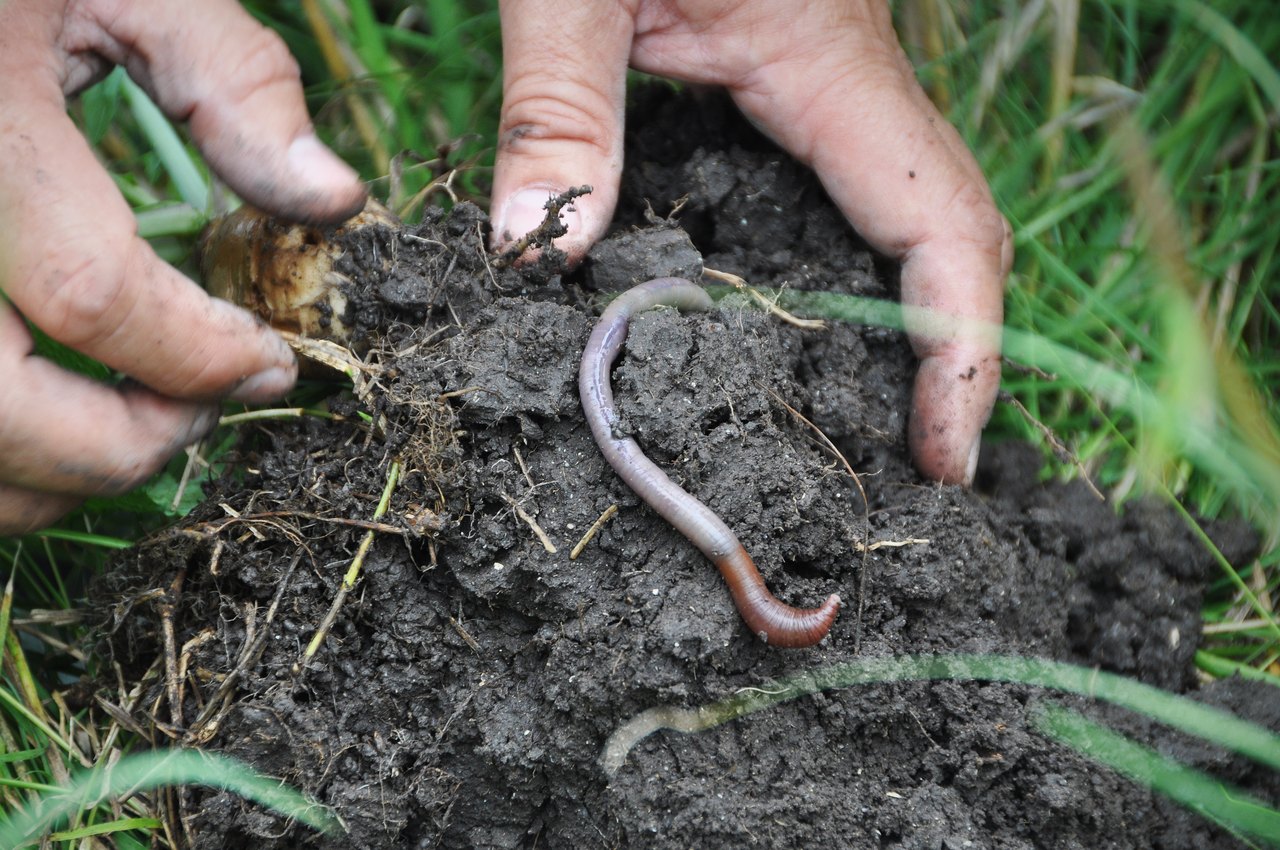
Life Science · Chapters 17–21The Earthworm frets and complains, but in a real garden he would be a hero. Earthworms spend their lives tunnelling through soil, and every tunnel does two priceless jobs: it lets air and water reach thirsty roots, and it loosens packed earth so young plants can push through. As a worm eats its way along, it swallows dead leaves and dirt, then leaves behind rich droppings called castings that feed the ground like natural fertilizer. A worm has no eyes and no legs; it moves by squeezing rings of muscle and gripping the soil with tiny bristles. Birds, meanwhile, adore them — which is exactly why James’s plan to lure the seagulls depends on the Earthworm’s soft, pink, wriggling body. Dahl turns a fearful little creature into the key that saves everyone, honouring a humble animal that quietly keeps the whole living soilalive.
adriftadj.Ch.18
Floating with no control
“The peach was adrift on the sea.”
despairn.Ch.18
A total loss of hope
“The Earthworm sank into despair.”
survivev.Ch.18
To stay alive
“They could survive by eating the peach.”
glidev.Ch.19
To move smoothly and silently
“Dark sharks glided beneath them.”
attackv.Ch.19
To try to harm
“The sharks began to attack the peach.”
desperateadj.Ch.19
Filled with urgent need
“Their plight grew desperate.”
lurev.Ch.20
To tempt or attract
“They would lure the gulls closer.”
baitn.Ch.20
Something used to attract
“The Earthworm served as bait.”
loopv.Ch.20
To make into a loop
“James looped silk round each neck.”
hoistv.Ch.21
To lift or raise up
“The gulls hoisted the peach skyward.”
1To be ‘adrift’ is to be —Ch.18
2‘Despair’ is —Ch.18
3Fill in each blank with the correct word.Chs. 18–19
Word choices:surviveglidedespairattack- some words will not be used
James said they could by eating the peach.
Sharks began to the floating fruit.
4To ‘glide’ is to —Ch.19
5To ‘survive’ is to stay alive.Ch.18
6To ‘lure’ something is to —Ch.20
7Fill in each blank with the correct word.Chs. 20–21
Word choices:baitloophoistlure- some words will not be used
The Earthworm was used as to draw the gulls.
Enough gulls could the whole peach into the air.
8‘Bait’ is —Ch.20
9To ‘hoist’ something is to —Ch.21
10To ‘loop’ a thread is to make it into a loop.Ch.20
Part 2
Comprehension
Show you understood what happens in Chapters 17–21.
🧠Knowledge Bank · Because This, Therefore That
Reading Skill · Chapters 17–21Stories are chains of cause and effect: one event, the cause, makes another event, the effect, happen. Spotting these links is how a reader understands not just what occurs but why. Watch the logic of the sea chapters. The peach floats, which is good — but sharks begin to bite it, which is the danger. Because the peach may sink, James must find a way up into the air; because seagulls fly overhead, he reasons they could lift the peach; because the Earthworm is a tempting snack, he can be used to catch the gulls. Each step is fastened to the one before it by a firm little because. When you can trace that thread, a clever plan stops feeling like luck and starts feeling like reasoning. Practice it here: for every action James takes, whisper the word because and hunt down the hidden reason.
1Where do James and his friends find themselves after the peach lands?Ch.18
2Why does James say they will not starve?Ch.18
3Fill in each blank with the correct word.Ch.19
Word choices:sharksattackseagullssilk- some words will not be used
Dark shapes in the water turn out to be .
They begin to and bite the peach.
4How do the sharks harm the peach?Ch.19
5James panics and gives up hope when the sharks arrive.Ch.19
6What is James’s plan to escape the sharks?Ch.20
7Who spins the silk string for the plan?Ch.20
8Write the numbers 1–5 in the boxes to show the correct order of events in Part 4. Number 1 = what happens first.Chs. 17–21
James makes a plan to lasso the seagulls with silk.
With 502 gulls roped on, the peach rises into the sky.
The Earthworm is used as bait to lure the gulls.
Sharks glide up and start biting the peach.
The peach floats, adrift, on the open sea.
9What is used as bait to lure the seagulls?Ch.20
10With enough seagulls roped on, the peach rises up out of the sea.Ch.21
Part 3
Literary Elements
Understanding HOW and WHY Roald Dahl tells the story across Chapters 17–21.
🧠Knowledge Bank · Keeping You on the Edge
Author’s Craft · Chapters 17–21Why can these chapters feel impossible to put down? Dahl is a master of suspense — the tense, breathless worry a writer builds when danger is near and the outcome is uncertain. He piles on threats: the peach is far from land, sharks are ripping at it, and the sea is pouring in. This mounting pressure is called rising action, the part of a story where problems stack higher and higher on the way to a peak. Notice Dahl’s trick of the ticking clock: the peach can only stay afloat for so long, so every second counts, and that time limit squeezes the tension tighter. He also lets us hope — James has an idea — before yanking the hope away with a fresh obstacle. This up-and-down rhythm keeps our hearts pounding. Learn from it: to grip a reader, do not solve a problem too quickly; first make them truly worry.
📚 Literary Devices in This Part · definitions & examples
Suspense is the tension that keeps us reading (will the sharks sink the peach?). Conflict is a struggle that drives the story (the travelers against sharks and sea). Rising action is the building events that lead toward a big moment (catching gull after gull).
1The tension of wondering whether the sharks will sink the peach is called —Ch.19
2A conflict is a struggle that drives a story forward.Ch.19
3Fill in each blank with the correct word.Chs. 19–20
Word choices:suspenseconflictsettingrhyme- some words will not be used
The struggle of the travelers against the sharks is a .
Not knowing if the plan will work fills us with .
4The building events — gull after gull roped on — that lead to the lift-off are the —Ch.21
5Danger from the sharks lowers the story’s tension and makes it dull.Ch.19
6Fill in the blank with the correct word.Ch.21
Word choices:rising actionhyperboleindex- some words will not be used
The steady catching of more and more gulls is the .
7Why does Dahl bring in the sharks just as the peach starts to float safely?Ch.19
8The main struggle in this part — travelers versus sharks and sea — is a conflict of —Ch.19
9Fill in the blank with the correct word.Ch.19
Word choices:suspenserhymeplot- some words will not be used
The nail-biting tension of the shark attack is called .
10As James invents and carries out his plan, he grows into the story’s —Chs. 20–21
Part 4
Think Deeper
Four deeper challenges — no single-word recall. Read, weigh the evidence, and reason it through.
🧠Knowledge Bank · The Boy Who Thinks Clearly
Critical Thinking · Chapters 17–21When the sharks attack, the creatures panic — the Earthworm wails, the Centipede shouts, and everyone expects the worst. James does something braver: he stops, breathes, and thinks. His courage is not the loud kind that charges into danger, but the quiet kind that stays calm long enough to find a plan. Fear floods the brain with noise, and a frightened mind grabs at the first wild idea; a steady mind, by contrast, can notice the seagulls overhead and slowly build a rescue from silk threads and a wriggling worm. Dahl is teaching a lesson useful far beyond any peach: in a crisis, the person who keeps a cool head often saves the day, even if they happen to be the smallest one there. Real leadership, he suggests, is less about strength than about steadiness — the rare gift of thinking well precisely when everyone around you is losing their nerve.
1Claim: “James, not the insects, is the one who saves the group.” — choose the two details that best prove it.Claim & Evidence
2Panic, or James’s plan? Tap each detail to send it left or right.Sort into two
◄ Panic & despairJames’s calm plan ►
3Match each cause to its result. For each cause, pick its result.Cause & Effect
The peach drops into the sea→
The sharks attack→
The Earthworm wriggles as bait→
Enough gulls are roped to the stem→
4Fill both blanks to complete the reasoning.Build the Argument
James becomes the leader of the group because , which shows that .
Part 5
Standardized Test
How Birds Fly · SAT & TOEFL-style practice
🎯 You already have the skills from the sections above — this is just a fun way to meet real SAT & TOEFL-style questions. Read the passage (the highlighted words are tested below), then answer the questions below. Tap an answer to select it, then tap it again to confirm — you can change your choice until you confirm.
A single seagull could never lift a giant peach — but hundreds together might. Real birds fly by pushing air with their wings. As a bird flaps, the special curved shape of each wing creates an upward push called lift, strong enough to hold the bird’s weight in the air. Air rushes faster over the curved top of a wing than along the flatter underside, and that difference in speed is what holds a heavy bird in the sky. The wider a bird’s wings, the more air they catch; the distance from wingtip to wingtip is called its wingspan.
Many birds also travel together in a group, or flock, which helps them find food and stay safe. Seagulls are strong, tireless fliers built for long journeys over the sea. A wandering albatross, with wings wider than a grown man is tall, can glide for hours above the waves without a single beat. James’s idea works because it turns a simple truth into something huge. If one gull makes a little lift, then five hundred gulls, roped together, could lift far more — even a boy, his insect friends, and an enormous peach.
Original passage written for Garden Heights — not a quotation from the novel.
1According to the passage, how do real birds fly?TOEFL · Factual Information
2In the passage, “lift” is —SAT · Words in Context
3What makes a wing create lift?SAT · Detail
4In the passage, a bird’s “wingspan” is —TOEFL · Vocabulary
5According to the passage, what do wider wings do?TOEFL · Factual Information
6In the passage, a “flock” is —SAT · Words in Context
7According to the passage, why does James’s plan work?SAT · Inference
8What is the passage mainly about?SAT · Central Ideas
9How does the passage connect to Part 4?SAT · Text Connections
10Insert Text (TOEFL). Look at the four squares [1]–[4] in the excerpt below. They show where this sentence could be added: “This is why the biggest birds tend to have the widest wings of all.”
A wing must catch enough air to hold up the whole bird. [1] A heavier bird needs to push more air with every beat. [2] The simplest way to push more air is to grow larger wings. [3] A tiny sparrow flies on small wings, but a heavy eagle never could. [4]
Where would the sentence fit best?TOEFL · Insert Text
Part 6 · Optional
Creative Writing
A bonus challenge to practice your English. Take your time and have fun with it.
About This Section
This writing task is optional and is not part of your auto-graded score. The feedback below checks only the basics — length, spelling, and grammar — not whether your ideas are right or wrong. It is meant for classroom discussion and creative practice, so feel free to use your imagination!
Writing Task — Part 4 “Keeping a Cool Head”
When the sharks attack, everyone panics except James, who stays calm and makes a plan. Write about a time you had to stay calm and solve a problem. What went wrong, and how did you handle it? Write at least 40 words.
You can start with: “Everyone was panicking, but I knew I had to…”
0 / 40 words minimum
đź—Ł Teach It · Just for Fun (optional)
No right or wrong — close the screen and tell someone nearby what happened in this part. Can’t find anyone? Tell yourself out loud. The moment you teach it, you truly understand it.

Part 4 Complete!
You finished Chapters 17–21 of James and the Giant Peach.
Here are your auto-graded results:
-
points out of 100
Your Writing
Your writing was checked automatically for length, spelling, grammar, and whether you included the key parts of the scene. Scroll back to Part 5 anytime to read your feedback and improve your work.
Independent study guide by Garden Heights. Not affiliated with or endorsed by Roald Dahl. Contains original analysis only; no text from the novel is reproduced. Reference text: This workbook follows Roald Dahl’s classic text (the standard Puffin edition sold worldwide). Revised 2023 UK editions change some wording and may not match the vocabulary studied here.