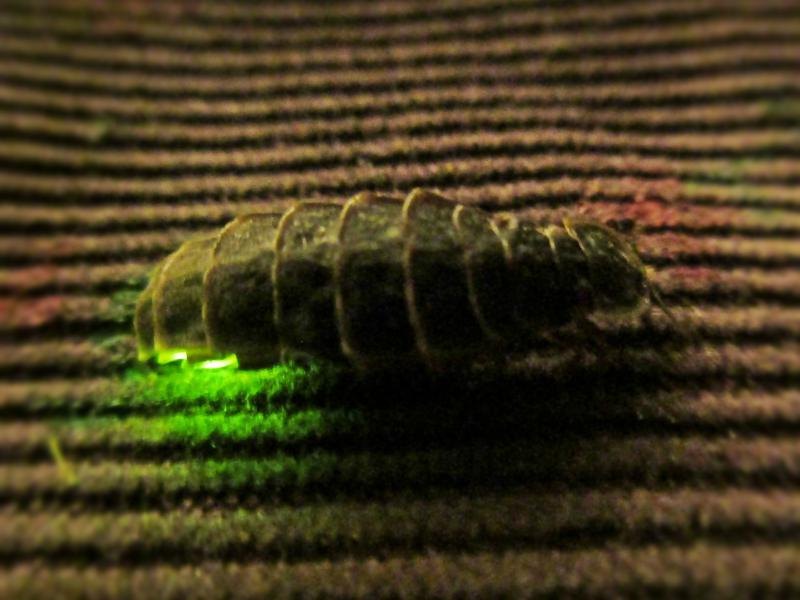
James and the Giant Peach cover
Garden Heights

James and the Giant Peach

This workbook is for Garden Heights members. Sign in to continue.

Sign in with Google →
New here? Just sign up with Google — your account includes Matilda, our gift book, forever.
James and the Giant Peach · Garden Heights

Part 5

for James and the Giant Peach · Part 5 · Chapters 22–26
8 Parts40 min
What Happens in Part 5

Safe above the sharks, the travelers celebrate, singing and dancing as the seagulls tow the peach across the sky. Miss Spider examines the peach and finds barely a scratch — the narrator explains that sharks struggle to bite into something so big and round. The Old-Green-Grasshopper, a talented musician, plays lovely music using his own body as an instrument. As they fly, the friends get to know one another: the Earthworm tells how worms process the soil in every field, and the Ladybird how she helps farms. Then trouble: the Centipede sings and dances so wildly that he tumbles off the edge, and James, tying on a silk rope, dangles down to rescue him. Higher still the peach climbs, until the crew spots the eerie, wispy Cloud-Men — strange white beings who shovel the clouds — and the Cloud-Men begin to hurl hard hailstones down at the peach.

What We Will Learn
SectionWhat you will practice
VocabularyWords of the sky: celebrate, examine, talented, instrument, wispy, hurl…
Literary ElementsDialogue, narrator, and the cliffhanger
Cross-CurricularHow insects help our world and make music, and why not to judge by fear
Chapter Summary
Ch.What happens
22–23Safe & Sound — the peach flies free; the sharks did almost no harm.
24The Music — the Grasshopper plays a concert using his own body.
25New Friends — the insects share true facts about their useful lives.
26The Cloud-Men — the Centipede falls; James saves him; the Cloud-Men hurl hail.
Part 1
Vocabulary
Study 10 key words from Chapters 22–26, then answer each question.
🧠Knowledge Bank · The Living Lamp
Entomology · Chapters 22–26High in the peach, the Glow-worm becomes a lantern, and this wonder is borrowed straight from real life. A glow-worm makes its own light through a process called bioluminescence, in which special chemicals inside its body mix together and give off a cool green glow with almost no heat — light without fire. In dark hedgerows a female glow-worm shines to signal to a mate, and fireflies, her close cousins, blink the same way across summer fields. The light is astonishingly efficient: nearly all the energy becomes glow rather than being wasted as warmth, something human bulbs still cannot match. So when James’s friend simply switches herself on to light the inside of the peach, Dahl is stretching a genuine marvel to storybook size. Nature, it turns out, invented the lamp long before people did, hiding a soft, patient beacon inside the body of a modest little beetle.
celebratev.Ch.23
To rejoice; to mark with joy
“They celebrated their escape.”
examinev.Ch.23
To look at closely
“Miss Spider examined the peach.”
talentedadj.Ch.24
Having natural skill
“The Grasshopper was a talented player.”
instrumentn.Ch.24
A tool for making music
“His body became his instrument.”
processv.Ch.25
To work on and change
“Worms process the soil in the fields.”
wispyadj.Ch.26
Thin, light, and faint
“The Cloud-Men were wispy and pale.”
eerieadj.Ch.26
Strange and frightening
“An eerie mist surrounded them.”
rescuev.Ch.26
To save from danger
“James rushed to rescue the Centipede.”
danglev.Ch.26
To hang loosely
“He dangled from a silk rope.”
hurlv.Ch.26
To throw hard
“The Cloud-Men hurled hailstones.”
1To ‘celebrate’ is to —Ch.23
2To ‘examine’ something is to —Ch.23
3Fill in each blank with the correct word.Chs. 24–25
Word choices:talentedinstrumentprocessexamine- some words will not be used
The Grasshopper was a very musician.
Earthworms the soil in every field.
4To ‘hurl’ something is to —Ch.26
5To ‘rescue’ someone is to save them from danger.Ch.26
6Something ‘wispy’ is —Ch.26
7Fill in each blank with the correct word.Ch.26
Word choices:dangleeeriehurlrescue- some words will not be used
James had to from a silk rope to reach his friend.
An pack of Cloud-Men loomed ahead.
8An ‘instrument’ is —Ch.24
9To ‘dangle’ is to —Ch.26
10Something ‘eerie’ is warm, safe, and cheerful.Ch.26
Part 2
Comprehension
Show you understood what happens in Chapters 22–26.
🧠Knowledge Bank · Guessing What Comes Next
Reading Skill · Chapters 22–26A lively reader is always leaning slightly forward, quietly predicting — using clues in the story to guess what might happen next. A prediction is not a wild wish; it is a reasonable forecast built from what the author has already shown. When the seagulls lift the peach into the freezing heights and strange figures appear among the clouds, you naturally begin to wonder: are these creatures friendly or dangerous? Your guess draws on everything you know so far about how adventure stories work and how James’s luck keeps swinging between rescue and peril. Chapters that end on a question or a looming threat are practically begging you to predict. The fun is in the checking: read on, and discover whether the story confirmed your idea or surprised you. Either way, you were reading actively, thinking right alongside the author instead of just waiting to be told.
1How do the travelers feel once the peach is safely in the air?Ch.23
2Why did the sharks do so little damage to the peach?Ch.23
3Fill in each blank with the correct word.Ch.24
Word choices:GrasshopperbodyCentipedecloud- some words will not be used
The Old-Green- plays beautiful music.
He uses his own as the instrument.
4How does the Grasshopper make music?Ch.24
5The Centipede falls off the peach while singing and dancing.Ch.26
6How does James rescue the Centipede?Ch.26
7What are the Cloud-Men?Ch.26
8Write the numbers 1–5 in the boxes to show the correct order of events in Part 5. Number 1 = what happens first.Chs. 22–26
  • The Grasshopper plays music using his own body.
  • The insects share facts about their useful lives.
  • The Centipede falls off and James rescues him.
  • The travelers celebrate escaping the sharks.
  • The Cloud-Men appear and hurl hailstones.
9What do the Cloud-Men throw down at the peach?Ch.26
10As they fly, the friends learn interesting facts about one another.Ch.25
Part 3
Literary Elements
Understanding HOW and WHY Roald Dahl tells the story across Chapters 22–26.
🧠Knowledge Bank · Leaving You Hanging
Author’s Craft · Chapters 22–26 Have you noticed how a chapter sometimes stops at the worst possible moment, just as danger appears? That is a cliffhanger — an ending left dangling in the middle of tension so the reader cannot bear to stop. Dahl uses the trick to keep the pages turning, especially as the mysterious Cloud-Men loom into view. Much of the excitement is carried through dialogue , the characters’ spoken words, which lets us feel their fear and wonder directly rather than being told about it second-hand. Watch, too, how the narrator — the voice telling the story — reveals just enough to worry us and no more, deliberately holding secrets back. A skilled storyteller knows that what is hidden can pull harder than what is shown, and that the surest way to be read is to leave a reader hungry for the next page .
📚 Literary Devices in This Part · definitions & examples
Dialogue is the words characters speak, which reveal who they are (the insects sharing their lives). The narrator is the voice telling the story, who can step in to explain (why the sharks did little harm). A cliffhanger is an exciting, unresolved ending (the Cloud-Men starting to hurl hail).
1The words the characters speak to one another are called —Ch.25
2The narrator is the voice that tells the story.Ch.23
3Fill in each blank with the correct word.Chs. 23–25
Word choices:dialoguenarratorsettingrhyme- some words will not be used
The friends’ spoken conversation is .
The voice explaining the shark’s round-nose problem is the .
4Ending Part 5 mid-danger, as the Cloud-Men start to attack, is a —Ch.26
5Dialogue can reveal what a character is really like.Ch.25
6Fill in the blank with the correct word.Ch.26
Word choices:cliffhangerhyperboleindex- some words will not be used
Stopping just as the hail begins to fly is a .
7Why does the narrator step in to explain the shark’s round-nose problem?Ch.23
8Letting the insects tell their own stories mainly helps us —Ch.25
9Fill in the blank with the correct word.Ch.25
Word choices:dialoguerhymeplot- some words will not be used
The spoken words that pass between characters are called .
10The sudden appearance of the hail-throwing Cloud-Men mainly makes the reader feel —Ch.26
Part 4
Think Deeper
Four deeper challenges — no single-word recall. Read, weigh the evidence, and reason it through.
🧠Knowledge Bank · Judging Past the Shivers
Critical Thinking · Chapters 22–26Most people, meeting a centipede or a spider, feel a shiver and step back — and at the very start James might have too. Yet inside the peach he learns to look past a creature’s frightening shape to the character underneath. Miss Spider, whose kind so many fear, turns out gentle and generous, spinning warm hammocks for her friends. Dahl is quietly arguing that fear is a poor judge; the things that look strange or ugly are often the very ones that help us most. This lesson reaches well beyond insects. People, too, get judged by their surface — their looks, their differences — before anyone learns who they truly are. James befriends the whole strange crew and is repaid with loyalty and love. As you read, let the story loosen an old habit: give the odd, the small, and the unlovely a fair chance, and you may discover an unexpected friend.
1Claim: “The insects are not frightening pests but likeable characters with useful lives.” — choose the two details that best prove it.Claim & Evidence
2The Grasshopper, or the Centipede? Tap each detail to send it left or right.Sort into two
◄ GrasshopperCentipede ►
3Match each cause to its result. For each cause, pick its result.Cause & Effect
The 502 gulls tow the peach
The Grasshopper rubs his leg on his body
The Centipede dances too wildly
Silkworm quickly spins a rope
4Fill both blanks to complete the reasoning.Build the Argument
The insects turn out to be good friends rather than scary bugs because , which shows that .
Part 5
Standardized Test
How Hail Forms · SAT & TOEFL-style practice
🎯 You already have the skills from the sections above — this is just a fun way to meet real SAT & TOEFL-style questions. Read the passage (the highlighted words are tested below), then answer the questions below. Tap an answer to select it, then tap it again to confirm — you can change your choice until you confirm.

The Cloud-Men hurl hailstones — and real hail is made high inside storm clouds. Deep in the cloud, powerful rising winds called updrafts catch tiny drops of water and carry them up to where the air is freezing cold. Even on a warm summer afternoon, the air near the top of a tall storm cloud is colder than the inside of a freezer. There each drop turns to ice. As the wind tosses the ice up and down through the wet cloud, more water freezes onto it, layer by layer, and the ball of ice grows.

A hailstone keeps growing until it is too heavy for even the strongest updraft to hold. Then it falls to the ground, sometimes as small as a pea and sometimes as large as a golf ball. A really large hailstone can dent the roof of a car or strip the leaves from a whole field of corn. If you cut a big hailstone in half, you can often see the layers of ice inside. They ring the stone like the rings of a tree, each one a trip it took up and down inside the storm.

Original passage written for Garden Heights — not a quotation from the novel.
1According to the passage, where is hail made?TOEFL · Factual Information
2In the passage, an “updraft” is —SAT · Words in Context
3What do the updrafts do to tiny water drops?SAT · Detail
4How does a hailstone grow larger?TOEFL · Factual Information
5Why does a hailstone finally fall to the ground?SAT · Detail
6In the passage, the “layers” inside a hailstone are compared to —TOEFL · Factual Information
7According to the passage, how big can a hailstone be?SAT · Detail
8What is the passage mainly about?SAT · Central Ideas
9In the passage, “hail” is —SAT · Words in Context
10This passage connects to Part 5 because the Cloud-Men —SAT · Text Connections
Part 6 · Optional
Creative Writing
A bonus challenge to practice your English. Take your time and have fun with it.
About This Section

This writing task is optional and is not part of your auto-graded score. The feedback below checks only the basics — length, spelling, and grammar — not whether your ideas are right or wrong. It is meant for classroom discussion and creative practice, so feel free to use your imagination!

Writing Task — Part 5 “Getting to Know You”

As they fly, James learns that the ‘creepy-crawlies’ are really kind and useful. Write about a time you got to know someone (or something) you first felt unsure about. How did your feelings change? Write at least 40 words.

You can start with: “At first I wasn’t sure, but then…”
0 / 40 words minimum
đź—Ł Teach It · Just for Fun (optional)

No right or wrong — close the screen and tell someone nearby what happened in this part. Can’t find anyone? Tell yourself out loud. The moment you teach it, you truly understand it.

Garden Heights

Part 5 Complete!

You finished Chapters 22–26 of James and the Giant Peach.

Here are your auto-graded results:

-
points out of 100
Your Writing

Your writing was checked automatically for length, spelling, grammar, and whether you included the key parts of the scene. Scroll back to Part 5 anytime to read your feedback and improve your work.

Move on to Part 6 →

Independent study guide by Garden Heights. Not affiliated with or endorsed by Roald Dahl. Contains original analysis only; no text from the novel is reproduced. Reference text: This workbook follows Roald Dahl’s classic text (the standard Puffin edition sold worldwide). Revised 2023 UK editions change some wording and may not match the vocabulary studied here.