New here? Just sign up with Google — your account includes Matilda, our gift book, forever.
James and the Giant Peach · Garden Heights
Part 6
for James and the Giant Peach · Part 6 · Chapters 27–31
8 Parts40 min
What Happens in Part 6
High in the clouds, the travelers watch the Cloud-Men roll cloud into balls to make hail. When the Centipede rudely taunts them — calling them idiots — the furious Cloud-Men retaliate, pelting the peach with hail that punctures its skin. Next they lower a huge rainbow on ropes to entangle the peach, and a Cloud-Man climbs a seagull line toward the crew — until James has the Centipede cut the rope, and the Cloud-Man is flung away. The Cloud-Men strike back again, dumping rainbow paint all over the Centipede and tipping out a whole sheet of water, but the seagulls flee just in time. As the peach sails on through the cloud city, the friends glimpse Cloud Women and Children: the Cloud-Men were guarding their own realm and families — a busy world where cyclones, tornadoes, and blizzards are made.
What We Will Learn
Section
What you will practice
Vocabulary
Words of the storm: taunt, furious, puncture, retaliate, cyclone, blizzard…
Literary Elements
Humor, conflict, and irony
Cross-Curricular
Where weather really comes from, and how a rainbow forms from light
Chapter Summary
Ch.
What happens
27
The Hail — the Centipede taunts the Cloud-Men, who pelt the peach with hail.
28
The Rainbow — the Cloud-Men lower a rainbow to trap the peach; James cuts the rope.
29–30
Paint & Water — the Centipede is painted; a sheet of water misses as the gulls flee.
31
The Cloud City — they pass the Cloud-Men’s families and weather-making realm.
Part 1
Vocabulary
Study 10 key words from Chapters 27–31, then answer each question.
🧠Knowledge Bank · The Gardener’s Best Friend
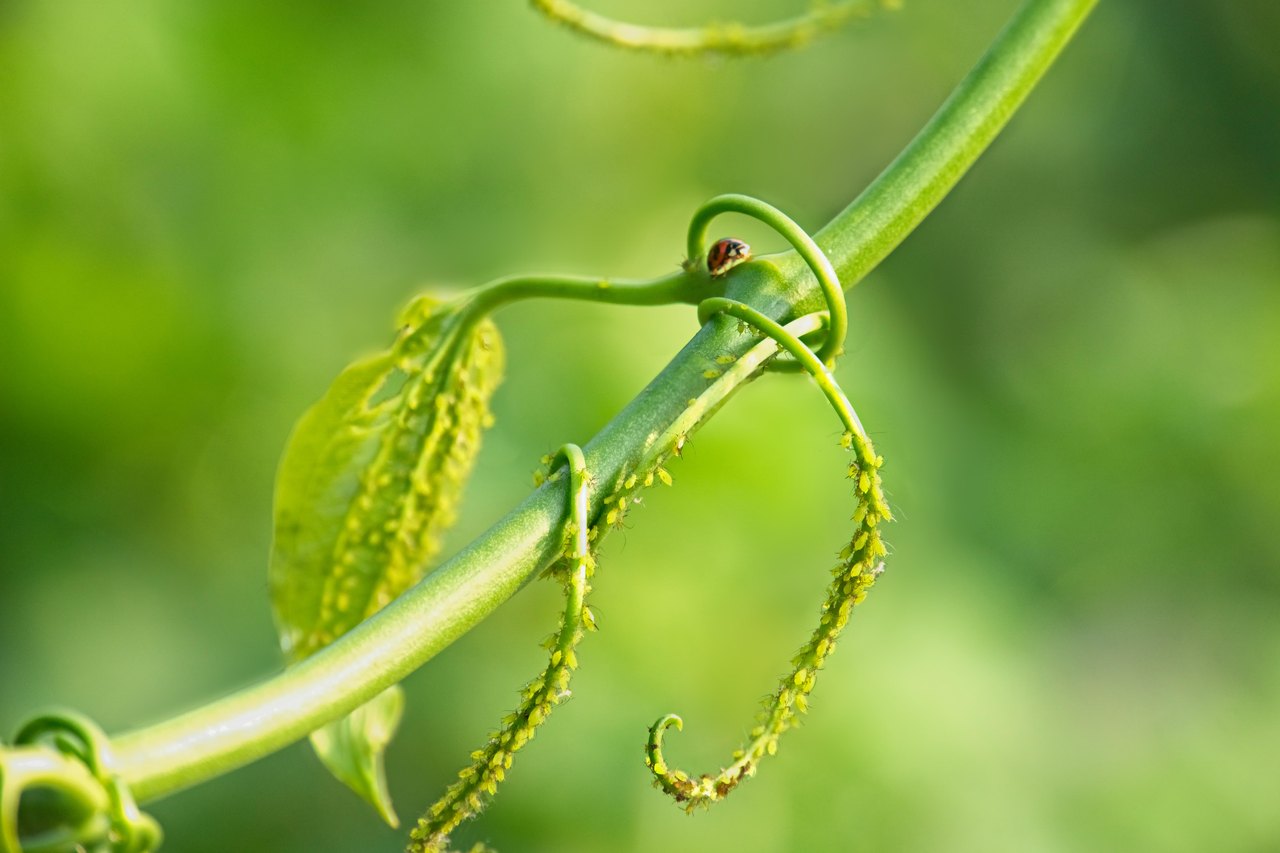
Entomology · Chapters 27–31The gentle Ladybird sails far above the clouds now, but her fame was earned close to the ground. Ladybugs are among a gardener’s most treasured helpers because of what they eat: aphids, the tiny soft insects that swarm plants and suck the sap from tender stems. A single ladybug can devour dozens of these pests in a day, and thousands over a lifetime, which is why farmers sometimes release them on purpose to guard a crop without poison. Her bright red shell dotted with black is not just pretty — those bold colors warn hungry birds that she tastes foul, a natural sign meaning leave me alone. The number of her spots hints at her species, not her age, whatever old rhymes may claim. So the polite little passenger riding James’s peach is, in her ordinary life, a fierce and useful guardian of every green and growing garden.
tauntv.Ch.27
To mock or tease cruelly
“The Centipede taunted the Cloud-Men.”
furiousadj.Ch.27
Very angry
“The furious Cloud-Men struck back.”
puncturev.Ch.28
To make a hole in
“The hail punctured the peach.”
entanglev.Ch.28
To tangle up
“A rainbow was used to entangle them.”
retaliatev.Ch.29
To strike back
“The Cloud-Men retaliated with paint.”
drenchv.Ch.30
To soak completely
“A sheet of water nearly drenched them.”
fleev.Ch.30
To run away from danger
“The seagulls fled just in time.”
cyclonen.Ch.31
A violent windstorm
“The Cloud-Men brew cyclones and storms.”
blizzardn.Ch.31
A heavy snowstorm
“They also make a fierce blizzard.”
realmn.Ch.31
A kingdom or domain
“The peach crossed the Cloud-Men’s realm.”
1To ‘taunt’ someone is to —Ch.27
2Someone ‘furious’ is —Ch.27
3Fill in each blank with the correct word.Chs. 28–29
Word choices:punctureretaliatefuriousentangle- some words will not be used
The hailstones the skin of the peach.
The angry Cloud-Men with rainbow paint.
4To ‘flee’ is to —Ch.30
5To ‘puncture’ something is to make a hole in it.Ch.28
6A ‘blizzard’ is —Ch.31
7Fill in each blank with the correct word.Chs. 30–31
Word choices:drenchcyclonerealmflee- some words will not be used
A sheet of water almost came down to them all.
They crossed the whole of the Cloud-Men.
8To ‘entangle’ something is to —Ch.28
9A ‘cyclone’ is —Ch.31
10To ‘retaliate’ is to forgive and do nothing.Ch.29
Part 2
Comprehension
Show you understood what happens in Chapters 27–31.
🧠Knowledge Bank · Comparing Two Sides
Reading Skill · Chapters 27–31Good readers constantly hold two things side by side to see how they are alike and how they differ; this is comparing and contrasting. It sharpens understanding, because meaning often lives in the gap between two things. In these stormy chapters, set the peach-travelers against the Cloud-Men. Both live high in the sky and both have strange powers — that is the comparison. But James and his friends are frightened travelers only trying to get home, while the Cloud-Men are territorial and hurl hail and paint like weapons — that is the contrast. Seeing the two groups together helps you judge who is truly in the wrong. You can use this same tool on characters, settings, even two whole chapters. Ask a simple pair of questions — how are these alike, and how are they different — and the story will quietly reveal a layer you might otherwise have missed.
1What are the Cloud-Men doing when James first sees them clearly?Ch.27
2Why do the Cloud-Men attack the peach?Ch.27
3Fill in each blank with the correct word.Ch.28
Word choices:puncturerainbowhailrope- some words will not be used
Sharp hailstones the skin of the peach.
The Cloud-Men lower a huge to trap it.
4How does James stop the Cloud-Man climbing the rope?Ch.28
5The Cloud-Men dump rainbow paint all over the Centipede.Ch.29
6How do the travelers escape the giant sheet of water?Ch.30
7What surprising thing do the friends see in the cloud city?Ch.31
8Write the numbers 1–5 in the boxes to show the correct order of events in Part 6. Number 1 = what happens first.Chs. 27–31
The Cloud-Men lower a rainbow to trap the peach.
A sheet of water misses as the seagulls flee.
The peach sails on past the Cloud-Men’s families.
The Centipede taunts the Cloud-Men, who pelt the peach with hail.
The Cloud-Men dump rainbow paint all over the Centipede.
9According to the story, what weather do the Cloud-Men make?Ch.31
10The Cloud-Men were being cruel for no reason at all.Ch.31
Part 3
Literary Elements
Understanding HOW and WHY Roald Dahl tells the story across Chapters 27–31.
🧠Knowledge Bank · Laughing at the Unexpected
Author’s Craft · Chapters 27–31Even in the middle of danger, Dahl keeps us laughing, and one of his sharpest tools is irony — a gap between what we expect and what actually happens. We expect the sky to be empty; instead it is crowded with grumpy Cloud-Men painting rainbows and dumping hail. We expect weather to come from nature; Dahl cheekily claims it is manufactured by cloud-dwelling workers, which is situational irony, a funny twist on how the world really works. His humor also springs from exaggeration and from the mismatch of the ordinary and the impossible — hailstones as big as houses, a rainbow hung up like laundry. Notice how the comedy actually eases the tension, letting young readers enjoy peril without being overwhelmed by it. That is a clever writer’s balance: a frightening storm becomes bearable, even delightful, when it is wrapped in surprise and gleeful mischief.
📚 Literary Devices in This Part · definitions & examples
Humor is a comic moment that makes us laugh (the paint-covered Centipede). Conflict is a struggle that drives the story (the travelers against the Cloud-Men). Irony is an outcome that fittingly reverses what is expected (the fight-starter gets the worst of it).
1The Centipede drenched head-to-foot in rainbow paint is an example of Dahl’s —Ch.29
2A conflict is a struggle that drives the story forward.Ch.27
3Fill in each blank with the correct word.Chs. 27–29
Word choices:humorconflictsettingrhyme- some words will not be used
The painted Centipede is one of Dahl’s bursts of .
The battle between the peach and the Cloud-Men is a .
4The Centipede starts the fight, then gets the worst of it. That fitting twist is —Ch.29
5That the rude Centipede is the one soaked in paint is a fitting irony.Ch.29
6Fill in the blank with the correct word.Ch.29
Word choices:ironyhyperboleindex- some words will not be used
The Centipede who caused the fight being the one drenched is .
7Why does Dahl drop in comic moments during the scary Cloud-Men battle?Ch.29
8Seeing the Cloud Women and Children mainly changes how we —Ch.31
9Fill in the blank with the correct word.Ch.27
Word choices:conflictrhymeplot- some words will not be used
A struggle between two sides that drives a story is a .
10Learning the Cloud-Men have families mostly makes them seem —Ch.31
Part 4
Think Deeper
Four deeper challenges — no single-word recall. Read, weigh the evidence, and reason it through.
🧠Knowledge Bank · Every Story Has Two Sides
Critical Thinking · Chapters 27–31 From James’s peach, the Cloud-Men look like villains, flinging hail and threats at innocent travelers. But pause and try to see it from the other side, the way empathy asks us to. The peach has come barging uninvited through the Cloud-Men’s own sky, their workplace and their home. Dahl is not excusing the hail, but he is quietly training a valuable habit of mind: before deciding who is right, imagine how the situation looks through someone else’s eyes. Almost every quarrel has two points of view, and the person we are quick to call an enemy usually believes they are defending something dear. This does not mean everyone is equally fair, but it does mean our judgments should wait for understanding. Learning to ask what does this look like to them is one of the truest signs of a growing mind .
1Claim: “The Centipede’s own rudeness brings the attack down on the peach.” — choose the two details that best prove it.Claim & Evidence
2Enemies, or a family? Tap each detail to send it left or right.Sort into two
◄ EnemiesA family ►
3Match each cause to its result. For each cause, pick its result.Cause & Effect
The Centipede insults the Cloud-Men→
James has the rope cut→
The Cloud-Men dump rainbow paint on the Centipede→
The seagulls flee at top speed→
4Fill both blanks to complete the reasoning.Build the Argument
Seeing the Cloud Women and Children changes how we view the Cloud-Men because , which shows that .
Part 5
Standardized Test
Where Weather Really Comes From · SAT & TOEFL-style practice
🎯 You already have the skills from the sections above — this is just a fun way to meet real SAT & TOEFL-style questions. Read the passage (the highlighted words are tested below), then answer the questions below. Tap an answer to select it, then tap it again to confirm — you can change your choice until you confirm.
In the story, Cloud-Men shovel out the hail and snow — but real weather needs no one at all. It runs on the water cycle. Heat from the sun makes water evaporate from oceans, lakes, and rivers, turning it into an invisible gas that rises into the sky. That invisible gas has a name — water vapor — and there is always some of it drifting unseen in the air around you. High up, where the air is cooler, that gas begins to condense back into tiny droplets, and billions of these droplets gather to form a cloud.
When the droplets in a cloud grow heavy enough, they fall as rain, or — if the air is cold — as snow or hail. The fallen water flows back to the sea, and the whole journey begins again. Rivers, streams, and even the puddle standing on your street are all small parts of that long return trip. This endless loop is called the water cycle, and it has turned the same water round and round the Earth for millions of years. No Cloud-Men required — just the sun, the air, and water on the move.
Original passage written for Garden Heights — not a quotation from the novel.
1According to the passage, what does real weather need to run?TOEFL · Factual Information
2In the passage, when water “evaporates,” it —SAT · Words in Context
3What gives the energy to make water evaporate?SAT · Detail
4In the passage, when the gas “condenses,” it —TOEFL · Vocabulary
5According to the passage, what forms a cloud?TOEFL · Factual Information
6When do the droplets in a cloud fall as rain, snow, or hail?SAT · Detail
7In the passage, the water “cycle” is —SAT · Words in Context
8What is the passage mainly about?SAT · Central Ideas
9How does the passage relate to Part 6?SAT · Text Connections
10Prose Summary (TOEFL).The passage explains how real weather comes from the water cycle. This TOEFL task lists six sentences; choose the THREE that best capture the passage’s main ideas. The other three do not belong — they state minor details or ideas the passage does not present.TOEFL · Prose Summary
Part 6 · Optional
Creative Writing
A bonus challenge to practice your English. Take your time and have fun with it.
About This Section
This writing task is optional and is not part of your auto-graded score. The feedback below checks only the basics — length, spelling, and grammar — not whether your ideas are right or wrong. It is meant for classroom discussion and creative practice, so feel free to use your imagination!
Writing Task — Part 6 “The Other Side”
The scary Cloud-Men turn out to have families of their own. Write about a time you saw ‘the other side’ of a disagreement, or understood why someone acted the way they did. What changed your mind? Write at least 40 words.
You can start with: “I used to think… until I realized…”
0 / 40 words minimum
đź—Ł Teach It · Just for Fun (optional)
No right or wrong — close the screen and tell someone nearby what happened in this part. Can’t find anyone? Tell yourself out loud. The moment you teach it, you truly understand it.

Part 6 Complete!
You finished Chapters 27–31 of James and the Giant Peach.
Here are your auto-graded results:
-
points out of 100
Your Writing
Your writing was checked automatically for length, spelling, grammar, and whether you included the key parts of the scene. Scroll back to Part 5 anytime to read your feedback and improve your work.
Independent study guide by Garden Heights. Not affiliated with or endorsed by Roald Dahl. Contains original analysis only; no text from the novel is reproduced. Reference text: This workbook follows Roald Dahl’s classic text (the standard Puffin edition sold worldwide). Revised 2023 UK editions change some wording and may not match the vocabulary studied here.