New here? Just sign up with Google — your account includes Matilda, our gift book, forever.
James and the Giant Peach · Garden Heights
Part 7
for James and the Giant Peach · Part 7 · Chapters 32–36
8 Parts40 min
What Happens in Part 7
The seagulls tow the peach clear across the Atlantic until, at last, a vast city rises below — New York. But the people do not cheer; they tremble and panic, certain the great round shape overhead is some terrible bomb. James decides to descend and calls to the Centipede to cut a few ropes — when disaster strikes: a passing airplane roars by and severs every seagull string at once. The peach begins to plummet toward the skyscrapers below. Sure they are doomed, James and his friends share a tearful farewell. Then, by the wildest luck, the peach drops straight onto the pointed spire of the Empire State Building — and the sharp tip drives up through the fruit with a great squelch, catching the peach fast, high above the astonished city.
What We Will Learn
Section
What you will practice
Vocabulary
Words of the fall: skyscraper, sever, plummet, panic, spire, doomed…
Literary Elements
Setting, climax, and coincidence
Cross-Curricular
How skyscrapers stand up, and why crowds panic at the unknown
Chapter Summary
Ch.
What happens
32–33
New York — the peach reaches the great city; the people panic below.
34
The Airplane — a plane cuts every seagull string; the peach begins to fall.
35
Farewell — sure they are doomed, the friends say goodbye.
36
The Spire — the peach is speared on the Empire State Building’s point.
Part 1
Vocabulary
Study 10 key words from Chapters 32–36, then answer each question.
🧠Knowledge Bank · Riders of the Wind
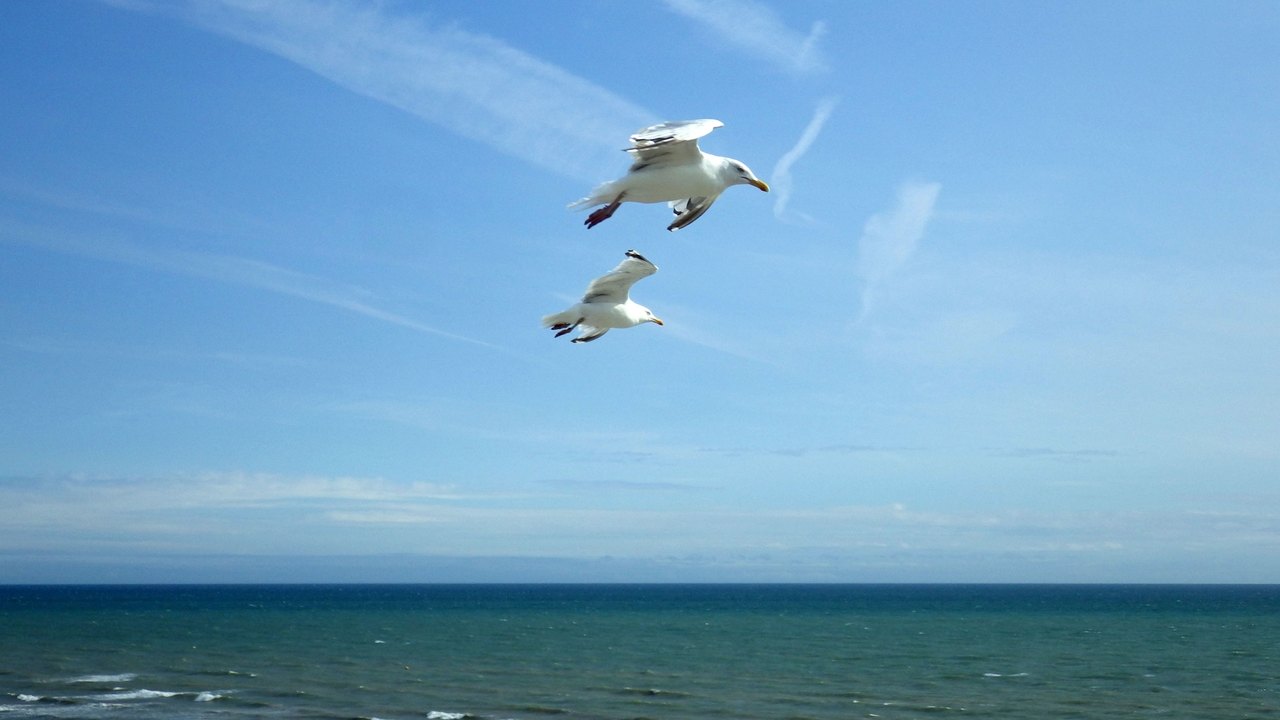
Ornithology · Chapters 32–36The seagulls that haul James’s peach across the Atlantic are, in real life, superb long-distance flyers. A gull’s wings are long and narrow, shaped so it can glide for great stretches without a single flap, riding the wind and saving precious energy the way a sailboat rides a breeze. Many gulls are travelers by nature, following coastlines and even crossing whole oceans as the seasons turn — a journey scientists call migration. They are famously bold and clever, snatching food from the water, the shore, or a careless picnic, which is why they gather wherever ships and cities meet the sea. Their hollow, lightweight bones and waterproof feathers make them at home above the endless gray Atlantic that James must somehow cross. So Dahl’s rescue is stitched from something real: to sail the sky over an ocean, you could hardly hire a stronger, hardier crew than a flock of tireless gulls.
vastadj.Ch.33
Extremely large
“A vast city spread out below.”
tremblev.Ch.33
To shake, often with fear
“The crowds trembled in fear.”
panicn.Ch.33
Sudden, uncontrolled fear
“Panic spread through the streets.”
descendv.Ch.34
To go down
“James tried to descend the peach.”
severv.Ch.34
To cut right through
“The plane severed the strings.”
plummetv.Ch.34
To fall very fast
“The peach began to plummet.”
doomedadj.Ch.35
Certain to meet a bad end
“They felt they were doomed.”
farewelln.Ch.35
A goodbye
“They said a tearful farewell.”
skyscrapern.Ch.36
A very tall building
“The city was full of skyscrapers.”
spiren.Ch.36
A pointed top of a building
“The peach hit a sharp spire.”
1Something ‘vast’ is —Ch.33
2To ‘tremble’ is to —Ch.33
3Fill in each blank with the correct word.Chs. 33–34
Word choices:panicseverdescendplummet- some words will not be used
Wild spread through the crowded streets.
An airplane came by to the seagull strings.
4To ‘plummet’ is to —Ch.34
5To ‘sever’ something is to cut right through it.Ch.34
6A ‘skyscraper’ is —Ch.36
7Fill in each blank with the correct word.Chs. 35–36
Word choices:farewellspiredoomedskyscraper- some words will not be used
Sure they were , the friends said goodbye.
The peach struck the pointed of the tower.
8A ‘spire’ is —Ch.36
9To ‘descend’ is to —Ch.34
10A ‘farewell’ is a warm hello.Ch.35
Part 2
Comprehension
Show you understood what happens in Chapters 32–36.
🧠Knowledge Bank · Adding the Clues Together
Reading Skill · Chapters 32–36 By this point in a book, a reader has collected many small details, and a strong reader knows how to gather them into a conclusion — a big understanding that no single sentence states outright. As the peach drifts over a vast city of towering buildings and crowded streets, Dahl does not announce the exact place in plain words at first, yet from the skyscrapers, the harbor, and the sheer size of it you can conclude the travelers have reached a great American city. Watch, too, how the frightened people below react to the peach, and draw conclusions about how strange and wonderful it must look from the ground. Reading well is not just collecting facts; it is asking, again and again, so what does all of this add up to , and trusting yourself to find the answer .
1What great city does the peach finally reach?Ch.33
2How do the people of New York react to the peach?Ch.33
3Fill in each blank with the correct word.Ch.34
Word choices:airplanestringspeachspire- some words will not be used
A passing roars by above the peach.
It cuts every one of the seagull .
4What suddenly makes the peach start to fall?Ch.34
5As the peach plummets, James and the insects say goodbye to one another.Ch.35
6What finally stops the falling peach?Ch.36
7Why did James believe they were doomed?Ch.35
8Write the numbers 1–5 in the boxes to show the correct order of events in Part 7. Number 1 = what happens first.Chs. 32–36
The peach begins to plummet toward the city.
The peach reaches New York, and the people panic.
Sure they are doomed, the friends say farewell.
An airplane cuts all the seagull strings.
The peach is speared on the Empire State Building.
9What is the Empire State Building?Ch.36
10The peach lands gently and safely down in a park.Ch.36
Part 3
Literary Elements
Understanding HOW and WHY Roald Dahl tells the story across Chapters 32–36.
🧠Knowledge Bank · Lucky Twists of Fate
Author’s Craft · Chapters 32–36 What are the odds that a peach falling from the sky would land, of all the places on earth, right on the point of one of the tallest buildings in a giant city? In a story, a surprising, lucky accident like this is called a coincidence — two unrelated events that happen to collide at just the right moment. Real life has coincidences too, but a writer must use them carefully, because too many can make a plot feel unbelievable. Dahl gets away with it partly because his whole tale is a joyful fantasy, and partly because the moment is so vivid. Notice how a well-placed coincidence can swing a story from disaster toward wonder in a single instant — the peril of the spike becoming, against all expectation, the doorway to James’s new life .
📚 Literary Devices in This Part · definitions & examples
Setting is the time and place of a story (the shift to New York City). The climax is the highest point of tension (the peach plummeting toward the city). A coincidence is an unlikely lucky chance (the peach landing on the one spire that stops it).
1The story’s move to a real, famous place — New York City — is a shift in —Ch.33
2The climax is the highest point of tension in a story.Ch.34
3Fill in each blank with the correct word.Chs. 33–34
Word choices:settingclimaxdialoguerhyme- some words will not be used
Moving the story to New York changes the .
The peach falling toward the city is the story’s .
4The peach falling exactly onto the one pointed spire that stops it is a lucky —Ch.36
5The peach landing on the one spire that could catch it is a wild coincidence.Ch.36
6Fill in the blank with the correct word.Ch.36
Word choices:coincidencehyperboleindex- some words will not be used
The peach landing on the one spire that could save it is a lucky .
7Why does Dahl set the ending in a real place like New York?Ch.33
8The falling peach, with the friends saying goodbye, is the story’s moment of greatest —Ch.35
9Fill in the blank with the correct word.Ch.33
Word choices:settingrhymeplot- some words will not be used
The time and place where a story happens is its .
10The crowd’s panic at the peach shows Dahl exploring the theme of —Ch.33
Part 4
Think Deeper
Four deeper challenges — no single-word recall. Read, weigh the evidence, and reason it through.
🧠Knowledge Bank · One Peach, Many Eyes
Critical Thinking · Chapters 32–36When the huge peach settles over the city, the crowds below do not cheer — they scream, certain that some terrible thing has come to destroy them. To James and his friends, the peach is a beloved home and a hard-won ship; to the strangers on the ground, the very same object looks like a monster. This gap reveals how powerfully fear shapes what people see. The unknown frightens us, and a frightened crowd often imagines the worst before it has gathered any facts. Dahl gently pokes at this all-too-human habit: we judge what is new and strange as dangerous simply because we do not yet understand it. Yet the story offers hope, for understanding can melt that fear in a moment — and it will, once the city finally hears James’s tale. The lesson lingers: the thing you fear on sight may turn out to carry nothing but wonder.
1Claim: “The New Yorkers fear the peach because they do not understand what it is.” — choose the two details that best prove it.Claim & Evidence
2To the travelers, or to the city? Tap each view of the peach to send it left or right.Sort into two
◄ The travelersThe city ►
3Match each cause to its result. For each cause, pick its result.Cause & Effect
The peach appears over New York→
An airplane roars past→
The seagull strings are all severed→
The peach drops onto the tall tower→
4Fill both blanks to complete the reasoning.Build the Argument
The New Yorkers panic instead of welcoming the peach because , which shows that .
Part 5
Standardized Test
How Skyscrapers Stand Up · SAT & TOEFL-style practice
🎯 You already have the skills from the sections above — this is just a fun way to meet real SAT & TOEFL-style questions. Read the passage (the highlighted words are tested below), then answer the questions below. Tap an answer to select it, then tap it again to confirm — you can change your choice until you confirm.
The peach is speared by the Empire State Building, one of the tallest towers in the world — so how do such giants stay up? The secret is a hidden skeleton of steel. Before steel, a stone building had to grow thicker at the bottom the higher it rose, which set a hard limit on its height. Instead of thick stone walls, a skyscraper is built around a strong inner frame of steel beams, bolted together like the bones of a body. The walls simply hang on this frame, so they can be light, even made of glass.
A tall tower also needs deep, solid foundations — heavy supports sunk far down into the rock beneath the street. These spread the building’s enormous weight and hold it steady against the strongest winds. Engineers test a design against wind, weight, and weather long before the first steel beam is ever lifted into place. With a steel frame above and deep foundations below, a skyscraper can rise higher than a hundred houses stacked on top of one another. In the story, that is tall enough to catch a falling peach.
Original passage written for Garden Heights — not a quotation from the novel.
1According to the passage, what hidden skeleton holds a skyscraper up?TOEFL · Factual Information
2In the passage, a “frame” is —SAT · Words in Context
3According to the passage, what do the walls of a skyscraper do?SAT · Detail
4In the passage, “foundations” are —TOEFL · Vocabulary
5According to the passage, what do the foundations do?SAT · Detail
6Why can a skyscraper’s walls be made of glass?SAT · Inference
7What is the passage mainly about?SAT · Central Ideas
8According to the passage, how tall can a skyscraper rise?TOEFL · Factual Information
9In the passage, “steel” is used because it is —SAT · Inference
10This passage connects to Part 7 because the peach —SAT · Text Connections
Part 6 · Optional
Creative Writing
A bonus challenge to practice your English. Take your time and have fun with it.
About This Section
This writing task is optional and is not part of your auto-graded score. The feedback below checks only the basics — length, spelling, and grammar — not whether your ideas are right or wrong. It is meant for classroom discussion and creative practice, so feel free to use your imagination!
Writing Task — Part 7 “A Big Misunderstanding”
The whole city mistakes the peach for a bomb. Write about a time something was badly misunderstood — when people got the wrong idea about a thing or a person. What was the truth, and how was it cleared up? Write at least 40 words.
You can start with: “Everyone thought… but really…”
0 / 40 words minimum
đź—Ł Teach It · Just for Fun (optional)
No right or wrong — tell someone nearby what happened in this part. Can’t find anyone? Tell yourself out loud. The moment you teach it, you truly understand it.

Part 7 Complete!
You finished Chapters 32–36 of James and the Giant Peach.
Here are your auto-graded results:
-
points out of 100
Your Writing
Your writing was checked automatically for length, spelling, grammar, and whether you included the key parts of the scene. Scroll back to Part 5 anytime to read your feedback and improve your work.
Independent study guide by Garden Heights. Not affiliated with or endorsed by Roald Dahl. Contains original analysis only; no text from the novel is reproduced. Reference text: This workbook follows Roald Dahl’s classic text (the standard Puffin edition sold worldwide). Revised 2023 UK editions change some wording and may not match the vocabulary studied here.