
New here? Just sign up with Google — your account includes Matilda, our gift book, forever.
What Happens in Part 3
In science class, Judy’s class is studying mealworms. Everything is going fine — until Judy accidentally flings her wriggly little mealworm through the air, and it lands right on Jessica Finch! Jessica shrieks and makes a commotion, and the teacher, thinking Jessica caused the fuss, gets cross with her. Here is a tricky moment for Judy. She could stay quiet and let her rival Jessica take the blame — after all, a little part of jealous Judy would not mind seeing Jessica in trouble. But something tugs at Judy’s conscience. All afternoon it nags at her. And so, after school, Judy does the brave and right thing: she confesses the truth — that the flying mealworm was hers. It is not the fame she was chasing, but it is something better: an honest, decent act.
What We Will Learn
Focus
What It Means
Internal Conflict
Judy’s struggle between staying quiet and telling the truth
Theme (Honesty)
Doing the right thing even when it costs you
Cause & Effect
How one flung mealworm sets off a chain of trouble
Chapter Summary
Pages
Key Events
pp. 31–45
In science class Judy accidentally flings her mealworm onto Jessica Finch, who gets blamed for the fuss; though a jealous part of Judy is tempted to stay quiet, her conscience wins, and after school she confesses the truth
💭 Before You Read · Warm-Up (not scored)
There are no wrong answers here — just think, guess, and talk:
Judy could have let her rival take the blame, but she told the truth instead. Why is being honest sometimes so hard?
A jealous part of Judy almost stayed quiet. Have you ever had a ‘good’ and a ‘not-so-good’ voice arguing inside you?
Predict: after doing the honest thing here, how might Judy’s idea of what really matters begin to change?
Copyright Notice
This is an independent study guide created by Garden Heights Academy to support reading comprehension and literary analysis. It contains original analysis questions and does not reproduce any text from the novel. Judy Moody Gets Famous! is a work by Megan McDonald. This guide is not affiliated with, authorized by, or endorsed by the author or any associated rights holder.
Part 1
Vocabulary
Study 10 key words from pages 31–45, then answer each question.
🧠Knowledge Bank · Words of Right & Wrong
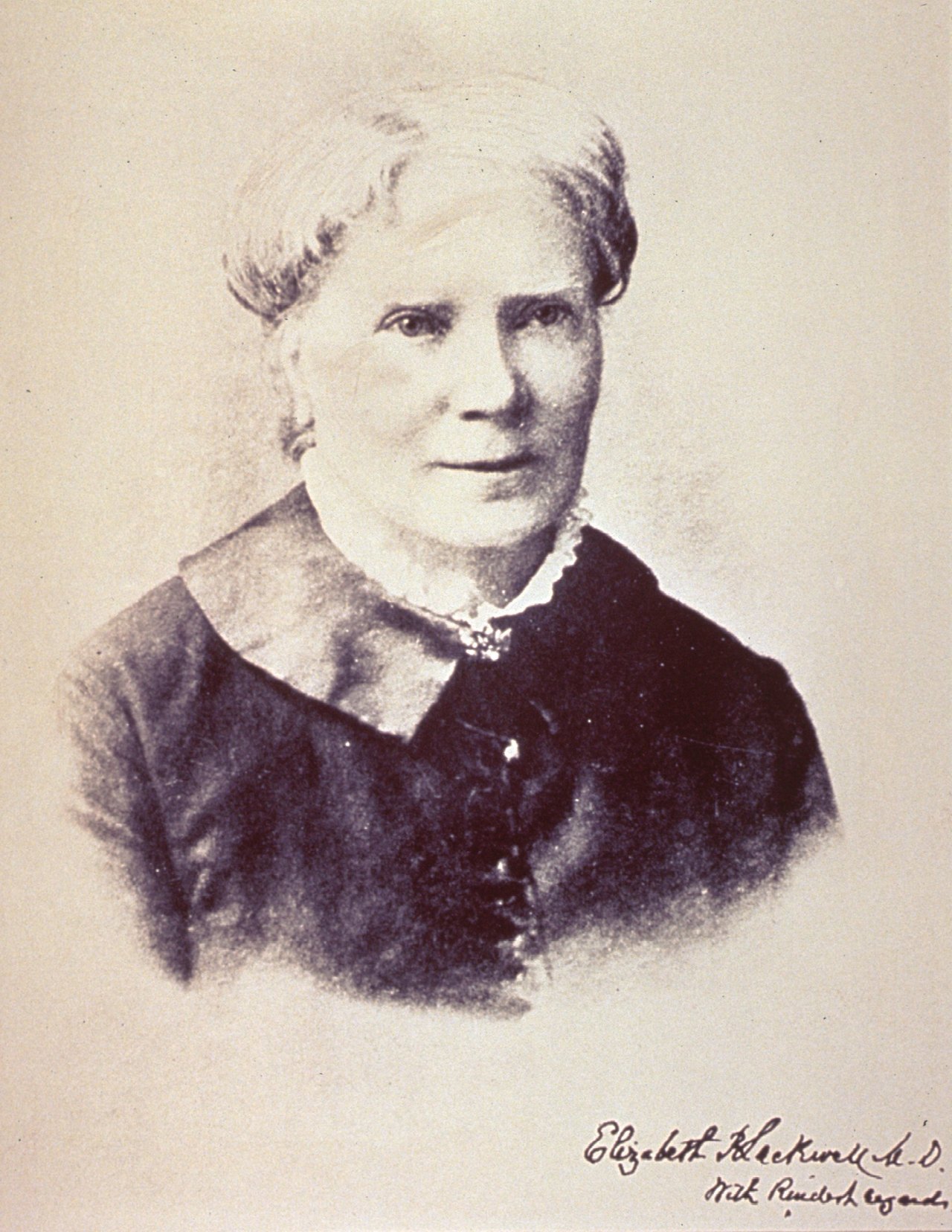
Medical History · Women in MedicineElizabeth Blackwell was the first woman to become a doctor in the United States. Back in 1849, many people believed only men could be doctors, and school after school said no to her. She did not give up. She studied hard, earned her degree, and spent her life caring for the sick and teaching other women that they could be doctors too. She helped the poor and started a hospital run by women. Elizabeth became famous not for wanting attention, but for the good, brave work she did to help people heal.
mealwormn.p.31
The larva (young stage) of the darkling beetle
“The class watched each mealworm wriggle in its box.”
flingv.p.33
To throw suddenly and with force
“Judy accidentally flung her mealworm across the room.”
commotionn.p.34
A noisy fuss or disturbance
“The flying mealworm caused a great commotion.”
blamen.p.36
Responsibility for something wrong
“Jessica got the blame for the fuss.”
consciencen.p.38
The inner sense of right and wrong
“Judy’s conscience nagged at her all afternoon.”
confessv.p.42
To admit that you did something
“After school, Judy confessed the truth.”
guiltyadj.p.39
Feeling bad because you did something wrong
“Judy felt guilty for staying silent.”
honestadj.p.42
Truthful; not lying or hiding the truth
“In the end, Judy chose to be honest.”
temptv.p.37
To make someone want to do something they shouldn’t
“She was tempted to let Jessica take the blame.”
accidentn.p.33
Something that happens by chance, not on purpose
“Flinging the mealworm was an accident.”
1A ‘mealworm’ is —Pages 31–45
2To ‘fling’ is to —Pages 31–45
3Fill in each blank with the correct word.Pages 31–45
Word choices:conscienceguiltyproudcalm- some words will not be used
Judy’s inner voice, her
nags at her because she feels .
4A ‘commotion’ is —Pages 31–45
5To be ‘brave’ is to face fear with courage.Pages 31–45
6To ‘blame’ someone is to —Pages 31–45
7Fill in each blank with the correct word.Pages 31–45
Word choices:confesstemptedbragrest- some words will not be used
Judy is ___ to stay silent
But in the end she chooses to .
8To be ‘honest’ is to be —Pages 31–45
9An ‘accident’ is —Pages 31–45
10To ‘ignore’ your conscience is always the right choice.Pages 31–45
Part 2
Comprehension
How well do you understand pages 31–45?
🧠Knowledge Bank · When No One Would Know
Reading Skill · InferenceSometimes a book does not tell you everything. You must be a detective and figure out the hidden part yourself. This is called making an inference. You take the clues on the page and add what you already know. When Judy faces a choice that no one else is watching, the author does not say what is right — you infer it from how she acts and feels. Ask, ‘What is really going on here?’ and ‘What does this clue mean?’ Reading between the lines this way helps you understand people, in books and in real life.
1What is Judy’s class studying?Pages 31–45
2What does Judy accidentally do?Pages 31–45
3Who does the teacher blame for the mess?Pages 31–45
4Judy is tempted to let someone else take the blame.Pages 31–45
5Write the numbers 1–5 in the boxes to show the correct order across Part 3. Number 1 = what happens first.Pages 31–45
The teacher blames someone else for the mess.
Judy’s guilty conscience nags at her all afternoon.
After school, Judy finally confesses the truth.
Judy accidentally flings the mealworms, causing a commotion.
Judy’s class begins studying mealworms.
6Judy is tempted to stay quiet about the accident.Pages 31–45
7What nags at Judy all afternoon?Pages 31–45
8What does Judy finally do after school?Pages 31–45
9Judy flung the mealworms on purpose.Pages 31–45
10What does Judy’s confession reveal about her?Pages 31–45
Part 3
Literary Elements
Understanding HOW and WHY Megan McDonald tells the story across pages 31–45.
🧠Knowledge Bank · McDonald’s Word-Craft: The Voice Inside
Language · Internal-Conflict SpotlightA conflict is a struggle in a story. Some struggles are on the outside, like a race. But the hardest kind happens inside a character’s own mind. This is called internal conflict. When Judy wants to do one thing but knows she should do another, a little battle goes on in her heart. Writers show this with worried thoughts and second guesses. This inner tug-of-war makes a character feel real, because we all argue with ourselves sometimes. As you read, notice the quiet moments when Judy is fighting nobody but herself.
📚 Literary Devices in This Part · definitions & examples
An internal conflict is a struggle within a character — here, Judy’s jealousy versus her conscience. (An external conflict, by contrast, is against an outside force.) How a character resolves inner conflict reveals their true character. Cause and effect also drives the scene: one flung mealworm causes a whole chain of trouble.
1Judy’s struggle over whether to confess is an —Pages 31–45
2An internal conflict is a struggle inside a character’s mind.Pages 31–45
3Fill in each blank with the correct word.Pages 31–45
Word choices:internal conflictcause and effectcontrastsetting- some words will not be used
Judy wrestling with her own conscience is an
Her fling of the worms causing a commotion shows .
4Judy’s fling (cause) leading to the commotion (effect) shows —Pages 31–45
5Cause and effect links an action to the result it brings.Pages 31–45
6Fill in each blank with the correct word.Pages 31–45
Word choices:cause and effectinternal conflictcontrastmood- some words will not be used
One event leading to the next is
Judy’s inner battle over confessing is an .
7The difference between honest Judy and silent Judy is a sharp —Pages 31–45
8Judy’s battle within her own mind is an —Pages 31–45
9Fill in each blank with the correct word.Pages 31–45
Word choices:cause and effectinternal conflictcontrastplot- some words will not be used
Her fling causing the mess shows
Her struggle over whether to confess is an .
10Judy’s inner struggle mainly makes readers feel her —Pages 31–45
Part 4
Think Deeper
Four deeper challenges — no single-word recall. Read, weigh the evidence, and reason it through.
🧠Knowledge Bank · The Test Nobody Sees
Ethics · HonestyWhat do you do when no one is looking? That question tests your honesty. It is easy to be good when others can see you and clap. It is much harder when you could cheat or fib and never get caught. Judy faces a moment like this, where doing the right thing costs her something. The choices we make in private show who we truly are. Nobody hands you a prize for being honest in secret, yet it is one of the most important things you can be. Being honest even when it is hard, even when no one would ever know, builds something you cannot see but everyone can feel: a good character.
1Claim: “Judy’s mealworm mishap brings the wrong kind of attention.” — choose the two details that best prove it.Claim & Evidence
2Shows attention going wrong, or just a detail of the scene? Tap each item to send it left or right.Sort into two
◄ Attention going wrongJust a detail ►
3Match each cause to its result. For each cause, pick its result.Cause & Effect
The class studies mealworms→
Judy flings it by accident→
Jessica shrieks→
Judy is noticed→
4Fill both blanks to complete the reasoning.Build the Argument
The mealworm incident shows that , which means that .
Part 5
Standardized Test
Key Details & Inference — SAT & TOEFL-style practice
🎯 You already have the skills from the sections above — this is just a fun way to meet real SAT & TOEFL-style questions. Read the passage (the highlighted words are tested below), then answer the questions below. Tap an answer to select it, then tap it again to confirm — you can change your choice until you confirm.
A mealworm is one of the most common creatures in a school science lab, yet it hides a surprising secret: it is not a worm at all. A mealworm is actually the larva — the young, grub-like stage — of an insect called the darkling beetle. Like a butterfly, this beetle changes completely as it grows, through a process called metamorphosis. It begins as a tiny egg and hatches into the wriggling mealworm we know. Next it turns into a still, pale pupa that does not eat or move. At last it comes out as a hard-shelled adult beetle. Each stage looks so different that you would never guess they are the same creature. Mealworms are popular in classrooms because they are cheap, harmless, and easy to keep; a handful of oats and a slice of potato for moisture is nearly all they need. Best of all, watching one change teaches, right before your eyes, one of the great wonders of biology: a single living thing can reinvent its own body again and again on the way to growing up.
Original passage written for Garden Heights — not a quotation from the novel.
1What surprising fact does the passage reveal about a mealworm?TOEFL · Factual Information
2According to the passage, a mealworm is really a beetle’s —TOEFL · Factual Information
3“Metamorphosis” is the process by which the beetle —TOEFL · Factual Information
4During the “pupa” stage, the insect is —TOEFL · Factual Information
5Each stage looks so different you would never guess they are the same “creature,” meaning the same —SAT · Words in Context
6Why are mealworms popular in classrooms?TOEFL · Factual Information
7To “keep” mealworms means to —SAT · Words in Context
8What can the reader infer makes mealworms good for teaching?SAT · Inference
9To say the insect can “reinvent” its body means it can —SAT · Words in Context
10This passage connects to the chapter because Judy’s class —TOEFL · Rhetorical Purpose
Part 6 · Optional
Creative Writing
A bonus challenge to practice your English. Take your time and have fun with it.
About This Section
This writing task is optional and is not part of your auto-graded score. The feedback below checks only the basics — length, spelling, and grammar — not whether your ideas are right or wrong. It is meant for classroom discussion and creative practice, so feel free to use your imagination!
Writing Task — Part 3 “Doing the Right Thing”
Judy tells the truth even though staying quiet would have been easier. Write about a time you (or someone you know) did the right thing when it was hard — owning up to a mistake, being fair, or telling the truth. What happened, and how did it feel afterward? Write at least 40 words.
You can start with: “One time I chose to do the right thing, even though it was hard…”
0 / 40 words minimum
🗣 Teach It · Just for Fun (optional)
No right or wrong — close the screen and tell someone nearby what Judy did with the mealworm and the honest choice she made. Can’t find anyone? Tell yourself out loud. The moment you teach it, you truly understand it.

Part 3 Complete!
You finished pages 31–45 of Judy Moody Gets Famous!.
Here are your auto-graded results:
-
points out of 100
Your Writing
Your writing was checked automatically for length, spelling, grammar, and whether you included the key parts of the scene. Scroll back to Part 5 anytime to read your feedback and improve your work.
Independent study guide by Garden Heights Academy. Not affiliated with or endorsed by the author or any rights holders. Contains original analysis only; no text from the novel is reproduced.