
New here? Just sign up with Google — your account includes Matilda, our gift book, forever.
From the Mixed-Up Files of Mrs. Basil E. Frankweiler · Garden Heights
Part 1
for From the Mixed-Up Files of Mrs. Basil E. Frankweiler · Part 1 · Chapters 1–2
8 Parts40 min
What Happens in Part 1
The whole book, we learn, is a long letter from rich, sharp-tongued old Mrs. Basil E. Frankweiler to her lawyer, Saxonberg, explaining a change to her will — and the story she tells begins with Claudia Kincaid, almost twelve, of Greenwich, Connecticut. Claudia is tired of the injustice of being the oldest: setting the table, emptying wastebaskets, and never being appreciated. So she plans to run away — but comfortably, importantly, to the most elegant hideout she can think of: the Metropolitan Museum of Art in New York City. She selects her brother Jamie, nine, as her accomplice, partly because he can keep quiet and mostly because he is rich: nearly twenty-five dollars in savings, won from his friend Bruce at cards. On Wednesday — music-lesson day — they pack clean underwear into a violin case and a trumpet case, mail a calm goodbye note to their parents, and ride the train toward their grand destination.
What We Will Learn
Section
What you will practice
Vocabulary
Words of plans and departures: injustice, allowance, accomplice, savings, scheme, destination…
Literary Elements
Frame story, narrator’s voice, and character motivation
Cross-Curricular
What the Metropolitan Museum of Art is, and what an allowance really teaches
Chapter Summary
Ch.
What happens
Letter
To My Lawyer, Saxonberg — Mrs. Frankweiler begins the letter that tells the whole story.
1a
Claudia’s Decision — fed up with chores and being unappreciated, she plans a comfortable, elegant runaway to the Met.
1b
Choosing Jamie — quiet, stingy, and rich: nearly $25 saved from card games with Bruce.
2
The Getaway — instrument cases packed with clothes, a goodbye note mailed, and the Wednesday train to New York.
Part 1
Vocabulary
Study 10 key words from Chapters 1–2, then answer each question.
🪙Knowledge Bank · Budgeting a Limited Allowance
Economics · Allowance and Opportunity CostAn allowance is a small, regular income, so it can teach the same basic skill that families and museums use: planning before spending. A budget divides limited money among needs, wants, and savings. Jamie protects his coins, while Claudia often spends hers on treats; neither habit is automatically wise in every situation. Saving creates future choices, but refusing every useful expense can block a good plan. Economists call the next-best thing given up an opportunity cost. A train ticket, for example, buys distance but removes money from the food fund. In Chapters 1–2, the children’s plan works only because ideas and savings are combined. Their different habits show that money is not merely counted; it is assigned a purpose. A strong budget turns a wish into a workable choice. Museums use the same habit when they divide funds among exhibitions, conservation, salaries, and education. Each choice reveals a goal, so every budget is also a statement of allocation.
injusticen.Ch.1
Unfair treatment
“Claudia was tired of the injustice of extra chores.”
allowancen.Ch.1
Money given regularly to a child
“Her allowance vanished every single week.”
accomplicen.Ch.1
A partner in a secret plan
“She chose Jamie as her accomplice.”
savingsn.Ch.1
Money set aside for later
“Jamie’s savings came to almost twenty-five dollars.”
schemen.Ch.1
A clever, detailed plan
“Her scheme covered every detail but one.”
departv.Ch.2
To leave, especially on a journey
“They would depart on Wednesday morning.”
destinationn.Ch.2
The place a journey ends
“Their destination was the great museum.”
concealv.Ch.2
To hide something from sight
“The cases concealed clean clothes, not instruments.”
faren.Ch.2
The price of a ride
“Train fare came out of Jamie’s money.”
appreciatev.Ch.1
To value someone or something properly
“Nobody seemed to appreciate Claudia at home.”
ⓘ The vocabulary words in this list are selected to help you understand and complete this workbook. Some may not appear verbatim in the original novel.
1Unfair treatment is called ___.Ch.1
2An ‘accomplice’ is a partner who helps with a secret plan.Ch.1
3Money given regularly to a child is an ___.Ch.1
4To ‘conceal’ something means to display it proudly.Ch.2
5Fill in each blank with the correct word.Ch.1–2
Word choices:savingsdestinationfarescheme- some words will not be used
Jamie’s made the whole plan possible.
The museum was their secret .
6The price you pay to ride a train or bus is the ___.Ch.2
7To ‘appreciate’ someone is to value them properly.Ch.1
8A clever, carefully detailed plan is a ___.Ch.1
9Fill in the blanks with the correct words.Ch.1–2
Word choices:departconcealinjusticeallowance- some words will not be used
The instrument cases would their clean clothes.
They planned to on music-lesson Wednesday.
10Money set aside to use later is called ___.Ch.1
Part 2
Comprehension
Show you understood what happens in Chapters 1–2.
🔎Knowledge Bank · Navigating a Museum on Paper
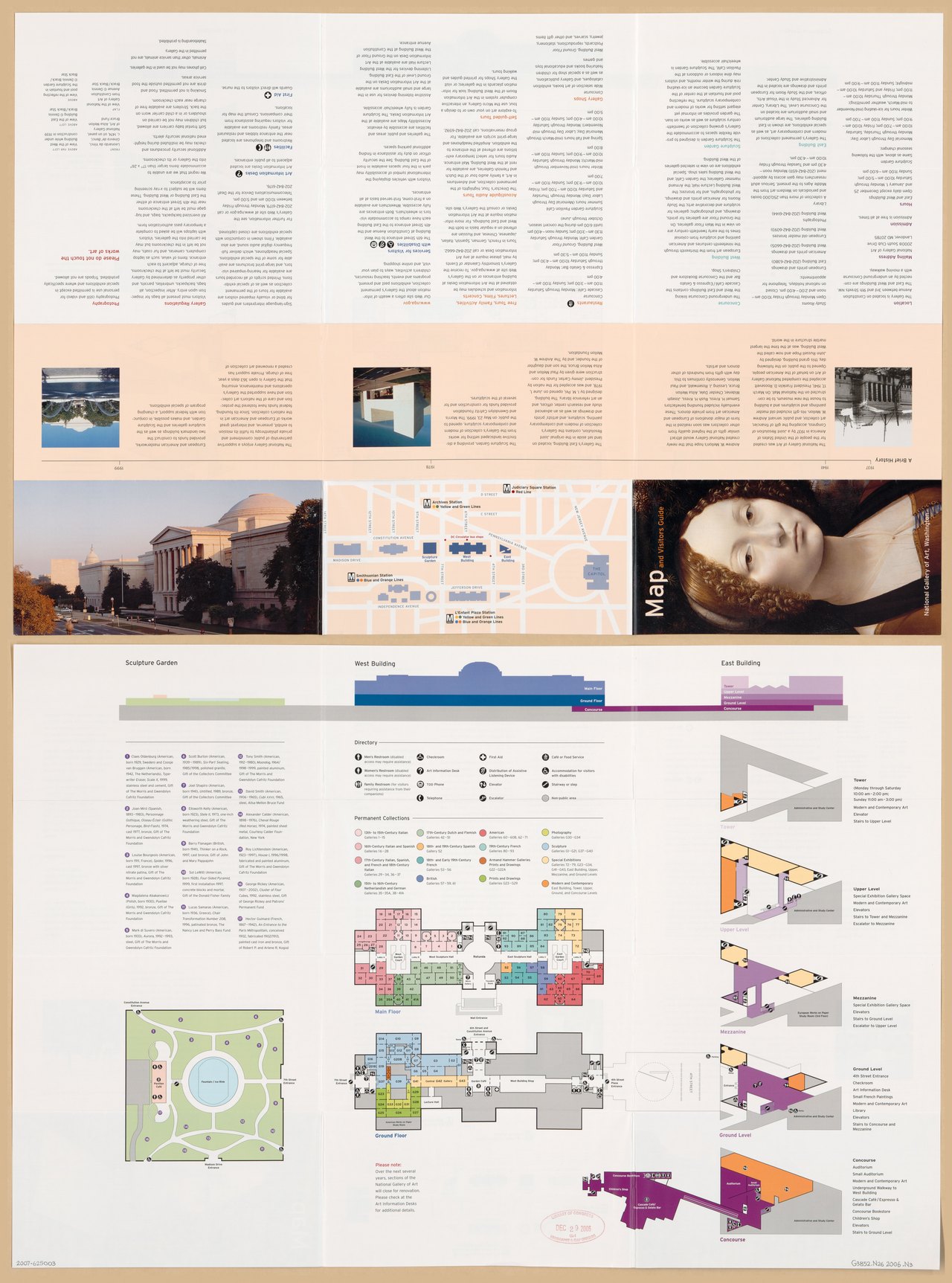
Museum Studies · Maps and SequenceThe Met’s Fifth Avenue building holds galleries arranged by culture, period, and material rather than as one straight path. A museum map turns that complex space into symbols: entrances, stairs, restrooms, and numbered rooms. Visitors use landmarks—a grand hall, a staircase, a famous object—to keep their place. Staff also divide the building into zones so each area can be watched and cared for. That background matters in Chapters 1–2 because Claudia chooses a real institution, not an imaginary castle. Her plan depends on understanding where crowds move and where daily routines repeat. A careful reader can treat each practical detail as part of a route: destination, arrival time, luggage, and meeting point. When details fit together into an ordered path, they form a sequence. Museum maps also mark routes between departments that may have been built at different times. Reading those connections prevents wandering and gives a visitor spatial orientation.
1Who is telling this whole story, and to whom?Letter
2Why does Claudia decide to run away?Ch.1
3Claudia picks the Metropolitan Museum because she wants a comfortable, elegant hideout.Ch.1
4Why does Claudia choose Jamie of all her brothers?Ch.1
5Write the numbers 1–5 in the boxes to show the correct order of events in Chapters 1–2. Number 1 = what happens first.Ch.1–2
Clothes are packed into the instrument cases.
A goodbye note is mailed to their parents.
The two ride the train toward New York City.
Claudia decides to run away from Greenwich.
Claudia chooses Jamie as her partner.
6Jamie earned his money by doing extra chores for the neighbors.Ch.1
7Why do they leave on a Wednesday?Ch.2
8What do the instrument cases actually hold?Ch.2
9Before leaving, Claudia mails a note so their parents will not think they were kidnapped.Ch.2
10Where do the children live before running away?Ch.1
Part 3
Literary Elements
Understanding HOW and WHY E.L. Konigsburg tells the story across Chapters 1–2.
đź§ Knowledge Bank · The Letter Around the Adventure
Literary Craft · Frame NarrativeA frame narrative places one story inside another. Here, the outer layer is Mrs. Frankweiler’s written message to Saxonberg; the inner layer follows Claudia and Jamie. The frame changes how readers judge information because the storyteller already knows the outcome and chooses when to interrupt. Her comments create a distinctive voice: observant, amused, and sometimes sharp. They also raise questions about identity. Why is she telling this particular person, and how did she learn events she did not witness? Those gaps are not mistakes; they are delayed clues. E. L. Konigsburg lets the narrator guide attention without explaining everything at once. As Chapters 1–2 begin, readers should notice both the children’s plan and the adult mind arranging it. A frame makes storytelling itself part of the mystery. Because the teller stands outside the central adventure, readers compare what she knows with what the children know. That distance turns narration into a study of perspective.
Frame Story
A story wrapped inside another — the runaway adventure sits inside Mrs. Frankweiler’s letter to Saxonberg.
Narrator’s Voice
The personality in the telling — crabby, witty asides show a narrator with opinions (and secrets).
Motivation
The reason behind a character’s actions — Claudia runs from feeling unappreciated, not from danger.
1The adventure being wrapped inside Mrs. Frankweiler’s letter makes this book a ___.Letter
2Fill in the blank with the correct literary term.Ch.1
Word choices:motivationframesettingdialogue- some words will not be used
The reason behind a character’s actions is their .
The letter that wraps around the whole adventure is the .
3Mrs. Frankweiler’s crabby asides to Saxonberg mainly reveal ___.Letter
4Claudia’s motivation for running away is escaping real physical danger at home.Ch.1
5Konigsburg makes Claudia plan a comfortable runaway to show she is ___.Ch.1
6Pairing spender Claudia with saver Jamie is an example of characters who ___.Ch.1
7A frame story means the same events are told twice by two narrators.Letter
8Fill in the blank with the correct literary term.Letter
Word choices:voicemotivationmoralrhyme- some words will not be used
The distinct personality we hear in the telling is the narrator’s .
9How can Mrs. Frankweiler narrate events she never witnessed?Letter
10Opening with the will and the lawyer — before any runaway — makes the reader ask ___.Letter
Part 4
Think Deeper
Four deeper challenges — no single-word recall. Read, weigh the evidence, and reason it out.
đź’ˇKnowledge Bank · Planning Under Real Limits
Decision Skills · Constraints and RolesGood planning begins with constraints—limits such as time, money, distance, rules, and available help. A plan becomes stronger when each limit is matched with a resource. Claudia supplies planning and organization; Jamie brings saved money and a willingness to cooperate. Their roles are complementary, meaning different strengths cover different needs. Project teams use the same principle: one person may manage the schedule while another tracks costs. Strong planners also imagine failure points and create a contingency, or backup response, before trouble appears. Chapters 1–2 invite readers to test the children’s scheme this way. Which limits have they noticed? Which risks have they ignored? A detailed plan can reveal intelligence, but detail alone does not make a decision safe or fair. Planning must end with responsible judgment. Professional planners test a proposal against likely costs and consequences before acting. A plan that cannot survive those tests may be detailed without being truly feasible.
Think back over the two chapters. A girl who hates discomfort plans the most comfortable escape in history: an art museum with velvet beds. She schedules it around music lessons, packs by checklist, and posts a polite goodbye. Her partner is chosen the way a business hires: for capital. And hovering over every page, an old woman narrates it all to her lawyer — years later, for reasons she has not yet told us.
Original passage written for Garden Heights — not a quotation from the novel.
1Claim: “Claudia’s runaway is a carefully managed project, not a desperate escape.” — choose the two details that best prove it.Claim & Evidence
2Claudia, or Jamie? Tap each detail to send it left or right.Sort into two
◄ ClaudiaJamie ►
3Match each cause to its result. For each cause, pick its result.Cause & Effect
Claudia feels unappreciated at home→
A runaway needs funding→
Wednesday means music lessons→
Parents must not fear a kidnapping→
4Fill both blanks to complete the reasoning.Build the Argument
Konigsburg gives Claudia a comfortable museum instead of a wild forest because , which shows that .
Part 5
Standardized Test
The Museum as a System · Text Structure & Inference · SAT & TOEFL-style practice
🎯 You already have the skills from the sections above — this is just a fun way to meet real SAT & TOEFL-style questions. Read the passage (the highlighted words are tested below), then answer the questions below. Tap an answer to select it, then tap it again to confirm — you can change your choice until you confirm.
The Metropolitan Museum of Art in New York City — the Met for short — is the largest art museum in the United States. Its collection includes more than two million works spanning about five thousand years, from ancient Egyptian objects and medieval armor to paintings and furnished rooms. A collection is not displayed all at once; much of it is studied, conserved, or stored while curators choose what visitors see. The building extends along Fifth Avenue beside Central Park, and its connected galleries use stairs, corridors, and doorways to guide movement. A gallery is a display room, but a sequence of galleries can also organize a journey by culture, period, or material.
A museum on this scale functions like a small city. Guards protect people and objects, conservators care for materials, curators research and arrange displays, and technicians manage lighting and climate. By the 1960s, millions of people visited each year, so no worker could recognize every face; security depended on routines, zones, and closing checks as well as personal attention. Regular visitors also learn the building’s rhythms: which halls stay crowded, when lines thin, and where movement slows. In Chapters 1–2, that immense scale and predictable rhythm help explain why Claudia imagines the Met as a comfortable public place with private corners, even though her plan still requires breaking rules.
Original passage written for Garden Heights — not a quotation from the novel.
1According to the passage, what is the Met?TOEFL · Factual Information
2In the passage, a museum’s “collection” is ___.SAT · Words in Context
3About how much time does the Met’s collection span?TOEFL · Factual Information
4In the passage, “galleries” are ___.SAT · Words in Context
5In the passage, “curators” are the people who ___.SAT · Words in Context
6Which choice best expresses the passage’s comparison of the museum to a small city?TOEFL · Sentence Simplification
7Why did security depend on routines and zones as well as recognizing people?TOEFL · Factual Information
8What can be inferred about someone who learns the museum’s rhythms?SAT · Inference
9How does the passage connect to Chapters 1–2?SAT · Author’s Purpose
10The passage is organized by ___.SAT · Text Structure
Part 6 · Optional
Creative Writing
A bonus challenge to practice your English. Take your time and have fun with it.
About This Section
This writing task is optional and is not part of your auto-graded score. The feedback below checks only the basics — length, spelling, and grammar — not whether your ideas are right or wrong. It is meant for classroom discussion and creative practice, so feel free to use your imagination!
Writing Task — Part 1 “My Secret Address”
Claudia chooses the most comfortable hideout she can imagine. If you could secretly live inside any public building — a museum, a library, an aquarium, a stadium — which would you choose? Describe your first night there: where you sleep, what you eat, and the one problem you did not plan for. Write at least 40 words.
You can start with: “The doors locked, the lights clicked off, and the building was mine…”
0 / 40 words minimum
🗣 Teach It · Just for Fun (optional)
No right or wrong — close the screen and tell someone nearby what happened in this part. Can’t find anyone? Tell yourself out loud. The moment you teach it, you truly understand it.

Part 1 Complete!
You finished Chapters 1–2 of From the Mixed-Up Files of Mrs. Basil E. Frankweiler.
Here are your auto-graded results:
-
points out of 100
Your Writing
Your writing was checked automatically for length, spelling, grammar, and whether you included the key parts of the scene. Scroll back to Part 5 anytime to read your feedback and improve your work.
Independent study guide by Garden Heights. Not affiliated with or endorsed by E.L. Konigsburg. Contains original analysis only; no text from the novel is reproduced. Reference text: This workbook follows E.L. Konigsburg’s classic text (the standard Puffin edition sold worldwide). Revised 2023 UK editions change some wording and may not match the vocabulary studied here.