
From the Mixed-Up Files of Mrs. Basil E. Frankweiler cover
Garden Heights

From the Mixed-Up Files of Mrs. Basil E. Frankweiler

This workbook is for Garden Heights members. Sign in to continue.

Sign in with Google →
New here? Just sign up with Google — your account includes Matilda, our gift book, forever.
From the Mixed-Up Files of Mrs. Basil E. Frankweiler · Garden Heights

Part 4

for From the Mixed-Up Files of Mrs. Basil E. Frankweiler · Part 4 · Chapter 5
8 Parts40 min
What Happens in Part 4

Saturday begins with ordinary work: Claudia and Jamie carry their clothes to a laundromat, combine everything in one load, and discover that the wash has turned every item a similar gray. Jamie would rather watch television displays, but Claudia insists on research. At the library she learns that determination is not the same as strategy; a huge scholarly volume overwhelms her, so she changes course and uses picture books while Jamie studies photographs. He finds memorable facts about Michelangelo, including a damaged nose and a missing marble cupid. On the way back, a found candy bar and time in Central Park briefly lighten the day. At closing, an unusual delay traps the children in separate washrooms. Jamie overhears workers discussing the Angel’s move, and both wait until the danger passes. Their long-planned bath finally happens in the restaurant fountain, where Jamie gathers $2.87 in coins. Before sleep, they visit the Angel and reflect on evidence, home, and how confidently they have adapted.

What We Will Learn
SectionWhat you will practice
VocabularyWords of research and adaptation: laundromat, volume, footnote, humbled, delicate, income…
Literary ElementsContrast, comic relief, pacing, frame narration, and suspense
Cross-CurricularSource strategy, museum closing routines, and the ethics of fountain coins
Chapter Summary
Ch.What happens
5aLaundry and Library — a gray wash leads into a demanding search for Michelangelo.
5bCandy and the Park — a found snack and Central Park give the researchers a brief pause.
5cAfter the Bell — a delayed closing routine leaves Jamie listening to workers discuss moving the Angel.
5dThe Fountain Bath — cold water becomes both a bath and a surprising source of $2.87.
Part 1
Vocabulary
Study 10 key words from Chapter 5, then answer each question.
📚Knowledge Bank · Build a Source Ladder
Research Methods · Source StrategyResearchers rarely begin by reading the longest book from first page to last. They build a source ladder: start with an overview, use an index or catalog to locate useful terms, examine images, and then consult specialist material for a narrower question. A footnote identifies evidence or points toward another source; it is a trail marker, not a decoration. Agreement between two books can strengthen confidence, but researchers still ask whether both copied the same earlier claim. In Chapter 5, Claudia changes methods when a massive Michelangelo volume proves inefficient, while Jamie searches photographs and memorable facts. Their different approaches show that difficulty is information: it can signal that a question needs a better route. Good research records titles, separates fact from guess, and preserves enough detail for another person to retrace the search. That retraceable path is documentation, and its purpose is scholarly traceability.
laundromatn.Ch.5
A place with coin-operated washing machines
“They wash one mixed load at a city laundromat.”
researchn.Ch.5
Careful study used to answer a question
“Claudia chooses research instead of television.”
volumen.Ch.5
A book, especially a large or numbered work
“The scholarly volume is more than two hundred pages.”
footnoten.Ch.5
A note that adds information or names a source
“Dense footnotes make the book look even harder.”
humbledadj.Ch.5
Made aware that one’s knowledge has limits
“The difficult search leaves Claudia humbled.”
delicateadj.Ch.5
Easily damaged; needing careful handling
“Workers describe the marble Angel as delicate.”
overhearv.Ch.5
To hear a conversation not meant for you
“Jamie overhears the workers after closing.”
fountainn.Ch.5
A structure that circulates or sprays water
“The restaurant fountain becomes their bathtub.”
bronzen.Ch.5
A durable metal made mainly from copper and tin
“Bronze dolphins rise above the water.”
incomen.Ch.5
Money received or coming in
“Jamie jokingly records the coins as income.”

ⓘ The vocabulary words in this list are selected to help you understand and complete this workbook. Some may not appear verbatim in the original novel.

1A public place where customers use washing machines is a ___.Ch.5
2Research means collecting information carefully to answer a question.Ch.5
3A note at the bottom of a page that gives extra information is a ___.Ch.5
4Something delicate can be handled roughly without risk.Ch.5
5Fill in each blank with the correct word.Ch.5
Word choices:volumebronzeincomeresearch- some words will not be used
The Michelangelois more than two hundred pages long.
The fountain is decorated withdolphins.
6Made aware that your knowledge has limits means ___.Ch.5
7To overhear is to hear a conversation that was not directed to you.Ch.5
8Money received or coming in is called ___.Ch.5
9Fill in the blanks with the correct words.Ch.5
Word choices:overheardelicatefountainlaundromat- some words will not be used
They wash their clothes at a.
After closing, Jamie canthe workers by the sinks.
10A large book, especially one in a set, is a ___.Ch.5
Part 2
Comprehension
Show you understood what happens in Chapter 5.
🏛Knowledge Bank · Closing Time Is a Security Sequence
Museum Operations · Access and Object MovementA museum closing is a coordinated sequence, not a single bell. Staff stop admitting visitors, direct people toward exits, inspect public rooms, secure restricted areas, and confirm that galleries are clear. Moving a fragile sculpture adds another operation: workers plan a route, stabilize the object, protect surfaces, and keep unnecessary people away. Each task depends on timing; a delay in one room can change what happens elsewhere. Chapter 5 turns that routine into suspense when the usual washroom check does not occur on schedule. Jamie notices lights, footsteps, and voices because he has learned the normal pattern. He cannot see the entire operation, so he must infer risk from partial evidence while Claudia waits separately. Readers should distinguish event order from cause: the workers remain late because the Angel must be moved, while the children stay hidden because staff are still present. Mapping those links reveals operational coordination and narrative causation.
1What happens to the children’s clothes at the laundromat?Ch.5
2Why does Claudia reject Jamie’s plan to watch television displays?Ch.5
3Claudia reads the entire two-hundred-page scholarly volume.Ch.5
4Which fact does Jamie find during the library research?Ch.5
5Write the numbers 1–5 in the boxes to show the correct order of events in Chapter 5. Number 1 = what happens first.Ch.5
  • They return to the museum, hide at closing, and hear that the Angel will be moved.
  • They gather coins from the fountain and later visit the Angel before bed.
  • They wash their clothes together and discover the load has turned gray.
  • They bathe in the restaurant fountain after the danger passes.
  • They search library books and photographs for information about Michelangelo.
6The delayed washroom check makes Jamie worry that Claudia may have been caught.Ch.5
7How much do the children gather from the fountain?Ch.5
8Where do the children take their long-planned bath?Ch.5
9After the bath, the children immediately leave the museum and go home.Ch.5
10What do Claudia and Jamie discuss before falling asleep?Ch.5
Part 3
Literary Elements
Understanding HOW and WHY E.L. Konigsburg tells the story across Chapter 5.
🎭Knowledge Bank · Contrast Controls Tone
Narrative Craft · Juxtaposition and PacingAuthors control tone by placing unlike scenes beside each other. This technique, called juxtaposition, makes each scene feel sharper through contrast. A serious investigation can be followed by physical comedy; quiet study can give way to a tense closing routine. Comic relief does not erase danger. It briefly releases pressure so the next uncertain moment can regain force. Chapter 5 repeatedly changes speed: the library search slows attention to books and frustration, the delayed washroom check stretches time, and the fountain bath moves quickly through cold water, jokes, and coins. Mrs. Frankweiler’s comments to her lawyer also remind readers that this adventure is being selected and framed by an older narrator. Because the chapter combines research, suspense, humor, and reflection, its mood never becomes flat. The changes are deliberate signals that guide emotional attention and establish narrative rhythm.
1Which pairing best shows Chapter 5’s use of contrast?Ch.5
2Fill in each blank with the correct literary term.Ch.5
Word choices:contrastcomic reliefsettingconflict- some words will not be used
A humorous scene that briefly eases tension is.
Placing unlike scenes side by side creates.
3What does the fountain bath do for the chapter’s tone?Ch.5
4The long library search and delayed closing both slow the pacing.Ch.5
5Why include Jamie’s memorable fact about Michelangelo’s damaged nose?Ch.5
6Why is Jamie’s word “income” funny when applied to fountain coins?Ch.5
7Mrs. Frankweiler’s comments to Saxonberg remind readers that she frames the children’s story.Ch.5
8Fill in the blank with the correct literary term.Ch.5
Word choices:pacingsymbolironynarrator- some words will not be used
The speed at which a story unfolds is its.
9What creates suspense during the museum closing?Ch.5
10What does the contrast between Claudia’s and Jamie’s research styles reveal?Ch.5
Part 4
Think Deeper
Four deeper challenges — no single-word recall. Read, weigh the evidence, and reason it out.
Knowledge Bank · Who Owns a Wishing Coin?
Applied Ethics · Property and StewardshipA coin tossed into a public fountain may look abandoned, but appearance alone does not settle its moral status. The thrower intends a gift to a custom, place, charity, or imagined wish—not necessarily a gift to the next person who can reach it. The building owner or city may collect the money under an established policy. Ethics therefore asks about intention, rules, need, and harm. Taking a coin could be judged differently from rescuing lost property or receiving payment for work. Chapter 5 makes the issue comic when Jamie calls the $2.87 “income,” a financial label that hides the question of permission. Readers can evaluate his choice without pretending that one word settles it. They should identify who has a claim, what the children know, and which alternatives are available. Caring for resources that may belong to others is called stewardship; it joins practical need to moral responsibility.
1Claim: “Chapter 5 shows the children adapting instead of following one fixed plan.” — choose the two details that best prove it.Claim & Evidence
2Planned task, or Unexpected discovery? Tap each detail to send it left or right.Sort into two
◄ Planned taskUnexpected discovery ►
3Match each cause to its result. For each cause, pick its result.Cause & Effect
All the clothes go into one wash
The scholarly volume is too broad and dense
The washroom closing routine is delayed
Jamie feels coins beneath the fountain water
4Fill both blanks to complete the reasoning.Build the Argument
Calling the fountain coins “income” does not settle whether taking them is fair because , which shows that .
Part 5
Standardized Test
The Custom of the Fountain Coin · Inference & Author’s Purpose · SAT & TOEFL-style practice
🎯 You already have the skills from the sections above — this is just a fun way to meet real SAT & TOEFL-style questions. Read the passage (the highlighted words are tested below), then answer the questions below. Tap an answer to select it, then tap it again to confirm — you can change your choice until you confirm.

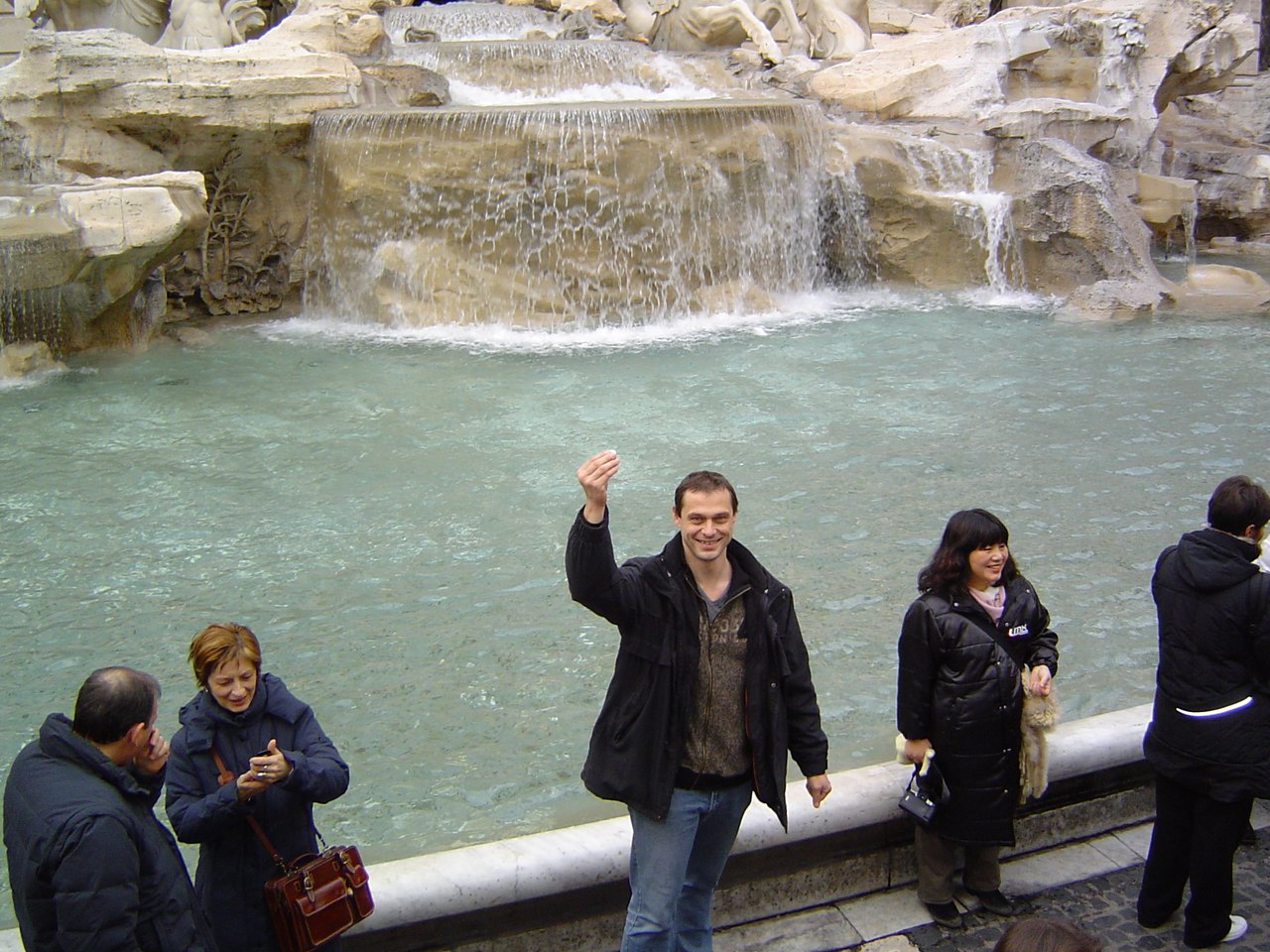
Why do visitors throw coins into many public fountains at busy tourist sites around the world? The habit is far older than fountains themselves. Ancient peoples treated some springs and wells as sacred, dropping an offering — a coin, a pin, or another small treasure — into the water to thank a spirit or ask for favor. Rome’s Trevi Fountain carries one famous custom: toss a coin over your shoulder, the story says, and you may return to Rome someday.

Modern coin-tossers may not share the ancient beliefs, yet the superstition continues as a hopeful game. Travelers learn the gesture by watching other visitors and through guidebooks, photographs, and films. That visibility helps a local ritual spread far beyond its original setting. Managers remove coins to clean basins, inspect drains, and maintain pumps safely, but policies for the collected money differ by location. At the Trevi Fountain, supervised city crews remove the coins and the proceeds support Caritas, a Catholic charity; other sites may use collections for maintenance or different causes. A fountain can therefore hold both private wishes and money managed under a public policy.

Original passage written for Garden Heights — not a quotation from the novel.
1According to the passage, why did ancient peoples drop coins into springs?TOEFL · Factual Information
2In the passage, an “offering” is ___.SAT · Words in Context
3What does the Trevi Fountain story promise a coin-tosser?TOEFL · Factual Information
4In the passage, a “custom” is ___.SAT · Words in Context
5In the passage, a “superstition” is described as having ___.SAT · Words in Context
6According to the passage, what happens to coins collected at the Trevi Fountain?TOEFL · Factual Information
7Why can a local coin-tossing ritual spread far beyond its original setting?SAT · Inference
8What is the passage mainly about?SAT · Central Ideas
9Why is this passage included alongside Chapter 5?SAT · Author’s Purpose
10Insert Text (TOEFL). Look at the four squares [1][4] in the excerpt below. They show where this sentence could be added:
“At the Trevi Fountain, this collection supports Caritas.”
Ancient wishers dropped offerings into sacred springs and wells. [1] The custom survives today as a small, hopeful game. [2] Policies for collected coins differ from place to place. [3] Rome’s city crews remove Trevi’s coins under supervision. [4]
Where would the sentence fit best?
TOEFL · Insert Text
Part 6 · Optional
Creative Writing
A bonus challenge to practice your English. Take your time and have fun with it.
About This Section

This writing task is optional and is not part of your auto-graded score. The feedback below checks only the basics — length, spelling, and grammar — not whether your ideas are right or wrong. It is meant for classroom discussion and creative practice, so feel free to use your imagination!

Writing Task — Part 4 “One Coin, One Wish”

Jamie scoops up $2.87 of other people’s wishes. Now imagine one coin from that fountain and the person who threw it. Tell that stranger’s story: who they were, what they wished for, and whether the wish came true. Write at least 40 words.

You can start with: “The nickel was warm from her hand when it hit the water…”
0 / 40 words minimum
🗣 Teach It · Just for Fun (optional)

No right or wrong — close the screen and tell someone nearby what happened in this part. Can’t find anyone? Tell yourself out loud. The moment you teach it, you truly understand it.


Garden Heights

Part 4 Complete!

You finished Chapter 5 of From the Mixed-Up Files of Mrs. Basil E. Frankweiler.

Here are your auto-graded results:

-
points out of 100
Your Writing

Your writing was checked automatically for length, spelling, grammar, and whether you included the key parts of the scene. Scroll back to Part 5 anytime to read your feedback and improve your work.

Move on to Part 5 →

Independent study guide by Garden Heights. Not affiliated with or endorsed by E.L. Konigsburg. Contains original analysis only; no text from the novel is reproduced. Reference text: This workbook follows E.L. Konigsburg’s classic text (the standard Puffin edition sold worldwide). Revised 2023 UK editions change some wording and may not match the vocabulary studied here.