New here? Just sign up with Google — your account includes Matilda, our gift book, forever.
From the Mixed-Up Files of Mrs. Basil E. Frankweiler · Garden Heights
Part 5
for From the Mixed-Up Files of Mrs. Basil E. Frankweiler · Part 5 · Chapter 6
8 Parts40 min
What Happens in Part 5
Sunday changes the museum’s rhythm. Claudia and Jamie make a small place of worship in the medieval galleries, say a prayer, and include an apology for taking a newspaper. Before the public arrives, they return to the Angel. A guard forces them behind a booth, and their escape brings them near the fabric that had supported the statue before its move. The velvet carries a raised imprint: linked circles with a letter that first looks like a W and then like an M. Jamie remembers the same emblem from a library book. Once the museum opens, the bookstore copy lets them verify that the design is associated with Michelangelo’s stonemason’s mark. During brunch, discovery becomes a plan. They want to alert the museum without revealing their hiding place, propose a return address that does not expose where they sleep, and debate going home. Claudia insists that the adventure should change more than her location. At a Fifth Avenue typewriter display, she composes an anonymous message directing museum staff toward the statue’s base. Chapter 6 closes with the message prepared and the next move still undecided.
What We Will Learn
Section
What you will practice
Vocabulary
Words of evidence and communication: medieval, imprint, stonemason, verify, anonymous, typewriter…
Literary Elements
Internal and external stakes, symbolism, misdirection, and characterization
Cross-Curricular
Impressions, maker’s marks, attribution evidence, and verifiable anonymous claims
Chapter Summary
Ch.
What happens
6a
A Museum Sunday — prayer in the medieval rooms leads to another close encounter with a guard.
6b
The Velvet Impression — the moved statue has left linked circles and a puzzling letter in the fabric.
6c
Bookstore Verification — a book cover connects the emblem to Michelangelo’s stonemason’s mark.
6d
A Message Prepared — the children plan a protected reply route and type an unsigned letter to the museum.
Part 1
Vocabulary
Study 10 key words from Chapter 6, then answer each question.
🔎Knowledge Bank · How an Impression Preserves Shape
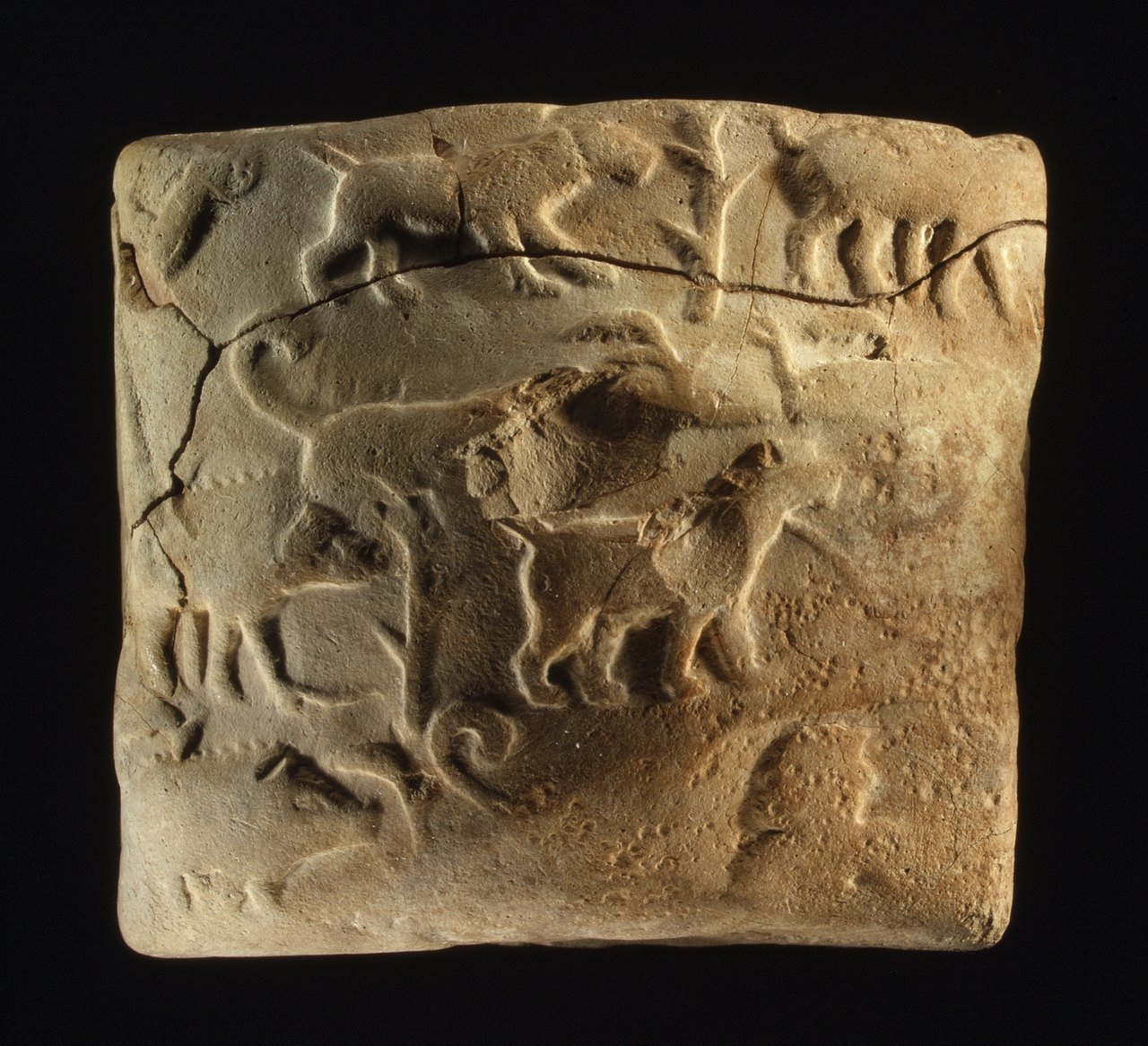
Materials Science · Pressure and Negative SpaceAn impression forms when one surface presses into another and transfers its shape. Soft materials such as wax, clay, foam, or plush fabric deform more readily than stone. A raised edge on a hard object can leave a recessed line; a hollow or chipped area may allow nearby fibers to spring upward, creating what looks like a reversed pattern. Investigators compare size, spacing, orientation, and depth before deciding what object made a trace. They also consider distortion: pressure may stretch fabric, and viewing a shape upside down can turn one letter into another. In Chapter 6, the linked circles in velvet first invite an everyday explanation, then become more significant when Jamie recalls a similar emblem. The trace is useful because it can be compared with another source, but it is not a complete history of the statue. A transferred shape preserves physical contact as material evidence, especially through its pattern.
medievaladj.Ch.6
Related to the European Middle Ages
“They say a prayer among medieval stained glass.”
prayern.Ch.6
Words spoken or thought in worship
“Their Sunday prayer restores a familiar routine.”
imprintn.Ch.6
A shape or mark pressed into a surface
“The statue leaves an imprint in the velvet.”
stonemasonn.Ch.6
A craftsperson who cuts and shapes stone
“The emblem is identified as a stonemason’s mark.”
verifyv.Ch.6
To check that something is accurate or true
“A bookstore copy helps them verify the emblem.”
anonymousadj.Ch.6
Given without revealing the sender’s name
“They prepare an anonymous message for the museum.”
composev.Ch.6
To create or write with care
“Claudia composes the letter at a display typewriter.”
typewritern.Ch.6
A machine that prints characters by pressing keys
“The public typewriter makes the message look official.”
ordinaryadj.Ch.6
Common; not unusual or special
“Claudia does not want the adventure to feel ordinary.”
extraordinaryadj.Ch.6
Very unusual or remarkable
“She hopes the discovery will create lasting, extraordinary change.”
ⓘ The vocabulary words in this list are selected to help you understand and complete this workbook. Some may not appear verbatim in the original novel.
1Related to the European Middle Ages means ___.Ch.6
2An imprint is a shape or mark pressed into a surface.Ch.6
3A craftsperson who cuts and shapes stone is a ___.Ch.6
4To verify a detail is to accept it without checking.Ch.6
5Fill in each blank with the correct word.Ch.6
Word choices:imprinttypewriterprayerordinary- some words will not be used
Linked circles form anin the velvet.
Claudia prepares the message on a public.
6A message that does not reveal its sender’s name is ___.Ch.6
7To compose a letter means to create and write it with care.Ch.6
8Very unusual or remarkable means ___.Ch.6
9Fill in the blanks with the correct words.Ch.6
Word choices:verifycomposemedievalstonemason- some words will not be used
A bookstore copy helps themthe emblem.
At the display machine, Claudia begins tothe museum letter.
10Words spoken or thought in worship are a ___.Ch.6
Part 2
Comprehension
Show you understood what happens in Chapter 6.
🖼Knowledge Bank · A Maker’s Mark Is a Lead, Not a Verdict
Art History · Attribution and Workshop PracticeA maker’s mark can identify a craftsperson, workshop, guild, owner, or quality standard. Its meaning depends on period and practice. Renaissance masters often worked with assistants, and a workshop could share designs, tools, or symbols. For that reason, one mark may connect an object to a circle of production without proving which hand carved every surface. Art historians build an attribution by combining several kinds of evidence: materials, tool marks, style, documents, ownership history, and comparison with accepted works. They also test alternative explanations, including later additions or copied emblems. In Chapter 6, the velvet trace becomes a stronger clue when a bookstore image independently matches its pattern. That comparison justifies a new question and a message to the museum, but not a final conclusion about the Angel. Responsible scholarship states exactly how far the evidence reaches. Confidence grows through corroboration, while certainty requires broader provenance.
1Where do Claudia and Jamie create a Sunday place of worship?Ch.6
2Why do the children hide behind a booth?Ch.6
3The linked-circle pattern is visible because its plush lies in a different direction from the surrounding velvet pressed by the statue.Ch.6
4What makes the linked-circle imprint important to Jamie?Ch.6
5Write the numbers 1–5 in the boxes to show the correct order of events in Chapter 6. Number 1 = what happens first.Ch.6
During brunch, they plan how to share the clue and debate when to go home.
After hiding from a guard, they notice linked circles pressed into the velvet.
Claudia types an unsigned message directing the museum toward the statue’s base.
A bookstore copy confirms that the emblem is associated with Michelangelo.
The children observe Sunday with a prayer in the medieval galleries.
6The children find a bookstore image that matches the velvet emblem.Ch.6
7Why does Claudia resist Jamie’s suggestion that they go home?Ch.6
8Where does Claudia type the message?Ch.6
9The typed letter names the children and reveals where they sleep.Ch.6
10What does the anonymous letter ask museum staff to examine?Ch.6
Part 3
Literary Elements
Understanding HOW and WHY E.L. Konigsburg tells the story across Chapter 6.
🧠Knowledge Bank · The Mystery Gains an Inner Stake
Narrative Craft · Motivation and Internal ConflictA plot gains depth when an external goal becomes connected to an internal need. The external goal is observable: identify the Angel’s maker and persuade adults to investigate. The internal stake is psychological: Claudia wants the adventure to alter how she understands herself before she returns to family life. These goals can support each other, but they can also create conflict. Jamie is more willing to treat the clue as a reason to go home, while Claudia treats uncertainty as a reason to continue. Chapter 6 makes the Angel more than an object of curiosity; it becomes a symbol of knowledge that could make experience meaningful. The guard scene, misread letter shape, bookstore match, and awkward typing keep the discovery grounded in risk and imperfection. Character motivation therefore drives the next action: a private desire becomes a public message. That connection between goal, emotion, and choice creates narrative stakes.
1What does the Angel increasingly represent to Claudia?Ch.6
2Fill in each blank with the correct literary term.Ch.6
Word choices:motivationinternal conflictsettingsatire- some words will not be used
A reason that drives a character to act is.
A struggle within a character’s own thoughts or desires is.
3Why place the Sunday prayer before the risky investigation?Ch.6
4The approaching guard raises the danger just before the children discover the imprint.Ch.6
5What is the effect of first reading the letter in the imprint as a W?Ch.6
6What does the imperfect typed letter reveal about Claudia?Ch.6
7An external goal concerns an observable outcome, while an internal stake concerns a character’s inner need.Ch.6
8Fill in the blank with the correct literary term.Ch.6
Word choices:symbolpacingsettingflashback- some words will not be used
When the Angel carries meaning beyond being a statue, it functions as a.
9Why does the bookstore match matter to the chapter’s structure?Ch.6
10Why end the chapter with a prepared message rather than a museum response?Ch.6
Part 4
Think Deeper
Four deeper challenges — no single-word recall. Read, weigh the evidence, and reason it out.
📩Knowledge Bank · Anonymous Claims Need Checkable Evidence
Information Ethics · Privacy and VerificationAn anonymous message separates a claim from the identity of its sender. That can protect a vulnerable source, but it also removes reputation as an easy reason for trust. A responsible reader therefore asks whether the message contains details that can be checked independently. Specific location, observable features, and a method of testing increase credibility; threats, vague certainty, and unverifiable rumors decrease it. A proposed reply route can preserve privacy while allowing questions, but it does not erase the sender’s ethical responsibility for accuracy. In Chapter 6, the children design a letter that directs museum staff to physical evidence on the statue rather than demanding belief in unknown authors. Their plan protects the museum hideout and imagines a separate return address, though that address has not yet been obtained. The best anonymous tip lets evidence carry more weight than personality. Trust then rests on transparent verification and careful integrity.
1Claim: “The planned anonymous letter asks the museum to test evidence, not merely trust strangers.” — choose the two details that best prove it.Claim & Evidence
2Direct observation, or Interpretation or plan? Tap each detail to send it left or right.Sort into two
◄ Direct observationInterpretation or plan ►
3Match each cause to its result. For each cause, pick its result.Cause & Effect
A guard approaches before opening→
Jamie remembers an emblem from a library image→
Claudia wants the adventure to change her inwardly→
Sharing the clue could reveal the museum hideout→
4Fill both blanks to complete the reasoning.Build the Argument
The proposed unsigned letter can protect the children without asking the museum for blind trust because , which shows that .
Part 5
Standardized Test
A Reply Address Without a Home · Author’s Purpose & Text Structure · SAT & TOEFL-style practice
🎯 You already have the skills from the sections above — this is just a fun way to meet real SAT & TOEFL-style questions. Read the passage (the highlighted words are tested below), then answer the questions below. Tap an answer to select it, then tap it again to confirm — you can change your choice until you confirm.
Since the 1800s, post offices have rented secure numbered compartments called post-office boxes. Mail bearing the assigned box number is sorted from the postal side, while the renter opens the locked front with a key or combination. The service separates a person’s correspondence—the letters and parcels sent or received—from the street where that person lives. Travelers, businesses, and people who value privacy have long used boxes for convenience. Yet address privacy is not invisibility: postal employees know the renter, and official records can connect the number to that customer. Current United States services verify a renter’s identity and physical address; earlier periods, other systems, and fiction may show different procedures.
In communication terms, the path is sender to box to renter, providing a reply destination without publishing a residence. Mystery stories value that design because an anonymous writer—one who signs no name—can offer a mailing address while withholding a home address from ordinary readers. This solves a practical problem: a hidden sender who wants an answer must give the reply somewhere to go. The number limits public disclosure, but it does not guarantee secrecy from the postal service or lawful authorities. In Chapter 6, Claudia and Jamie only prepare their museum letter and propose a separate reply route; they do not yet rent the box or deliver the message. The passage explains the logic of their unfinished plan while keeping privacy distinct from disappearance.
Original passage written for Garden Heights — not a quotation from the novel.
1How does a post-office box work, according to the passage?TOEFL · Factual Information
2In the passage, “correspondence” means ___.SAT · Words in Context
3What does the box separate a person’s mail from?TOEFL · Factual Information
4Who does the passage say has rented boxes since the 1800s?TOEFL · Factual Information
5In the passage, an “anonymous” writer is one who ___.SAT · Words in Context
6What problem does an anonymous writer who wants an answer face?TOEFL · Factual Information
7How does the numbered box solve that problem?SAT · Inference
8Why do post-office boxes appear so often in mystery stories?TOEFL · Factual Information
9Why is this passage included alongside Chapter 6?SAT · Author’s Purpose
10The passage is organized by ___.SAT · Text Structure
Part 6 · Optional
Creative Writing
A bonus challenge to practice your English. Take your time and have fun with it.
About This Section
This writing task is optional and is not part of your auto-graded score. The feedback below checks only the basics — length, spelling, and grammar — not whether your ideas are right or wrong. It is meant for classroom discussion and creative practice, so feel free to use your imagination!
Writing Task — Part 5 “The Letter I Would Not Sign”
Imagine you know something important — something helpful, not hurtful — but you can only say it in an unsigned letter. Write about it: what you know, who needs to know it, and how you would make them believe a letter with no name. Write at least 40 words.
You can start with: “To Whom It May Concern: you do not know me, but…”
0 / 40 words minimum
🗣 Teach It · Just for Fun (optional)
No right or wrong — close the screen and tell someone nearby what happened in this part. Can’t find anyone? Tell yourself out loud. The moment you teach it, you truly understand it.

Part 5 Complete!
You finished Chapter 6 of From the Mixed-Up Files of Mrs. Basil E. Frankweiler.
Here are your auto-graded results:
-
points out of 100
Your Writing
Your writing was checked automatically for length, spelling, grammar, and whether you included the key parts of the scene. Scroll back to Part 5 anytime to read your feedback and improve your work.
Independent study guide by Garden Heights. Not affiliated with or endorsed by E.L. Konigsburg. Contains original analysis only; no text from the novel is reproduced. Reference text: This workbook follows E.L. Konigsburg’s classic text (the standard Puffin edition sold worldwide). Revised 2023 UK editions change some wording and may not match the vocabulary studied here.