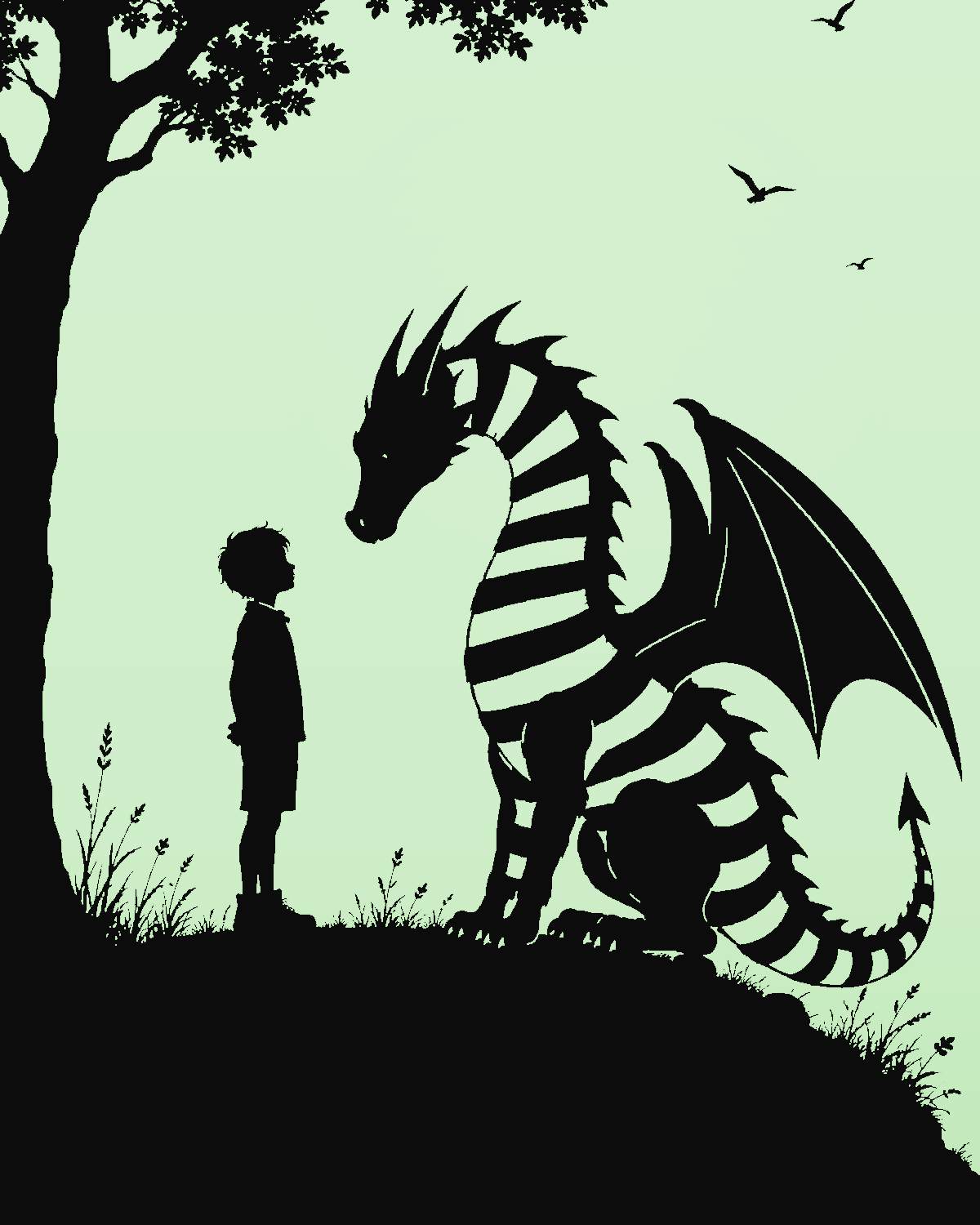
My Father’s Dragon cover
Garden Heights Academy

My Father's Dragon

This workbook is for Garden Heights members. Sign in to continue.

Sign in with Google →
New here? Just sign up with Google — your account includes Matilda, our gift book, forever.
My Father's Dragon · Garden Heights Academy

Part 2

for My Father's Dragon · Part 2 · Chapters 3–4
a novel by Ruth Stiles Gannett
30 min5 Parts
This workbook is built on a solid pedagogical foundation, effectively integrating content and language learning based on the CLIL framework (Content and Language Integrated Learning), elevated by our unique 5th C — Connection — and an integrated Standardized Test section that weaves every SAT & TOEFL question type right into the novel, so learners build real test skills easily, naturally, and with fun.
What Happens in Part 2

Elmer reaches the island of Tangerina, where tangerine trees grow everywhere. To get to Wild Island, he must cross a chain of dangerous black rocks in the dark, using his flashlight and compass to find the way. Once safely across, Elmer explores the thick, steamy jungle of Wild Island, eating tangerines to keep up his strength. Deep in the jungle he discovers the wide river where the wild animals keep the baby dragon — but the island is crawling with fierce, proud creatures, and Elmer realizes he will have to use his wits to reach the dragon without being eaten.

What We Will Learn
FocusWhat It Means
GeographyIslands, oceans, and finding your way
SettingThe wild jungle of Wild Island
SuspenseThe growing danger around Elmer
Chapter Summary
ChapterKey Events
Ch.3Elmer reaches Tangerina, then crosses a chain of dark rocks to Wild Island using his flashlight and compass
Ch.4Elmer explores the jungle, eats tangerines for strength, and finds the river where the dragon is kept
💭 Before You Read · Warm-Up (not scored)

There are no wrong answers here — just think, guess, and talk:

  • Elmer must cross a chain of slippery black rocks in the dark, using only a flashlight and a compass. What would be the scariest part of a crossing like that?
  • The jungle is ‘hot, thick, and steamy.’ How does a story’s setting change the way danger feels?
  • Predict: the island is full of fierce animals. Since Elmer is small, how do you think he’ll get past creatures far bigger than himself?
Copyright Notice

This is an independent study guide created by Garden Heights Academy to support reading comprehension and literary analysis. It contains original analysis questions and does not reproduce any text from the novel. My Father's Dragon is a work by Ruth Stiles Gannett. This guide is not affiliated with, authorized by, or endorsed by the author or any associated rights holders. Students should read the original book, available from libraries and booksellers.
Part 1
Vocabulary
Study 10 key words from Chapters 3–4, then answer each question.
🌴Knowledge Bank · Inside a Rainforest
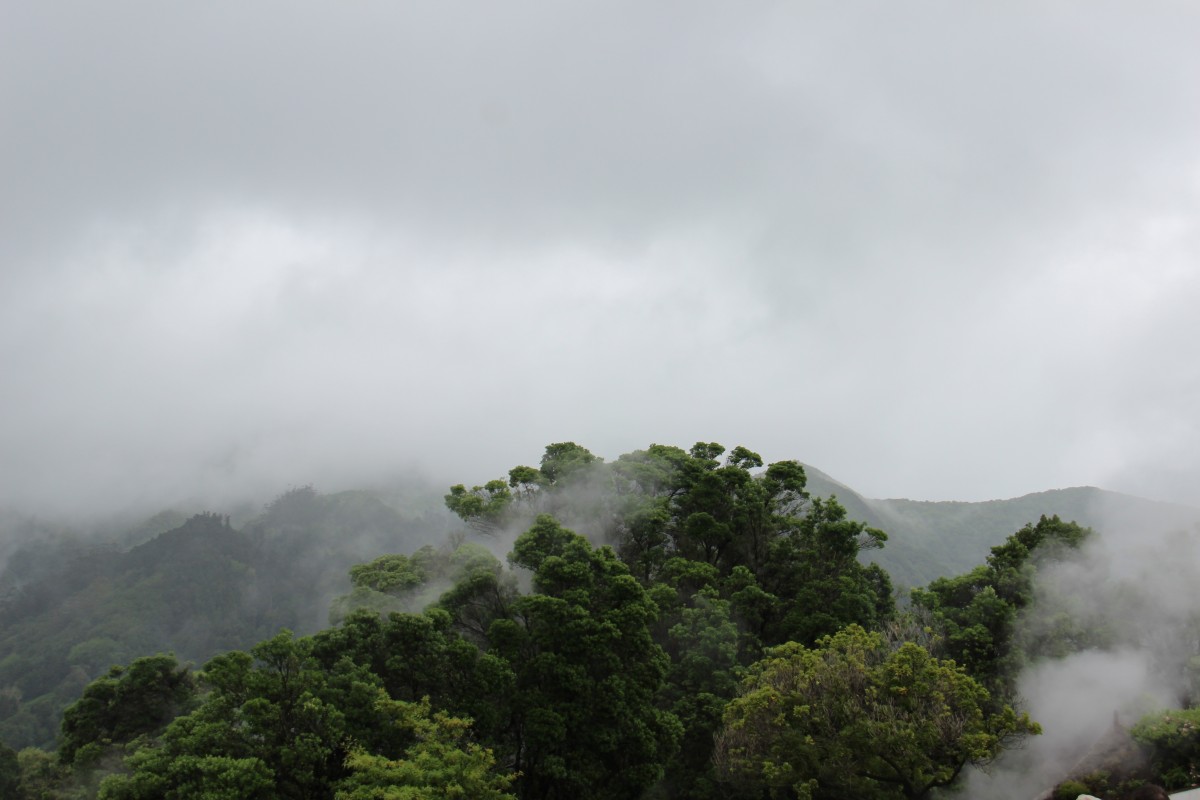
Geography · RainforestsWild Island is buried under hot, dripping jungle — what scientists call a tropical rainforest. Forests like this grow near the equator, the warm middle band of the Earth, where rain falls on almost every day of the year. The tallest trees spread their leaves into a green roof called the canopy, so little sunlight ever reaches the ground, and the floor below stays dim, damp, and muddy. Vines hang in tangles, insects hum without stopping, and unseen animals call from the branches overhead. More kinds of living thing crowd together here than anywhere else on land, and nothing else on our planet is so busy or so green as a tropical rainforest.
islandn.Ch.3
Land with water all around it
“Wild Island sat far out at sea.”
compassn.Ch.3
A tool that points north to guide you
“Elmer used a compass in the dark.”
junglen.Ch.4
A hot, thick forest
“The jungle was steamy and tangled.”
explorev.Ch.4
To travel around to discover a place
“Elmer began to explore the island.”
dangerousadj.Ch.3
Likely to cause harm
“The black rocks were dangerous to cross.”
fierceadj.Ch.4
Wild, strong, and frightening
“The animals were fierce and proud.”
currentn.Ch.4
Water moving in one direction
“The river had a strong current.”
steamyadj.Ch.4
Hot and damp
“The jungle air was steamy.”
directionn.Ch.3
The way something faces or moves
“The compass showed the right direction.”
nibblev.Ch.4
To eat in small bites
“Elmer would nibble tangerines for energy.”

ⓘ The vocabulary words in this list are selected to help you understand and complete this workbook. Some may not appear verbatim in the original novel.

1Land with water all around it is an ___.Ch.3
2True or False: A “compass” is a tool that points north to help guide you.Ch.3
3A hot, thick forest is a ___.Ch.4
4True or False: Something “dangerous” is safe and harmless.Ch.3
5Fill in each blank with the correct word.Ch.3–4
Word choices:islandcompassjunglecurrent- some words will not be used
Elmer used a to cross to the , then explored its thick .
6True or False: To “explore” means to travel around and discover a place.Ch.4
7The wild animals are described as wild and frightening, or ___.Ch.4
8True or False: A river’s “current” is water moving in one direction.Ch.4
9Fill in the blanks with the correct words.Ch.4
Word choices:explorefiercesteamynibble- some words will not be used
Elmer would tangerines while the animals roamed nearby.
10The way something faces or moves is its ___.Ch.3
Part 2
Comprehension
How well do you understand Chapters 3–4?
🏝Knowledge Bank · Islands and Their Animals
Science · Island LifeAn island is a piece of land with water reaching all the way around it. That ring of water works like a wall: land animals cannot simply stroll across to an island, and they cannot stroll away either. Over enormous stretches of time, the creatures stranded there change until they exist nowhere else on Earth. Giant tortoises live wild only in the Galapagos, and every lemur in the world comes from Madagascar. Scientists prize such places because each is a small world running by its own rules. Being cut off by the sea is exactly why an island can hold a crowd of beasts so wonderfully strange.
1What grows everywhere on the island of Tangerina?Ch.3
2How does Elmer cross from Tangerina to Wild Island?Ch.3
3What does Elmer use to find his way in the dark?Ch.3
4True or False: Elmer eats tangerines to keep up his strength.Ch.4
5Write the numbers 1–5 in the boxes to show the correct order across Part 2. Number 1 = what happens first.Ch.3–4
  • Elmer explores the steamy jungle of Wild Island.
  • He eats tangerines to keep up his strength.
  • Elmer arrives at the island of Tangerina.
  • He crosses a chain of dark rocks using his flashlight and compass.
  • He finds the river where the dragon is kept.
6True or False: Wild Island is calm and empty, with no animals around.Ch.4
7What is the jungle of Wild Island like?Ch.4
8What important place does Elmer find in the jungle?Ch.4
9True or False: Elmer realizes he must use his wits to get past the animals.Ch.4
10Fill in the blanks to complete the sentence.Ch.3–4
Word choices:compasstangerinesriverjungle- some words will not be used
Elmer ate and used a to cross to the island.
Part 3
Literary Elements
Understanding HOW and WHY Ruth Stiles Gannett creates certain feelings across Chapters 3–4.
🌌Knowledge Bank · Building Suspense Through Setting
Literary Craft · Setting and MoodA setting is more than a place for characters to stand; a skilled writer uses it to steer what the reader feels. The dark, dripping forest here makes us uneasy long before a single animal appears. That tight, edge-of-the-seat feeling has a name: suspense. Ruth Stiles Gannett fills her island with tangled vines, sudden noises, and deep shadow, so that danger seems to be waiting behind every trunk. Swap those details for sunshine and birdsong and the very same jungle would read like a holiday. Choosing details on purpose — sound, light, weather — is how an author builds mood.
📚 Literary Devices in This Part · definitions & examples
The setting of dark rocks and steamy jungle creates a dangerous, exciting mood.
Suspense is tension about what will happen; the fierce animals make us fear for Elmer.
Imagery is description that paints a picture — the hot, tangled jungle we can almost feel.
The questions below are mixed — not grouped by device. Decide which device each one is about.
1The dark rocks and steamy jungle where the action happens are the story’s —Ch.3–4
2The setting is the time and place where a story happens.Ch.3–4
3Fill in each blank with the correct word.Ch.3–4
Word choices:settingsuspenseimagerygoal- some words will not be used
The dark rocks and hot jungle are the story’s
The tension over what the animals will do is .
4The tension that makes us fear for Elmer among fierce animals is —Ch.3–4
5Suspense means the reader already knows exactly how everything ends.Ch.3–4
6Fill in each blank with the correct word.Ch.3–4
Word choices:imagerysettingsuspensemood- some words will not be used
Descriptions of the hot, tangled jungle we can almost feel are
The dark rocks form a dangerous .
7‘The hot, tangled jungle pressed close and dripping’ is an example of —Ch.3–4
8How does the dangerous setting most affect the story’s mood?Ch.3–4
9Fill in each blank with the correct word.Ch.3–4
Word choices:suspenseimagerysettingplot- some words will not be used
Rich description that paints the steamy jungle is
The fear over Elmer’s fate is .
10Why does the author pile on vivid jungle description?Ch.3–4
Part 4
Think Deeper
Four deeper challenges — no single-word recall. Read, weigh the evidence, and reason it through.
🧭Knowledge Bank · Finding North Without a Map
Navigation · CompassesOut at sea, or deep under trees, every direction can look identical, so travelers carry a tool. A compass holds a small magnetic needle that always swings around to point north, because the whole Earth behaves like an enormous magnet. Once north is settled, south, east, and west follow, and a traveler can hold a straight line instead of wandering in a slow circle. Sailors and explorers have trusted compasses for hundreds of years, and hikers still tuck one into a pocket today. When the ground ahead is unfamiliar, knowing your direction is what keeps a bold plan from ending up hopelessly lost.
1Claim: “Elmer relies on careful preparation to reach Wild Island safely.” — choose the two details that best prove it.Claim & Evidence
2Shows Elmer’s careful preparation, or just a detail of the setting? Tap each item to send it left or right.Sort into two
◄ Careful preparationJust a detail ►
3Match each cause to its result. For each cause, pick its result.Cause & Effect
Elmer must cross in the dark
The path is hard to find
The black rocks are dangerous
He reaches Wild Island
4Fill both blanks to complete the reasoning.Build the Argument
Elmer crosses the black rocks safely because , which shows that .
Part 5
Standardized Test
Key Details & Inference — SAT & TOEFL-style practice
🎯 You already have the skills from the sections above — this is just a fun way to meet real SAT & TOEFL-style questions. Read the passage (the highlighted words are tested below), then answer the questions below. Tap an answer to select it, then tap it again to confirm — you can change your choice until you confirm.

A tropical rainforest is one of the hottest, wettest, and busiest places on Earth. Most rainforests grow near the equator, the imaginary line around the middle of the planet, where the sun is strong all year. Warm air and almost daily rain keep the forest humid, so the air feels thick and steamy even in the shade. So many plants grow that they form layers: tall trees make a leafy roof called the canopy, and far below, the forest floor stays dim and damp. This green world is home to more kinds of animal than anywhere else; scientists believe over half of all land species live in rainforests. Many are hard to spot, because the thick leaves and dim light help creatures conceal themselves. To a small traveler, a rainforest can feel like a maze — beautiful, alive, and full of hidden eyes.

Original passage written for Garden Heights — not a quotation from the novel.
1Where do most rainforests grow?TOEFL · Factual Information
2The “equator” is —SAT · Words in Context
3Air that is “humid” is —SAT · Words in Context
4The leafy roof of tall trees is called the —TOEFL · Factual Information
5A “canopy” is —SAT · Words in Context
6About how many land species does the passage say live in rainforests?TOEFL · Factual Information
7The passage most strongly suggests that animals are hard to spot in a rainforest because —SAT · Inference
8According to the passage, the leafy roof of a rainforest is called the —TOEFL · Factual Information
9Why might a rainforest feel like a maze to a small traveler?SAT · Inference
10Prose Summary (TOEFL). Rainforests are hot, layered, and home to more kinds of life than anywhere else. This TOEFL task lists six sentences; choose the THREE that best capture the passage’s main ideas. The other three do not belong — they state minor details or ideas the passage does not present.TOEFL · Prose Summary
Part 6 · Optional
Creative Writing
A bonus challenge to practice your English. Take your time and have fun with it.
About This Section

This writing task is optional and is not part of your auto-graded score. The feedback below checks only the basics — length, spelling, and grammar — not whether your ideas are right or wrong. It is meant for classroom discussion and creative practice, so feel free to use your imagination!

Writing Task — Part 2 “Exploring a New Place”

Elmer explores a wild, steamy jungle far from home. Describe a place you would love to explore — real or imaginary. What would you see, hear, and feel there? Write at least 40 words.

You can start with: “The place I would most love to explore is…”
0 / 40 words minimum
🗣 Teach It · Just for Fun (optional)

No right or wrong — close the screen and tell someone nearby what happened in this part. Can’t find anyone? Tell yourself out loud. The moment you teach it, you truly understand it.

Garden Heights Academy

Part 2 Complete!

You finished Chapters 3–4 of My Father's Dragon.

Here are your auto-graded results:

-
points out of 100
Your Writing

Your writing was checked automatically for length, spelling, grammar, and whether you included the key parts of the scene. Scroll back to Part 5 anytime to read your feedback and improve your work.

Move on to Part 3 →

Independent study guide by Garden Heights Academy. Not affiliated with or endorsed by the author or any rights holders. Contains original analysis only; no text from the novel is reproduced.