New here? Just sign up with Google — your account includes Matilda, our gift book, forever.
My Side of the Mountain · Garden Heights
Part 4
for My Side of the Mountain · Part 4 · Chapters 10–12
8 Parts40 min
What Happens in Part 4
Sam builds himself a true home, and it is a marvel of patience and cleverness: he hollows out the inside of a huge, ancient hemlock tree, slowly burning and carving away the rotten heartwood until there is room enough to live inside the living trunk. He fashions a door, a bed of soft ferns, shelves for his tools, and even a fireplace with a clever smoke hole, so he can have warmth without burning down his own home. Snug and hidden inside the tree, Sam is no longer a visitor camping on the mountain; he is an inhabitant, as much a part of the forest as the creatures around him. And there are many creatures. Sam gets to know his wild neighbors and gives them names: a bold, thieving weasel he calls The Baron; a mischievous raccoon, Jessie Coon James, who raids his stores; deer mice, songbirds, and more. He watches the endless drama of the forest — who eats whom, who hides, who hunts — and comes to understand that he lives inside a vast, connected web of life, a whole community of plants and animals depending on one another. Sam is learning the deepest lesson the mountain has to teach: that he is not the master of this place, but one small, humble part of a living, breathing world.
The home as achievement, animal characters, and nature’s web
Cross-Curricular
A tree as a home — forest ecology and the web of life
Chapter Summary
Ch.
What happens
Chapter 10
The Hemlock Home — Sam patiently hollows out a giant hemlock tree, making a snug dwelling with a bed, shelves, and a clever fireplace; he becomes an inhabitant, not a visitor.
Chapters 11–12
Wild Neighbors — Sam names and befriends the animals — The Baron the weasel, Jessie Coon James the raccoon — and comes to see the mountain as a connected web of life.
Part 1
Vocabulary
Study 10 key words from Chapters 10–12, then answer each question.
🧠Knowledge Bank · Staying Warm Without a House
Building Skills · Shelter
Shelter is about controlling four ways a body loses heat. Conduction carries warmth into whatever you touch, which is why insulation underneath you matters more than a thicker blanket on top; convection carries it away in moving air; radiation carries it into a cold night sky; and evaporation carries it off with sweat and rain. Good wilderness shelters attack all four. They are small, because a smaller space is warmer; they sit off the ground on dry debris; they turn their back to the prevailing wind; and they use a thick layer of dry leaves or bark, which works because the still air trapped inside is the actual insulator. A hollow tree is a natural version of the same design. Builders also site a shelter carefully, avoiding valley bottoms where cold air pools at night and staying clear of dead branches that could fall.
Visual AidFour ways a body loses heat
Diagram for the Knowledge Bank on shelter. Each numbered row pairs one way heat escapes with the thing that stops it: conduction with insulation underneath, convection with a windbreak, radiation with a roof, evaporation with staying dry. Card 5 is the rule that follows from all four. Notice that only one of the four is about a blanket on top. A good wilderness shelter attacks every route at once, which is why it is small, off the ground and covered.
The four ways a body loses heat, as described in the Knowledge Bank. Drawn for Garden Heights Academy.
hollowv.Ch.10
To make empty on the inside
“Sam would hollow out the great tree.”
dwellingn.Ch.10
A place where someone lives
“The tree became a snug dwelling.”
ecosystemn.Ch.12
A community of living things and their surroundings
“The forest was a whole ecosystem.”
habitatn.Ch.12
The natural home of a plant or animal
“The mountain was the animals’ habitat.”
observev.Ch.11
To watch closely
“Sam loved to observe his wild neighbors.”
inhabitantn.Ch.10
One who lives in a place
“Sam became a true inhabitant of the forest.”
canopyn.Ch.12
The leafy top layer of a forest
“Birds nested high in the canopy.”
thievingadj.Ch.11
Given to stealing
“The thieving raccoon raided his stores.”
connectedadj.Ch.12
Joined or linked together
“All the living things were connected.”
humbleadj.Ch.12
Modest; not proud
“Sam felt humble before the living forest.”
ⓘ The vocabulary words in this list are selected to help you understand and complete this workbook. Some may not appear verbatim in the original novel.
🧠Knowledge Bank question
1According to the Knowledge Bank, why does insulation underneath you matter more than a thicker blanket on top?Ch.10
2A ‘dwelling’ is a place where someone lives.Ch.10
3A community of living things and their surroundings is an ___.Ch.12
4A ‘habitat’ is the natural home of a plant or animal.Ch.12
5Fill in each blank with the correct word.Ch.11
Word choices:observethievinghollowsneer- some words will not be used
Sam loved to his wild neighbors.
The raccoon raided his food stores.
6An ‘inhabitant’ is one who ___ a place.Ch.10
7The ‘canopy’ is the leafy top layer of a forest.Ch.12
8Things that are ‘connected’ are ___.Ch.12
9Fill in each blank with the correct word.Ch.12
Word choices:ecosystemhabitatdwellingcanopy- some words will not be used
The mountain was the animals’ .
The whole forest formed one .
10Someone ‘humble’ is ___.Ch.12
Part 2
Comprehension
Show you understood what happens in Chapters 10–12.
🧠Knowledge Bank · A Tree That Makes Its Own Shade
Dendrology · The Eastern Hemlock
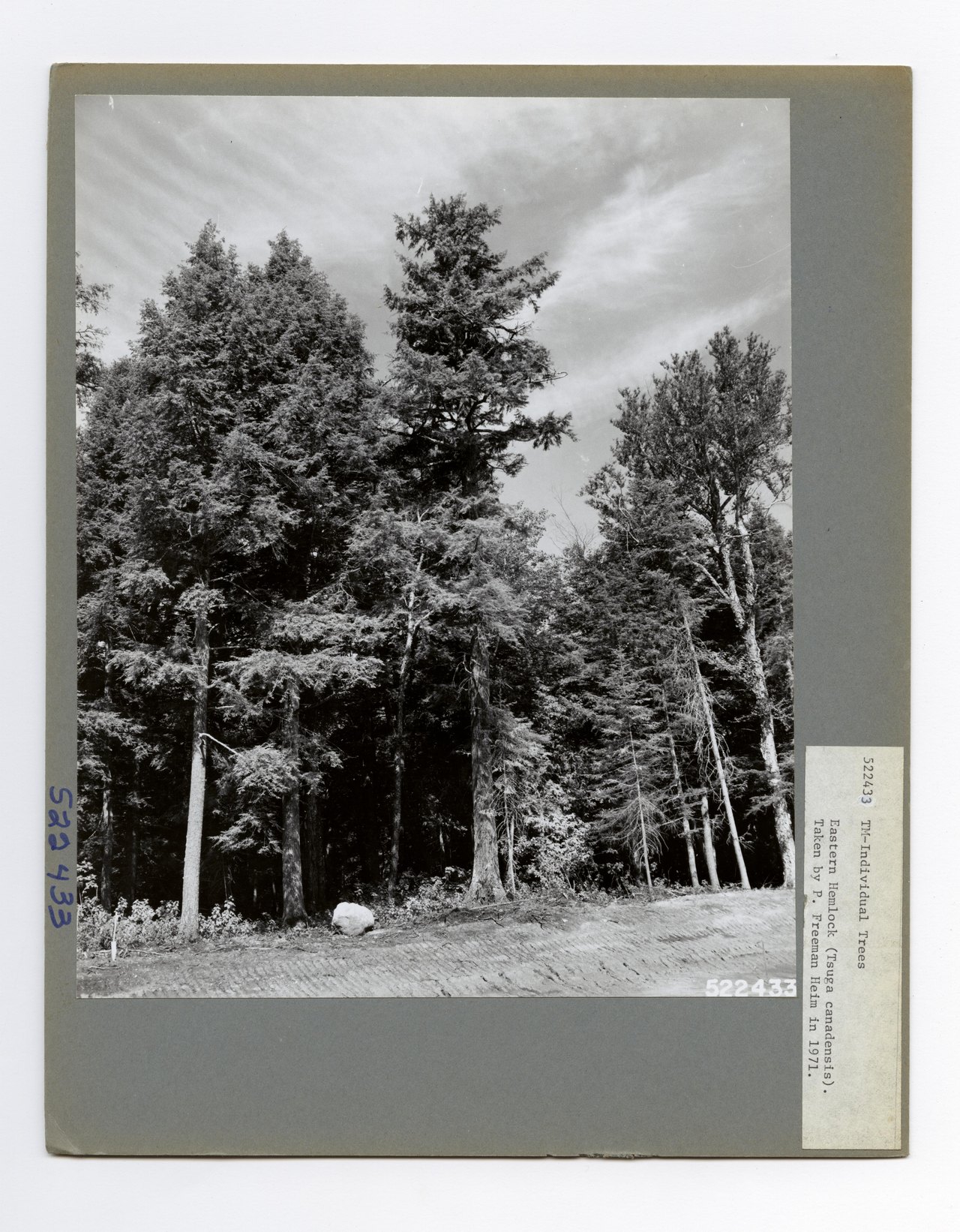
The eastern hemlock is unusual and worth knowing. It is extremely shade-tolerant, so seedlings survive for decades in dim understorey and take over slowly, and mature trees cast such dense shade that a hemlock grove has a sparse floor and a noticeably cool, damp microclimate. Foresters call such a species a climax tree because it dominates the final stage of forest succession. Hemlock groves shade trout streams and keep them cold, which is why the tree matters to whole watersheds. Its wood is coarse but its bark was once the region’s main source of tanning chemicals, and the tanning industry felled enormous numbers in the nineteenth century. Today it faces a smaller enemy: an introduced insect called the hemlock woolly adelgid, which feeds at the base of the needles and has killed hemlocks across large parts of the eastern range, a reminder that a dominant tree can still be fragile.
Visual AidThe tree that makes its own shade
An archival identification photograph of eastern hemlock. The Knowledge Bank explains that the species is extremely shade-tolerant, so its seedlings survive for decades in dim understorey and slowly take over, and that mature trees cast shade dense enough to leave a sparse floor and a cool, damp microclimate beneath. Foresters call such a species a climax tree. Look at how little grows under the crowns. That emptiness is not neglect; it is what the tree does to everything trying to grow beneath it.
Eastern hemlock, tree identification photograph; Digital Public Library of America. Source: Wikimedia Commons, public domain.
🧠Knowledge Bank question
1The Knowledge Bank explains that foresters call the eastern hemlock a climax tree because it ___.Ch.10
2Inside his tree, Sam builds a bed, shelves, and a ___.Ch.10
3Living in the tree, Sam is still just a visitor camping on the mountain.Ch.10
4Sam gives his wild neighbors ___.Ch.11
5Write the numbers 1–5 in the boxes to show the correct order of events. Number 1 = what happens first.Chapters 10–12
He names his animal neighbors, like The Baron.
Sam hollows out the giant hemlock tree.
He becomes a true inhabitant of the forest.
He sees the mountain as a connected web of life.
He builds a bed, shelves, and a clever fireplace.
6The Baron is a bold, thieving weasel.Ch.11
7Jessie Coon James is a raccoon who ___.Ch.11
8Watching the animals, Sam realizes the forest is a ___.Ch.12
9Sam decides he is the master of the mountain.Ch.12
10The deepest lesson the mountain teaches Sam is that he is ___.Ch.12
Part 3
Literary Elements
Understanding HOW and WHY Jean Craighead George tells the story across Chapters 10–12.
🧠Knowledge Bank · Why Specifics Are More Convincing
Literary Craft · Concrete Detail
Writing teachers repeat one instruction more than any other: be specific. The reason is that a concrete noun triggers a sensory image while an abstract one does not, so “a hollowed hemlock” puts a reader in a place that “a shelter” never will. Specificity also functions as evidence. A narrator who names tools, measurements and mistakes sounds like someone who has actually done the thing, which buys the trust a survival story needs. Novelists call this verisimilitude, the appearance of truth, and it is produced by accumulation rather than by any single claim. There is a limit worth watching. Detail that does not carry meaning becomes inventory, so skilled writers attach specifics to a decision or a consequence, letting each object earn its place by changing what the character can do.
Symbol
The hollowed hemlock home — standing for Sam’s transformation and his joining with nature.
Naming as character
Giving animals names (The Baron, Jessie) turns them into neighbors and characters.
Theme
The web of life — Sam learns he is one humble part of nature, not its master.
🧠Knowledge Bank question
1According to the Knowledge Bank, naming tools, measurements and mistakes makes a narrator sound ___.Ch.10
2Fill in each blank with the correct literary term.Ch.10
Word choices:symbolthemesettingrhyme- some words will not be used
The hollowed hemlock home is a of Sam’s transformation.
The web of life carries the book’s of belonging to nature.
3A symbol is an object that also stands for a bigger idea.Ch.10
4Naming the animals turns them from creatures into ___.Ch.11
5The tree home is a dwelling made WITHIN a tree so that Sam ___ nature.Ch.10
6George makes the animals into silly cartoons that do not act wild.Ch.11
7The web of life develops the book’s ___ that a human is part of nature.Ch.12
8Fill in each blank with the correct literary term.Ch.11
Word choices:naming as charactersymbolnarratorrhyme- some words will not be used
Giving the weasel a name, The Baron, is .
The tree home is a of Sam’s change.
9The tree home appears mostly at warm, safe moments in the story.Ch.10
10That Sam names his neighbors mainly shows both his loneliness and his ___.Ch.11
Part 4
Think Deeper
Four deeper challenges — no single-word recall. Read, weigh the evidence, and reason it out.
🧠Knowledge Bank · Could Everyone Do This
Environmental Science · Living Off the Land
A useful test of any way of living is what happens when it is multiplied. Ecologists measure this with carrying capacity, the number of individuals an area can support without degrading it. Estimates for hunting and gathering in temperate forest fall around one person per several square kilometers, which is why such societies were always small and mobile. Agriculture raised the figure by orders of magnitude, and industrial farming raised it again, which is what allows cities to exist at all. This reframes the romance of self-sufficiency honestly. One person living off a forest can be sustainable and instructive; a nation attempting it would strip the forest within a season. Environmental scientists therefore treat wilderness skills as a source of perspective rather than a plan, valuable because they show exactly how much land stands behind an ordinary meal.
Visual AidCould everyone live like this
Scale drawing for the Knowledge Bank on whether everyone could do what Sam does. The three squares are the land that stands behind one person's food, all drawn to the same scale: foraging, farming before machines, and the cropland each person on Earth has today. Notice square 3, the speck. It is not the forager's square, it is ours — and the drawing measures land, not virtue: one person on four square kilometers works precisely because there is one of him.
The land behind one person's food, drawn to one scale. Drawn for Garden Heights Academy.
Think back over these chapters. Ember by careful ember, a boy burns and scrapes out the heart of an ancient tree until he can crawl inside and stand up in a room that is also a living thing, and there he lays a bed of ferns, sets his few tools on shelves, and coaxes a small fire to warm him without burning his own walls. Outside, the forest goes on being itself: a weasel he calls the Baron slips through the roots, a raccoon named Jessie robs his larder, birds and mice and deer thread their lives around his. And the boy, snug in the trunk of a tree, understands at last that he has not conquered this mountain. He has been allowed, humbly, to become one more life inside it.
Original passage written for Garden Heights — not a quotation from the novel.
1Claim: “Part 4 teaches Sam that he is not the master of the mountain but one humble part of its web of life.” — choose the two details that best prove it.Claim & Evidence
2Master of nature (rejected), or Part of nature (Sam’s lesson)? Tap each detail to sort it — tap again to switch sides. You can keep tapping to change your answer.Sort into two
◄ Master of nature (rejected)Part of nature (Sam’s lesson) ►
3Match each cause to its result. For each cause, pick its result.Cause & Effect
Sam hollows out the hemlock→
He builds bed, shelves, fireplace→
He names The Baron and Jessie→
He sees the web of life→
🧠Knowledge Bank question
4Fill both blanks to complete the reasoning.Build the Argument
The Knowledge Bank argues that Sam's way of living could not be adopted by everyone because , which shows that .
Part 5
Standardized Test
Reading passage · A Tree as a Home: Forest Ecology · SAT & TOEFL-style practice
Read the passage — the highlighted words are tested — then answer. Tap an answer, then tap it again to confirm.
SATCentral Ideas — the passage's main point
SATDetail — a fact stated in the passage
SATWords in Context — a word's meaning in this passage
TOEFLFactual Information — a fact stated in the passage
TOEFLInsert Text — where a sentence best fits
A Forest's Web of Life
Sam’s home inside a living hemlock is a perfect way to understand forest ecology — the study of how all the parts of a woodland fit together. Consider that a single old tree is itself a small ecosystem. Its bark shelters insects, its high branches cradle birds’ nests, its leaves feed caterpillars, its roots trade food with fungi hidden in the soil, and, when part of it rots and hollows, its trunk becomes a den for a raccoon — or a home for a boy. By living inside a tree rather than in a cabin built upon the land, Sam becomes part of the forest instead of an outsider looking on.
A whole forest is arranged in layers: the tall canopy of treetops, the shrubby understory beneath, and the leaf-littered floor below. All of it is bound together by the flow of energy in what scientists call the web of life. The sun’s energy feeds the green plants; the plants feed the plant-eaters; the plant-eaters feed the hunters; and when any creature dies, its body returns nutrients to the soil to grow new plants. Every thread pulls on every other, and nothing in the forest lives alone. Sam’s neighbors — the weasel that hunts, the raccoon that raids — are each a strand in this web, and by the end so is Sam himself. Jean Craighead George uses Sam’s year to lead him toward a humble truth: a human being is a small and connected part of the natural world.
Original passage written for Garden Heights — not a quotation from the novel.
1What does the passage mainly explain?SAT · Central Ideas
2A single old tree shelters insects, birds, fungi, and can become a ___.TOEFL · Factual Information
3By living inside a tree, Sam becomes ___ the forest.SAT · Detail
4A forest is arranged in ___.TOEFL · Factual Information
5In the passage, the canopy is the ___ of the forest.SAT · Detail
6In the web of life, the sun’s energy first feeds the ___.TOEFL · Factual Information
7When a creature dies, its body returns ___ to the soil.SAT · Detail
8The passage says that in the forest, nothing lives ___.SAT · Central Ideas
9In the passage, ecosystem most nearly means ___.SAT · Words in Context
10Insert Text (TOEFL). Look at the four squares [1]–[4] in the passage excerpt below. They show where the following sentence could be added: “Pull one thread, and the whole web trembles.”
All of it is bound together by the flow of energy in what scientists call the web of life. [1] The sun’s energy feeds the green plants, the plants feed the plant-eaters, and the plant-eaters feed the hunters. [2] Every thread pulls on every other. [3] Nothing in the forest lives alone. [4]
Where would the sentence fit best?TOEFL · Insert Text
Part 6 · Optional
Creative Writing
A bonus challenge to practice your English. Take your time and have fun with it.
About This Section
This writing task is optional and is not part of your auto-graded score. The feedback below checks only the basics — length, spelling, and grammar — not whether your ideas are right or wrong. It is meant for classroom discussion and creative practice, so feel free to use your imagination!
Writing Task — Part 4 “Part of Something Bigger”
Living in his tree, Sam learns he is not the master of the mountain but one small part of a connected web of life. Write about a time you felt part of something much bigger than yourself — a team, a family, nature, a community. What was it, and how did feeling connected change you? 6–10 sentences. End with why it matters to see ourselves as part of a whole.
You can start with: “For a while I thought it was all about me, until I realized...”
0 / 40 words minimum
🗣 Teach It · Just for Fun (optional)
No right or wrong — close the screen and tell someone nearby what happened in this part. Can’t find anyone? Tell yourself out loud. The moment you teach it, you truly understand it.
Part 4 Complete!
You finished Chapters 10–12 of My Side of the Mountain.
Here are your auto-graded results:
-
points out of 100
Teach it to someone
The best last step is to teach it. In your own words, explain what happened — retell a favorite scene, teach a character’s big choice, or sum up the main idea for a parent, friend, or classmate. When you can teach it clearly, you truly own it.
Independent study guide by Garden Heights. Not affiliated with or endorsed by Jean Craighead George. Contains original analysis only; no text from the novel is reproduced. Reference text: This workbook follows Jean Craighead George’s classic text (the standard Puffin edition sold worldwide). Revised 2023 UK editions change some wording and may not match the vocabulary studied here.
SAT® is a registered trademark of College Board, which is not affiliated with, and does not endorse, these materials. TOEFL® is a registered trademark of ETS. These materials are not endorsed or approved by ETS. Garden Heights is an independent provider of test-style reading practice.