New here? Just sign up with Google — your account includes Matilda, our gift book, forever.
📚
Garden Heights
Members sign in to continue.
Narnia: The Lion, the Witch and the Wardrobe · Garden Heights
Part 3
for Narnia: The Lion, the Witch and the Wardrobe · Part 3 · Chapters 5–6
a novel by C.S. Lewis
30 min6 Parts
This workbook is built on a solid pedagogical foundation, effectively integrating content and language learning based on the CLIL framework (Content and Language Integrated Learning), elevated by our unique 5th C — Connection — and an integrated Standardized Test section that weaves every SAT & TOEFL question type right into the novel, so learners build real test skills easily, naturally, and with fun.
💭 Before You Read · Just for Fun
No right or wrong answers — just think or chat about it: Has anyone ever not believed you when you were telling the truth? How could you prove that something amazing really happened?
What Happens in Part 3
Lucy insists Narnia is real, and Edmund spitefully says it is all pretend. Worried that Lucy is either lying or unwell, Peter and Susan take the problem to the old Professor. To their surprise, he reasons it out with logic: Lucy is honest and not mad, so perhaps she is simply telling the truth. Soon afterwards, while hiding from the housekeeper Mrs. Macready and her tour of visitors, all four children pile into the wardrobe at once — and tumble together into snowy Narnia. They go to Mr. Tumnus’s cave and find it wrecked: a notice says he has been arrested for High Treason for helping a human. A friendly robin, and then a talking Beaver, beckon them deeper into the forest.
What We Will Learn
Literary Element
What It Means
Plot
The chain of events that make up a story
Foreshadowing
Hints an author plants about what will happen next
Suspense
The tense feeling that makes a reader want to know what happens
Chapter Summary
Chapter
Key Events
Ch.5
Back on This Side of the Door — the others doubt Lucy; the Professor uses logic to argue she may be telling the truth
Ch.6
Into the Forest — all four children enter Narnia, find Mr. Tumnus’s cave ransacked and a notice of his arrest, and follow a robin and a Beaver
Copyright Notice
Independent study guide by Garden Heights. Not affiliated with or endorsed by C.S. Lewis or HarperCollins. No text from the novel is reproduced. Students should read the original book.
Part 1
Vocabulary
Study 10 key words from Chapters 5–6, then answer each question.
🧠Knowledge Bank · Doorways to Other Worlds
Lexicology · Doorways to Other Worlds
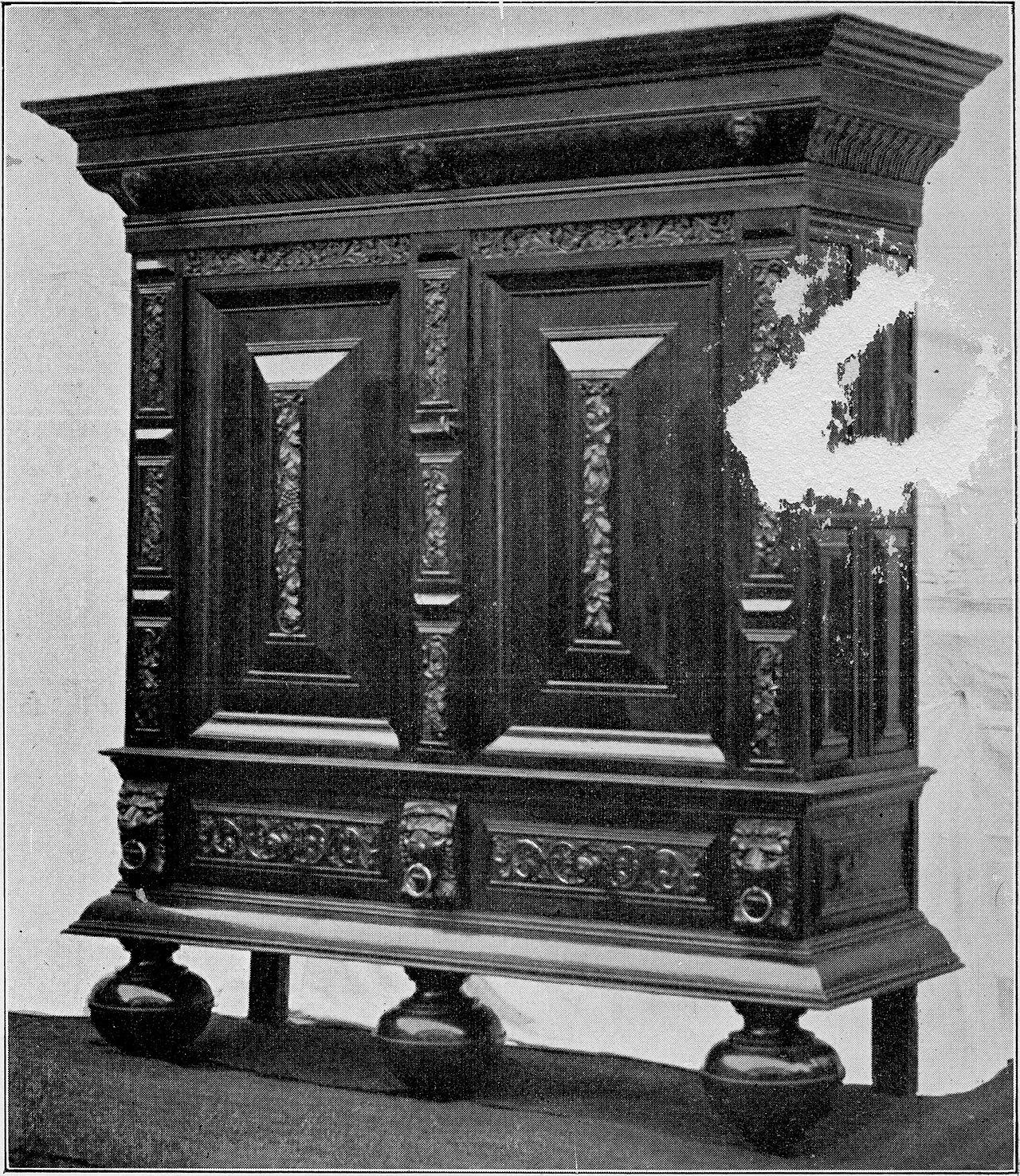
The wardrobe is a portal — a magic doorway that joins two worlds. Storytellers have loved this idea for a long time: Alice falls down a rabbit-hole in Alice’s Adventures in Wonderland, and a tornado carries Dorothy to Oz in The Wizard of Oz. Lewis adds his own clever rule: no time passes at home while the children are away in Narnia. A wardrobe that opens on another land is one of the oldest story patterns there is — the magic portal. From Alice’s rabbit-hole to folktale doors inside hills, myths worldwide let heroes cross into a second world; Lewis simply hides his gateway in a spare-room wardrobe. Suspense: The tense feeling that makes a reader want to know what happens. They go to Mr. Tumnus’s cave and find it wrecked: a notice says he has been arrested for High Treason for helping a human.
Visual AidA door that is only a door
Photograph of an old carved two-door cupboard, the kind of piece a wardrobe like the Professor’s might have been. The Knowledge Bank explains that the wardrobe is a portal, a doorway joining two worlds, and puts it beside Alice’s rabbit-hole and Dorothy’s tornado. This is a real cupboard from an old book plate; it opens onto shelves and nothing else, and it is not the wardrobe Lewis owned. Notice how ordinary it is. A portal in a story is almost always a plain thing — that is what makes crossing it a shock.
Carved armoire, reproduced from an old furniture plate. Source: Wikimedia Commons, public domain.
ⓘ Vocabulary words are selected to help you understand and complete this workbook. Some may not appear verbatim in the novel.
logicn.Ch.5
Careful, sensible reasoning
“The Professor used logic to decide whether Lucy was telling the truth.”
skepticaladj.Ch.5
Doubting; not easily convinced
“Peter and Susan were skeptical about Lucy’s strange story.”
evidencen.Ch.5
Facts that show whether something is true
“The Professor weighed the evidence before giving his opinion.”
treasonn.Ch.6
The crime of betraying your king or ruler
“The notice said Mr. Tumnus was guilty of High Treason.”
arrestv.Ch.6
To seize someone by official authority
“The Witch’s police had come to arrest the faun.”
ransackv.Ch.6
To search roughly, leaving a mess
“Someone had ransacked the cave and smashed the dishes.”
inscriptionn.Ch.6
Words written or printed on something
“The children read the inscription nailed to the floor.”
cautiousadj.Ch.6
Careful to avoid danger
“They were cautious as they crept through the silent wood.”
reluctantadj.Ch.6
Unwilling; hesitant
“Edmund was reluctant to follow the Beaver any further.”
beckonv.Ch.6
To signal someone to come, often with a hand
“The Beaver kept beckoning them deeper into the trees.”
🧠Knowledge Bank question
1According to the Knowledge Bank, what clever rule does Lewis add to the old idea of a doorway between worlds?Ch.5
2Someone who is “skeptical” believes everything at once.Ch.5
3“Evidence” is —Ch.5
4Fill in each blank with the correct word.Ch.5–6
Word choices:treasonlogicarrestevidence- some words will not be used
The Professor reasoned carefully using
The crime of betraying your ruler is
5To “arrest” someone means to set them free.Ch.6
6To “ransack” a room is to —Ch.6
7An “inscription” is —Ch.6
8A “cautious” person is careful to avoid danger.Ch.6
9Fill in each blank with the correct word.Ch.6
Word choices:reluctantbeckoncautiousransack- some words will not be used
Unwilling and hesitant means
To wave someone toward you is to
10When the Beaver “beckons,” he —Ch.6
Part 2
Comprehension
How well do you understand Chapters 5–6?
🧠Knowledge Bank · Weighing the Evidence
Narrative Logic · Weighing the Evidence
When characters disagree, good readers do what the Professor does: weigh the evidence. Is Lucy usually honest? Does she seem unwell? Could her story be true? Following an argument step by step helps you decide what to believe in a story. Chapter 5 covers Back on This Side of the Door — the others doubt Lucy; the Professor uses logic to argue she may be telling the truth. Chapter 6 covers Into the Forest — all four children enter Narnia, find Mr. Tumnus’s cave ransacked and a notice of his arrest, and follow a robin and a Beaver. Lucy insists Narnia is real, and Edmund spitefully says it is all pretend. Worried that Lucy is either lying or unwell, Peter and Susan take the problem to the old Professor. The Professor’s answer is worth copying. He never asks whether Narnia sounds likely; he asks whether Lucy has ever lied before — which turns a wild claim into a question about testimony.
Visual AidThe Professor weighs the evidence
Diagram for the Knowledge Bank on weighing the evidence. It takes the three questions the Knowledge Bank puts in the Professor’s mouth and draws each one arriving at its answer, then lets the three answers arrive together at a decision. It does not claim the Professor proves Narnia exists; he only shows that believing Lucy is the sensible choice. Notice the shape: three small steps and one conclusion. That is what an argument looks like when it is drawn.
The Professor’s three questions as given in the Knowledge Bank. Drawn for Garden Heights Academy.
🧠Knowledge Bank question
1The Knowledge Bank says good readers do what the Professor does when characters disagree. What is that?Ch.5
2The Professor surprises Peter and Susan by taking Lucy’s story seriously.Ch.5
3How does the Professor decide Lucy is probably telling the truth?Ch.5
4Why do all four children end up in the wardrobe at the same time?Ch.6
5Put these events from Part 3 in the correct order. Write 1–4 (1 = first).Ch.5–6
They find Mr. Tumnus’s cave wrecked and read the arrest notice.
A robin and then a Beaver beckon the children into the forest.
All four children hide in the wardrobe and reach Narnia.
The Professor argues that Lucy may be telling the truth.
6This time, all four children reach Narnia together.Ch.6
7What do the children find when they reach Mr. Tumnus’s cave?Ch.6
8What is Mr. Tumnus charged with on the notice?Ch.6
9A talking Beaver signals the children to follow him deeper into the forest.Ch.6
10Which child is most unwilling and grumbling as they follow the Beaver?Ch.6
Part 3
Literary Elements
Understanding HOW and WHY C.S. Lewis writes Chapters 5–6 the way he does.
🧠Knowledge Bank · Plot, Foreshadowing, and Suspense
Literary Technique · Plot, Foreshadowing, and Suspense
Part 3 moves the plot forward by getting all four children into Narnia. The wrecked cave and the arrest notice are foreshadowing — signs of danger ahead — and they build suspense, making us anxious to know what has happened to Mr. Tumnus. This part is full of real-world ideas. Civics & history — unjust law: “High Treason” is a real, serious crime against a ruler. Here a cruel ruler punishes kindness — a sign of tyranny. Science — beavers: real beavers are “ecosystem engineers” that build dams, change rivers, and make homes for other animals. To their surprise, he reasons it out with logic: Lucy is honest and not mad, so perhaps she is simply telling the truth. Soon afterwards, while hiding from the housekeeper Mrs. Macready and her tour of visitors, all four children pile into the wardrobe at once — and tumble together into snowy Narnia. Lewis waited three chapters to send all four through, and the wait does work: by the time the wardrobe opens, the reader is already impatient.
📚 Literary Devices in This Part · definitions & examples
Plot is the chain of events in a story. In Part 3 the plot moves forward by bringing all four children into Narnia.Foreshadowing is a hint of what is to come. The wrecked cave and arrest notice warn the reader that the Witch is dangerous.Suspense is the tense, anxious feeling that makes you want to keep reading. Not knowing what happened to Tumnus creates suspense.
The questions below are mixed — not grouped by device. Decide which device each one is about.
🧠Knowledge Bank question
1According to the Knowledge Bank, what do the wrecked cave and the arrest notice do?Ch.6
2Foreshadowing plants clues about events that have not happened yet.Ch.6
3Fill in the blanks with the correct words.Ch.6
Word choices:suspensetensionfeastbeaver- some words will not be used
The tense feeling that makes you read on is called
Suspense fills a story with
4The ransacked cave and arrest notice hint at danger ahead. This is called —Ch.6
5Go beyond the definition: why does Lewis end Part 3 with the wrecked cave and Tumnus’s mysterious arrest?Ch.6
6Fill in the blanks with the correct words.Ch.6
Word choices:ploteventssnowcave- some words will not be used
The chain of events in a story is the
A plot is made of a series of
7The worried, on-edge feeling about Mr. Tumnus’s fate is called —Ch.6
8Plot is the order of events that happen in a story.Ch.6
9Fill in the blanks with the correct words.Ch.6
Word choices:foreshadowingcluestearobin- some words will not be used
Hinting at future events is called
Foreshadowing gives the reader
10Which sentence best combines plot, foreshadowing, and suspense from Part 3?Ch.5–6
Part 4
Think Deeper
Four deeper challenges — no single-word recall. Read, weigh the evidence, and reason it through.
🧠Knowledge Bank · Actions Have Consequences
Ethical Reasoning · Actions Have Consequences
Mr. Tumnus is arrested for the “crime” of being kind to Lucy, and Edmund’s earlier lie has begun to do real harm. Part 3 shows a key idea of the book: choices have consequences, and even small unkindness can hurt others. The wise old Professor reflects Lewis’s own life as a teacher who valued careful thinking and logic. There may even be a real wardrobe behind the story: Lewis’s family owned a large carved oak wardrobe made by his grandfather, which he knew as a boy. That very wardrobe is now kept in a museum, the Wade Center, in the United States. That detail matters more than it looks. Lewis is not inventing a portal from nothing; he is pointing at a real piece of furniture in a real family, which is exactly how the book keeps working — one ordinary object at a time, until an ordinary house turns strange.
1Claim: “The Professor decides Lucy is probably telling the truth.” — choose the two details that best prove it.Claim & Evidence
2Is it a real reason to believe Lucy? Tap each item to sort it — tap again to switch sides. You can keep tapping to change your answer.Sort into two
◄ A real reasonNot a real reason ►
3Match each cause to its result. For each cause, pick its result.Cause & Effect
A tour of the house threatens to find them→
All four finally stand in Narnia→
They find Tumnus’s cave torn apart→
A robin keeps hopping ahead of them→
🧠Knowledge Bank question
4Fill both blanks to complete the reasoning.Build the Argument
The Knowledge Bank argues that Part 3 shows choices have consequences because , which shows that .
Part 5
Standardized Test · Key Details & Inference
Part 3 practices Key Details, Inference, and Main Idea — with a quick vocabulary review — in friendly SAT– and TOEFL–style questions. No pressure: you have already met these skills above!
Read the passage — the highlighted words are tested — then answer. Tap an answer, then tap it again to confirm.
SATInference — a conclusion the passage implies
SATWords in Context — a word's meaning in this passage
SATCentral Ideas — the passage's main point
SATText Structure & Purpose — how the passage is built, and why
TOEFLVocabulary — a tested word's meaning here
TOEFLFactual Information — a fact stated in the passage
TOEFLNegative Factual — the statement the passage does NOT support
TOEFLInference — what the passage implies
Beavers as Ecosystem Engineers
Beavers are among the very few animals that can reshape an entire habitat — they are, in effect, nature’s engineers. With powerful front teeth that never stop growing, a beaver gnaws through timber, dragging branches and mud into a stream to build a strong barrier called a dam. Behind the dam the water spreads out and slows down, forming a calm, deep pond. There the cautious beaver builds its dome-shaped home, called a lodge.
These ponds do far more than shelter beavers. By slowing the current, a dam traps sediment and filters the water, making it cleaner downstream. The still water creates a wetland where fish, frogs, insects, and birds can thrive, and it can even hold back floods after heavy rain. Because so many other living things depend on the beaver’s work, scientists call it a keystone species — a creature whose presence supports a whole community. When beavers vanish from a region, the effects can cascade outward: the pond drains, the wetland dries, and the animals that relied on it disappear. For this reason, conservationists in many countries now work to restore beaver populations, having learned from clear evidence that a single busy animal can quietly sustain the health of an entire landscape.
Original passage written for Garden Heights — not a quotation from the novel.
1The passage most strongly suggests that removing beavers from a region can —SAT · Inference
2In the passage, the word “thrive” is closest in meaning to —TOEFL · Vocabulary
3In the passage, “cautious” most nearly means —SAT · Words in Context
4In the passage, “evidence” most nearly means —SAT · Words in Context
5According to the passage, what does a beaver build across a stream?TOEFL · Factual Information
6Which choice best states the central idea of the passage?SAT · Central Ideas
7According to the passage, which of these does a beaver’s dam NOT do?TOEFL · Negative Factual
8It can reasonably be inferred that removing beavers from an area would —SAT · Inference
9The passage most strongly suggests that a “keystone species” is one that —TOEFL · Inference
10The author describes the beaver as a kind of ‘engineer’ mainly to —SAT · Text Structure & Purpose
Part 6 · Optional
Creative Writing
A bonus challenge to practice your English.
About This Section
This writing task is optional and not part of your auto-graded score. Feedback checks length, spelling, and grammar only.
Writing Task — Part 3 “The Wrecked Cave”
Use suspense to describe the moment the children find Mr. Tumnus’s ruined cave. Show what they see and how the wreckage makes them feel afraid for their friend. Write at least 40 words.
You can start with: “The door of the little cave hung off its hinges, and as the children looked inside they saw…”
0 / 40 words minimum
🗣 Teach It · Just for Fun (optional)
No right or wrong — close the screen and tell someone nearby what happened in this part. Can’t find anyone? Tell yourself out loud. The moment you teach it, you truly understand it.
Part 3 Complete!
You finished Chapters 5–6 of Narnia: The Lion, the Witch and the Wardrobe.
Here are your auto-graded results:
-
points out of 100
Teach it to someone
The best last step is to teach it. In your own words, explain what happened — retell a favorite scene, teach a character’s big choice, or sum up the main idea for a parent, friend, or classmate. When you can teach it clearly, you truly own it.
SAT® is a registered trademark of College Board, which is not affiliated with, and does not endorse, these materials. TOEFL® is a registered trademark of ETS. These materials are not endorsed or approved by ETS. Garden Heights is an independent provider of test-style reading practice.