New here? Just sign up with Google — your account includes Matilda, our gift book, forever.
📚
Garden Heights
Members sign in to continue.
Narnia: The Lion, the Witch and the Wardrobe · Garden Heights
Part 4
for Narnia: The Lion, the Witch and the Wardrobe · Part 4 · Chapters 7–8
a novel by C.S. Lewis
30 min6 Parts
This workbook is built on a solid pedagogical foundation, effectively integrating content and language learning based on the CLIL framework (Content and Language Integrated Learning), elevated by our unique 5th C — Connection — and an integrated Standardized Test section that weaves every SAT & TOEFL question type right into the novel, so learners build real test skills easily, naturally, and with fun.
💭 Before You Read · Just for Fun
No right or wrong answers — just think or chat about it: If you heard that a brave hero was finally coming to set things right, how would you feel? And why might someone choose to sneak away and help the “bad side” instead?
What Happens in Part 4
Mr. Beaver leads the children secretly to his snug lodge beside his dam, where Mrs. Beaver serves a warm fish dinner. The Beavers share the great news: Aslan, the rightful King and a mighty Lion, is on the move and coming back to Narnia. They recite an old prophecy — that when two Sons of Adam and two Daughters of Eve sit on the four thrones at Cair Paravel, the Witch’s reign and her life will end. In the middle of the talk, the children realize that Edmund has slipped away — gone, Mr. Beaver fears, to the White Witch. The friends set off at once to find Aslan at the Stone Table.
What We Will Learn
Literary Element
What It Means
Prophecy
A foretelling of what is destined to happen
Foreshadowing
Hints an author drops about coming events
Suspense
The tense feeling created by danger or uncertainty
Chapter Summary
Chapter
Key Events
Ch.7
A Day with the Beavers — Mr and Mrs. Beaver feed the children and tell them that Aslan is coming and share the old prophecy about the four thrones
Ch.8
What Happened After Dinner — the children learn more about Aslan and the Witch, then discover that Edmund has crept away to betray them
Copyright Notice
Independent study guide by Garden Heights. Not affiliated with or endorsed by C.S. Lewis or HarperCollins. No text from the novel is reproduced. Students should read the original book.
Part 1
Vocabulary
Study 10 key words from Chapters 7–8, then answer each question.
🧠Knowledge Bank · Aslan: A Name That Means ‘Lion’
Lexicology · Aslan: A Name That Means ‘Lion’
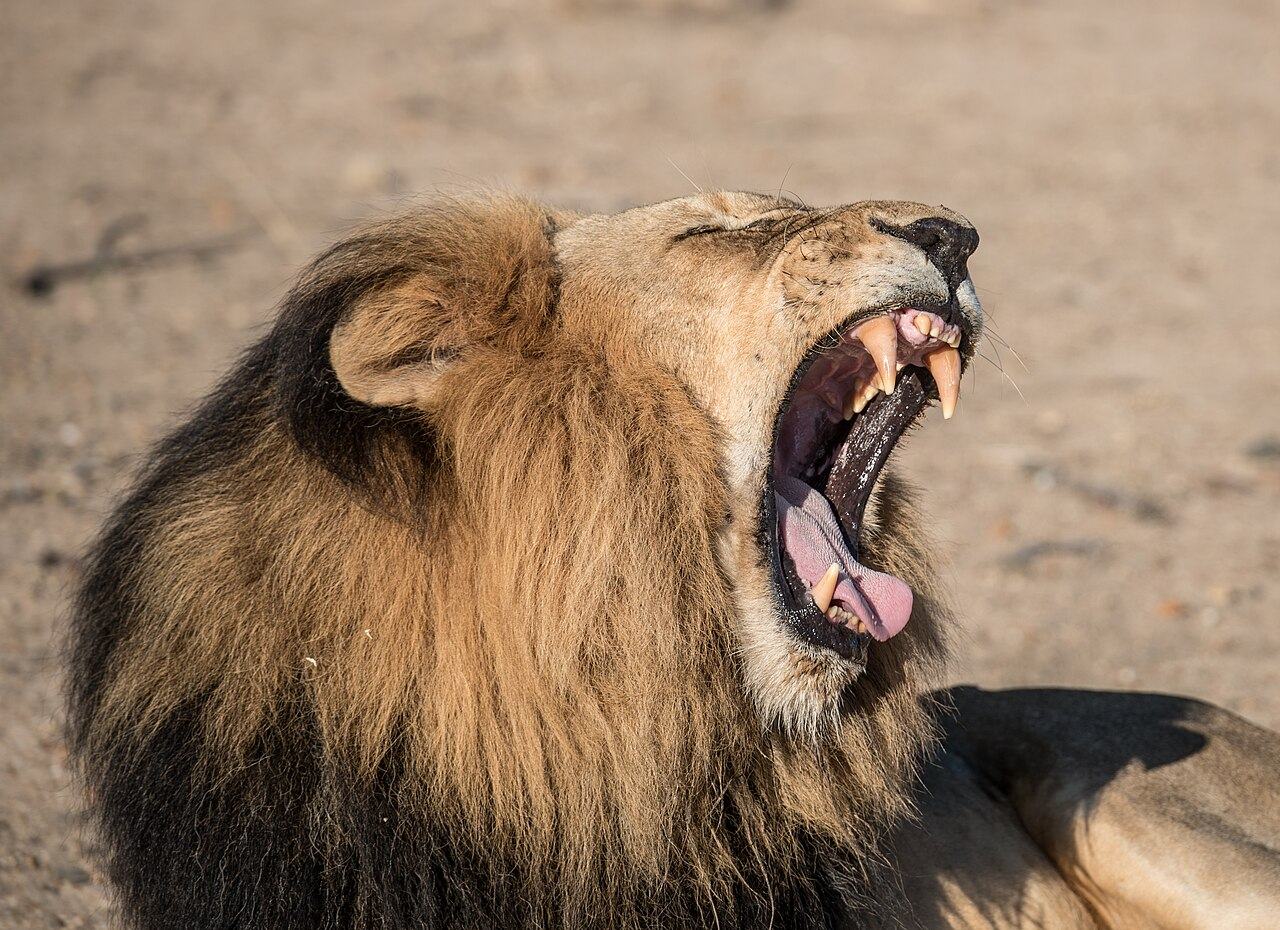
Aslan is simply the Turkish word for “lion.” Lewis chose it on purpose. For thousands of years the lion has been a symbol of kingship and courage — people call it “the king of beasts,” and lions appear on the crowns, flags, and coats of arms of many countries. Making the true King of Narnia a great Lion would have felt instantly noble to readers. ‘Aslan’ is the Turkish word for lion, and for thousands of years the lion has stood for courage and kingship in myth, heraldry and scripture. The prophecy of the four thrones follows another ancient pattern — the oracle or foretelling that drives so many legends. The prophecy is a naming trick as well. Cair Paravel, Aslan, four thrones — Lewis hands Narnia a vocabulary that sounds inherited rather than invented, so a reader quietly assumes the country has a long unwritten past.
Visual AidWhat the name means
Photograph of a male lion. The Knowledge Bank explains that Aslan is simply the Turkish word for lion, and that for thousands of years the lion has stood for kingship and courage on crowns, flags and coats of arms. The file that holds this picture calls it a roar; with the eyes closed it may just as well be a yawn, and the animal is a real lion with no connection to the novel. Notice the mane and the teeth — the two things that made people choose this animal, out of all animals, to mean a king.
Male lion, Unsplash photograph. Source: Wikimedia Commons, CC0.
ⓘ Vocabulary words are selected to help you understand and complete this workbook. Some may not appear verbatim in the novel.
damn.Ch.7
A barrier built to hold back water
“Mr. Beaver had built a fine dam across the stream.”
lodgen.Ch.7
A beaver’s home; a small dwelling
“Inside the lodge it was warm and smelled of fish.”
prophecyn.Ch.7
A statement about what will happen in the future
“The old prophecy spoke of four humans on four thrones.”
reignn.Ch.7
The rule of a king or queen
“The prophecy said the Witch’s reign would one day end.”
thronen.Ch.7
The special chair of a king or queen
“There were four empty thrones waiting at Cair Paravel.”
traitorn.Ch.8
A person who betrays others
“Mr. Beaver feared Edmund had become a traitor.”
rumorn.Ch.7
A story passed around that may not be true
“A rumor was spreading that Aslan had come back.”
murmurv.Ch.7
To speak very softly
“Mr. Beaver began to murmur so no spy could hear.”
briskadj.Ch.8
Quick and lively
“They set off at a brisk pace to reach Aslan.”
duskn.Ch.8
The time of day when the light begins to fade
“At dusk the friends hurried through the darkening wood.”
🧠Knowledge Bank question
1According to the Knowledge Bank, what does the name Aslan mean, and why did Lewis choose it?Ch.7
2A “lodge” is a beaver’s home.Ch.7
3A “prophecy” is —Ch.7
4Fill in each blank with the correct word.Ch.7
Word choices:thronereigndamprophecy- some words will not be used
The special chair of a king or queen is a
The rule of a king or queen is called a
5A “traitor” is someone who is loyal and faithful.Ch.8
6A “rumor” is —Ch.7
7To “murmur” is to —Ch.7
8If you walk at a “brisk” pace, you move quickly and with energy.Ch.8
9Fill in each blank with the correct word.Ch.7–8
Word choices:dusktraitormurmurbrisk- some words will not be used
The fading light of evening is called
A person who betrays others is a
10“Dusk” is the time when —Ch.8
Part 2
Comprehension
How well do you understand Chapters 7–8?
🧠Knowledge Bank · Following a Prophecy
Narrative Logic · Following a Prophecy
When a story gives you a prophecy or rhyme about the future, treat it like a promise to keep checking. Note exactly what it predicts — here, four humans on four thrones — and watch for the moment it comes true. Tracking a prophecy helps you predict where the plot is heading. Chapter 7 covers A Day with the Beavers — Mr and Mrs. Beaver feed the children and tell them that Aslan is coming and share the old prophecy about the four thrones. Chapter 8 covers What Happened After Dinner — the children learn more about Aslan and the Witch, then discover that Edmund has crept away to betray them. Mr. Beaver leads the children secretly through the snow to his snug lodge beside the dam, where the fire is lit, the news of Aslan is waiting, and Mrs. Beaver serves a warm fish dinner.
Visual AidA prophecy is a promise to keep checking
Diagram for the Knowledge Bank on following a prophecy. It states what the rhyme promises in one box, then breaks that promise into the three things a reader should watch for, with what Part 4 already shows about each. It does not tell the reader how the prophecy ends. Notice that the very first piece, four humans, is already in trouble the moment Edmund slips away: a prophecy is useful exactly because it lets you spot that.
The prophecy’s terms as given in the Knowledge Bank. Drawn for Garden Heights Academy.
🧠Knowledge Bank question
1The Knowledge Bank explains how to treat a prophecy in a story. What does it advise?Ch.7
2Mrs. Beaver gives the children a warm meal of fish.Ch.7
3What is the great news the Beavers share?Ch.7
4According to the prophecy, what will happen when four humans sit on the four thrones at Cair Paravel?Ch.7
5Who is Aslan?Ch.7
6Put these events from Part 4 in the correct order. Write 1–4 (1 = first).Ch.7–8
The Beavers tell of Aslan and recite the old prophecy.
Mr. Beaver leads the children to his lodge.
The friends set off to find Aslan at the Stone Table.
The children notice that Edmund has slipped away.
7During the talk, the children discover that Edmund has disappeared.Ch.8
8Where does Mr. Beaver fear Edmund has gone?Ch.8
9How did Mr. Beaver guess that Edmund had already met the Witch?Ch.8
10After Edmund vanishes, the others decide to give up and go home.Ch.8
Part 3
Literary Elements
Understanding HOW and WHY C.S. Lewis writes Chapters 7–8 the way he does.
🧠Knowledge Bank · Prophecy and Suspense
Literary Technique · Prophecy and Suspense
Lewis uses an old prophecy to give the children a mission and to make us hope. At the same time, Edmund’s quiet disappearance creates suspense and a sense of dread — we know, before the others fully do, that he is heading into danger and betrayal. Civics & history — rightful rule: the prophecy says the true kings and queens will replace the Witch — the idea of a rightful ruler versus one who seized power. Science — day & night: dusk is the fading light as Earth turns away from the Sun — the children race against the dark. The Beavers share the great news: Aslan, the rightful King and a mighty Lion, is on the move and coming back to Narnia. They recite an old prophecy — that when two Sons of Adam and two Daughters of Eve sit on the four thrones at Cair Paravel, the Witch’s reign and her life will end. A prophecy is a promise the plot owes the reader, and Edmund slips out while it still stands unpaid.
📚 Literary Devices in This Part · definitions & examples
A prophecy is a foretelling of what is destined to happen. The Beavers’ rhyme about the four thrones is a prophecy.Foreshadowing hints at events to come. Edmund’s quiet exit foreshadows his betrayal.Suspense is the tense feeling created by danger or uncertainty. Edmund’s disappearance fills Part 4 with suspense.
The questions below are mixed — not grouped by device. Decide which device each one is about.
🧠Knowledge Bank question
1According to the Knowledge Bank, why does Edmund's quiet disappearance create suspense?Ch.7
2Foreshadowing prepares the reader for something that will happen later.Ch.8
3Fill in the blanks with the correct words.Ch.8
Word choices:suspensedangerfishbeaver- some words will not be used
The tense feeling of not knowing what happens next is
Suspense often comes from a sense of
4Edmund slipping away unnoticed is a hint of betrayal to come. This is called —Ch.8
5Go beyond the definition: why is it so tense that we sense Edmund’s danger before the other children do?Ch.8
6Fill in the blanks with the correct words.Ch.7
Word choices:prophecyfuturefishdam- some words will not be used
A foretelling of what will happen is a
A prophecy is about the
7The anxious feeling once the children realize Edmund is missing is called —Ch.8
8A prophecy tells of something that is meant to happen in the future.Ch.7
9Fill in the blanks with the correct words.Ch.8
Word choices:foreshadowinghintslodgethrone- some words will not be used
Hinting at later events is called
Foreshadowing gives the reader
10Which sentence best combines prophecy, foreshadowing, and suspense from Part 4?Ch.7–8
Part 4
Think Deeper
Four deeper challenges — no single-word recall. Read, weigh the evidence, and reason it through.
🧠Knowledge Bank · Loyalty and Betrayal
Ethical Reasoning · Loyalty and Betrayal
Part 4 sets loyalty against betrayal. The Beavers risk their lives to help the children, while Edmund sneaks off to the Witch for the promise of sweets and power. As Aslan’s name brings hope, Edmund’s choice brings danger — two very different ways to treat the people who trust you. Mr and Mrs. Beaver live in a cozy lodge beside a dam — and real beavers do exactly this. Using their strong teeth, beavers fell small trees and pile up sticks and mud to dam a stream, creating a pond. In the middle they build a dome-shaped lodge with its entrance hidden under water, so enemies cannot easily get in. Lewis gives his Beavers a real animal’s clever, hard-working nature. Set the two households side by side. The Beavers have almost nothing and give the children everything; the Witch has everything and gives Edmund a sweet. The book is measuring generosity against bribery.
1Claim: “Edmund has secretly taken the Witch’s side.” — choose the two details that best prove it.Claim & Evidence
2Who does each detail describe? Tap each item to sort it — tap again to switch sides. You can keep tapping to change your answer.Sort into two
◄ AslanThe White Witch ►
3Match each cause to its result. For each cause, pick its result.Cause & Effect
The Beavers say Aslan is on the move→
An old rhyme tells of four empty thrones→
Edmund hears the others praise Aslan→
Edmund quietly slips out the door→
🧠Knowledge Bank question
4Fill both blanks to complete the reasoning.Build the Argument
The Knowledge Bank argues that Part 4 sets loyalty against betrayal because , which shows that .
Part 5
Standardized Test · Inference & Author’s Purpose
Part 4 practices Inference and Author’s Purpose — plus a quick vocabulary and detail review — in friendly SAT– and TOEFL–style questions. No pressure: you have already met these skills above!
Read the passage — the highlighted words are tested — then answer. Tap an answer, then tap it again to confirm.
SATWords in Context — a word's meaning in this passage
SATCentral Ideas — the passage's main point
SATInference — a conclusion the passage implies
SATText Structure & Purpose — how the passage is built, and why
TOEFLVocabulary — a tested word's meaning here
TOEFLFactual Information — a fact stated in the passage
TOEFLInsert Text — where a sentence best fits
TOEFLRhetorical Purpose — why the author included a detail
Earth's Tilt and the Seasons
Narnia’s ‘endless winter’ is a fantasy, but on our own planet the seasons follow a real and predictable pattern. Earth is tilted on its axis — the imaginary line through its center — as it travels in a great orbit around the Sun. Because of this tilt, different parts of the planet lean toward or away from the Sun at different times of the year, and that is what gives us summer and winter. When a region leans away from the Sun, its sunlight arrives at a low, slanting angle and spreads thin, so the days grow short and brisk. Near the North and South Poles this effect is extreme: for weeks the Sun barely clears the horizon, holding the land in a long dusk, and the ground can stay frozen for years in a state scientists call permafrost.
Yet even there, winter is only temporary — as Earth continues its orbit, the same region eventually tilts back toward the Sun and the season changes. This steady cycle is what makes a land locked in permanent winter feel so unnatural. Scientists study these patterns to predict the weather, plan farming, and understand the climate. Knowing that spring must return, no matter how long the cold endures, is not only science — it is also a quiet reason for hope.
Original passage written for Garden Heights — not a quotation from the novel.
1In the passage, “brisk” most nearly means —SAT · Words in Context
2In the passage, the word “temporary” is closest in meaning to —TOEFL · Vocabulary
3In the passage, “dusk” most nearly means —SAT · Words in Context
4According to the passage, why do scientists study seasonal patterns?TOEFL · Factual Information
5According to the passage, what causes Earth’s seasons?TOEFL · Factual Information
6Which choice best states the central idea of the passage?SAT · Central Ideas
7It can reasonably be inferred that a world with a truly endless winter would —SAT · Inference
8Insert Text (TOEFL). Look at the four squares [1]–[4] in the passage excerpt below. They show where the following sentence could be added: “That is why, at the very same moment, it can be summer in Australia and winter in Canada.”
Earth is tilted on its axis — the imaginary line through its center — as it travels in a great orbit around the Sun. [1] Because of this tilt, different parts of the planet lean toward or away from the Sun at different times of the year, and that is what gives us summer and winter. [2] When a region leans away from the Sun, its sunlight arrives at a low, slanting angle and spreads thin, so the days grow short and cold. [3] Near the North and South Poles this effect is extreme: for weeks the Sun barely rises, and the ground can stay frozen for years as permafrost. [4]
Where would the sentence fit best?TOEFL · Insert Text
9The author explains the science of the seasons mainly to —SAT · Text Structure & Purpose
10The author ends by calling the return of spring ‘a quiet reason for hope’ mainly to —TOEFL · Rhetorical Purpose
Part 6 · Optional
Creative Writing
A bonus challenge to practice your English.
About This Section
This writing task is optional and not part of your auto-graded score. Feedback checks length, spelling, and grammar only.
Writing Task — Part 4 “News of Aslan”
Imagine you are one of the children hearing the name Aslan for the first time. Describe the feeling the name gives you and why a great Lion might bring the friends hope. Write at least 40 words.
You can start with: “When Mr. Beaver first whispered the name ‘Aslan,’ a strange feeling ran through me, and I began to hope that…”
0 / 40 words minimum
🗣 Teach It · Just for Fun (optional)
No right or wrong — close the screen and tell someone nearby what happened in this part. Can’t find anyone? Tell yourself out loud. The moment you teach it, you truly understand it.
Part 4 Complete!
You finished Chapters 7–8 of Narnia: The Lion, the Witch and the Wardrobe.
Here are your auto-graded results:
-
points out of 100
Teach it to someone
The best last step is to teach it. In your own words, explain what happened — retell a favorite scene, teach a character’s big choice, or sum up the main idea for a parent, friend, or classmate. When you can teach it clearly, you truly own it.
SAT® is a registered trademark of College Board, which is not affiliated with, and does not endorse, these materials. TOEFL® is a registered trademark of ETS. These materials are not endorsed or approved by ETS. Garden Heights is an independent provider of test-style reading practice.