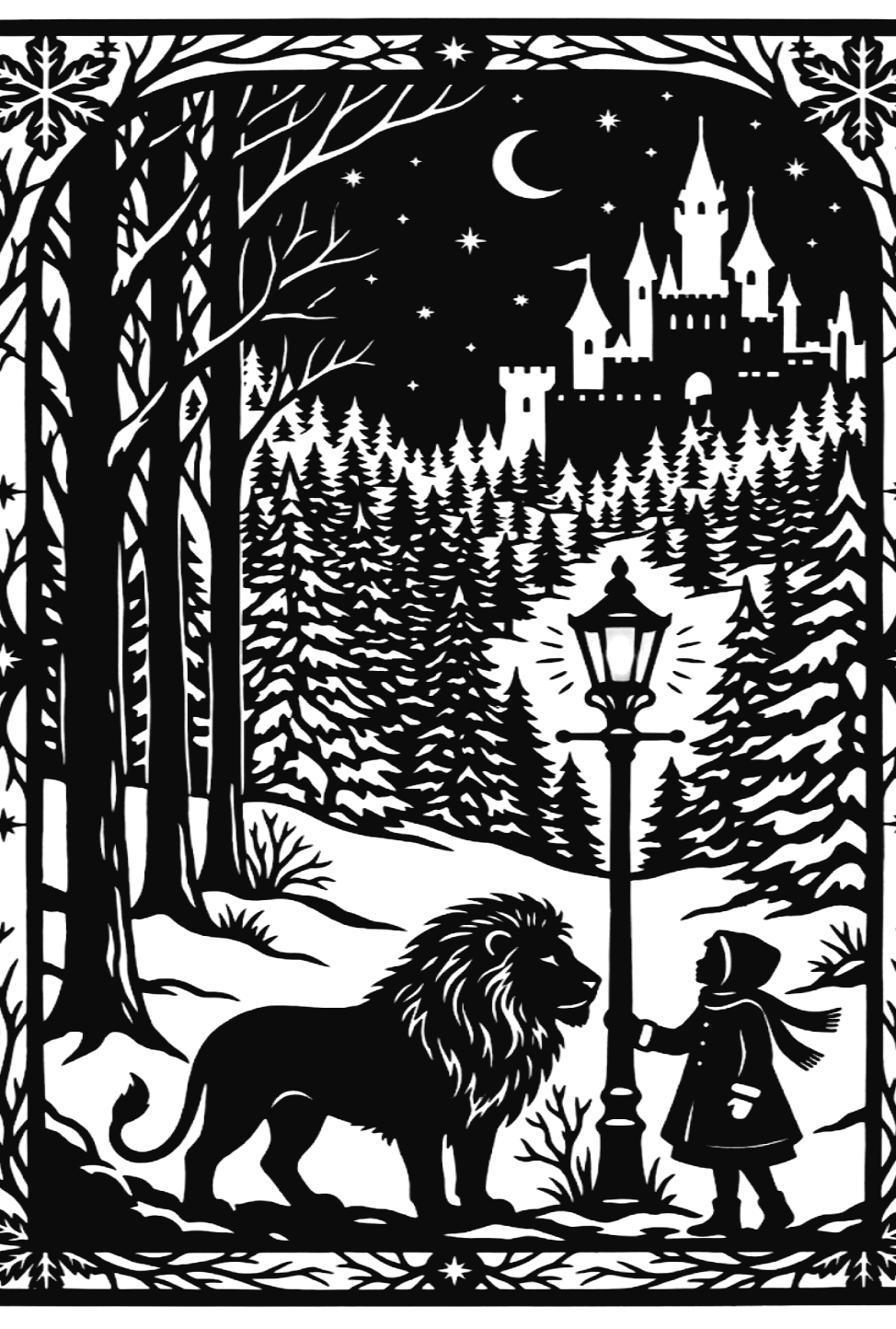
New here? Just sign up with Google — your account includes Matilda, our gift book, forever.
📚
Garden Heights
Members sign in to continue.
Narnia: The Lion, the Witch and the Wardrobe · Garden Heights
Part 6
for Narnia: The Lion, the Witch and the Wardrobe · Part 6 · Chapters 11–12
a novel by C.S. Lewis
30 min6 Parts
This workbook is built on a solid pedagogical foundation, effectively integrating content and language learning based on the CLIL framework (Content and Language Integrated Learning), elevated by our unique 5th C — Connection — and an integrated Standardized Test section that weaves every SAT & TOEFL question type right into the novel, so learners build real test skills easily, naturally, and with fun.
💭 Before You Read · Just for Fun
No right or wrong answers — just think or chat about it: Have you ever had to do something brave even though you were scared? What helped you do it? Do you think being brave means never feeling afraid?
What Happens in Part 6
Traveling with Edmund, the Witch finds her sledge useless as the snow melts into rushing streams and the first flowers and birds of spring appear. In her fury she turns a merry party of creatures to stone. Meanwhile, the three children and the Beavers reach the great Stone Table on its hill and meet Aslan at last, surrounded by his army. Aslan is majestic and kind. He shows Peter the castle of Cair Paravel far off by the sea. Then the Witch’s wolf captain, Maugrim, attacks Susan; Peter kills it with his new sword in his first battle, and Aslan knights him “Sir Peter Wolf’s-Bane.” Aslan sends a rescue party racing after a second wolf to save Edmund.
What We Will Learn
Literary Element
What It Means
Imagery
Describing words that bring a scene to life
Climax of a scene
The most exciting, turning-point moment
Characterization
How an author reveals a character’s qualities
Chapter Summary
Chapter
Key Events
Ch.11
Aslan Is Nearer — spring melts the Witch’s power; in her rage she turns creatures to stone, while the children near the Stone Table
Ch.12
Peter’s First Battle — the children meet Aslan; Peter kills the wolf Maugrim, is knighted, and a party rides to rescue Edmund
Copyright Notice
Independent study guide by Garden Heights. Not affiliated with or endorsed by C.S. Lewis or HarperCollins. No text from the novel is reproduced. Students should read the original book.
Part 1
Vocabulary
Study 10 key words from Chapters 11–12, then answer each question.
🧠Knowledge Bank · How a Knight Is Made
Lexicology · How a Knight Is Made
When Aslan knights Peter by touching his shoulder with the flat of a sword, Lewis is using the real medieval ceremony called dubbing. In the Middle Ages a brave fighter could be made a knight this way, and then had to follow the code of chivalry: be courageous, stay loyal, keep your word, and protect those weaker than yourself — just what Peter must now learn to do. When Peter is knighted after the battle, Lewis draws on the real medieval code of chivalry — bravery, honor and protecting the weak. Banners like Aslan’s red lion come from heraldry, the medieval system of crests that told friend from foe across a battlefield. Characterization: How an author reveals a character’s qualities. The shift from pursue to summon mirrors the part’s movement from one problem toward another.
ⓘ Vocabulary words are selected to help you understand and complete this workbook. Some may not appear verbatim in the novel.
majesticadj.Ch.12
Grand and dignified, like a king
“Aslan stood majestic and golden among his followers.”
manen.Ch.12
The long hair on a lion’s or horse’s neck
“The great Lion shook his golden mane.”
valiantadj.Ch.12
Very brave
“It was a valiant deed for Peter to face the wolf.”
dreadn.Ch.12
Great fear
“Peter felt a cold dread as the wolf rushed at him.”
knightn.Ch.12
A warrior of high rank; to make someone a knight
“Aslan made Peter a knight after the battle.”
bannern.Ch.11
A long flag, often bearing a symbol
“Aslan’s banner showed a great red lion.”
pursuev.Ch.12
To chase or follow
“A party set out to pursue the second wolf.”
summonv.Ch.12
To call someone to come
“Aslan summoned his swiftest creatures.”
tremblingadj.Ch.12
Shaking, often from fear or cold
“Susan came down from the tree, still trembling.”
fierceadj.Ch.12
Violent and frightening
“The fierce wolf bared its teeth and sprang.”
🧠Knowledge Bank question
1According to the Knowledge Bank, what does the code of chivalry require of a knight?Ch.12
2A “mane” is the long hair on a lion’s or horse’s neck.Ch.12
3Someone “valiant” is —Ch.12
4Fill in each blank with the correct word.Ch.12
Word choices:dreadknightmanemajestic- some words will not be used
Great fear is called
A warrior of high rank is a
5A “banner” is a long flag, often with a symbol on it.Ch.11
6To “pursue” the wolf means to —Ch.12
7To “summon” someone is to —Ch.12
8If you are “trembling,” you are perfectly calm and still.Ch.12
9Fill in each blank with the correct word.Ch.12
Word choices:fiercevaliantsummonpursue- some words will not be used
Violent and frightening means
Very brave means
10A “fierce” animal is —Ch.12
Part 2
Comprehension
How well do you understand Chapters 11–12?
🧠Knowledge Bank · Cause and Effect
Narrative Logic · Cause and Effect
Part 6 is full of cause and effect. The thaw (cause) makes the Witch’s sledge useless (effect); Maugrim’s attack (cause) leads to Peter’s first battle and his knighthood (effect). Chapter 11 covers Aslan Is Nearer — spring melts the Witch’s power; in her rage she turns creatures to stone, while the children near the Stone Table. Chapter 12 covers Peter’s First Battle — the children meet Aslan; Peter kills the wolf Maugrim, is knighted, and a party rides to rescue Edmund. Traveling with Edmund, the Witch finds her sledge useless as the snow melts into rushing streams and the first flowers and birds of spring appear. In her fury she turns a merry party of creatures to stone. Meanwhile, the three children and the Beavers reach the great Stone Table on its hill and meet Aslan at last, surrounded by his army.
Visual AidEach cause, and what it sets off
Diagram for the Knowledge Bank on cause and effect. It draws the two chains the Knowledge Bank names, the thaw and the wolf, as three boxes each, and labels the middle box twice: it is the effect of the first and the cause of the last. It adds no links the chapters do not contain. Notice that neither chain stops after one step. That is the habit to build: when something happens in a story, ask what it will make happen next.
The two chains named in the Knowledge Bank. Drawn for Garden Heights Academy.
🧠Knowledge Bank question
1The Knowledge Bank gives one cause and its effect from Part 6. Which pair does it name?Ch.11
2As her power weakens, the Witch grows kinder.Ch.11
3Where do the children finally meet Aslan?Ch.12
4Who attacks Susan, leading to Peter’s first battle?Ch.12
5Put these events from Part 6 in the correct order. Write 1–4 (1 = first).Ch.11–12
The children reach the Stone Table and meet Aslan.
Aslan sends a party to rescue Edmund.
Peter kills the wolf and Aslan knights him.
The thaw ruins the Witch’s sledge as spring arrives.
6Peter kills the wolf with the sword Father Christmas gave him.Ch.12
7What does Aslan do for Peter after the battle?Ch.12
8How does Peter feel as the wolf charges him?Ch.12
9After the wolf is killed, Aslan sends a party to rescue Edmund.Ch.12
10What does Aslan show Peter in the distance?Ch.12
Part 3
Literary Elements
Understanding HOW and WHY C.S. Lewis writes Chapters 11–12 the way he does.
🧠Knowledge Bank · Imagery and the Hero’s First Test
Literary Technique · Imagery and the Hero’s First Test
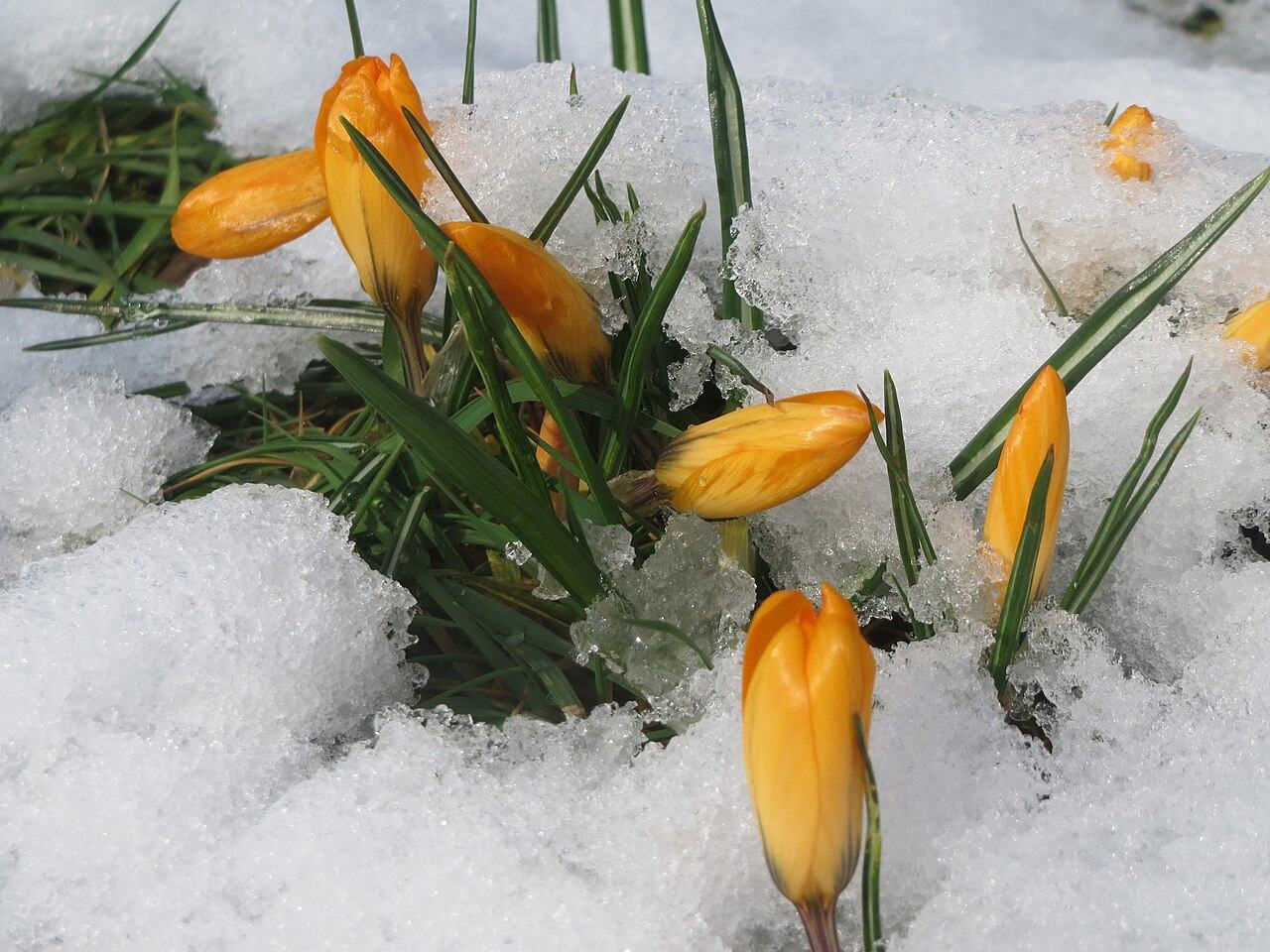
Lewis uses bright imagery — melting snow, crocuses, birdsong — to make spring feel alive after the long winter. He also gives Peter a hero’s first test: a frightening fight he would rather avoid. How Peter acts when he is afraid tells us what kind of leader he is becoming. Science — the seasons: spring arrives as Earth’s tilt turns the land back toward the Sun; melting snow, crocuses, and birdsong are real signs of it. Science — wolves & lions: wolves are real pack hunters; a lion’s mane makes it look bigger and protects its neck. Aslan is majestic and kind. He shows Peter the castle of Cair Paravel far off by the sea. Then the Witch’s wolf captain, Maugrim, attacks Susan; Peter kills it with his new sword in his first battle, and Aslan knights him “Sir Peter Wolf’s-Bane.” Aslan sends a rescue party racing after a second wolf to save Edmund. Peter does not want the fight and wins it anyway; that gap is where Lewis puts courage.
Visual AidThe flower that comes up through snow
Photograph of crocuses coming up through melting snow. The Knowledge Bank explains that Lewis uses bright imagery, melting snow, crocuses and birdsong, to make spring feel alive after the long winter. This is the real plant doing the real thing: it flowers so early that it often opens before the snow has gone. The photograph was taken in a garden in March and has no connection to the novel. Notice that the snow and the flowers are in the same picture at once — which is exactly the image Lewis chose.
Crocus chrysanthus in snow, 8 March 2016. Source: Wikimedia Commons, CC0.
📚 Literary Devices in This Part · definitions & examples
Imagery is describing words that bring a scene to life. Lewis paints spring with melting snow, crocuses, and birdsong.A scene’s climax is its most exciting, turning-point moment. Peter’s fight with the wolf is the climax of Part 6.Characterization is how an author reveals a character’s qualities. Peter’s brave action shows the leader he is becoming.
The questions below are mixed — not grouped by device. Decide which device each one is about.
🧠Knowledge Bank question
1According to the Knowledge Bank, what does Peter's first test reveal?Ch.11
2Peter killing the wolf is the high point, or climax, of the scene.Ch.12
3Fill in the blanks with the correct words.Ch.12
Word choices:characterizationactionsswordwolf- some words will not be used
Revealing what a character is like is called
We learn about Peter through his brave
4The most exciting, decisive moment of a scene is its —Ch.12
5Go beyond the definition: what does Peter fighting the wolf even though he is ‘sick with fear’ mainly reveal about him?Ch.12
6Fill in the blanks with the correct words.Ch.11
Word choices:imagerysenseswolfmane- some words will not be used
Describing words that bring a scene to life are called
Imagery appeals to the reader’s
7Showing Peter’s courage through how he acts in battle is an example of —Ch.12
8Imagery helps the reader see, hear, and feel a scene.Ch.11
9Fill in the blanks with the correct words.Ch.12
Word choices:climaxexcitingbannerthaw- some words will not be used
The turning-point, peak moment of a scene is the
A climax is usually the most
10Which sentence best combines imagery, climax, and characterization from Part 6?Ch.11–12
Part 4
Think Deeper
Four deeper challenges — no single-word recall. Read, weigh the evidence, and reason it through.
🧠Knowledge Bank · Courage Means Acting Despite Fear
Ethical Reasoning · Courage Means Acting Despite Fear
Peter is “sick with fear” when he faces the wolf, yet he charges anyway. Part 6 shows the book’s idea of courage: not the absence of fear, but doing the right and brave thing even while you are afraid. That is how an ordinary boy begins to become a king. Aslan’s camp stands by the Stone Table — a huge gray slab covered with strange, ancient carvings. It echoes real places from long ago: people thousands of years back raised great standing stones and stone altars, such as Stonehenge in England, for ceremonies we still do not fully understand. The Table’s great age hints that Narnia’s ‘Deep Magic’ is older than anyone living can remember. Imagery: Describing words that bring a scene to life. Climax of a scene: The most exciting, turning-pointmoment.
1Claim: “Spring’s arrival shows the Witch’s power is finally breaking.” — choose the two details that best prove it.Claim & Evidence
2What does each moment reveal? Tap each item to sort it — tap again to switch sides. You can keep tapping to change your answer.Sort into two
◄ Peter’s courageThe Witch’s cruelty ►
3Match each cause to its result. For each cause, pick its result.Cause & Effect
The snows melt into rushing water→
Spring shames the Witch’s magic→
A wolf springs straight at Susan→
Peter shows courage at the Table→
🧠Knowledge Bank question
4Fill both blanks to complete the reasoning.Build the Argument
The Knowledge Bank argues that Peter's fight defines courage because , which shows that .
Part 5
Standardized Test · Reference & Inference
Part 6 practices Reference (what a word points to), Sentence Meaning, and Inference — plus a vocabulary review — in friendly SAT– and TOEFL–style questions. No pressure: you have already met these skills above!
Read the passage — the highlighted words are tested — then answer. Tap an answer, then tap it again to confirm.
SATWords in Context — a word's meaning in this passage
SATInference — a conclusion the passage implies
SATText Structure & Purpose — how the passage is built, and why
TOEFLVocabulary — a tested word's meaning here
TOEFLFactual Information — a fact stated in the passage
TOEFLReference — what a pronoun refers to
TOEFLSentence Simplification — the shorter sentence that keeps the meaning
TOEFLProse Summary — the three sentences that sum it up
Lions and the Power of Prides
For thousands of years the lion has been called the ‘king of beasts.’ Lions are powerful big cats that live mainly in the grasslands, or savanna, of Africa. Unlike most cats, which hunt and live alone, lions are highly social animals: they live together in family groups called prides, and within a pride they cooperate closely. Life in a pride depends on teamwork: the lionesses usually do most of the hunting, and because they work as a coordinated team, they can bring down prey far larger than a single lion could. A male’s heavy mane makes him look bigger and helps protect his neck in a fight, while a lion’s roar — one of the loudest sounds any land animal makes — can be heard for miles, warning fierce rivals to stay away.
The lion’s strength and dignity have made it a lasting emblem of courage and royalty. Ancient kings carved lions onto their thrones. Countless flags and coats of arms still display the animal today. Its real majesty in the wild is exactly why storytellers so often place a noble lion at the very heart of a tale about power and goodness.
Original passage written for Garden Heights — not a quotation from the novel.
1In the passage, “mane” most nearly means —SAT · Words in Context
2In the passage, the word “cooperate” is closest in meaning to —TOEFL · Vocabulary
3In the passage, “fierce” most nearly means —SAT · Words in Context
4The passage most strongly suggests that storytellers use a lion to stand for —SAT · Inference
5According to the passage, which lions usually do most of the hunting?TOEFL · Factual Information
6In “Because the pride shares this work, it can defend a wide territory,” the word “it” refers to —TOEFL · Reference
7Which choice best restates “because they work as a coordinated team, they can bring down prey far larger than a single lion could”?TOEFL · Sentence Simplification
8Prose Summary (TOEFL).The passage describes what makes lions unusual among cats and why they symbolise royalty. This TOEFL task lists six sentences; choose the THREE that best capture the passage’s main ideas. The other three do not belong — they state minor details or ideas the passage does not present.TOEFL · Prose Summary
9It can reasonably be inferred that a lion driven out of its pride would —SAT · Inference
10The author mentions kings carving lions onto their thrones mainly to —SAT · Text Structure & Purpose
Part 6 · Optional
Creative Writing
A bonus challenge to practice your English.
About This Section
This writing task is optional and not part of your auto-graded score. Feedback checks length, spelling, and grammar only.
Writing Task — Part 6 “Peter’s First Battle”
Describe Peter’s fight with the wolf from his point of view. Show his fear and his courage, and how he feels when Aslan names him a knight. Write at least 40 words.
You can start with: “My heart was pounding and my hand shook on the sword, but when the wolf sprang at Susan I knew I had to…”
0 / 40 words minimum
🗣 Teach It · Just for Fun (optional)
No right or wrong — close the screen and tell someone nearby what happened in this part. Can’t find anyone? Tell yourself out loud. The moment you teach it, you truly understand it.
Part 6 Complete!
You finished Chapters 11–12 of Narnia: The Lion, the Witch and the Wardrobe.
Here are your auto-graded results:
-
points out of 100
Teach it to someone
The best last step is to teach it. In your own words, explain what happened — retell a favorite scene, teach a character’s big choice, or sum up the main idea for a parent, friend, or classmate. When you can teach it clearly, you truly own it.
SAT® is a registered trademark of College Board, which is not affiliated with, and does not endorse, these materials. TOEFL® is a registered trademark of ETS. These materials are not endorsed or approved by ETS. Garden Heights is an independent provider of test-style reading practice.