New here? Just sign up with Google — your account includes Matilda, our gift book, forever.
📚
Garden Heights
Members sign in to continue.
Narnia: The Lion, the Witch and the Wardrobe · Garden Heights
Part 7
for Narnia: The Lion, the Witch and the Wardrobe · Part 7 · Chapters 13–14
a novel by C.S. Lewis
30 min6 Parts
This workbook is built on a solid pedagogical foundation, effectively integrating content and language learning based on the CLIL framework (Content and Language Integrated Learning), elevated by our unique 5th C — Connection — and an integrated Standardized Test section that weaves every SAT & TOEFL question type right into the novel, so learners build real test skills easily, naturally, and with fun.
💭 Before You Read · Just for Fun
No right or wrong answers — just think or chat about it: Have you ever forgiven someone who let you down? And what do you think it means to give up something important so that someone else can be safe?
What Happens in Part 7
Aslan’s rescuers free Edmund, who is brought back and quietly forgiven after a private talk with Aslan. But then the Witch arrives under a flag of truce. She claims Edmund’s life: by the Deep Magic from the Dawn of Time, every traitor belongs to her, and without blood all Narnia will perish. Aslan speaks with her alone, and she gives up her claim on Edmund — but secretly Aslan has agreed to die in the boy’s place. That night, unable to sleep, Susan and Lucy follow Aslan to the Stone Table. There the Witch’s horde binds, shaves, and jeers at him, and the Witch kills him with a stone knife while the hidden girls weep.
What We Will Learn
Literary Element
What It Means
Sacrifice (theme)
Giving up something precious for the sake of another
Dramatic irony
When the reader knows something the characters do not
Mood
The emotional feeling of a scene, here deep sorrow
Chapter Summary
Chapter
Key Events
Ch.13
Deep Magic from the Dawn of Time — Edmund is rescued; the Witch claims his life by ancient law, and Aslan secretly bargains his own life instead
Ch.14
The Triumph of the Witch — Susan and Lucy follow Aslan to the Stone Table, where the Witch mocks and kills him
Copyright Notice
Independent study guide by Garden Heights. Not affiliated with or endorsed by C.S. Lewis or HarperCollins. No text from the novel is reproduced. Students should read the original book.
Part 1
Vocabulary
Study 10 key words from Chapters 13–14, then answer each question.
🧠Knowledge Bank · ‘Deep Magic’ and Ancient Law
Lexicology · ‘Deep Magic’ and Ancient Law
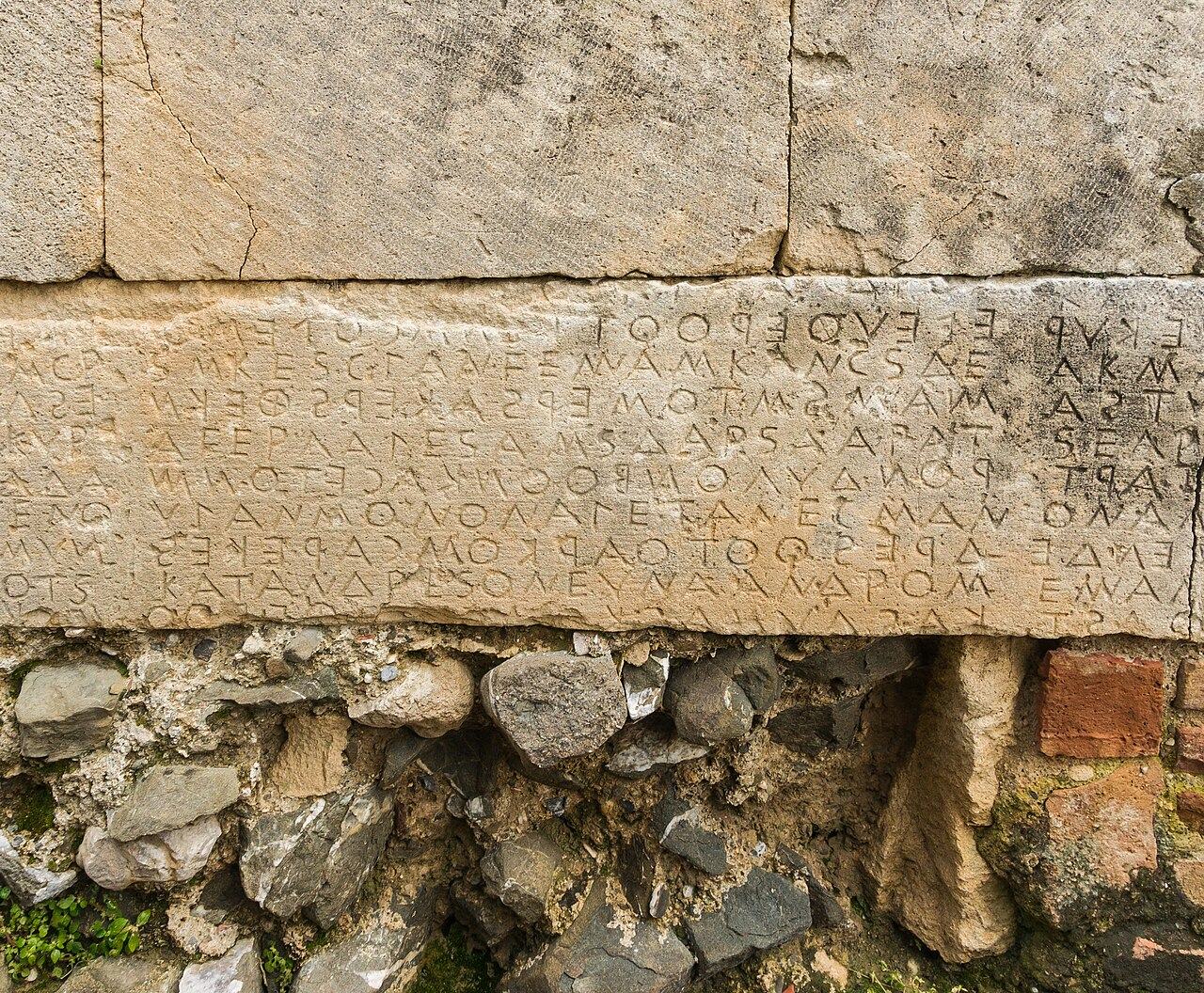
The Deep Magic is described as a law written at the very beginning of the world — one the Witch herself did not invent and even Aslan will not simply break. This reflects a very old idea found in many cultures and real legal traditions: that some laws are so deep and ancient that no rulerstands above them. The Witch is using that law to demand the traitor’s life. The great cracked slab where Aslan dies recalls the megaliths and stone altars of the ancient world — think of Stonehenge — places long tied to law and sacrifice. The ‘Deep Magic’ carved into it is Lewis’s version of an ancient, binding law older than any ruler. The Witch is not cheating when she claims Edmund. That is what makes the scene frightening: she is standing on a law Aslan agrees is real, and the only way past it is not an argument but a substitution.
Visual AidA law older than its rulers
Photograph of the law code of Gortyn on the island of Crete, cut into a stone wall around 450 BC. The Knowledge Bank explains that the Deep Magic reflects a very old idea found in real legal traditions: that some laws are so deep and ancient that no ruler stands above them. This is what such a law looked like when it was made permanent — carved where anyone could read it and no one could quietly change it. It has nothing to do with the novel. Notice that the lines run alternately left-to-right and right-to-left, the way an ox ploughs a field.
The Gortyn law code, Crete, c. 450 BC, boustrophedon inscription. Source: Wikimedia Commons, CC0.
ⓘ Vocabulary words are selected to help you understand and complete this workbook. Some may not appear verbatim in the novel.
trucen.Ch.13
An agreement to stop fighting for a time
“The Witch came to the camp under a flag of truce.”
perishv.Ch.13
To die or be destroyed
“She warned that all Narnia would perish without blood.”
solemnadj.Ch.14
Serious and dignified
“Aslan’s face was solemn as he walked through the night.”
sorrown.Ch.14
Deep sadness
“The girls watched in helpless sorrow.”
jeerv.Ch.14
To mock or laugh at cruelly
“The Witch’s creatures began to jeer at the bound Lion.”
multituden.Ch.14
A very large number of people or creatures
“A foul multitude crowded around the Stone Table.”
repentv.Ch.13
To feel sorry for doing wrong
“Edmund had begun to repent of his betrayal.”
sacrificen.Ch.13
Giving up something precious for another’s sake
“Aslan made the greatest sacrifice for Edmund.”
wearyadj.Ch.14
Very tired
“Aslan walked slowly, weary and sad, to the hill.”
stealthyadj.Ch.14
Quiet and secret, so as not to be noticed
“The girls were stealthy as they followed Aslan in the dark.”
🧠Knowledge Bank question
1According to the Knowledge Bank, what real idea does the Deep Magic reflect?Ch.13
2To “perish” means to die or be destroyed.Ch.13
3A “solemn” face is —Ch.14
4Fill in each blank with the correct word.Ch.13–14
Word choices:sorrowtruceperishjeer- some words will not be used
Deep sadness is called
An agreement to stop fighting is a
5To “jeer” at someone is to praise them kindly.Ch.14
6A “multitude” is —Ch.14
7To “repent” is to —Ch.13
8A “sacrifice” means giving up something precious for another’s sake.Ch.13
9Fill in each blank with the correct word.Ch.14
Word choices:stealthywearysacrificerepent- some words will not be used
Quiet and secret, so as not to be noticed, means
Very tired means
10Someone who is “weary” is —Ch.14
Part 2
Comprehension
How well do you understand Chapters 13–14?
🧠Knowledge Bank · Following a Bargain
Narrative Logic · Following a Bargain
Part 7 turns on a hidden deal. Keeping the bargain clear in your mind makes the shocking ending make sense. Chapter 13 covers Deep Magic from the Dawn of Time — Edmund is rescued; the Witch claims his life by ancient law, and Aslan secretly bargains his own life instead. Chapter 14 covers The Triumph of the Witch — Susan and Lucy follow Aslan to the Stone Table, where the Witch mocks and kills him. Aslan’s rescuers free Edmund, who is brought back and quietly forgiven after a private talk with Aslan. But then the Witch arrives under a flag of truce. She claims Edmund’s life, and she does it by the book: under the Deep Magic from the Dawn of Time every traitor is hers, and if she is denied that blood, the law says all Narnia will perish.
Visual AidThe bargain, and who knows
Diagram for the Knowledge Bank on following a bargain. The top row states the deal in two boxes, the Witch’s claim and Aslan’s secret offer; the bottom row shows who senses it and who is told nothing. It does not give away what happens at the Stone Table. Notice that the reader is placed with Susan and Lucy, not with the camp: keeping the bargain in mind is what lets the ending make sense instead of coming from nowhere.
The bargain as set out in the Knowledge Bank. Drawn for Garden Heights Academy.
🧠Knowledge Bank question
1The Knowledge Bank says Part 7 turns on one thing. What is it?Ch.13
2After his rescue, Edmund talks privately with Aslan and begins to change.Ch.13
3On what grounds does the Witch claim Edmund’s life?Ch.13
4What does Aslan secretly agree to do?Ch.13
5Put these events from Part 7 in the correct order. Write 1–4 (1 = first).Ch.13–14
The Witch claims Edmund’s life by the Deep Magic.
The Witch kills Aslan on the Stone Table.
Susan and Lucy secretly follow Aslan into the night.
Edmund is rescued and talks privately with Aslan.
6Susan and Lucy follow Aslan to the Stone Table because they cannot sleep and sense something is wrong.Ch.14
7How do the Witch’s creatures treat Aslan at the Stone Table?Ch.14
8Who kills Aslan?Ch.14
9Susan and Lucy are able to stop the Witch and save Aslan.Ch.14
10Why does Aslan let himself be taken without fighting back?Ch.14
Part 3
Literary Elements
Understanding HOW and WHY C.S. Lewis writes Chapters 13–14 the way he does.
🧠Knowledge Bank · Dramatic Irony and Mood
Literary Technique · Dramatic Irony and Mood
Lewis uses dramaticirony: the reader, like Susan and Lucy, begins to sense the terrible price Aslan has agreed to pay, while the rest of the camp does not. He also builds a heavy mood of sorrow — the silent night walk and the cruel mocking make this the darkest, saddest part of the book. Civics & law — the Deep Magic: even the Witch must obey an ancient law. The idea that rules bind everyone, even rulers, is the rule of law. Ethics — justice and mercy: the law demands a price (justice); Aslan pays it for Edmund (mercy). The story weighs the two. Sacrifice (theme): Giving up something precious for the sake of another. Aslan speaks with her alone, and she gives up her claim on Edmund — but secretly Aslan has agreed to die in the boy’s place.
📚 Literary Devices in This Part · definitions & examples
A theme is a big idea a story explores. The theme of Part 7 is sacrifice — giving up something precious for another.Dramatic irony is when the reader knows something important that some characters do not — here, the price Aslan will pay.Mood is the emotional feeling of a scene. The night walk to the Stone Table has a mood of deep sorrow.
The questions below are mixed — not grouped by device. Decide which device each one is about.
🧠Knowledge Bank question
1According to the Knowledge Bank, what makes Part 7 dramatic irony?Ch.13
2Dramatic irony means the reader knows something the characters do not.Ch.14
3Fill in the blanks with the correct words.Ch.14
Word choices:moodsorrowtrucestone- some words will not be used
The emotional feeling of a scene is its
The mood of this scene is one of deep
4When we and the girls sense Aslan’s coming death while the camp does not, that is —Ch.14
5Go beyond the definition: why does Lewis give the Stone Table scene such a deep mood of sorrow?Ch.14
6Fill in the blanks with the correct words.Ch.13
Word choices:sacrificethemetrucesnow- some words will not be used
Giving up something precious for another is
A big idea a story explores is its
7The heavy, grief-filled feeling of the Stone Table scene is its —Ch.14
8A theme is a big idea or message a story explores.Ch.13
9Fill in the blanks with the correct words.Ch.14
Word choices:ironyreaderknifelion- some words will not be used
When we know more than the characters, that is dramatic
Dramatic irony depends on what the
10Which sentence best combines the theme of sacrifice, dramatic irony, and mood from Part 7?Ch.13–14
Part 4
Think Deeper
Four deeper challenges — no single-word recall. Read, weigh the evidence, and reason it through.
🧠Knowledge Bank · The Meaning of Sacrifice
Ethical Reasoning · The Meaning of Sacrifice
The great theme of Part 7 is sacrifice — giving up something precious for someone else. Aslan lays down his own life so that Edmund, who betrayed everyone, may live. The story asks us to think about what it means to be loved enough that another would suffer in your place. Lewis was also a famous Christian writer who wrote books for grown-ups about his faith. Many readers notice that Aslan willingly giving his life to save the traitor Edmund — and what happens next — echoes ideas of sacrifice and new life at the heart of Christian belief. Lewis said he did not start with a hidden message; he started with pictures in his mind. But he was glad when readers found more meaning in it than he had put there, and he never insisted on one reading. That is part of why the book lasted: it works as a rescue story, as a myth, and as a creed, without ever telling you which one you are reading.
1Claim: “Aslan gives his own life to save Edmund.” — choose the two details that best prove it.Claim & Evidence
2Sort each action. Tap each item to sort it — tap again to switch sides. You can keep tapping to change your answer.Sort into two
◄ MercyCruelty ►
3Match each cause to its result. For each cause, pick its result.Cause & Effect
Edmund broke faith with the others→
Aslan bargains alone with the Witch→
Aslan walks to the Table by night→
The girls creep after him→
🧠Knowledge Bank question
4Fill both blanks to complete the reasoning.Build the Argument
The Knowledge Bank argues that the theme of Part 7 is sacrifice because , which shows that .
Part 5
Standardized Test · Cohesion & Insert Text
Part 7 practices Cohesion & Transitions, Inference, and a trickier exam skill, Insert Text (placing a sentence where it best fits) — plus a vocabulary review — in friendly SAT– and TOEFL–style questions. No pressure!
Read the passage — the highlighted words are tested — then answer. Tap an answer, then tap it again to confirm.
SATWords in Context — a word's meaning in this passage
SATInference — a conclusion the passage implies
SATCentral Ideas — the passage's main point
SATText Structure & Purpose — how the passage is built, and why
TOEFLVocabulary — a tested word's meaning here
TOEFLFactual Information — a fact stated in the passage
TOEFLInsert Text — where a sentence best fits
The Mystery of Ancient Megaliths
Great stone tables and rings echo through the real ancient world. Thousands of years ago, long before modern machines, people raised enormous stones called megaliths. The most famous example is Stonehenge in England, a ring of standing stones, some weighing more than twenty tons (18.1 tonnes). How and why such monuments were built is one of the great puzzles of archaeology.
Archaeologists — scientists who study the past through objects and ruins — have offered several explanations. Some sites seem to line up with the sunrise on the longest or shortest day, suggesting they marked the seasons. Others contain human remains, hinting that they honored the dead. Moving the huge stones would also have required a multitude of people working together, using ramps, ropes, and wooden rollers. These ancient stones still carry a powerful sense of mystery and deep time, and because they have endured for so many centuries, they connect us directly to people who lived long before written history. When a storyteller places a solemn ceremony at a great stone table, they deliberately borrow that same weighty, ancient atmosphere — reminding readers that some events follow rules far older than any single ruler.
Original passage written for Garden Heights — not a quotation from the novel.
1In the passage, “solemn” most nearly means —SAT · Words in Context
2In the passage, the word “endured” is closest in meaning to —TOEFL · Vocabulary
3In the passage, “multitude” most nearly means —SAT · Words in Context
4The passage most strongly suggests that a stone table in a story creates a feeling of —SAT · Inference
5According to the passage, what is Stonehenge?TOEFL · Factual Information
6Which choice best states the central idea of the passage?SAT · Central Ideas
7Insert Text. Look at the four spots below. Where would this sentence best fit? Sentence: “This vast shared effort suggests the monuments mattered deeply to whole communities.”TOEFL · Insert Text
[1] Archaeologists have offered several explanations for these giant monuments. [2] Some sites line up with the sunrise, suggesting they once marked the seasons. [3] Moving the huge stones would have required hundreds of people working together. [4] Today, visitors still travel from around the world to wonder at them.
8In paragraph 2, the linking words ‘Some… Others…’ mainly work to —SAT · Text Structure & Purpose
9It can reasonably be inferred that building a megalith like Stonehenge —SAT · Inference
10The author connects the ancient stones to storytelling mainly to —SAT · Text Structure & Purpose
Part 6 · Optional
Creative Writing
A bonus challenge to practice your English.
About This Section
This writing task is optional and not part of your auto-graded score. Feedback checks length, spelling, and grammar only.
Writing Task — Part 7 “The Long Walk”
Describe the night walk to the Stone Table from Susan or Lucy’s point of view. Use mood to show the sadness and dread, even before they understand what will happen. Write at least 40 words.
You can start with: “We crept after Aslan through the cold, dark wood, and though we did not yet know what was coming, our hearts felt…”
0 / 40 words minimum
🗣 Teach It · Just for Fun (optional)
No right or wrong — close the screen and tell someone nearby what happened in this part. Can’t find anyone? Tell yourself out loud. The moment you teach it, you truly understand it.
Part 7 Complete!
You finished Chapters 13–14 of Narnia: The Lion, the Witch and the Wardrobe.
Here are your auto-graded results:
-
points out of 100
Teach it to someone
The best last step is to teach it. In your own words, explain what happened — retell a favorite scene, teach a character’s big choice, or sum up the main idea for a parent, friend, or classmate. When you can teach it clearly, you truly own it.
SAT® is a registered trademark of College Board, which is not affiliated with, and does not endorse, these materials. TOEFL® is a registered trademark of ETS. These materials are not endorsed or approved by ETS. Garden Heights is an independent provider of test-style reading practice.