
New here? Just sign up with Google — your account includes Matilda, our gift book, forever.
Number the Stars · Garden Heights
Part 7
for Number the Stars · Part 7 · Chapters 13–15
8 Parts40 min
What Happens in Part 7
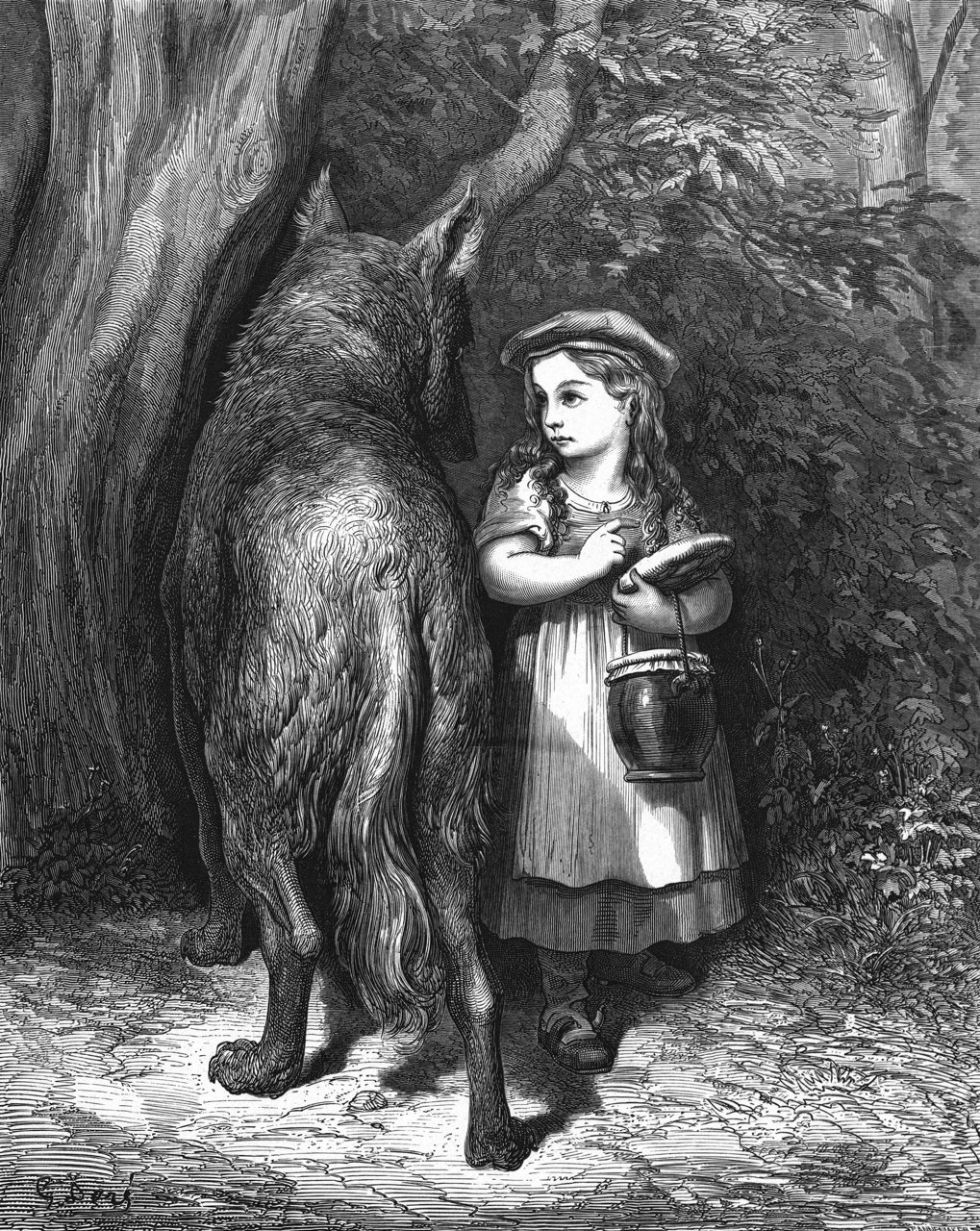
There is no one else. Mama, white-faced on the sofa with her ankle splinted, packs a lunch basket — bread, cheese, an apple — and slides the packet to the bottom: Annemarie will run it to the boat, playing a silly little girl bringing lunch to her forgetful fisherman uncle. If anyone stops her, she must BE that girl — empty-headed, chattering, like Kirsti. The path to the harbor runs through dark woods, and Annemarie steadies herself the only way she can: by telling herself Little Red Riding-Hood, the story she has told Kirsti a hundred times — until, at the path’s bend, the story comes true: four soldiers, and two straining dogs. The questioning is long and mocking. Why so early? Where is the lunch going? The dogs smell meat — the soldiers tear the bread, toss the cheese, and find, at the bottom, the packet: inside, only a folded white handkerchief. Contemptuous, the officer flings it back. Annemarie reaches the Ingeborg breathless and hands Henrik the handkerchief — and his face tells her it was not nothing: it was everything. The boat sails on the morning tide.
The fairy tale walked into, and courage as performance
Cross-Curricular
How a dog’s nose works
Chapter Summary
Ch.
What happens
13–15
The Run Through the Dark — with every adult spent, Annemarie runs the packet to the harbor in a lunch basket, rehearsing Little Red Riding-Hood; soldiers and dogs stop her at the path’s end; the basket is torn apart down to a ‘worthless’ handkerchief; she plays the silly child perfectly — and delivers, just in time, the thing the whole escape depends on.
Part 1
Vocabulary
Study 10 key words from Chapters 13–15, then answer each question.
🏃Knowledge Bank · How a Dog Reads Scent
Biology · Olfaction and TrackingA dog follows scent by sampling odor molecules released from skin, breath, clothing, food, and disturbed ground. This sense is called olfaction. Inside the nasal cavity, millions of specialized receptors bind to different molecules and send patterns of signals to the brain. Rapid sniffing draws in repeated samples, while the two nostrils help compare which side has the stronger odor. A scent trail is not a neat line: wind stretches it into a shifting plume, moisture can hold molecules near the ground, and footsteps crush plants or move soil. Trained dogs learn to search these changing patterns and give a practiced signal when they locate a target odor. Handlers must read the dog and the wind; the animal is detecting molecules, not understanding guilt or innocence. In Chapters 13–15, meat, a basket, a forest path, and hidden travelers create overlapping odors. That biology explains why the search feels dangerous even when human eyes find nothing—the dog is reading scent.
splintn.Ch.13–15
A support holding a broken bone still
“Mama’s ankle was wrapped tight against a splint.”
basketn.Ch.13–15
A woven container with a handle
“The lunch basket hid the packet at its bottom.”
rehearsev.Ch.13–15
To practice before performing
“She rehearsed the silly-girl act as she walked.”
mockv.Ch.13–15
To make fun of cruelly
“The soldiers seemed to mock her little errand.”
strainv.Ch.13–15
To pull hard against a hold
“The dogs began to strain toward the basket.”
contemptn.Ch.13–15
The feeling that something is worthless
“With contempt, the officer flung the handkerchief back.”
breathlessadj.Ch.13–15
Panting; out of breath
“Breathless, she reached the boat at last.”
errandn.Ch.13–15
A short trip made to do a task
“The lunch errand carried the escape’s last hope.”
tiden.Ch.13–15
The sea’s daily rise and fall
“The boat had to sail on the morning tide.”
instinctn.Ch.13–15
Knowledge acting without thought
“Instinct told her to chatter like Kirsti.”
ⓘ The vocabulary words in this list are selected to help you understand and complete this workbook. Some may not appear verbatim in the original novel.
1A support holding a broken bone still is a ___.Ch.13–15
2To ‘rehearse’ is to practice before performing.Ch.13–15
3To make fun of cruelly is to ___.Ch.13–15
4‘Contempt’ is the feeling that something is precious.Ch.13–15
5Fill in each blank with the correct word.Ch.13–15
Word choices:straintidesplintmock- some words will not be used
The dogs began to toward the basket.
The boat had to sail on the morning .
6Knowledge acting without thought is ___.Ch.13–15
7The ‘tide’ is the sea’s daily rise and fall.Ch.13–15
8Panting and out of breath is ___.Ch.13–15
9Fill in the blanks with the correct words.Ch.13–15
Word choices:basketcontemptrehearsebreathless- some words will not be used
The lunch hid the packet at its bottom.
With , the officer flung the handkerchief back.
10A short trip made to do a task is an ___.Ch.13–15
Part 2
Comprehension
Show you understood what happens in Chapters 13–15.
📋Knowledge Bank · Couriers on the Coastal Route
History & Geography · Guides and MessengersA courier carries information or material between parts of a network; a guide leads people through a particular route. Both jobs reward local knowledge more than rank. During the Danish rescue, coastal residents knew which lanes reached the harbor, which houses could hide a family, when patrols passed, and which captain could be trusted. One documented helper, Preben Munch-Nielsen, was a seventeen-year-old resistance courier from Snekkersten. He helped conceal refugees near the shore and lead them to boats that carried as many as twelve people at a time. One crossing from that area covered about four miles and took roughly fifty minutes. His age helps readers infer that a young messenger might attract less notice, although the historical record does not prove that age protected him. The chapters’ basket and familiar path turn Annemarie’s errand into the smallest possible link in this historical pattern. A courier succeeds by arriving, revealing little, and preserving the route’s continuity.
1Why must Annemarie make the run?Ch.13–15
2How is the packet hidden?Ch.13–15
3Annemarie is told exactly what the packet contains before she goes.Ch.13–15
4What role must Annemarie play if stopped?Ch.13–15
5Write the numbers 1–5 in the boxes to show the correct order of events in Chapters 13–15. Number 1 = what happens first.Ch.13–15
The basket is searched down to the handkerchief.
Annemarie steadies herself with Red Riding-Hood.
Breathless, she delivers it to Henrik’s boat.
Soldiers and dogs block the path’s bend.
Mama packs the packet beneath the lunch.
6The soldiers’ dogs are drawn to the basket by the smell of meat.Ch.13–15
7What do the soldiers find at the basket’s bottom?Ch.13–15
8How does the officer treat the handkerchief?Ch.13–15
9Henrik’s reaction shows the handkerchief was truly important.Ch.13–15
10How does Part 7 end?Ch.13–15
Part 3
Literary Elements
Understanding HOW and WHY Lois Lowry tells the story across Chapters 13–15.
🧠Knowledge Bank · Red Riding Hood Rewritten
Literary Craft · Allusion and ReversalAn allusion invites readers to remember another story without retelling it fully. Lowry gives Annemarie a basket, food, a dark wood, and dangerous figures on the path, activating the familiar pattern of Little Red Riding Hood. The old folktale makes the scene legible to a child: there is a route to follow and a threatening “wolf” to recognize. Yet Lowry uses reversal rather than simple imitation. No rescuer appears to defeat the danger for Annemarie. She must use observation, self-control, and performance to continue the errand herself. The allusion also changes the meaning of innocence. In many folktales, innocence makes a child vulnerable; here, Annemarie deliberately performs a younger child’s careless behavior so the soldiers underestimate her. Readers experience two stories at once—the remembered fairy tale and the wartime mission beneath it. Their difference measures Annemarie’s growth from protected listener to active protagonist.
Broken fairy tale
Red Riding-Hood beneath the chapter — but no woodcutter comes; the girl is her own rescue.
Courage as performance
The weapon is an act: Kirsti’s emptiness, studied and worn like armor.
Contempt as camouflage
The soldiers FIND the secret — and toss it back: the plan counted on their scorn.
1The Red Riding-Hood allusion breaks from the original because ___.Ch.13–15
2Fill in the blank with the correct literary term.Ch.13–15
Word choices:climaxprologueresolutionsubplot- some words will not be used
The run through the dark is the novel’s .
3Annemarie’s courage in the search scene takes the form of ___.Ch.13–15
4The dogs fail to notice anything in the basket.Ch.13–15
5The handkerchief passes inspection because of the officer’s ___.Ch.13–15
6Telling herself the fairy tale on the path shows Annemarie ___.Ch.13–15
7Lowry lets the reader learn the handkerchief’s purpose in this part.Ch.13–15
8Fill in the blank with the correct literary term.Ch.13–15
Word choices:performancemonologuesoliloquyaside- some words will not be used
Her courage takes the form of a .
9Making the dogs RIGHT about the meat strengthens the scene because ___.Ch.13–15
10Part 7 completes Kirsti’s role in the novel by ___.Ch.13–15
Part 4
Think Deeper
Four deeper challenges — no single-word recall. Read, weigh the evidence, and reason it out.
💡Knowledge Bank · Courage as Adaptation
Psychology & Literary Reasoning · Adaptive CouragePressure rarely follows a plan exactly, so courage must be adaptive. Annemarie begins with a destination and a basket, but the soldiers introduce new questions, dogs, and a search. She first observes: their impatience, their contempt, and their assumption that a young girl is harmless. She then turns that assumption into a tool by performing the kind of noisy, offended behavior she knows from Kirsti. This is not fearlessness. It is performance guided by situational awareness. Annemarie watches the soldiers’ reactions and adjusts without forgetting the purpose of her errand. A reckless response would challenge their power directly; a rigid response would repeat a plan even after conditions changed. Adaptive courage keeps the goal steady while changing the method. Readers can trace the sequence: notice, interpret, choose, monitor, revise. Her body remains afraid, but her attention stays active enough to transform fear into useful adaptation.
Think back over these chapters. A kitchen at first light: a mother who cannot stand packs bread and cheese over a flat paper packet, and hands her daughter the most important lunch in Denmark. A path into trees still holding night. A girl’s voice, whispering a fairy tale to keep her feet moving. Then the bend: four gray uniforms, two dogs pulling at their leads, and questions with teeth in them. Bread torn. Cheese tossed. A white handkerchief shaken open, found worthless, flung back. And a fishing boat, minutes later, easing out on the tide with its hidden hold — carrying, thanks to a ‘silly’ girl, the one thing that could blind the wolves’ noses.
Original passage written for Garden Heights — not a quotation from the novel.
1Claim: “The climax argues that Annemarie’s ignorance and her act are one weapon.” — choose the two details that best prove it.Claim & Evidence
2What the soldiers see, or What is really there? Tap each detail to send it left or right.Sort into two
◄ What the soldiers seeWhat is really there ►
3Match each cause to its result. For each cause, pick its result.Cause & Effect
Every adult is spent, sailed, or splinted→
A fairy tale is whispered on the dark path→
The dogs smell exactly what they should→
The officer’s contempt flings the prize back→
4Fill both blanks to complete the reasoning.Build the Argument
Lowry keeps Annemarie IGNORANT of the handkerchief’s purpose through the whole run because , which shows that .
Part 5
Standardized Test
Reading passage · How a Dog’s Nose Works · Inference & Rhetorical Purpose · SAT & TOEFL-style practice
🎯 You already have the skills from the sections above — this is just a fun way to meet real SAT & TOEFL-style questions. Read the passage (the highlighted words are tested below), then answer the questions below. Tap an answer to select it, then tap it again to confirm — you can change your choice until you confirm.
When the patrol dogs strain toward Annemarie’s lunch basket, they are using one of nature’s most sensitive chemical detectors. A dog’s nose holds hundreds of millions of scent receptors — nerve endings that catch odor molecules — compared with only a few million in a human nose. The share of a dog’s brain devoted to interpreting smell is also many times larger than ours. Rapid sniffs direct air into a chamber where odors can be held and sorted, while the two nostrils help the animal locate the direction of a trail. To a dog, the basket does not have one blended smell: bread, cheese, apple, old meat, cloth, and the child carrying them remain distinct.
That biology explains why the meeting at the bend is dangerous even before any soldier asks a question. Training teaches a search dog to follow an assigned odor through other smells, but food can still attract its attention and give a handler a reason to inspect a basket. The soldiers pull apart the lunch because the meat is real, exactly as the dog’s nose reports. Annemarie’s cover is ingenious — clever in an unexpected way — because her chatter, early errand, and ordinary food all support the same harmless story. The dog’s accurate work therefore raises the pressure on her performance without explaining why the handkerchief matters; at the end of Chapters 13–15, its purpose must remain as hidden from the reader as it is from Annemarie.
Original passage written for Garden Heights — not a quotation from the novel.
1What is the main idea of the passage?SAT · Central Ideas
2In the passage, receptors are ___.TOEFL · Vocabulary
3How does a dog’s brain compare to a human’s for smell?TOEFL · Factual Information
4What do a dog’s quick sniffs do?TOEFL · Factual Information
5Knowing which nostril caught a smell first lets a dog ___.TOEFL · Factual Information
6In the passage, scents that are distinct are ___.SAT · Words in Context
7Why do the soldiers pull apart Annemarie’s lunch?TOEFL · Factual Information
8What can be inferred about why wooden planking alone could not protect hidden passengers?SAT · Inference
9In the passage, an ingenious solution is ___.TOEFL · Vocabulary
10Why does the author end without explaining the handkerchief’s purpose?TOEFL · Rhetorical Purpose
Part 6 · Optional
Creative Writing
A bonus challenge to practice your English. Take your time and have fun with it.
About This Section
This writing task is optional and is not part of your auto-graded score. The feedback below checks only the basics — length, spelling, and grammar — not whether your ideas are right or wrong. It is meant for classroom discussion and creative practice, so feel free to use your imagination!
Writing Task — Part 7 “The Bend in the Path”
Write the search scene from the point of view of ONE of the soldiers or ONE of the dogs at the bend. What does your narrator notice, suspect, and miss? Keep Annemarie’s performance visible from the outside. 6–10 sentences. End with the moment the basket is handed back.
You can start with: “Another early walker on the path — small, this one, and talking far too much...”
0 / 40 words minimum
π£ Teach It · Just for Fun (optional)
No right or wrong — tell someone nearby what happened in this part. Can’t find anyone? Tell yourself out loud. The moment you teach it, you truly understand it.

Part 7 Complete!
You finished Chapters 13–15 of Number the Stars.
Here are your auto-graded results:
-
points out of 100
Your Writing
Your writing was checked automatically for length, spelling, grammar, and whether you included the key parts of the scene. Scroll back to Part 5 anytime to read your feedback and improve your work.
Independent study guide by Garden Heights. Not affiliated with or endorsed by Lois Lowry. Contains original analysis only; no text from the novel is reproduced. Reference text: This workbook follows Lois Lowry’s classic text (the standard Puffin edition sold worldwide). Revised 2023 UK editions change some wording and may not match the vocabulary studied here.