New here? Just sign up with Google — your account includes Matilda, our gift book, forever.
The Lightning Thief · Garden Heights
Part 4
for The Lightning Thief · Part 4 · Chapters 10–12
a novel by Rick Riordan
40 min6 Parts
This workbook is built on a solid pedagogical foundation, effectively integrating content and language learning based on the CLIL framework (Content and Language Integrated Learning), elevated by our unique 5th C — Connection — and an integrated Standardized Test section that weaves every SAT & TOEFL question type right into the novel, so learners build real test skills easily, naturally, and with fun.
💭 Before You Read · Just for Fun
No right or wrong answers — just think or chat about it: Have you ever met someone or something that seemed friendly at first but turned out to be trouble? How did you figure out the truth — and if you had to face a danger you could not look at directly, how might you outsmart it?
What Happens in Part 4
Furies wreck the bus, Medusa nearly turns the heroes to stone, and a poodle funds tickets west.
Furies on the BusOn a Greyhound bus leaving New York, the three Furies attack in disguise; Percy barely escapes as the bus is wrecked.
Medusa's Statue ShopThey stumble into Aunty Em's Garden Gnome Emporium, a statue shop run by Medusa, whose gaze turns people to stone. Watching her reflection, Percy beheads her and ships her head to the gods on Mount Olympus, which helps and annoys them.
Gladiola's RewardLow on money and far from California, the hungry, tired companions catch runaway pink poodle Gladiola, earning just enough reward for train tickets west.
What We Will Learn
Focus
What It Means
Greek Mythology
Medusa, the Gorgon, and the Furies
Problem-Solving
How Percy outwits powerful monsters
Allusion
Percy’s name and the hero Perseus
Chapter Summary
Chapter
Key Events
Ch.10
On a bus out of New York, the three Furies attack; the bus is wrecked and the heroes flee into the woods
Ch.11
At “Aunty Em’s,” the heroes meet Medusa; Percy beheads her using a reflection and mails her head to Olympus
Ch.12
Out of money, the heroes catch a runaway poodle for a reward to buy train tickets west
Copyright Notice
This is an independent study guide created by Garden Heights to support reading comprehension and literary analysis. It contains original analysis questions and does not reproduce any text from the novel. The Lightning Thief is a work by Rick Riordan. This guide is not affiliated with, authorized by, or endorsed by Rick Riordan or any associated rights holders. Students should read the original book, available from libraries and booksellers.
Part 1
Vocabulary
Study 10 key words from Chapters 10–12, then answer each question.
🧠Knowledge Bank · Greek Words for the Afterlife
Classical Studies · The Underworld
The Greek afterlife was a geography with named regions, and the words survive. Hades is both the god and his kingdom, which is why English keeps the name for a place rather than a person. Within it, the Elysian Fields were reserved for heroes, and Tartarus lay far below as a prison for the defeated Titans. Five rivers ran through it, including the Styx, whose name means hatred and by which even gods swore binding oaths, and Lethe, meaning forgetfulness, whose water erased the memory of a life. That last name still works in English inside the word lethargy. Greek writers were not consistent about the details, and the map changed over centuries. What stayed constant was the idea that the dead go somewhere specific with rules, an idea so useful to storytellers that the descent into the underworld became one of the oldest plot structures we have.
Visual AidThe Underworld the words describe
Structure diagram of the geography the Knowledge Bank walks through: the border rivers Styx and Lethe, the realm that shares its ruler’s name, the Elysian Fields kept for heroes, and Tartarus far below. The stack orders the names, not real distances — Greek writers never agreed on the details, and the Knowledge Bank says so. Nothing here maps the Underworld of the novel, which is Rick Riordan (author)’s own rebuilding of the old geography. Notice how the words outlived the belief: lethargy still carries Lethe’s forgetting.
Regions and rivers of the Greek Underworld as summarized in standard classical references. Drawn for Garden Heights Academy.
disguisen.Ch.10
Clothing or a look that hides who you are
“The Furies attacked in disguise.”
Gorgonn.Ch.11
A snake-haired monster like Medusa
“Medusa was a deadly Gorgon.”
petrifyv.Ch.11
To turn to stone (or to frighten greatly)
“Medusa’s gaze could petrify anyone.”
reflectionn.Ch.11
An image seen in a mirror or shiny surface
“Percy watched Medusa’s reflection.”
emporiumn.Ch.11
A large shop that sells many goods
“The sign read ‘Garden Gnome Emporium.’”
boldadj.Ch.11
Brave and daring
“It was bold to mail the head to the gods.”
rewardn.Ch.12
Something given for a good deed or service
“They earned a reward for the poodle.”
pursuev.Ch.10
To chase or follow
“The Furies pursued the heroes.”
cunningadj.Ch.11
Clever in a sly, tricky way
“Medusa was cunning and dangerous.”
wearyadj.Ch.12
Very tired
“The weary heroes needed money and rest.”
ⓘ The vocabulary words in this list are selected to help you understand and complete this workbook. Some may not appear verbatim in the original novel.
🧠Knowledge Bank question
1According to the Knowledge Bank, the word lethargy — a weary, drained state — still preserves the name of —Ch.11
2True or False: To “petrify” can mean to turn to stone.Ch.11
3An image seen in a mirror or shiny shield is a ___.Ch.11
4True or False: A “disguise” hides who someone really is.Ch.10
5Fill in each blank with the correct word.Ch.11
Word choices:reflectionGorgonpetrifyemporium- some words will not be used
Medusa, a , could people, so Percy watched only her .
6True or False: Someone “weary” is full of energy.Ch.12
7Something given for a good deed or service is a ___.Ch.12
8True or False: To “pursue” means to chase or follow.Ch.10
9Fill in the blanks with the correct words.Ch.11–12
Word choices:boldcunningrewardweary- some words will not be used
It was to mail Medusa’s head to the gods, but the heroes were and needed money.
10A large shop that sells many goods is an ___.Ch.11
Part 2
Comprehension
How well do you understand Chapters 10–12?
🧠Knowledge Bank · Mountains That Are Still Building
Physical Geography · Volcanoes
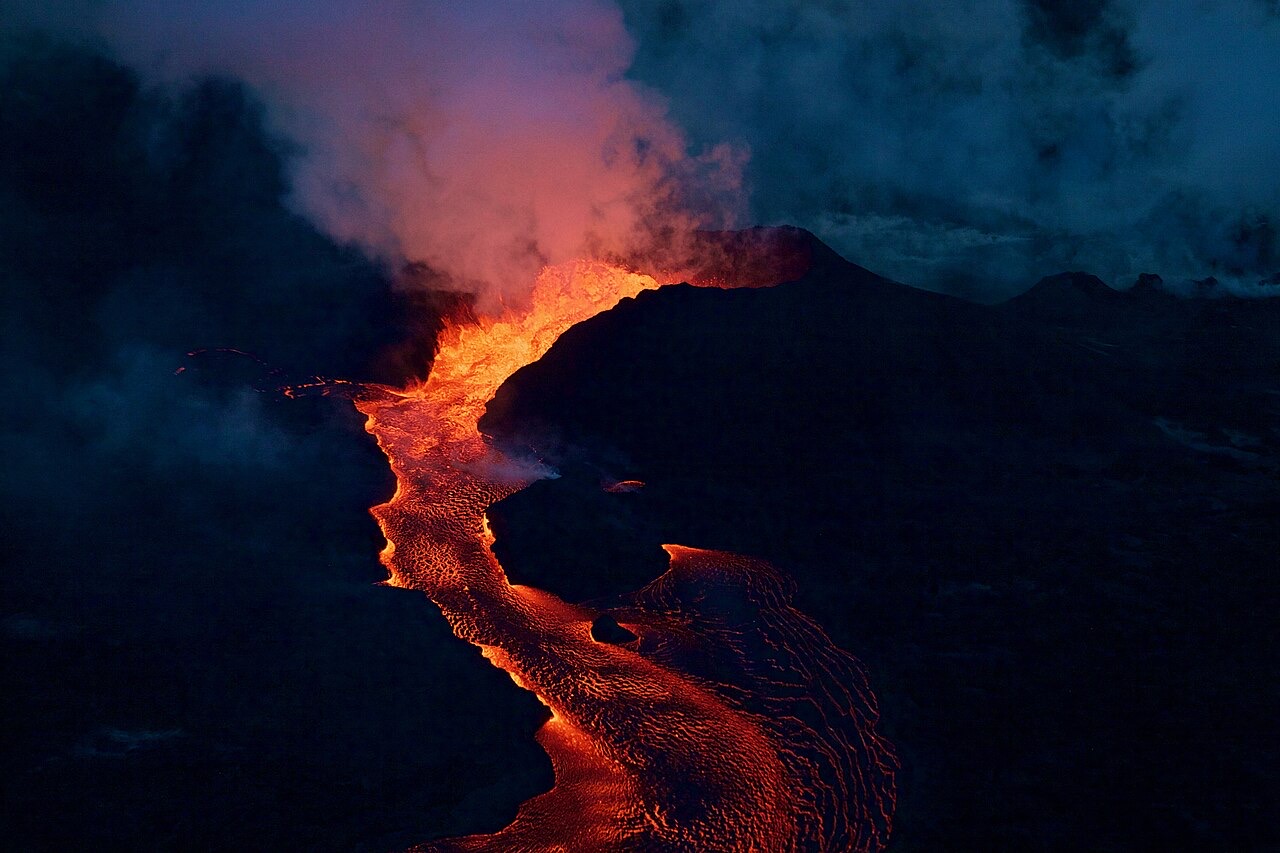
Ancient people placed forges and prisons under volcanoes for a good reason: the mountains were audibly alive. Geologists explain them through plate tectonics. Where one slab of the Earth’s crust dives beneath another, water carried down lowers the melting point of rock above, producing magma that rises and collects. If that magma is thick and gas-rich, pressure builds until the mountain erupts explosively; if it is runny, lava flows out steadily and builds the broad shields of Hawaii. The Mediterranean sits on such a boundary, which is why Vesuvius, Etna and Stromboli have all erupted within recorded history. Volcanologists now watch for three warning signs — swarms of small earthquakes, ground that swells by centimetres, and changes in the sulphur gases venting from the summit. None of the three gives an exact date, which is why living beside a volcano still means accepting a risk you can measure but never eliminate.
Visual AidA mountain audibly alive
Photograph by the U.S. Geological Survey of Kilauea’s Fissure 8 cone erupting before dawn on June 28, 2018, a river of molten rock running down its channel. This is the runny kind of magma the Knowledge Bank contrasts with the explosive kind: fluid basalt that flows out steadily and builds Hawaii’s broad shields. The picture shows one Pacific volcano, not Vesuvius, Etna or Stromboli — and no forge or prison beneath, which was the ancients’ explanation for the noise. Notice how the lava behaves exactly like a river, with banks, bends and overflows.
Fissure 8 cone and lava channel, Kilauea Lower East Rift Zone eruption, June 28, 2018; U.S. Geological Survey. Source: Wikimedia Commons, File:Kilauea Fissure 8 cone erupting on 6-28-2018.jpg, public domain.
🧠Knowledge Bank question
1The Knowledge Bank explains that magma forms where one slab of crust dives beneath another because —Ch.10
3How does Percy defeat Medusa without being turned to stone?Ch.11
4True or False: The “statues” in Medusa’s shop are really people she turned to stone.Ch.11
5Write the numbers 1–5 in the boxes to show the correct order across Part 4. Number 1 = what happens first.Ch.10–12
Out of money, the heroes catch a poodle for a reward to buy train tickets.
The three Furies attack the heroes on the bus out of New York.
The bus is wrecked and the heroes flee into the woods.
Percy beheads Medusa using her reflection.
The heroes enter “Aunty Em’s” and meet Medusa.
6True or False: Percy mails Medusa’s head to the gods on Mount Olympus.Ch.11
7Why do the heroes catch the runaway poodle?Ch.12
8By the end of Part 4, how are the heroes traveling west?Ch.12
9True or False: The heroes have plenty of money throughout these chapters.Ch.12
10Fill in the blanks to complete the sentence.Ch.10–12
Word choices:MedusareflectionFuriespoodle- some words will not be used
The attacked the bus, and later Percy used a to beat Medusa.
Part 3
Literary Elements
Understanding HOW and WHY Rick Riordan creates certain feelings across Chapters 10–12.
🧠Knowledge Bank · Why Stories Need a Missing Thing
Literary Craft · The Quest Object
Alfred Hitchcock popularized the term MacGuffin for the object everyone in a story is chasing — the stolen plans, the missing statue — and argued that its actual nature barely matters, because its job is to set the characters in motion. Quest narratives are the oldest form of the device: a hero is sent to retrieve something, and the retrieval organizes the journey into stages with a deadline. Good writers make the object do double duty. If the missing thing also carries symbolic weight — proof of identity, a father’s trust, the power to start or stop a war — then every stage of the search advances the character as well as the plot. Watch what a quest object is worth to each faction that wants it. A story in which all sides want the same thing for different reasons has built its conflict into the object itself.
📚 Literary Devices in This Part · definitions & examples
An allusion references another story. Percy’s reflection trick alludes to the myth of Perseus.Suspense is tension about what will happen. Medusa’s deadly gaze keeps readers on edge.Wit is clever humor. Mailing a monster’s head to the gods is a bold, funny choice.
The questions below are mixed — not grouped by device. Decide which device each one is about.
🧠Knowledge Bank question
1According to the Knowledge Bank, a story builds its conflict into the quest object itself when —Ch.12–14
2An allusion is a reference to another well-known story.Ch.12–14
3Fill in each blank with the correct word.Ch.12–14
Word choices:allusionsuspensewitsetting- some words will not be used
Percy’s reflection trick nods to the hero Perseus, an
Medusa’s deadly gaze fills the scene with .
4The tension we feel while Medusa’s deadly gaze threatens Percy is —Ch.12–14
5Suspense is created only when the reader already knows the ending.Ch.12–14
6Fill in each blank with the correct word.Ch.12–14
Word choices:witsuspenseallusionmood- some words will not be used
Mailing a monster’s head to the gods is a bold, funny choice — that is
Medusa’s threat keeps us in .
7Mailing Medusa’s head to the gods as a joke shows the author’s —Ch.12–14
8Why does Percy fight Medusa by looking at her reflection?Ch.12–14
9Fill in each blank with the correct word.Ch.12–14
Word choices:suspensewitallusionplot- some words will not be used
Medusa’s deadly stare keeps readers on edge with
The Perseus reference is an .
10The author’s clever humor in tense moments is best called —Ch.12–14
Part 4
Think Deeper
Four deeper challenges — no single-word recall. Read, weigh the evidence, and reason it through.
🧠Knowledge Bank · What the Body Does Before You Decide
Psychology · Fear and the Amygdala
Fear is faster than thought. Sensory information reaches a pair of almond-shaped structures called the amygdala by a short route that bypasses the slower analytical pathway, which is why you flinch from a shape on the path before recognizing it as a stick. The amygdala triggers a release of adrenaline: the heart accelerates, airways widen, blood shifts to the large muscles, and digestion stops. Peripheral vision narrows, and fine motor control deteriorates — a reason emergency training relies on drilled, simple actions rather than complex ones. The system is superb at short, sudden danger and poor at long, unresolvable stress, where the same chemistry becomes exhausting. Psychologists note that courage is not the absence of this cascade but action taken during it, since nobody can switch off an amygdala. What can be trained is what the body does in the seconds that follow.
1Claim: “Percy beats Medusa with cleverness, not raw strength.” — choose the two details that best prove it.Claim & Evidence
2How Medusa hides her danger, or how Percy defeats her? Tap each item to sort it — tap again to switch sides. You can keep tapping to change your answer.Sort into two
◄ Medusa hides her dangerPercy defeats her ►
3Match each cause to its result. For each cause, pick its result.Cause & Effect
The Furies board the bus in disguise→
Medusa offers the heroes food and rest→
Percy watches Medusa’s reflection→
Percy defeats Medusa by a trick→
🧠Knowledge Bank question
4Fill both blanks to complete the reasoning.Build the Argument
The Knowledge Bank defines courage as action taken during the fear cascade because , which shows that .
Part 5
Standardized Test · Inference & Author’s Purpose
Part 4 practices Inference and Author’s Purpose — reading between the lines and asking why a writer includes a detail, as the SAT and TOEFL do. Read the passage (the highlighted words are tested below), then choose the answer best supported by the text.
Read the passage — the highlighted words are tested — then answer. Tap an answer, then tap it again to confirm.
SATInference — a conclusion the passage implies
SATText Structure & Purpose — how the passage is built, and why
TOEFLVocabulary — a tested word's meaning here
TOEFLFactual Information — a fact stated in the passage
TOEFLInsert Text — where a sentence best fits
Medusa's Protective Symbol
In Greek myth Medusa was a Gorgon whose gaze could transform any living creature into stone. To reach her at all, the hero Perseus had to pursue her across the sea to the remote island where she lived. He defeated her not by confronting her directly but by watching her reflection in his polished shield, so that he never met her eyes. According to the legend, he later used her severed head as a weapon, since even in death her petrifying stare kept its deadly power over anyone who looked.
Long after the story was first told, artists carved Medusa’s face onto shields, armor, and the walls of temples across the Greek world. This deliberate choice was not meant to frighten friends; ancient people believed her fearsome image could ward off evil. Archaeologists have found the design on buildings and armor from Italy to the Black Sea, so the belief was clearly widespread. Such a protective charm, part of a long and elaborate tradition, was known in the ancient world as a gorgoneion.
The image has proved remarkably durable. Medusa still stares out from jewelry, company logos, and films today. Her lasting power shows how a single striking symbol can endure for thousands of years, its meaning shifting from terror to protection to fashion. Renaissance painters returned to the subject again and again, and one famous painted shield of her head still hangs in an Italian gallery. Today a well-known fashion house even uses the Gorgon’s face as its emblem — a bold choice, and proof that an ancient warning can quietly become a modern badge of style.
Original passage written for Garden Heights — not a quotation from the novel.
1In the passage, pursue most nearly means ___.TOEFL · Vocabulary
2According to the passage, how did Perseus defeat Medusa?TOEFL · Factual Information
3In the passage, bold most nearly means ___.TOEFL · Vocabulary
4According to the passage, a protective charm showing a Gorgon face was called —TOEFL · Factual Information
5Carving Medusa’s face onto shields most strongly suggests that ancient people believed —SAT · Inference
6In the passage, the word “durable” is closest in meaning to —TOEFL · Vocabulary
7Why does the author mention jewelry, company logos, and films?SAT · Text Structure & Purpose
8According to the passage, Medusa’s gaze could —TOEFL · Factual Information
9That Perseus avoided meeting Medusa’s eyes mainly shows that he —SAT · Inference
10Insert Text (TOEFL). Look at the four squares [1]–[4] in the excerpt below. They show where this sentence could be added: “A ship’s captain, for example, might paint one on the bow to frighten off bad luck.”
People once placed Medusa’s face on objects for protection. [1] Her fierce glare was meant to scare away evil. [2] Soldiers carved it onto their shields and armor. [3] Over time the same image spread to doorways, coins, and jewelry. [4]
Where would the sentence fit best?TOEFL · Insert Text
Part 6 · Optional
Creative Writing
A bonus challenge to practice your English. Take your time and have fun with it.
About This Section
This writing task is optional and is not part of your auto-graded score. The feedback below checks only the basics — length, spelling, and grammar — not whether your ideas are right or wrong. It is meant for classroom discussion and creative practice, so feel free to use your imagination!
Writing Task — Part 4 “Outsmarting a Monster”
Percy defeats Medusa with cleverness, not just strength. Invent your own monster and describe how you would outsmart it using a clever plan. Write at least 40 words.
You can start with: “The monster was too strong to fight, so instead I…”
0 / 40 words minimum
🗣 Teach It · Just for Fun (optional)
No right or wrong — close the screen and tell someone nearby what happened in this part. Can’t find anyone? Tell yourself out loud. The moment you teach it, you truly understand it.
Part 4 Complete!
You finished Chapters 10–12 of The Lightning Thief.
Here are your auto-graded results:
-
points out of 100
Teach it to someone
The best last step is to teach it. In your own words, explain what happened — retell a favorite scene, teach a character’s big choice, or sum up the main idea for a parent, friend, or classmate. When you can teach it clearly, you truly own it.
Independent study guide by Garden Heights. Not affiliated with or endorsed by Rick Riordan. Contains original analysis only; no text from the novel is reproduced.
SAT® is a registered trademark of College Board, which is not affiliated with, and does not endorse, these materials. TOEFL® is a registered trademark of ETS. These materials are not endorsed or approved by ETS. Garden Heights is an independent provider of test-style reading practice.