New here? Just sign up with Google — your account includes Matilda, our gift book, forever.
Refugee · Garden Heights
Part 5
for Refugee · Part 5 · Chapters 29–35
8 Parts40 min
What Happens in Part 5
Alan Gratz (author) tightens all three crossings at once: a failing boat, an Aegean storm, and a ship no country wants.
Leak and dinghyIn 1994, seawater weeps steadily through the patched bullet hole, so Isabel's family and the Castillos bail in shifts that never end while the Gulf Stream drags them east of the course to Florida and the fresh water shrinks jug by jug. In 2015, after days of a smuggler's endless tomorrow in Izmir, far too many people in cheap life vests wade out at night and pack into a rubber dinghy bound for Lesbos.
Miami says noIn 1939, the St. Louis, refused by Cuba, steams north until the glow of Miami hangs on the night horizon — close enough to count the lights — but a patrol boat shadows the liner to stop anyone desperate enough to swim, and the United States will not let the ship land.
Shark and stormBack in the straits, the heat turns murderous. Iván goes into the water beside the boat, and a shark strikes; his leg is torn, the grown-ups cannot stop the bleeding, and the sea takes his body. Isabel, numb with grief, keeps bailing because the leak does not care. On the Aegean, partway to Lesbos, the rain becomes a storm: swells break over the dinghy's low sides, frightened passengers argue about turning back, and Mahmoud holds on in the dark.
Bridge and lighthouseWith Europe growing nearer every hour, a knot of desperate passengers — Josef among them — forces its way onto the bridge to seize the ship; Captain Schroeder, calm and unarmed, talks the men down and gives his word to find some way not to hand his passengers back to Germany. In 1994, with thirst swelling every tongue and Mami burning with fever, a lighthouse sweeps the darkness ahead — the American coast — and between boat and coast runs a Coast Guard cutter.
What We Will Learn
Section
What you will practice
Vocabulary
Words for open water and empty jugs: adrift, bail, ration, parched, mutiny…
Literary Elements
Parallel plots braided across three decades, cliffhangers that cut away at the worst moment, and lights — Miami’s glow, a lighthouse beam — working as symbols of safety just out of reach
Cross-Curricular
The Straits of Florida — how the Gulf Stream turns ninety miles into a killing distance, and the wet-foot, dry-foot rule that made touching sand mean everything
Chapter Summary
Ch.
What happens
Chapter 29
Isabel — Bailing for Their Lives — The patched bullet hole lets the sea seep in faster than anyone can rest, so bailing becomes a rotation that never stops. Food and fresh water are rationed, the engine strains, and the current keeps sliding the boat east of the line Papi tries to hold toward Florida.
Chapter 30
Mahmoud — The Call at Last — After days of the smuggler’s tomorrow, tomorrow, the word finally comes. On a dark beach near Izmir, far more riders than the rubber dinghy was built for wade out in their life vests and squeeze aboard, and the overloaded boat pushes off into the night toward Lesbos.
Chapter 31
Josef — The Lights of Miami — Turned away from Cuba, the St. Louis steams north until Miami’s glow fills the night horizon. An American patrol boat paces the liner to stop any swimmer from reaching shore, and the answer from the United States, when it comes, is no. The ship turns back toward Europe.
Chapter 32
Isabel — Sharks — In punishing heat, Iván goes into the water beside the boat — and a shark strikes. His leg is torn beyond helping, the bleeding cannot be stopped, and the family gives his body to the sea. Isabel keeps bailing through her grief, because the leak does not pause for mourning.
Chapter 33
Mahmoud — The Storm — Partway to Lesbos, the rain becomes a storm. Frightened passengers argue over turning back while swell after swell breaks over sides that sit only inches above the water, and the crowded dinghy staggers through the dark toward a shore no one can see. The chapter stops at its most dangerous moment.
Chapter 34
Josef — Mutiny on the St. Louis — With Europe closing in, desperate passengers — Josef among them — force their way onto the bridge to take the ship. Captain Schroeder talks the men into standing down and promises he will find some way not to deliver his passengers back to Germany.
Chapter 35
Isabel — The Lighthouse — Thirst has thickened every tongue, and Mami — sick, and heavy with the baby — is fading, when a light sweeps the darkness ahead: a lighthouse, which can only mean the American coast is near. But patrolling the water between the boat and that shore is a Coast Guard cutter — and being caught on the water changes everything.
Part 1
Vocabulary
Study 10 key words from Chapters 29–35, then answer each question.
💧Knowledge Bank · The Water You Cannot Drink
Physiology · Thirst at SeaThe human body is roughly sixty percent water, and under an open sun at sea it loses that water fast — through sweat, through breath, even through the skin. Lose just two percent of it and thinking slows; lose ten and the body starts to fail. The cruelest part of an ocean crossing is that the victim floats on water no one can drink. Seawater is about three and a half percent salt, far saltier than blood, and the kidneys — the organs that filter waste out of the blood — must spend more fresh water flushing that salt away than the seawater delivered in the first place. Every swallow leaves a castaway drier than before. That is why sailors ration fresh water by the capful, and why severe thirst brings a fever-like fog: a parched brain, running low on fluid, begins to wander and mixes memory with the present. Sea-survival manuals have a name for that final stage, and Part 5 shows it: delirium.
Visual AidWhy the sea cannot be drunk
Measure diagram of the numbers the Knowledge Bank runs: seawater is about 3.5 percent salt against roughly 0.9 percent in human blood, so the kidneys spend more fresh water flushing a swallow of it out than the swallow brought in; below, the second scale marks where thinking slows and where the body fails as water is lost. The figures are rounded averages — real bodies, and real seas, vary — and the diagram does not predict any one person’s limit. Notice what it means for a raft: the victim floats on water that only deepens the thirst, and the fog at the end has a name — delirium.
Salinity of seawater and blood, and dehydration thresholds, as given in the Knowledge Bank and standard physiology references. Drawn for Garden Heights Academy.
adriftadj.Ch.29
Floating without power or control, carried by wind and water
“If the engine quit for good, they would be adrift in the Gulf Stream.”
bailv.Ch.29
To scoop water out of a boat to keep it from sinking
“Isabel bailed until her arms shook, and the water kept coming.”
rationv.Ch.29
To hand out something scarce in small, limited shares
“The grown-ups rationed the last jug of water a capful at a time.”
currentn.Ch.29
A strong flow of water moving steadily in one direction
“The current kept sliding the boat east of the course Papi steered.”
interceptv.Ch.31
To stop someone or something before it reaches its goal
“The patrol boat’s job was to intercept anyone who tried to swim ashore.”
mutinyn.Ch.34
An open revolt by a ship’s passengers or crew against its officers
“Whispers of mutiny spread among the most desperate passengers.”
dinghyn.Ch.30
A small open boat, often made of inflatable rubber
“Twice as many riders as the dinghy was made for climbed aboard.”
swelln.Ch.33
A long, rolling wave that lifts and drops whatever floats on it
“Each swell raised the little boat and dropped it into the next trough.”
parchedadj.Ch.35
Painfully dry, especially from heat and thirst
“Parched and sunburned, Isabel could barely whisper an answer.”
deliriousadj.Ch.35
Confused and raving because of fever, heat, or thirst
“By the last day, heat and thirst had left some of the rafters delirious.”
ⓘ The vocabulary words in this list are selected to help you understand and complete this workbook. Some may not appear verbatim in the original novel.
🧠Knowledge Bank question
1The Knowledge Bank explains that severe thirst at sea ends in delirium because a parched brain ___.Ch.29
2To ‘bail’ a boat is to scoop water out of it.Ch.29
3To ‘ration’ water is to ___.Ch.29
4A ‘dinghy’ is ___.Ch.30
5Fill in each blank with the correct word.Ch.29
Word choices:currentinterceptmutinyparched- some words will not be used
The dragged the little boat east, mile after mile.
The patrol boat waited to any swimmer heading for shore.
6A ‘mutiny’ is ___.Ch.34
7Someone who is ‘parched’ is soaked through with cold water.Ch.35
8A ‘delirious’ person is ___.Ch.35
9Fill in each blank with the correct word.Ch.33
Word choices:swelldinghyrationadrift- some words will not be used
A long rolling lifted the boat and let it fall.
Far too many riders crowded into the rubber .
10To ‘intercept’ a boat is to guide it safely into harbor.Ch.31
Part 2
Comprehension
Show you understood what happens in Chapters 29–35.
🧭Knowledge Bank · A River in the Sea
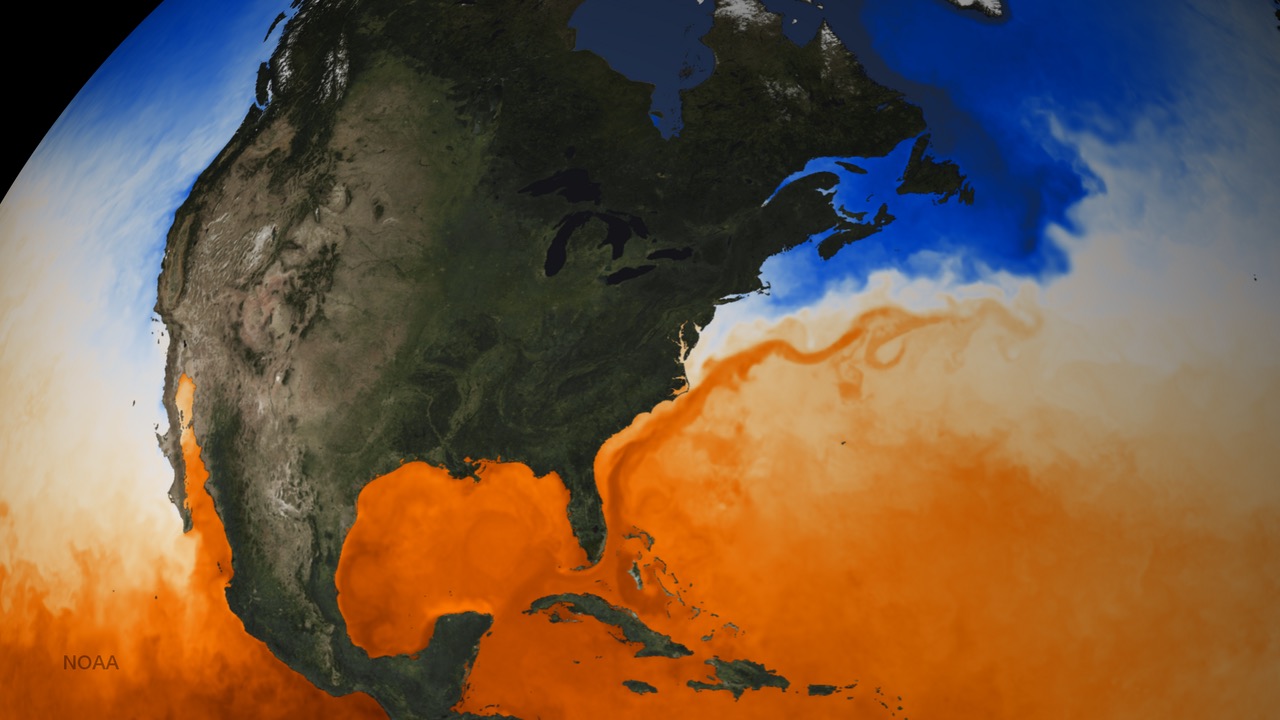
Oceanography · The Gulf StreamBetween Cuba and Florida the sea is never still. The Straits of Florida work like a nozzle: the Gulf Stream, the mightiest current in the Atlantic, squeezes through the ninety-mile gap and pours east, then north, at up to four knots — about four and a half miles per hour. That sounds gentle until you apply it to every drop of an ocean at once: the stream moves more water past Havana than all the world’s rivers pouring together. Benjamin Franklin printed one of the first charts of it around 1770, after ship captains noticed that fighting it added weeks to a voyage. For a steel tanker the push is a detail; for a homemade raft with a coughing motor it is destiny. Aim straight at Miami and the water slides you sideways hour after hour, so ninety miles on the map can demand several times that distance through the sea. A boat that loses its engine stops steering but never stops moving — it goes wherever the river in the sea is going, which is east.
Visual AidThe river in the sea, photographed from orbit
Sea-surface temperature image built by NOAA from satellite measurements: orange is warm water, blue is cold. The Gulf Stream the Knowledge Bank describes is the bright orange ribbon that squeezes through the narrow gap between Cuba and Florida — the very straits Isabel’s boat must cross — then pours up the coast and out across the Atlantic. The colors are false, chosen to make temperature visible; no water is actually orange, and the image shows conditions on the days it was assembled, not August 1994. Notice how thin the gap is beside the engine pushing through it: aim straight at Miami, and this is the river that slides you east.
The Gulf Stream seen through sea surface temperature, NOAA satellite data visualization, 2016. Source: Wikimedia Commons, File:The Gulf Stream Seen Through Sea Surface Temperature (NESDIS 2016-06-03).png, public domain.
🧠Knowledge Bank question
1According to the Knowledge Bank, why can ninety miles on a map demand several times that distance through the sea?Ch.29
2Mahmoud’s family boards the dinghy on the same day they first reach Izmir.Ch.30
3At night, what do the St. Louis passengers see across the water?Ch.31
4What happens to Iván during the crossing?Ch.32
5Write the numbers 1–5 in the boxes to show the correct order of events in Isabel’s crossing. Number 1 = what happens first.Chapters 29–35
The last fresh water is rationed out a sip at a time.
A lighthouse beam sweeps the darkness ahead of the boat.
A Coast Guard cutter patrols between the boat and the shore.
Bailing the leaking boat becomes a rotation that never ends.
A shark attacks Iván in the water beside the boat.
6How does the takeover of the St. Louis’s bridge end?Ch.34
7Josef is part of the group that forces its way onto the bridge.Ch.34
8What is wrong with the boat that carries Mahmoud’s family?Ch.30
9When Isabel’s family sees the lighthouse, they believe the American coast is near.Ch.35
10What patrols the water between the little boat and the Florida shore?Ch.35
Part 3
Literary Elements
Understanding HOW and WHY Alan Gratz tells the story across Chapters 29–35.
🎭Knowledge Bank · Cut Away at the Worst Moment
Authorial Craft · The Braided CliffhangerRefugee runs on a strict rotation: a Josef chapter, an Isabel chapter, a Mahmoud chapter, around and around for fifty-three short chapters. Alan Gratz (author) sharpens that structure with a rule you can watch him follow: cut away at the worst possible moment. A chapter ends with a shark’s fin, a swamped dinghy, or a locked bridge door, and the next page is suddenly a different family in a different decade. Each break is a cliffhanger, and the effect is double. First, momentum: the only way to learn what happened is to read on, through two other stories, so the reader is always owed three answers at once. Second, comparison — what writers call juxtaposition, placing scenes side by side so they comment on each other. Miami’s glow in 1939, a lighthouse in 1994, and Lesbos’s shore in 2015 land within pages of one another, and the reader sees what the characters cannot: three crossings that are really one story, told together.
Parallel Plots
Three refugees, three decades, one rotation: Alan Gratz (author) tells the stories side by side so each crossing casts light on the other two.
Cliffhanger
Nearly every chapter stops at its most dangerous instant — then the book jumps to another sea, another year, and leaves the danger hanging.
Symbolism
Lights do double duty in Part 5: Miami’s glow, a lighthouse beam — brightness that means safety, hanging just beyond reach.
🧠Knowledge Bank question
1According to the Knowledge Bank, the chapter breaks give Refugee its momentum because the reader ___.Ch.33
2Telling Josef’s, Isabel’s, and Mahmoud’s stories in strict rotation is called ___.Chapters 29–35
3A symbol is an object or image that stands for a larger idea.Ch.31
4Miami’s glow on the horizon works as a symbol of ___.Ch.31
5A cliffhanger answers every question a chapter has raised before it ends.Ch.32
6Fill in each blank with the correct literary term.Ch.33
Word choices:cliffhangersymbolflashbackrhyme- some words will not be used
A chapter that stops as the storm swamps the dinghy ends on a .
A lighthouse beam that promises land acts as a .
7By cutting to a different decade at each moment of danger, Alan Gratz (author) mainly ___.Chapters 29–35
8Parallel plots let readers compare how three families face the same kinds of danger.Chapters 29–35
9Which detail from Part 5 works most clearly as a symbol?Ch.35
10Fill in each blank with the correct word.Chapters 29–35
Word choices:parallelsuspenseglossarymoral- some words will not be used
Three stories told side by side are plots.
Not knowing whether the cutter has seen the boat builds .
Part 4
Think Deeper
Four deeper challenges — no single-word recall. Read, weigh the evidence, and reason it out.
⚖Knowledge Bank · The Race for Dry Sand
Civics · Wet Foot, Dry FootWhen Isabel’s family sets out in 1994, the rule that will define Cuban migration for a generation is just being born. That summer, tens of thousands of rafters took to the straits, and in September 1994 and May 1995 the United States and Cuba signed migration accords to end the emergency. Out of them came the policy nicknamed wet foot, dry foot. A Cuban stopped on the water — a wet foot — would be turned back; a Cuban who reached United States soil — a dry foot — could stay, and under a 1966 law could apply for permanent residency after a year. No other nationality had a deal like it. The policy turned the end of every crossing into a footrace: Coast Guard crews worked to intercept boats offshore, while rafters swam, waded, and sprinted for the beach, because the law measured everything by where your feet were when you were found. The rule lasted until January 2017, when it was ended — but in Isabel’s summer, the whole meaning of ninety miles came down to sand.
Picture three small worlds of water, decades apart, all going wrong at once. In 1939, a luxury liner idles off Florida so close to Miami that its passengers can see the city glowing like a lit birthday cake — and an American patrol boat paces alongside to make sure none of them swims to it. In 1994, a boat built out of scrap has a bullet hole below the waterline, a family bailing in shifts around the clock, and a current under its hull that shoves it east no matter where the rudder points. In 2015, on a dark Turkish beach, a rubber dinghy built for a handful of riders swallows a crowd, pushes off toward a Greek island it cannot see, and meets a storm halfway. Part 5 is the middle of the sea in all three stories: no shore behind, no shore ahead, and the water itself doing the arguing. Thirst, sharks, swells, and a cutter’s searchlight — everyone is close enough to see safety, and nobody is allowed to touch it yet.
Original passage written for Garden Heights — not a quotation from the novel.
1Claim: “Part 5 argues that, for a refugee at sea, the ocean itself is as merciless as any government.” — choose the two details that best prove it.Claim & Evidence
2The sea as the enemy, or People as the enemy? Tap each detail to send it left or right.Sort into two
◄ The sea as the enemyPeople as the enemy ►
3Match each cause to its result. For each cause, pick its result.Cause & Effect
A bullet hole lets the sea seep in→
The United States will not open its ports→
Desperation grows as Europe draws closer→
Far too many riders board the dinghy→
🧠Knowledge Bank question
4Fill both blanks to complete the reasoning.Build the Argument
The Knowledge Bank argues that wet foot, dry foot turned the end of every crossing into a footrace because , which shows that .
Part 5
Standardized Test
Ninety Miles of Moving Water · Reading & Vocabulary · SAT & TOEFL-style practice
Read the passage — the highlighted words are tested — then answer. Tap an answer, then tap it again to confirm.
SATCentral Ideas — the passage's main point
SATInference — a conclusion the passage implies
SATAuthor’s Purpose — what the author wants to achieve
SATWords in Context — a word's meaning in this passage
TOEFLFactual Information — a fact stated in the passage
TOEFLVocabulary — a tested word's meaning here
Ninety Miles of Moving Water
On a map, the crossing from Cuba to Florida looks almost friendly: about ninety miles, less than many people drive to visit relatives. The map is lying. The Straits of Florida are the nozzle through which the Gulf Stream — the Atlantic's mightiest ocean current — forces its way, moving more water past Havana than all Earth's rivers pour together. It runs east and north at up to four knots — about four and a half miles per hour — and never pauses.
For a small boat, that push rewrites geography. A raft that aims straight at Miami is carried sideways hour after hour, so ninety miles on the chart can become several hundred through the water — and a boat whose engine fails drifts wherever the stream goes. Weather stacks a second danger on the first: the straits breed sudden squalls — short, violent storms — whose swells rise higher than a raft's sides and break over them. A third danger rides along: a crossing planned for one day can stretch into four or five, forcing passengers to ration fresh water that was measured for one.
Under an open sun, a human body can lose more than a quart of water in a day, and drinking from the sea only speeds the loss: flushing out its salt costs the body more water than the seawater contains. Thirst, heat, and exhaustion arrive together, and fast. That is why so many crossings ended with rafts intercepted at sea, their parched passengers too weak to go on — and why, to the people aboard, the Florida shore was never just scenery. Ninety miles of moving water stood between two lives, and only the last few feet of it were dry.
Original passage written for Garden Heights — not a quotation from the novel.
1Which sentence best states the main idea of the passage?SAT · Central Ideas
2According to the passage, the Gulf Stream moves ___.TOEFL · Factual Information
3Why does drinking seawater make thirst worse?TOEFL · Factual Information
4A raft that aims straight at Miami will most likely ___.SAT · Inference
5The passage says squalls endanger rafts because their swells ___.TOEFL · Factual Information
6The author opens with the map comparison mainly to ___.SAT · Author’s Purpose
7The final sentence suggests that for rafters, reaching dry land ___.SAT · Inference
8In the passage, ration most nearly means ___.SAT · Words in Context
9In the passage, swells most nearly means ___.TOEFL · Vocabulary
10In the passage, parched most nearly means ___.SAT · Words in Context
Part 6 · Optional
Creative Writing
A bonus challenge to practice your English. Take your time and have fun with it.
About This Section
This writing task is optional and is not part of your auto-graded score. The feedback below checks only the basics — length, spelling, and grammar — not whether your ideas are right or wrong. It is meant for classroom discussion and creative practice, so feel free to use your imagination!
Writing Task — Part 5 “The Lights You Could Not Reach”
Josef counts the lights of Miami from the deck of a ship that is not allowed to land. Isabel steers for a lighthouse she may never touch. Write about a time when something you wanted was close enough to see but still out of reach — a goal, a place, a person, a prize. Describe what you could see, what stood between you and it, and what you did next. 6–10 sentences. End by telling whether the distance changed how much you wanted it.
You can start with: “I could see exactly what I wanted, and I still could not touch it...”
0 / 40 words minimum
🗣 Teach It · Just for Fun (optional)
No right or wrong — close the screen and tell someone nearby what happened in this part. Can’t find anyone? Tell yourself out loud. The moment you teach it, you truly understand it.
Independent study guide by Garden Heights. Not affiliated with or endorsed by Alan Gratz. Contains original analysis only; no text from the novel is reproduced. Reference text: This workbook follows Alan Gratz’s classic text (the standard Puffin edition sold worldwide). Revised 2023 UK editions change some wording and may not match the vocabulary studied here.