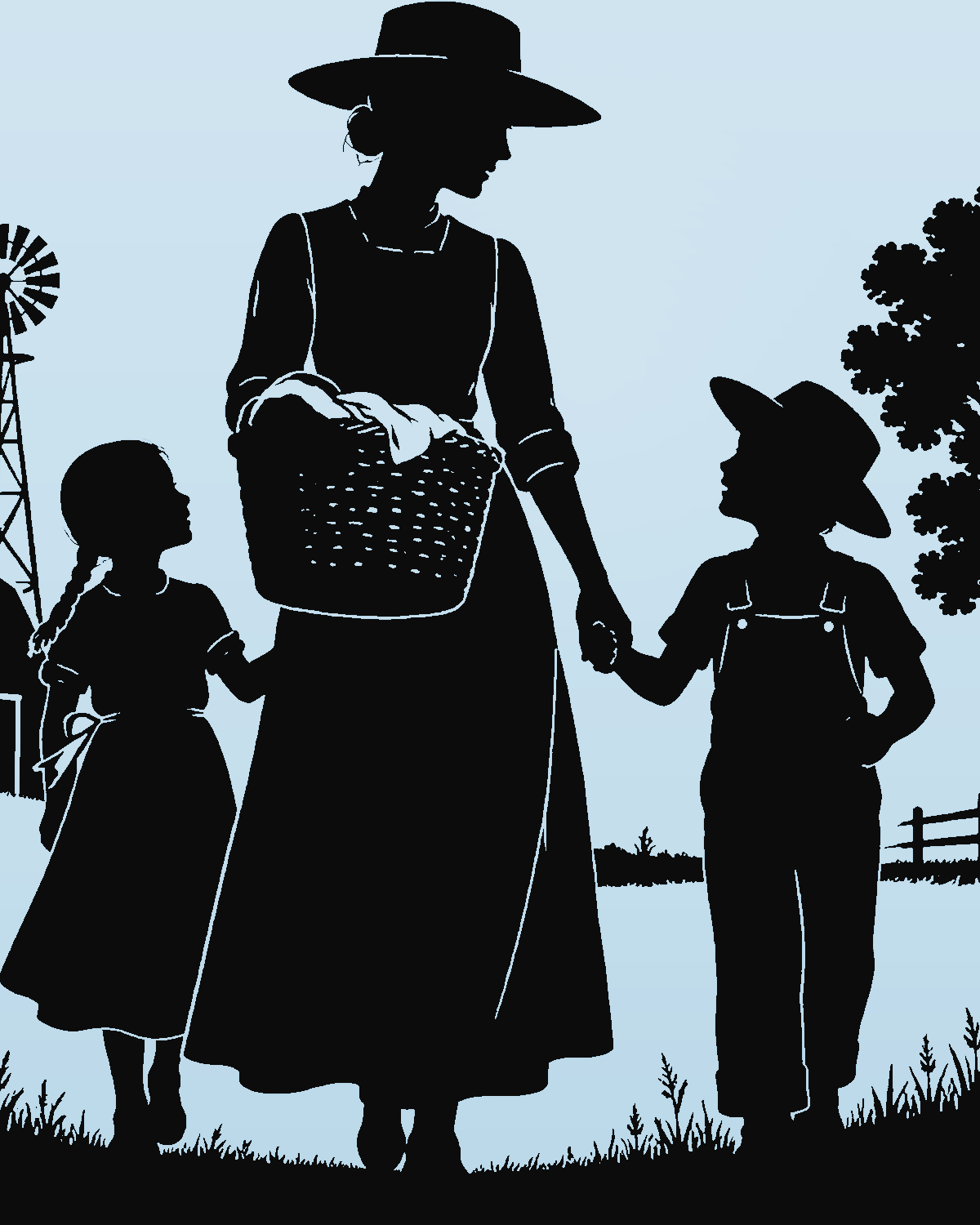
Sarah, Plain and Tall cover
Garden Heights Academy

Sarah, Plain and Tall

This workbook is for Garden Heights members. Sign in to continue.

Sign in with Google →
New here? Just sign up with Google — your account includes Matilda, our gift book, forever.
What Happens in Part 5

The prairie summer turns hot, and Sarah has a wonderful idea: they should all go swimming. She leads Anna and Caleb down to the cool cow pond and promises to teach them how to swim. Gently she shows them how to lie back and float, the water holding them up as they gaze at the sky. Then the fun begins — they push and splash the water at one another, making it churn and ripple, and pretend they are riding real ocean waves. For a whole shining afternoon the muddy little pond becomes a sea. But the best part is Sarah herself: laughing, soaked, and truly happy. The children notice, and their hearts lift — because a Sarah this happy just might decide to stay with them, even after her one month is over.

What We Will Learn
FocusWhat It Means
Mood & ToneHow the happy, hopeful feeling is built
Science of FloatingBuoyancy — why water holds us up
Theme (Hope)A joyful Sarah, and the wish that she will stay
Chapter Summary
ChapterKey Events
Ch.6On a hot day Sarah leads the children to the cow pond, teaches them to float, and they splash and pretend to ride ocean waves; seeing Sarah so happy, the children hope she will stay
💭 Before You Read · Warm-Up (not scored)

There are no wrong answers here — just think, guess, and talk:

  • Sarah and the children pretend a cow pond is the sea. How can imagination change an ordinary place?
  • The children feel hopeful because Sarah looks happy. Why can someone else’s happiness give us hope?
  • Predict: if Sarah is this happy on the prairie, what might that mean for the big question — will she stay?
Copyright Notice

This is an independent study guide created by Garden Heights Academy to support reading comprehension and literary analysis. It contains original analysis questions and does not reproduce any text from the novel. Sarah, Plain and Tall is a work by Patricia MacLachlan. This guide is not affiliated with, authorized by, or endorsed by the author or any associated rights holder.
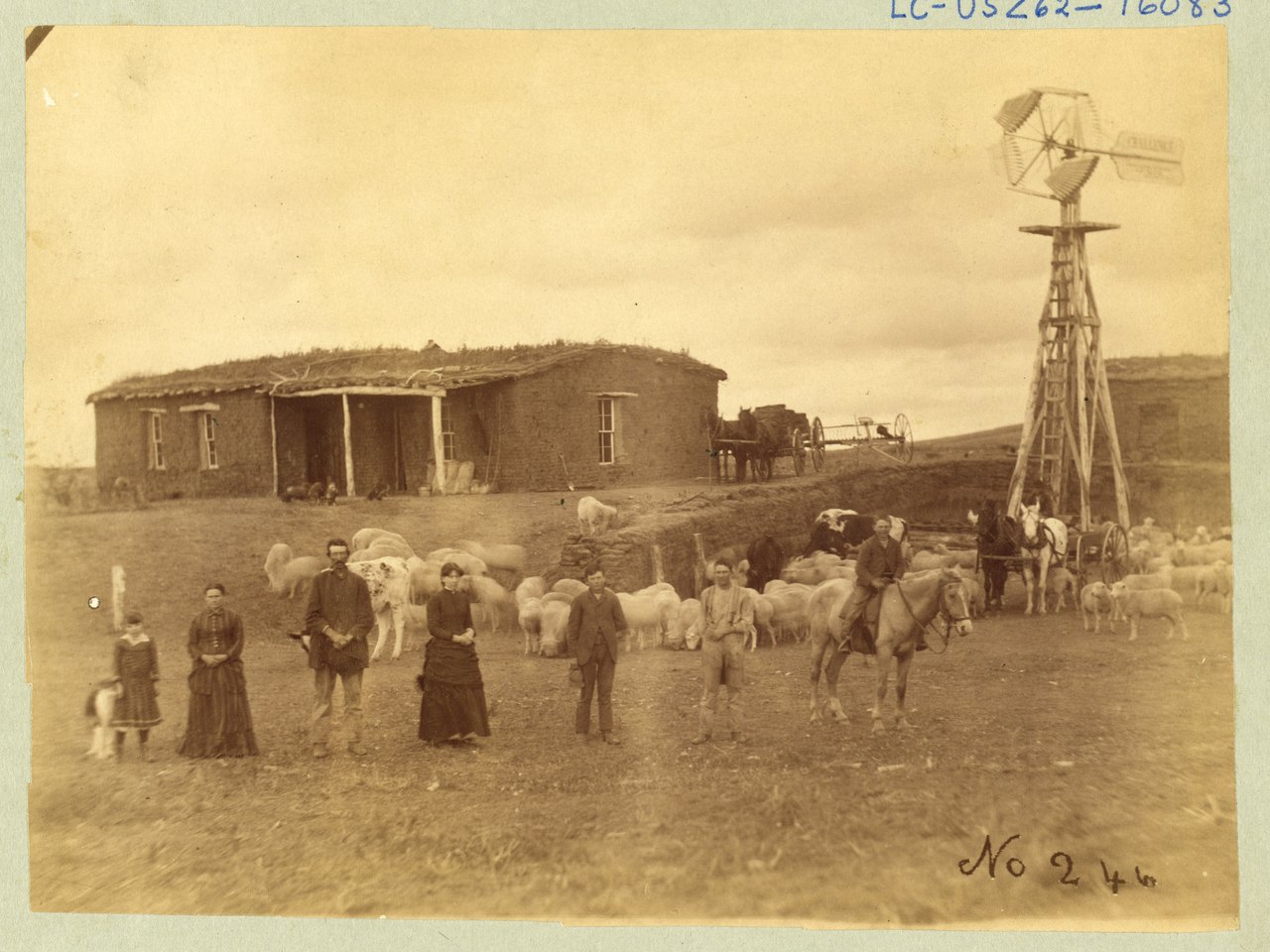
Part 1
Vocabulary
Study 10 key words from Chapter 6, then answer each question.
🧠Knowledge Bank · Why a Body Floats
Physics · BuoyancyPut anything into water and the water shoves back upward. That push is called buoyancy, and its strength equals the weight of the water the object pushes aside. A human body weighs almost exactly what it displaces, so the margin is razor thin: fill your lungs with air and you rise, empty them and you sink. Relaxing matters just as much. Stretched flat on your back you displace more water than you do curled up, and loose muscles stop the thrashing that drives a swimmer under. That is why lying still on the surface is the very first skill a swimmer learns.
pondn.Ch.6
A small body of still water
“Ducks paddled across the quiet pond.”
floatv.Ch.6
To rest on top of water without sinking
“She lay back and learned to float on the calm water.”
splashv.Ch.6
To throw water about noisily
“The children splashed each other and laughed.”
ripplen.Ch.6
A small wave on the surface of water
“A breeze sent ripples across the pond.”
wadev.Ch.6
To walk through shallow water
“They waded in slowly, feeling the cool mud.”
surfacen.Ch.6
The top layer of the water
“A leaf drifted on the surface of the pond.”
driftv.Ch.6
To move slowly and gently on water or air
“He let himself drift on his back under the sky.”
shimmerv.Ch.6
To shine with a soft, wavering light
“The water shimmered in the hot afternoon sun.”
cooladj.Ch.6
Pleasantly cold
“The cool water was a relief on the hot day.”
playfuladj.Ch.6
Full of fun and games
“In a playful mood, they pretended the pond was the sea.”
1A “pond” is ___.Ch.6
2To “float” means to ___.Ch.6
3To “splash” is to ___.Ch.6
4True or False: A “ripple” is a small wave on the surface of water.Ch.6
5Fill in each blank with the correct word.Ch.6
Word choices:wadesplashdriftfloat- some words will not be used
The children in through the shallow water.
They laugh and each other with cool water.
6The “surface” of the water is ___.Ch.6
7To “drift” is to ___.Ch.6
8Fill in each blank with the correct word.Ch.6
Word choices:shimmersurfaceripplepond- some words will not be used
The still of the pond gleams in the sun.
Tiny waves with a soft, wavering light.
9True or False: Something “cool” is pleasantly cold.Ch.6
10Someone in a “playful” mood is ___.Ch.6
Part 2
Comprehension
How well do you understand Chapter 6?
🧠Knowledge Bank · Water on a Dry Farm
Hydrology · Farm Water SupplyRain on the plains is unreliable, so a homestead planned its water with care. Families sank a well by hand or by drill and hauled buckets up on a rope; many also scooped out a shallow pond, dammed a low spot, and let spring runoff collect there for the livestock. One cow drinks tens of gallons a day, so that pond counted as equipment rather than scenery. Every drop for the house was carried, heated, and then used twice, since wash water went out to the garden. Where water is measured and lifted by hand, splashing about in it is a rare luxury.
1Why do they decide to go swimming?Ch.6
2The family swims in the cow pond on a hot summer day.Ch.6
3What does Sarah teach the children first?Ch.6
4What do the children pretend as they splash?Ch.6
5Put these events from Part 5 in the correct order. Write 1–5 (1 = first).Ch.6
  • The children pretend the pond waves are the ocean.
  • A blazing hot day makes everyone long to cool off.
  • They head home laughing, soaked and happy.
  • They walk out to the cow pond together.
  • Sarah teaches the children to float on their backs.
6How does Sarah seem during the swim?Ch.6
7How do the children feel seeing Sarah so happy?Ch.6
8Why is it fitting that Sarah is the one who teaches swimming?Ch.6
9True or False: The cow pond really is a part of the ocean.Ch.6
10Why does Sarah’s happiness matter so much to the children?Ch.6
Part 3
Literary Elements
Understanding HOW and WHY Patricia MacLachlan tells the story across Chapter 6.
🧠Knowledge Bank · Building the Feeling of a Scene
Literary Craft · Mood and ToneMood is the feeling a scene produces in the reader; tone is the writer’s own attitude toward what she is describing. Both are assembled from ordinary choices — which details get named, how long the sentences run, whether the verbs move quickly or slowly. Bright, sensory nouns and short clauses make a page feel light; heavy sounds and winding clauses weigh it down. A chapter can be nearly empty of events and still be doing enormous work, because the reader is being trained how to feel about these people. Nothing carries mood as efficiently as one exactly chosen detail.
📚 Literary Devices in This Part · definitions & examples
Mood is the feeling a scene gives the reader; here it is bright, playful, and hopeful. Tone is the author’s attitude toward the scene — warm and tender. Together they are built from imagery: the hot sun, the cool pond, the pretend waves. Notice how happy details can make a reader hope.
1Fill in each blank with the correct literary term.Ch.6
Word choices:moodtonerhymetitle- some words will not be used
The feeling a scene gives the READER is the .
The author’s own attitude toward events is the .
2What is the mood of this chapter?Ch.6
3How does the author build this mood?Ch.6
4True or False: An author chooses details on purpose to make a reader feel a certain way.Ch.6
5Pretending the pond is the sea is an example of ___.Ch.6
6Why does the happy mood matter to the plot?Ch.6
7Fill in each blank with the correct literary term.Ch.6
Word choices:motifimagerynarratorsetting- some words will not be used
The sea-idea that keeps returning through the book is a .
Sunny, splashing detail that appeals to the senses is .
8True or False: Tone is the author’s attitude toward what is happening.Ch.6
9By the end of this bright chapter, the reader mostly feels ___.Ch.6
10True or False: The mood is the overall feeling a scene gives the reader — here, warm, playful, and hopeful.Ch.6
Part 4
Think Deeper
Four deeper challenges — no single-word recall. Read, weigh the evidence, and reason it through.
🧠Knowledge Bank · Work and Play on a Homestead
Social History · Frontier ChildhoodFrontier children worked. By six a child hauled water, fed poultry, and minded a younger brother; by ten the same child could drive a team or take a turn at harvest, with the nearest store a full day away and no one else to send. School fit around the crops, which is why country classrooms emptied at planting time. Play was never scheduled, only stolen: a swim after chores, a game invented from hay and rope. Researchers who study childhood find that unplanned play is where children rehearse cooperating, taking turns, and repairing a quarrel, so those stolen hours were their own kind of learning.
1Claim: “Sarah brings new joy and closeness to the family.” — choose the two details that best prove it.Claim & Evidence
2Shows the family growing closer, or just a detail of the day? Tap each item to send it left or right.Sort into two
◄ The family growing closerJust a detail ►
3Match each cause to its result. For each cause, pick its result.Cause & Effect
The summer grows hot
Sarah leads them to the pond
They splash and laugh together
The water reminds Sarah of home
4Fill both blanks to complete the reasoning.Build the Argument
The swimming day matters to the family because , which shows that .
Part 5
Standardized Test
Cause & Effect — SAT & TOEFL-style practice
🎯 You already have the skills from the sections above — this is just a fun way to meet real SAT & TOEFL-style questions. Read the passage (the highlighted words are tested below), then answer the questions below. Tap an answer to select it, then tap it again to confirm — you can change your choice until you confirm.

Have you ever wondered why a heavy person can lie back and rest on top of the water without sinking? The secret is a force called buoyancy — the upward push that water gives to anything placed in it. When you get into a pond or a sea, the water presses up against your body. If that upward push is as strong as your weight pulling down, you float. A few simple tricks make floating easier. Fill your lungs with air, and your chest becomes like a balloon, lighter than the water around it. Spread your arms and legs wide, and your weight is shared over a larger area, so no part of you sinks. Most of all, stay calm; a relaxed body floats, while a stiff, frightened one tends to sink. This is why teachers show new swimmers how to float on their backs before anything else — it is the safest skill in the water, and a tired swimmer who can float can always rest instead of struggling.

Original passage written for Garden Heights — not a quotation from the novel.
1“Buoyancy” is best described as —SAT · Words in Context
2According to the passage, you float when —TOEFL · Factual Information
3To “float” is to —SAT · Words in Context
4Why does filling your lungs with air help you float?TOEFL · Factual Information
5Spreading your arms and legs shares your weight over a larger “area,” meaning a larger —SAT · Words in Context
6The passage says a “calm” body floats while a frightened one sinks; this suggests that —SAT · Inference
7What can the reader infer about a swimmer who panics?SAT · Inference
8The author ends with the tired swimmer who can “rest” mainly to —TOEFL · Rhetorical Purpose
9Why do teachers show floating on the back first?TOEFL · Rhetorical Purpose
10This passage connects to Chapter 6 because Sarah —TOEFL · Rhetorical Purpose
Part 6 · Optional
Creative Writing
A bonus challenge to practice your English. Take your time and have fun with it.
About This Section

This writing task is optional and is not part of your auto-graded score. The feedback below checks only the basics — length, spelling, and grammar — not whether your ideas are right or wrong. It is meant for classroom discussion and creative practice, so feel free to use your imagination!

Writing Task — Part 5 “An Ordinary Place Made Magic”

Sarah and the children turn a plain cow pond into ‘the sea’ using only their imagination. Write about an ordinary place you have made special through play or imagination — a backyard, a bedroom, a park. What did it become, and how? Use sights, sounds, and feelings. Write at least 40 words.

You can start with: “There is one ordinary place I could turn into anything, and it is…”
0 / 40 words minimum
🗣 Teach It · Just for Fun (optional)

No right or wrong — close the screen and tell someone nearby what happened in this part. Can’t find anyone? Tell yourself out loud. The moment you teach it, you truly understand it.


Garden Heights Academy

Part 5 Complete!

You finished Chapter 6 of Sarah, Plain and Tall.

Here are your auto-graded results:

-
points out of 100
Your Writing

Your writing was checked automatically for length, spelling, grammar, and whether you included the key parts of the scene. Scroll back to Part 5 anytime to read your feedback and improve your work.

Move on to Part 6 →

Independent study guide by Garden Heights Academy. Not affiliated with or endorsed by the author or any rights holders. Contains original analysis only; no text from the novel is reproduced.