New here? Just sign up with Google — your account includes Matilda, our gift book, forever.
What Happens in Part 3
At last Willy learns the reason for Grandfather’s sorrow. A stranger named Clifford Snyder, a tax collector for the state of Wyoming, arrives at the farm. Coldly and plainly, he explains that Grandfather has not paid his taxes for years, and now the farm owes the state a huge sum: five hundred dollars. If the debt is not paid, the state will take the farm away. Suddenly everything makes sense — Grandfather gave up because he could see no way to save the land he loves. But Willy reacts very differently. Instead of despairing, he sets his jaw and makes a vow: somehow, he will find five hundred dollars and pay the tax himself. The problem finally has a name, and a number — and Willy has a goal.
What We Will Learn
Focus
What It Means
Conflict
The central problem the whole story now turns on
Civics
What taxes are and why they must be paid
Character Contrast
How the same news breaks Grandfather but fires up Willy
Chapter Summary
Chapter
Key Events
Ch.4
Clifford Snyder, a state tax collector, reveals that Grandfather owes $500 in back taxes and could lose the farm; understanding at last why Grandfather gave up, Willy vows to find the money and save the land himself
💭 Before You Read · Warm-Up (not scored)
There are no wrong answers here — just think, guess, and talk:
The same terrible news makes Grandfather give up but makes Willy fight harder. Why do people react so differently to trouble?
Taxes pay for roads, schools, and shared things — but a big unpaid bill can ruin a poor family. How can something fair still cause great pain?
Predict: Willy needs five hundred dollars — a fortune for him. How on earth might a ten-year-old raise that much?
Copyright Notice
This is an independent study guide created by Garden Heights Academy to support reading comprehension and literary analysis. It contains original analysis questions and does not reproduce any text from the novel. Stone Fox is a work by John Reynolds Gardiner. This guide is not affiliated with, authorized by, or endorsed by the author or any associated rights holder.
Part 1
Vocabulary
Study 10 key words from Chapter 4, then answer each question.
🧠Knowledge Bank · What Five Hundred Dollars Meant
Economics · The Value of MoneyMoney changes value over time, and a price that sounds ordinary today could be a fortune a century ago. In the years when this story is set, a hired hand on a Western farm might earn a dollar or two for a long day of work. At that rate five hundred dollars came to well over a year of steady wages — more than a good team of horses cost, and far beyond anything a small family could gather in one winter. Working out what a sum was really worth is how a reader measures the true size of a debt.
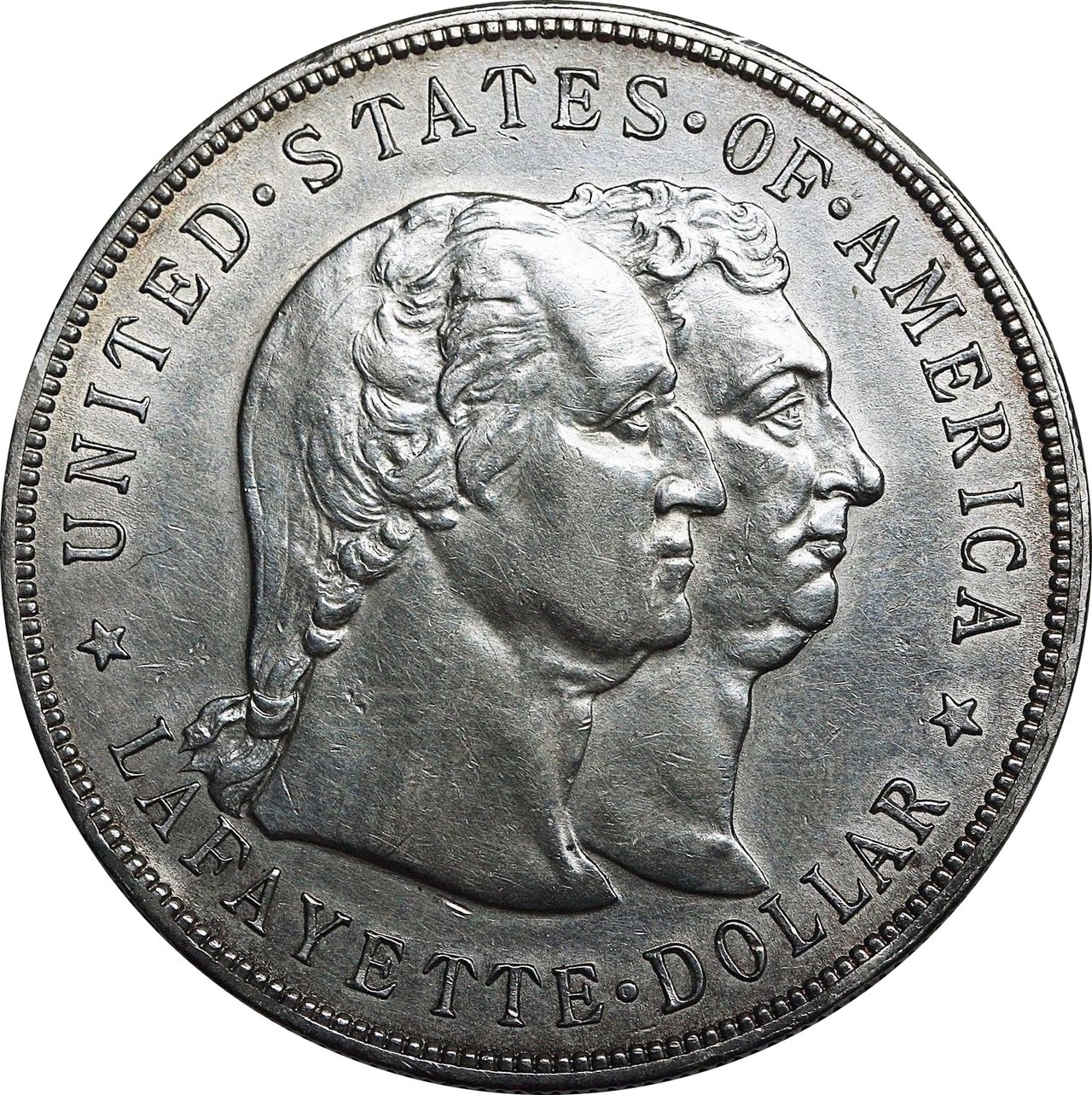
Visual AidWhat a silver dollar looked like
Photograph of the face of an American silver dollar of 1900, designed by Charles E. Barber. The Knowledge Bank explains that money changes value over time: in the years this story is set, a hired hand on a Western farm might earn a dollar or two for a long day of work, so five hundred dollars came to well over a year of steady wages, more than a good team of horses cost. This is one dollar. Counting five hundred of them, one long day at a time, is how a reader measures the true size of the debt on the farm. The coin is a museum piece and has no connection to the story.
Obverse of the 1900 Lafayette silver dollar, designed by Charles E. Barber; coin photograph by Lost Dutchman Rare Coins. Source: Wikimedia Commons, public domain.
taxn.Ch.4
Money people pay to the government for shared services
“The farm owed years of unpaid tax to the state.”
debtn.Ch.4
Money that is owed and must be paid back
“A debt that large seemed impossible to repay.”
collectorn.Ch.4
A person whose job is to gather money that is owed
“The tax collector came to the farm for the money.”
officialn.Ch.4
A person with a government job or authority
“The official carried papers stamped by the state.”
owev.Ch.4
To have to pay money to someone
“Grandfather owed the state five hundred dollars.”
sternadj.Ch.4
Serious, strict, and unsmiling
“The stern man showed no sympathy at all.”
despairn.Ch.4
A complete loss of hope
“Grandfather sank into despair over the debt.”
vown.Ch.4
A serious promise
“Willy made a vow to save the farm.”
seizev.Ch.4
To take something by force or by law
“The state could seize the farm if the debt went unpaid.”
fortunen.Ch.4
A very large amount of money
“To a poor boy, five hundred dollars was a fortune.”
🧠Knowledge Bank question
1According to the Knowledge Bank, five hundred dollars in this story was worth ___.Ch.4
2A “debt” is ___.Ch.4
3Fill in each blank with the correct word.Ch.4
Word choices:collectorseizeofficialvow- some words will not be used
Clifford Snyder is a tax — his job is to gather what is owed.
If the debt is not paid, the state can the whole farm.
4An “official” is ___.Ch.4
5To “owe” money is to ___.Ch.4
6True or False: A “stern” person is warm and full of smiles.Ch.4
7“Despair” is ___.Ch.4
8A “vow” is ___.Ch.4
9Fill in each blank with the correct word.Ch.4
Word choices:debtdespairfortuneowe- some words will not be used
The five hundred dollars the farm owes is a that must be paid.
Grandfather has sunk into — a complete loss of hope.
10True or False: A “fortune” is a very large amount of money.Ch.4
Part 2
Comprehension
How well do you understand Chapter 4?
🧠Knowledge Bank · Cause and Effect
Reading Skill · Cause & EffectReaders who track causes rarely get lost. A cause is the reason something happens; an effect is what happens because of it. Here one plain fact explains a mystery that has lasted since the first page: an old tax bill sits on the farm, and its weight is why Grandfather stopped speaking. Notice that a single cause can produce different effects in different people, and that each effect quickly becomes the cause of the next thing. Chains like that turn scattered happenings into a story that runs in one clear line.
Visual AidOne cause, then effect after effect
Diagram for the Knowledge Bank on cause and effect. The three numbered cards run in the order the Knowledge Bank gives them: the old tax bill is the cause, Grandfather’s silence is its effect, and that silence becomes the cause of what Willy has to do next. It shows the shape of the chain, not every event in the chapters. Notice that the middle card is both an effect and a cause — that is exactly how a chain runs in one clear line.
The cause-and-effect chain described in the Knowledge Bank. Drawn for Garden Heights Academy.
🧠Knowledge Bank question
1The Knowledge Bank says chains of cause and effect matter because they ___.Ch.4
2What is the real reason Grandfather gave up?Ch.4
3How much does the farm owe in back taxes?Ch.4
4If the back taxes are not paid, the state can take the farm away.Ch.4
5Put these events from Part 3 in the correct order. Write 1–5 (1 = first).Ch.4
Willy learns the farm owes five hundred dollars in back taxes.
Willy vows to raise the five hundred dollars himself.
Willy finally understands why Grandfather gave up.
Willy refuses to accept that the farm is lost.
A stern stranger in a suit arrives at the farm.
6How does Willy react to the terrible news?Ch.4
7Why had Grandfather hidden the tax problem?Ch.4
8Is the tax itself unfair or illegal?Ch.4
9True or False: The same news affects Grandfather and Willy in exactly the same way.Ch.4
10Learning the ‘reason’ changes the story by ___.Ch.4
Part 3
Literary Elements
Understanding HOW and WHY John Reynolds Gardiner tells the story across Chapter 4.
🧠Knowledge Bank · Words That Feel Cold
Literary Craft · Diction & ConnotationEvery word carries two things: a meaning and a feeling. That second thing is called connotation. The words home and house point at the same building, but only one of them sounds warm. When the tax collector arrives, Gardiner reaches for cool, clipped, businesslike language, and the chill in it tells us how to regard the man before he has done a single thing. Authors pick words the way painters pick colors, mixing warm shades and cold ones on purpose. Ask not only what a word means but how it lands, because word choice quietly sets the mood.
📚 Literary Devices in This Part · definitions & examples
Conflict is the central problem or struggle in a story. An external conflict is a struggle against an outside force — here, Willy against the tax debt and the state that will seize the farm. An antagonist is a person or force working against the hero; the cold tax collector Clifford Snyder plays that role, though the deeper enemy is the debt itself.
1Fill in each blank with the correct literary term.Ch.4
Word choices:conflictexternalinternalrhyme- some words will not be used
The central problem a character must fight against is the .
A struggle against an outside force is an conflict.
🧠Knowledge Bank question
2According to the Knowledge Bank, connotation is ___.Ch.4
3Fill in each blank with the correct literary term.Ch.4
Word choices:antagonistcontrastnarratortitle- some words will not be used
A character or force working against the hero is the .
Setting despair right beside determination is called .
4True or False: Conflict is what drives a story forward and makes us want to keep reading.Ch.4
5How does the author make us dislike Snyder?Ch.4
6The contrast between Grandfather and Willy mainly reveals ___.Ch.4
7Naming the exact sum — five hundred dollars — makes the conflict feel ___.Ch.4
8True or False: An antagonist must always be an evil villain.Ch.4
9Why place this reveal now, after the harvest?Ch.4
10True or False: Conflict is the central struggle a character faces — here, Willy against a five-hundred-dollar debt.Ch.4
Part 4
Think Deeper
Four deeper challenges — no single-word recall. Read, weigh the evidence, and reason it through.
🧠Knowledge Bank · Fair, and Still Cruel
Social-Emotional · FairnessThe law says Grandfather must pay his taxes, and that rule is the same for everyone. In one way, that is fair. But it still feels cruel to take a family’s farm over money they do not have. This part asks a hard, grown-up question: can something be fair and unkind at the same time? Sometimes the answer is yes. Rules keep the world orderly, yet rules alone do not always show mercy. As you read, think about the difference between what is fair and what is kind. The wisest people learn to make room in their hearts for kindness.
1Claim: “The unpaid taxes are the real cause of Grandfather’s despair.” — choose the two details that best prove it.Claim & Evidence
2The burden causing the sorrow, or just a detail of the scene? Tap each item to sort it — tap again to switch sides. You can keep tapping to change your answer.Sort into two
◄ The burdenJust a detail ►
3Match each cause to its result. For each cause, pick its result.Cause & Effect
Grandfather cannot pay his taxes→
The tax collector Snyder arrives→
The farm could be lost→
The debt is five hundred dollars→
🧠Knowledge Bank question
4Fill both blanks to complete the reasoning.Build the Argument
The Knowledge Bank calls the tax on the farm fair because , and yet it still feels cruel because .
Part 5
Standardized Test
Key Details & Inference — SAT & TOEFL-style practice
Read the passage — the highlighted words are tested — then answer. Tap an answer, then tap it again to confirm.
SATWords in Context — a word's meaning in this passage
SATAuthor’s Purpose — what the author wants to achieve
SATInference — a conclusion the passage implies
SATCentral Ideas — the passage's main point
TOEFLFactual Information — a fact stated in the passage
TOEFLRhetorical Purpose — why the author included a detail
Why Communities Pay Taxes
Have you ever wondered who pays for the roads you travel, the public school down the street, or the firefighters who come when someone calls? The answer is almost always the same: a tax. A tax is money that people and businesses pay to their government, and it is one of the oldest ideas in human society. The reason is simple. Some things are too big or too important for any single person to provide alone — roads, schools, courts, clean water, and help after a disaster. So a community pools its money and uses it for what everyone shares. People may pay tax on what they earn, on what they buy, or on property they own, such as a house or a farm. Because a person comes to owe this money by law, someone who does not pay can face serious trouble: fines, or a court order letting the government seize the very property the tax is based on. This can feel harsh, especially for someone who is poor, yet the basic idea is meant to be fair — everyone chips in so that everyone can benefit.
Original passage written for Garden Heights — not a quotation from the novel.
1In the passage, a tax is ___.SAT · Words in Context
2According to the passage, why do communities collect taxes?TOEFL · Factual Information
3Why does the passage say no single person could “provide” things like roads and schools alone?TOEFL · Factual Information
4On which of these might a person pay tax, according to the passage?TOEFL · Factual Information
5The author lists roads, schools, courts, and clean water as things everyone “shares” mainly to —SAT · Author’s Purpose
6The passage implies everyone can truly “benefit” from a tax system when —SAT · Inference
7In the passage, to owe money is to ___.SAT · Words in Context
8In the passage, to seize property means to ___.SAT · Words in Context
9Which sentence best states the main idea?SAT · Central Ideas
10This passage helps explain Grandfather’s trouble because he —TOEFL · Rhetorical Purpose
Part 6 · Optional
Creative Writing
A bonus challenge to practice your English. Take your time and have fun with it.
About This Section
This writing task is optional and is not part of your auto-graded score. The feedback below checks only the basics — length, spelling, and grammar — not whether your ideas are right or wrong. It is meant for classroom discussion and creative practice, so feel free to use your imagination!
Writing Task — Part 3 “Facing a Big Problem”
Willy hears news that would make many people give up — but he decides to fight. Write about a big problem you or someone you know once faced. Did you feel like giving up, like Grandfather, or like fighting, like Willy? What did you do, and what happened? Write at least 40 words.
You can start with: “The biggest problem I ever had to face was…”
0 / 40 words minimum
🗣 Teach It · Just for Fun (optional)
No right or wrong — close the screen and tell someone nearby WHY Grandfather gave up, and what Willy vowed to do. Can’t find anyone? Tell yourself out loud. The moment you teach it, you truly understand it.
Part 3 Complete!
You finished Chapter 4 of Stone Fox.
Here are your auto-graded results:
-
points out of 100
Teach it to someone
The best last step is to teach it. In your own words, explain what happened — retell a favorite scene, teach a character’s big choice, or sum up the main idea for a parent, friend, or classmate. When you can teach it clearly, you truly own it.
Independent study guide by Garden Heights Academy. Not affiliated with or endorsed by the author or any rights holders. Contains original analysis only; no text from the novel is reproduced.
SAT® is a registered trademark of College Board, which is not affiliated with, and does not endorse, these materials. TOEFL® is a registered trademark of ETS. These materials are not endorsed or approved by ETS. Garden Heights is an independent provider of test-style reading practice.