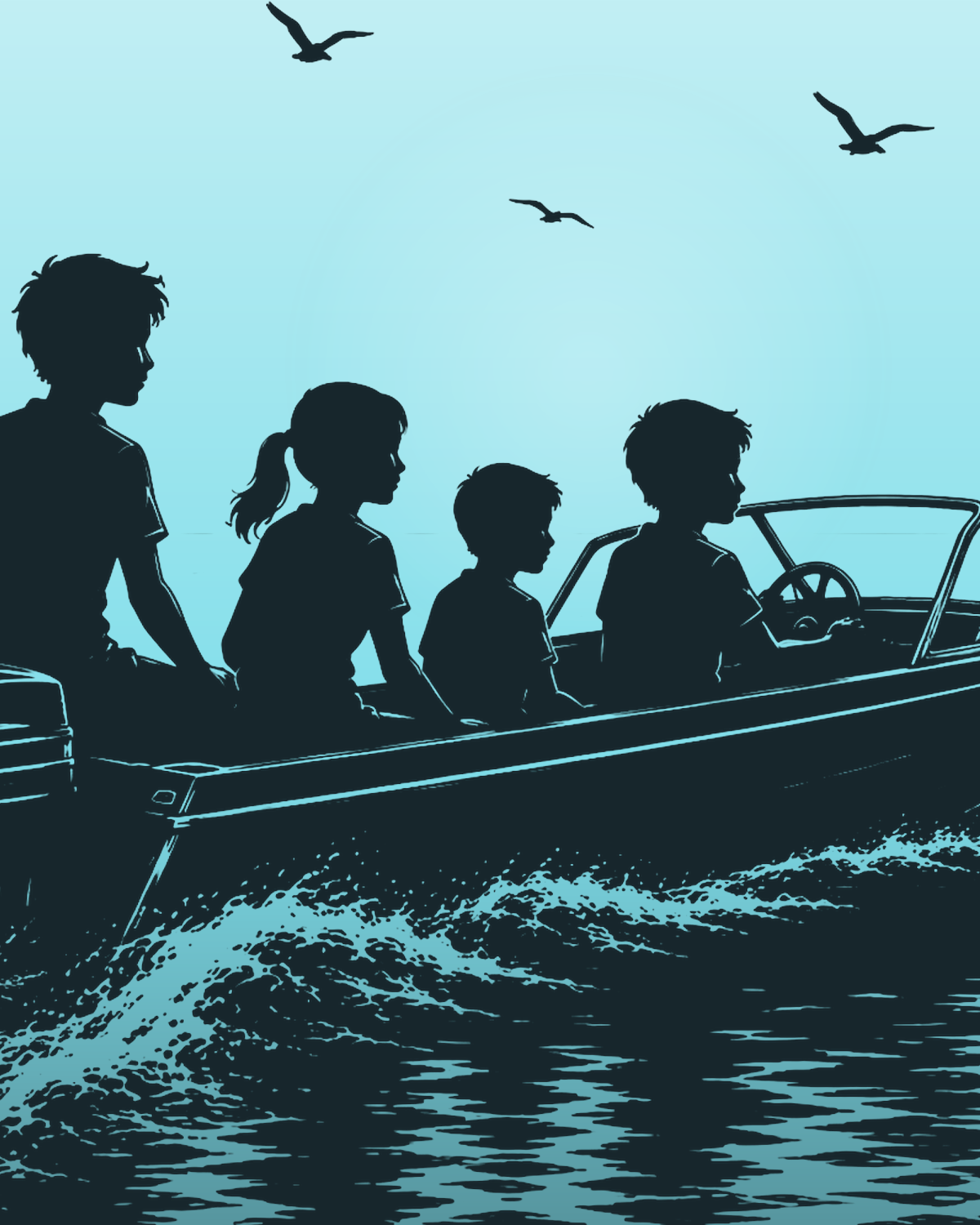
Surprise Island cover
Garden Heights Academy

Surprise Island

This workbook is for Garden Heights members. Sign in to continue.

Sign in with Google →
New here? Just sign up with Google — your account includes Matilda, our gift book, forever.
What Happens in Part 3

Down to the beach the children go, for one of the best island treats of all: clamming. When the tide goes out, it leaves behind a wide, wet stretch of sand — and hidden just beneath it are dozens of clams. Kindly Joe shows the Aldens exactly how to find them: watch for the little air holes, then dig quickly with your fingers into the cool, salty sand before the clam can burrow away. Soon their bucket is full of fresh clams to cook for supper. Splashing in the shallows, digging in the sand, and gathering their own food straight from the sea, the children are perfectly happy. And once again, thoughtful Joe is right there beside them — patient, knowledgeable, and quietly teaching them everything he knows about the island and the sea.

What We Will Learn
FocusWhat It Means
Sensory ImageryHow the beach comes alive for the senses
Joe as MentorThe kind teacher who deepens the mystery
Science of TidesWhy clamming needs low tide
Chapter Summary
PagesKey Events
pp. 39–57At low tide the children go clamming; Joe teaches them how to spot and dig the clams from the wet sand, and they fill a bucket for supper — a happy day of gathering food from the sea, with Joe patiently teaching all the while
💭 Before You Read · Warm-Up (not scored)

There are no wrong answers here — just think, guess, and talk:

  • Joe patiently teaches the children how to do new things. Who has taught you something useful, and how did they do it?
  • The children gather their own food from the sea. Why can catching or growing your own food feel especially satisfying?
  • Predict: Joe knows so much about the island and the sea. What might that tell us about who Joe really is?
Copyright Notice

This is an independent study guide created by Garden Heights Academy to support reading comprehension and literary analysis. It contains original analysis questions and does not reproduce any text from the novel. Surprise Island is a work by Gertrude Chandler Warner. This guide is not affiliated with, authorized by, or endorsed by the author or any associated rights holder.
Part 1
Vocabulary
Study 10 key words from pages 39–57, then answer each question.
🧠Knowledge Bank · Reading the Low Tide
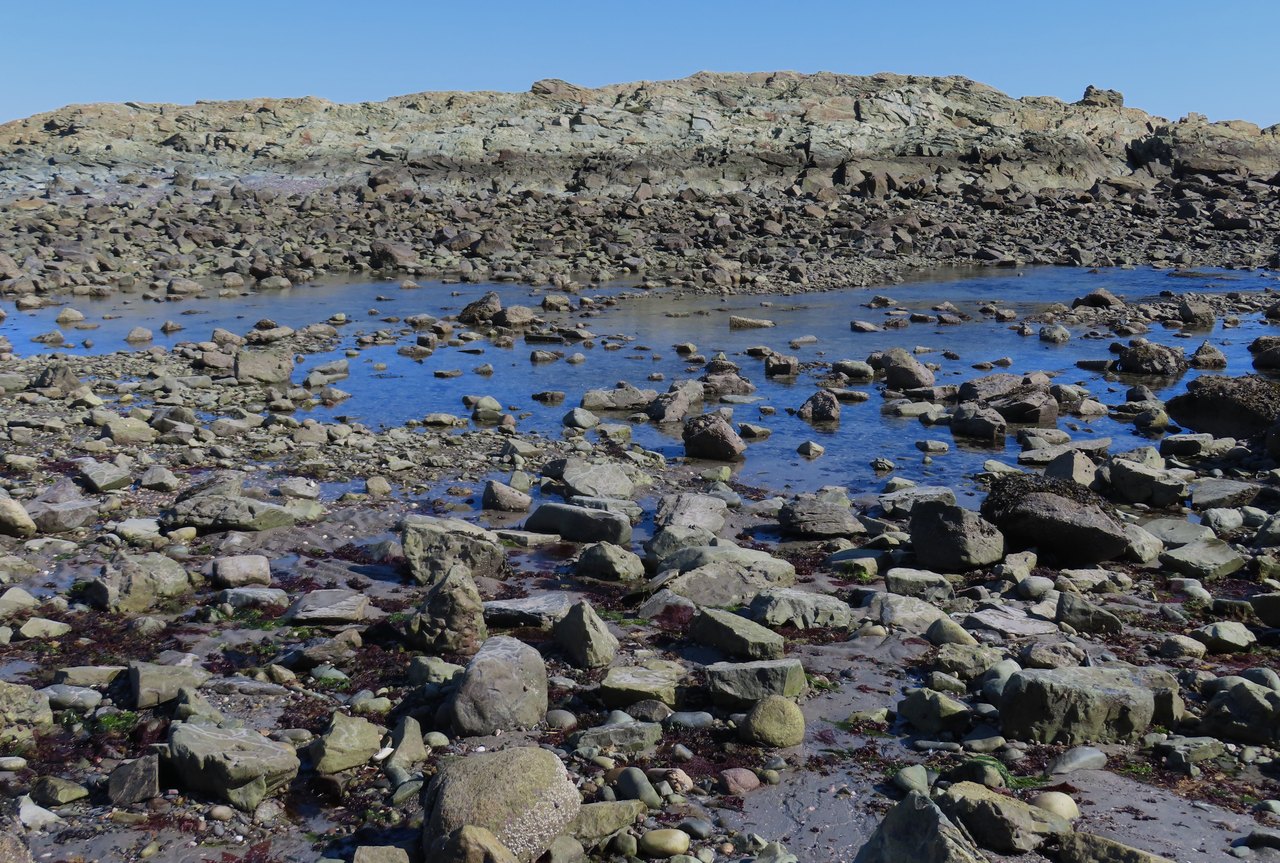
Oceanography · Tides and FlatsTwice a day the sea climbs the beach, and twice a day it drains away again; that steady breathing is the tide. The Moon is the main cause. Its gravity tugs the ocean into a slight bulge, and as the Earth turns, every coast swings through high water and then low. Roughly six hours separate the two, and the times slip a little later each day, which is why shore families keep a printed tide table on the wall. At low water a wide floor of wet sand lies bare that nobody can walk on at any other hour, and that window closes fast. Anyone who works the flats learns to watch the clock, the table, and the creeping edge of the water, because everything depends on timing.
clammingn.p.39
Digging for clams in the sand or mud
“Clamming was one of the island’s best treats.”
tiden.p.40
The daily rise and fall of the sea
“They dug when the tide was low.”
clamn.p.41
A shellfish that lives buried in wet sand
“Each clam hid just under the surface.”
burrowv.p.43
To dig down quickly into the ground
“A clam can burrow away in a flash.”
bucketn.p.45
A round container for carrying things
“They filled the bucket with fresh clams.”
shoren.p.39
The land along the edge of the sea
“They walked along the sandy shore.”
shallowadj.p.46
Not deep
“They splashed in the shallow water.”
plentifuladj.p.44
Present in large amounts
“Clams were plentiful on the island beach.”
saltyadj.p.42
Tasting of salt, like the sea
“The cool sand was damp and salty.”
gatherv.p.44
To collect things together
“They gathered enough clams for supper.”
1‘Clamming’ is —p.39
2The ‘tide’ is —p.40
3Fill in each blank with the correct word.pp. 39–57
Word choices:clambucketshoretide- some words will not be used
Each hidden can burrow away fast if you are slow.
They fill a round with fresh clams.
4To ‘burrow’ is to —p.43
5Something ‘shallow’ is not deep.p.46
6The ‘shore’ is —p.39
7Fill in each blank with the correct word.pp. 39–57
Word choices:plentifulgathersaltyshallow- some words will not be used
Clams are on the island beach.
The children enough clams for supper.
8A ‘clam’ is —p.41
9Something ‘plentiful’ is —p.44
10To ‘gather’ is to scatter things far apart.p.44
Part 2
Comprehension
How well do you understand pages 39–57?
🧠Knowledge Bank · Shellfish on the Table
Food History · Coastal GatheringGathering shellfish is one of the oldest ways people have fed themselves. All along the New England shore, archaeologists find middens — great banked heaps of discarded shells marking places where families came back to eat, season after season, for thousands of years. The tools have barely changed: a short-tined rake, a wire basket, and fingers. A buried clam gives itself away with a small hole at the surface, and a digger works fast, because a clam’s muscular foot can pull it deeper into the sand. The catch goes home to be steamed open or cooked into chowder. Today licenses, closed seasons, and size limits keep the beds from being stripped bare, so a shore that has fed people for centuries stays productive.
1What do the children go to the beach to do?p.39
2When can they dig for clams?p.40
3How do they spot where a clam is hiding?p.41
4Why must they dig quickly?p.43
5Write the numbers 1–5 in the boxes to show the correct order across Part 3. Number 1 = what happens first.pp. 39–57
  • They cook the fresh clams for supper.
  • They spot air holes and dig quickly.
  • They fill a bucket with the clams.
  • They walk to the shore at low tide.
  • Joe patiently shows them how to clam.
6What will they do with the clams?p.44
7Who teaches the children how to clam?p.41
8What do we notice about Joe again?p.41
9The children buy their clams from a shop.p.44
10Joe knowing so much about the island quietly deepens the story’s mystery.p.41
Part 3
Literary Elements
Understanding HOW and WHY Gertrude Chandler Warner tells the story across pages 39–57.
🧠Knowledge Bank · Writing You Can Almost Feel
Literary Craft · Sensory ImagerySome chapters you can nearly feel on your skin, and the tool that does it is sensory imagery — language aimed straight at the five senses. Instead of reporting that the children went down to the beach, a writer hands you cool damp sand, the smell of salt, the slap of shallow water, a tiny hole that betrays what lies beneath, and the promise of supper. Because more than one sense is touched at once, the scene wraps around a reader like weather rather than lying flat on the page. Try it in your own writing: name a sound and a texture, not only a sight. That is the whole difference between being told about a day and living it as an experience.
📚 Literary Devices in This Part · definitions & examples
Sensory imagery is language that appeals to the five senses, putting the reader right in the scene — the salty sand, the splashing water. A mentor is a wise, helpful teacher-figure; Joe teaches the children while his deep knowledge keeps the mystery of his identity alive.
1Describing the cool, salty, damp sand is an example of —p.42
2Sensory imagery can appeal to touch, sound, sight, taste, and smell.p.42
3Fill in each blank with the correct word.pp. 39–57
Word choices:sensory imagerymentorrhymeindex- some words will not be used
The salty, splashy beach language is
Joe, the wise and kindly teacher-figure, is a .
4Joe, the wise and kindly teacher-figure, plays the role of a —p.41
5A mentor can help the plot AND deepen a mystery at the same time.p.41
6Fill in each blank with the correct word.pp. 39–57
Word choices:mysterymentorrhymesetting- some words will not be used
A handyman who knows so much builds the story’s
Joe teaching the children makes him a .
7Why does the author fill this chapter with the senses?p.42
8The mood of this chapter is best described as —p.39
9Fill in each blank with the correct word.pp. 39–57
Word choices:sensory imagerymysteryrhymeplot- some words will not be used
Words that make you feel the sand and sea are
The growing puzzle of who Joe really is is the .
10Each new sign of Joe’s knowledge makes the reader more —p.41
Part 4
Think Deeper
Four deeper challenges — no single-word recall. Read, weigh the evidence, and reason it through.
🧠Knowledge Bank · Learning a Skill Hand to Hand
Education · ApprenticeshipSome knowledge never makes it into books. Exactly where clams lie, how hard to twist a rake, when to stop digging — that sort of learning passes from one pair of hands to another. For centuries whole trades worked this way: an apprentice lived and labored beside a master craftsman for years, sweeping and fetching at first, then slowly taking on the real work until the skill belonged to him. Coastal families still teach children the flats in the same patient fashion. The arrangement asks something of both sides. A teacher must explain and let a beginner make a mess; a learner must watch closely, ask, and accept correction. Skill of this kind is never handed over in a single telling. It is grown slowly, through practice.
1Claim: “Kindly Joe helps the children learn a new island skill.” — choose the two details that best prove it.Claim & Evidence
2Shows Joe teaching and the children learning, or just a detail of the scene? Tap each item to send it left or right.Sort into two
◄ Teaching and learningJust a detail ►
3Match each cause to its result. For each cause, pick its result.Cause & Effect
The tide goes out
Clams hide beneath the sand
Joe knows how
They follow his lead
4Fill both blanks to complete the reasoning.Build the Argument
Joe teaching the children to clam shows that , which means that .
Part 5
Standardized Test
Key Details & Inference — SAT & TOEFL-style practice
🎯 You already have the skills from the sections above — this is just a fun way to meet real SAT & TOEFL-style questions. Read the passage (the highlighted words are tested below), then answer the questions below. Tap an answer to select it, then tap it again to confirm — you can change your choice until you confirm.

Stand on a beach for a few hours and you will see something astonishing: the whole sea slowly rises up the sand, then slides back out. This daily rise and fall is called the tide, and it happens, in most places, twice every day. For a long time it puzzled people, but we now know the main cause is the Moon. Though it is far away, the Moon’s gravity reaches across space and gently pulls on Earth’s oceans, tugging the water into a bulge on the side facing it. As the Earth spins, each coast passes through that bulge into high tide, then out of it into low tide. The tides are more than a curiosity; they shape life along every shore. Countless creatures — crabs, clams, and snails — have their own rhythm timed to the water, feeding when the tide is in and hiding when it goes out. People who gather food from the shore must learn this rhythm too: to dig for clams, you must arrive at low tide, when the sea has pulled back and the sand where the clams hide lies open. The Moon, it turns out, sets the table for anyone who can read the sea.

Original passage written for Garden Heights — not a quotation from the novel.
1The “tide” is the daily —TOEFL · Factual Information
2What is the main cause of the tides?TOEFL · Factual Information
3The Moon’s gravity gently “pulls” on the oceans, meaning it —SAT · Words in Context
4A coast gets a high tide when it passes —TOEFL · Factual Information
5Sea creatures have rhythms “timed” to the water, meaning matched to its —SAT · Words in Context
6When must a person dig for clams?TOEFL · Factual Information
7At low tide, the sand where the clams “hide” lies —SAT · Words in Context
8What can the reader infer about people who gather food from the shore?SAT · Inference
9The passage says the tides do more than amaze us; they —TOEFL · Factual Information
10This passage explains the chapter because the Aldens —TOEFL · Rhetorical Purpose
Part 6 · Optional
Creative Writing
A bonus challenge to practice your English. Take your time and have fun with it.
About This Section

This writing task is optional and is not part of your auto-graded score. The feedback below checks only the basics — length, spelling, and grammar — not whether your ideas are right or wrong. It is meant for classroom discussion and creative practice, so feel free to use your imagination!

Writing Task — Part 3 “A Day at the Beach”

The children spend a happy day clamming and splashing at the shore. Write about a day at a beach, lake, or river — real or imagined. Use your senses: what did you see, hear, feel, and smell? Write at least 40 words.

You can start with: “My favorite thing about a day by the water is…”
0 / 40 words minimum
🗣 Teach It · Just for Fun (optional)

No right or wrong — close the screen and tell someone nearby how the children go clamming and why Joe seems mysterious. Can’t find anyone? Tell yourself out loud. The moment you teach it, you truly understand it.

Garden Heights Academy

Part 3 Complete!

You finished pages 39–57 of Surprise Island.

Here are your auto-graded results:

-
points out of 100
Your Writing

Your writing was checked automatically for length, spelling, grammar, and whether you included the key parts of the scene. Scroll back to Part 5 anytime to read your feedback and improve your work.

Move on to Part 4 →

Independent study guide by Garden Heights Academy. Not affiliated with or endorsed by the author or any rights holders. Contains original analysis only; no text from the novel is reproduced.