Tales of a Fourth Grade Nothing cover
Garden Heights Academy

Tales of a Fourth Grade Nothing

This workbook is for Garden Heights members. Sign in to continue.

Sign in with Google →
New here? Just sign up with Google — your account includes Matilda, our gift book, forever.
What Happens in Part 1

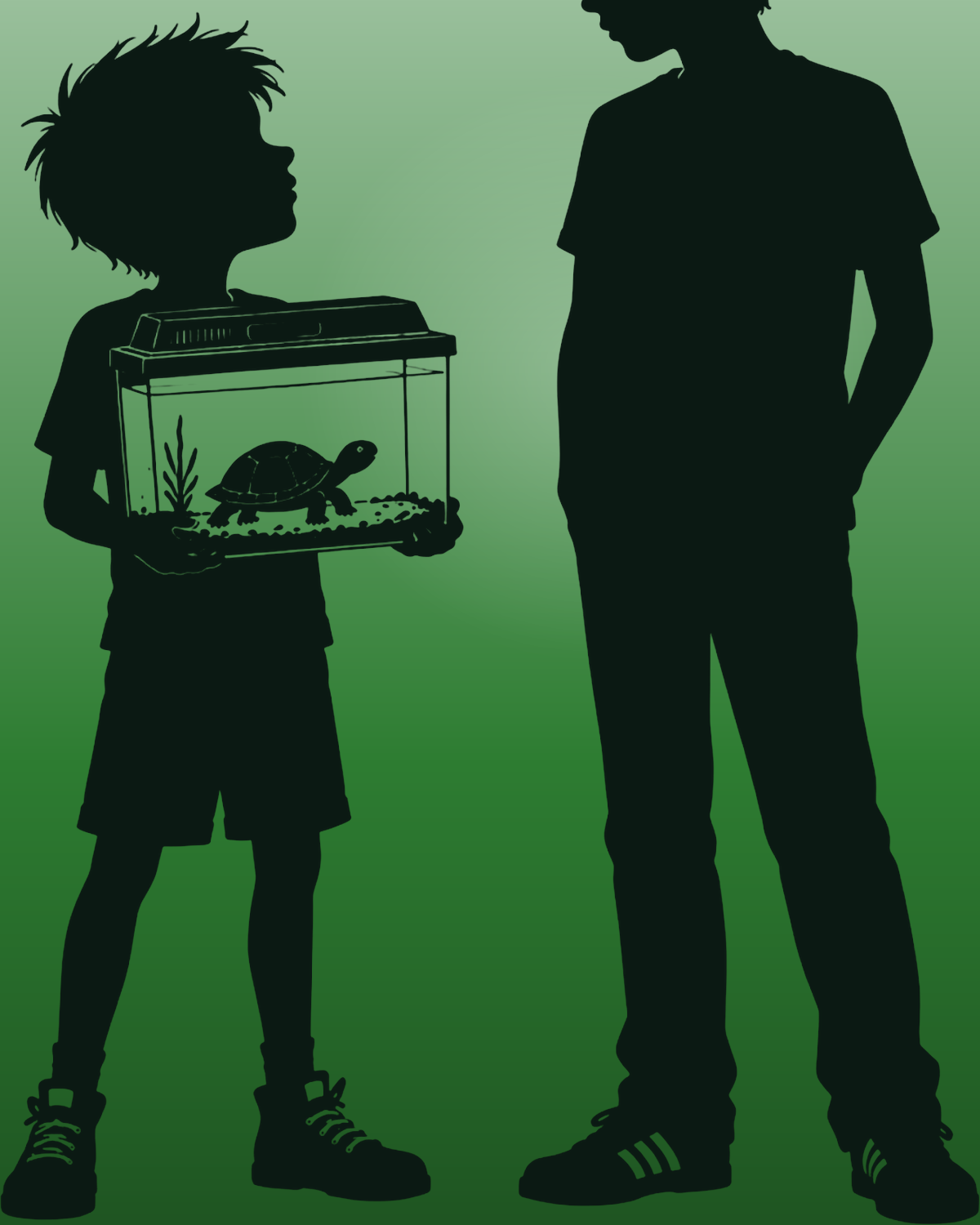
Meet Peter Hatcher, a fourth-grader who lives with his family in an apartment in New York City — and who tells us his own story in his honest, funny voice. Peter’s biggest problem in life is small but mighty: his two-and-a-half-year-old little brother, Fudge, who is, in Peter’s opinion, a complete pest. Fudge throws tantrums, ruins Peter’s things, and somehow gets away with everything. But this story starts on a happy note. At his friend Jimmy Fargo’s birthday party, Peter wins a prize he adores: a tiny pet turtle, which he names Dribble. Peter loves Dribble more than almost anything and keeps him in a bowl in his room. Life with Fudge may be a trial — but at least now Peter has a pet all his own.

What We Will Learn
FocusWhat It Means
First-Person NarratorPeter telling his own story in his own voice
CharacterizationMeeting Peter and his pesky brother Fudge
Theme (Sibling Life)The ups and downs of having a little brother
Chapter Summary
PagesKey Events
pp. 1–15We meet Peter Hatcher, a fourth-grader in a New York City apartment, and his troublesome toddler brother Fudge; at a friend’s birthday party Peter wins a pet turtle he names Dribble and comes to love
💭 Before You Read · Warm-Up (not scored)

There are no wrong answers here — just think, guess, and talk:

  • Peter finds his little brother Fudge exhausting. If you have a younger sibling (or can imagine one), what is the hardest part?
  • Peter treasures his own pet turtle. Why can having something — or someone — that is truly ‘yours’ feel so special?
  • Predict: Fudge gets into everything and ruins Peter’s things. Do you think Peter’s new pet turtle will be safe around Fudge?
Copyright Notice

This is an independent study guide created by Garden Heights Academy to support reading comprehension and literary analysis. It contains original analysis questions and does not reproduce any text from the novel. Tales of a Fourth Grade Nothing is a work by Judy Blume. This guide is not affiliated with, authorized by, or endorsed by the author or any associated rights holder.
Part 1
Vocabulary
Study 10 key words from pages 1–15, then answer each question.
🧠Knowledge Bank · Turtles as Apartment Pets
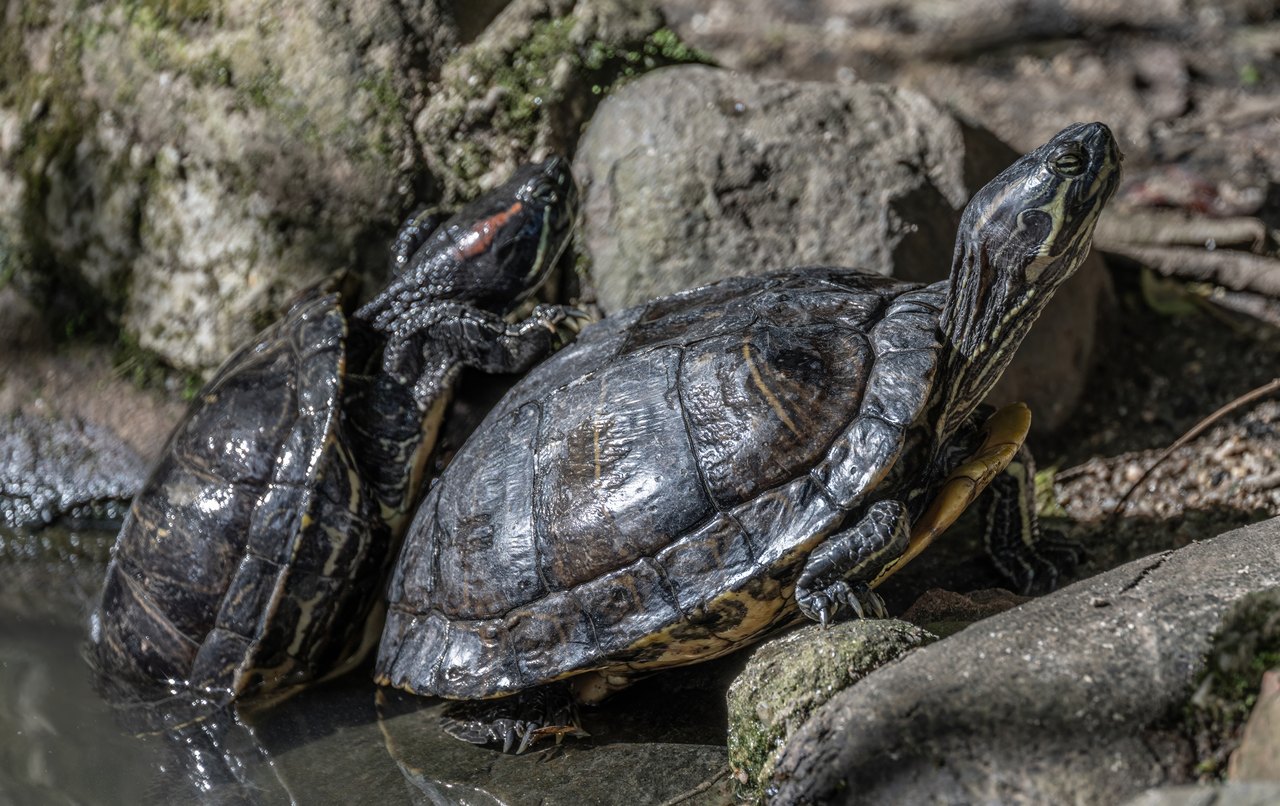
Zoology · Reptile CareA small pet turtle is worth understanding before you meet one in a story. A turtle is a reptile, a cold-blooded animal that makes no heat of its own and must borrow warmth from the air and light around it. Its famous shell is not a house it can step out of; the ribs and backbone are fused into it, so pulling the head and legs inside is the only door it has. Keeping one is quieter work than keeping a dog, but it is still daily work: clean water, a warm lamp, and the right food. Small turtles can live for decades, far longer than most classroom animals. And for a child in a city building with no yard at all, an animal that needs one bowl and one shelf makes an almost perfect pet.
apartmentn.p.2
A home on one floor of a larger building
“The Hatchers lived in a city apartment.”
prizen.p.8
Something won in a game or contest
“Peter won a prize at the party.”
turtlen.p.9
A reptile with a hard shell
“His new pet was a little turtle.”
pestn.p.3
Someone or something that is very annoying
“Peter thought his brother was a pest.”
tantrumn.p.4
A sudden fit of bad temper
“Fudge threw a tantrum on the floor.”
annoyv.p.5
To bother or irritate someone
“Fudge loved to annoy his big brother.”
patiencen.p.6
The ability to stay calm and wait
“It took great patience to live with Fudge.”
preciousadj.p.11
Greatly loved and valued
“Dribble was precious to Peter.”
complainv.p.5
To say you are unhappy about something
“Peter had a lot to complain about.”
terribleadj.p.4
Very bad; awful
“Fudge could be absolutely terrible.”
1An ‘apartment’ is —Pages 1–15
2A ‘prize’ is —Pages 1–15
3Fill in each blank with the correct word.Pages 1–15
Word choices:tantrumannoygigglewhisper- some words will not be used
When Fudge screams and kicks on the floor, he throws a
Fudge loves to ___ his big brother Peter .
4A ‘turtle’ is —Pages 1–15
5‘Patience’ means being able to wait calmly.Pages 1–15
6A ‘pest’ is someone who —Pages 1–15
7Fill in each blank with the correct word.Pages 1–15
Word choices:hilariousembarrassedpatientgentle- some words will not be used
Peter is not amused, but readers find Fudge’s antics
When Fudge acts up in public, Peter feels .
8Something ‘precious’ is —Pages 1–15
9To ‘complain’ is to —Pages 1–15
10Something ‘terrible’ is wonderful and delightful.Pages 1–15
Part 2
Comprehension
How well do you understand pages 1–15?
🧠Knowledge Bank · Listening to a Narrator
Reading Science · Narrative VoiceEvery story arrives in somebody’s voice, and the voice itself carries information. Researchers who study reading find that strong readers track more than events; they track the words a speaker chooses, because word choice leaks feeling. A narrator who calls his brother a pest, then lists every crime the brother has committed, is reporting two things at once: what happened, and how much it stung. Watch which details a speaker lingers over and which he hurries past, because the lingering marks what matters to him. Watch the jokes too, since humor is one of the oldest ways of carrying a complaint politely. Reading for tone is a habit you can practice on any page, and it slowly teaches you to hear what a person means underneath what they actually say.
1Who tells the story?Pages 1–15
2Where does Peter live?Pages 1–15
3Who is Fudge?Pages 1–15
4Peter often finds his brother Fudge annoying.Pages 1–15
5Write the numbers 1–5 in the boxes to show the correct order across Part 1. Number 1 = what happens first.Pages 1–15
  • Fudge starts pestering Peter and the turtle.
  • Peter wins a pet turtle as the prize.
  • Peter takes Dribble home to the apartment.
  • Peter goes to Jimmy Fargo’s birthday party.
  • Peter names his new turtle Dribble.
6Peter wins his turtle at a birthday party.Pages 1–15
7Where does Peter win his prize?Pages 1–15
8What does Peter name his turtle?Pages 1–15
9How does Peter feel about Dribble?Pages 1–15
10Why is his own pet special for Peter?Pages 1–15
Part 3
Literary Elements
Understanding HOW and WHY Judy Blume tells the story across pages 1–15.
🧠Knowledge Bank · First-Person Point of View
Literary Craft · NarrationWhen a story says ‘I,’ it is written in first person: a character inside the events is also the one reporting them. Judy Blume hands this whole book to a fourth grader, and that single choice decides what readers are permitted to know. We ride behind one pair of eyes, so a younger brother’s reasons stay offstage while an older brother’s irritation fills the frame. That limit is not a flaw; it is the engine of the comedy, because exasperation is funniest when the reader is made to share it. Blume belongs to a wave of writers in the 1970s who built humor out of ordinary family life instead of adventure, and a young narrator suited that project exactly. A first-person narrator is honest but never complete, and knowing whose eyes you have borrowed is the mark of a careful reader.
📚 Literary Devices in This Part · definitions & examples
A first-person narrator tells the story using ‘I,’ sharing their own thoughts — here, Peter Hatcher. This makes his characterization close and vivid; we know him from the inside. The book’s theme is the everyday comedy and challenge of family and sibling life.
1Peter tells the story himself, saying ‘I’ — he is a —Pages 1–15
2A first-person narrator tells the story using ‘I.’Pages 1–15
3Fill in each blank with the correct word.Pages 1–15
Word choices:first-person narratorcharacterizationthemesetting- some words will not be used
Peter telling his own story with ‘I’ makes him a
How Blume reveals what Peter is like is .
4How Blume shows what Peter is like is —Pages 1–15
5Characterization is how an author reveals what a character is like.Pages 1–15
6Fill in each blank with the correct word.Pages 1–15
Word choices:characterizationfirst-person narratorthememood- some words will not be used
Blume revealing Peter through his own words is
Peter narrating with ‘I’ makes him the .
7Peter narrating in his own voice makes him the story’s —Pages 1–15
8A big idea about family that runs through the book is a —Pages 1–15
9Fill in each blank with the correct word.Pages 1–15
Word choices:themefirst-person narratorcharacterizationplot- some words will not be used
The big idea running through the book is a
Peter telling it with ‘I’ makes him the .
10Being inside Peter’s head mainly makes readers —Pages 1–15
Part 4
Think Deeper
Four deeper challenges — no single-word recall. Read, weigh the evidence, and reason it through.
🧠Knowledge Bank · Inside the Toddler Brain
Developmental Psychology · Self-ControlA two-year-old is not a small adult who has decided to behave badly. Brain scientists have shown that the regions handling strong feeling come online early, while the prefrontal cortex, which manages waiting, planning, and stopping yourself, keeps developing into a person’s twenties. That mismatch explains almost everything a toddler does. The wanting arrives at full volume; the brake has barely been installed. So a small child who is told no does not sulk quietly, he floods, and the flood looks to everybody else like pure defiance. Knowing the mechanism does not make a shrieking child easier to live beside, but it does change what the shrieking means. A toddler is not plotting against his brother. He is running a brain that feels everything and can hold back almost nothing.
1Claim: “Peter’s little brother Fudge is the biggest problem in his life.” — choose the two details that best prove it.Claim & Evidence
2Shows why Fudge is Peter’s big problem, or just a background detail? Tap each item to send it left or right.Sort into two
◄ Why Fudge is the problemJust a detail ►
3Match each cause to its result. For each cause, pick its result.Cause & Effect
Peter has a little brother
Fudge is only two and a half
Fudge causes constant trouble
Peter tells his own story
4Fill both blanks to complete the reasoning.Build the Argument
Peter calls Fudge his biggest problem because , which means that .
Part 5
Standardized Test
Key Details & Inference — SAT & TOEFL-style practice
🎯 You already have the skills from the sections above — this is just a fun way to meet real SAT & TOEFL-style questions. Read the passage (the highlighted words are tested below), then answer the questions below. Tap an answer to select it, then tap it again to confirm — you can change your choice until you confirm.

The small pet turtle, like Peter’s Dribble, has been a favorite of children for generations — and it is easy to see why. A turtle is a reptile, a cold-blooded animal, and its most famous feature is its shell: a hard, bony case, joined to its skeleton, into which the turtle can pull its head and legs for protection from danger. This built-in armor means a turtle rarely needs to run; it can simply tuck in and wait for trouble to pass. Turtles are quiet, gentle, and slow-moving, which makes them calm and pleasant to watch, and a small one needs only a modest bowl or tank, some clean water, and the right food. That makes a turtle a good pet for a family in a city apartment, where there is no room for a large, noisy animal. Turtles are also famously long-lived: with good care, some can outlast a childhood and become a pet a person keeps for many years. Small, peaceful, and undemanding, a pet turtle asks little and gives its owner the quiet pleasure of caring for a creature of their very own.

Original passage written for Garden Heights — not a quotation from the novel.
1A turtle is a —TOEFL · Factual Information
2Into what does a turtle pull its head and legs for “protection”?TOEFL · Factual Information
3“Protection” means keeping something —SAT · Words in Context
4The passage suggests the main pleasure of a pet turtle is —SAT · Inference
5Why is a turtle a good pet for a city “apartment”?TOEFL · Factual Information
6An “apartment” is —SAT · Words in Context
7According to the passage, turtles are famous for being —TOEFL · Factual Information
8What can the reader infer makes a turtle an easy pet?SAT · Inference
9A pet turtle gives its owner the pleasure of caring for a creature of their very “own,” meaning one that —SAT · Words in Context
10This passage helps us understand why Peter —TOEFL · Rhetorical Purpose
Part 6 · Optional
Creative Writing
A bonus challenge to practice your English. Take your time and have fun with it.
About This Section

This writing task is optional and is not part of your auto-graded score. The feedback below checks only the basics — length, spelling, and grammar — not whether your ideas are right or wrong. It is meant for classroom discussion and creative practice, so feel free to use your imagination!

Writing Task — Part 1 “A Pet of My Own”

Peter adores his turtle Dribble. Write about a pet you have or would love to have — what kind, what you would name it, and how you would care for it. Or write about a younger sibling or little kid you know and what they are like. Write at least 40 words.

You can start with: “The pet I have (or would love) is…”
0 / 40 words minimum
🗣 Teach It · Just for Fun (optional)

No right or wrong — close the screen and tell someone nearby about Peter, his brother Fudge, and the turtle Dribble. Can’t find anyone? Tell yourself out loud. The moment you teach it, you truly understand it.

Garden Heights Academy

Part 1 Complete!

You finished pages 1–15 of Tales of a Fourth Grade Nothing.

Here are your auto-graded results:

-
points out of 100
Your Writing

Your writing was checked automatically for length, spelling, grammar, and whether you included the key parts of the scene. Scroll back to Part 5 anytime to read your feedback and improve your work.

Move on to Part 2 →

Independent study guide by Garden Heights Academy. Not affiliated with or endorsed by the author or any rights holders. Contains original analysis only; no text from the novel is reproduced.