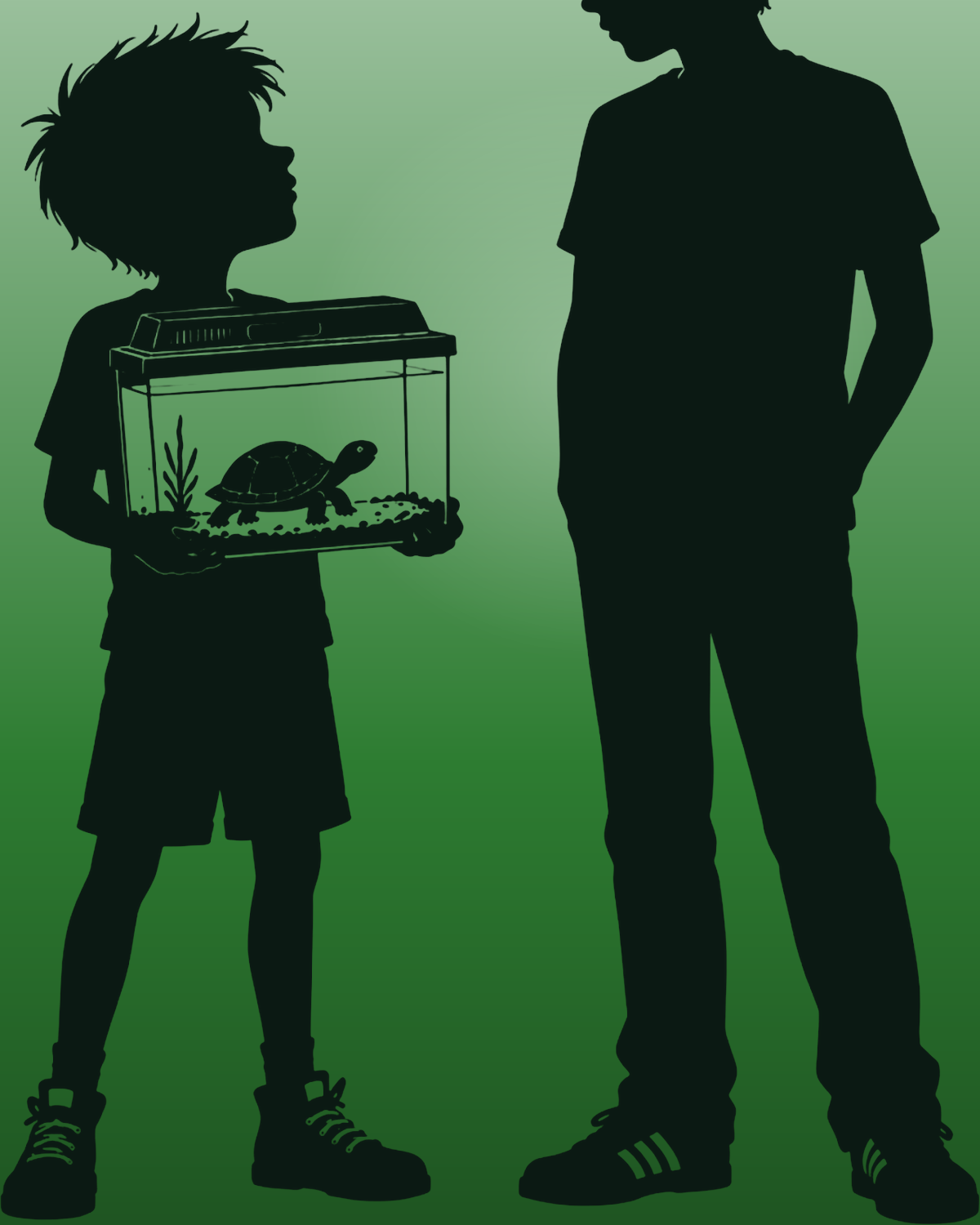
Tales of a Fourth Grade Nothing cover
Garden Heights Academy

Tales of a Fourth Grade Nothing

This workbook is for Garden Heights members. Sign in to continue.

Sign in with Google →
New here? Just sign up with Google — your account includes Matilda, our gift book, forever.
What Happens in Part 3

Now Fudge invents a brand-new way to drive everyone crazy: he goes on an eating strike and simply refuses to eat anything at all. Meal after meal, he clamps his mouth shut and will not touch his food, no matter what the family tries. Peter’s parents grow desperate and worried — a small child has to eat! They plead, they coax, they make a huge fuss — which is exactly what stubborn little Fudge wants. At last they hit on a wild solution: Fudge will eat, but only if he can pretend to be a dog, eating his dinner off the floor with no hands. It is ridiculous, undignified, and totally absurd — and it works! Peter looks on, half-disgusted and half-amazed, as his whole family bends itself into knots just to get one stubborn toddler to swallow a few bites of supper.

What We Will Learn
FocusWhat It Means
Absurd ComedyA whole family bending to a toddler’s will
Child PsychologyWhy refusing to eat is really about control
Family DynamicsOne stubborn child upending the household
Chapter Summary
PagesKey Events
pp. 31–45Fudge goes on an eating strike, refusing all food; his desperate parents plead and fuss until they hit on an absurd fix — Fudge will eat only by pretending to be a dog, eating off the floor with no hands
💭 Before You Read · Warm-Up (not scored)

There are no wrong answers here — just think, guess, and talk:

  • Fudge refuses to eat, which gives him power over the whole family. Why do you think saying ‘no’ can feel powerful to a small child?
  • The more the family fusses, the more Fudge enjoys it. Why does making a big fuss sometimes make a problem worse?
  • Predict: the family gave in and let Fudge eat like a dog. Do you think that was a good idea, or will it just lead to more Fudge trouble?
Copyright Notice

This is an independent study guide created by Garden Heights Academy to support reading comprehension and literary analysis. It contains original analysis questions and does not reproduce any text from the novel. Tales of a Fourth Grade Nothing is a work by Judy Blume. This guide is not affiliated with, authorized by, or endorsed by the author or any associated rights holder.
Part 1
Vocabulary
Study 10 key words from pages 31–45, then answer each question.
🧠Knowledge Bank · Why Toddlers Refuse Food
Nutrition Science · Picky EatingA small child who clamps his mouth shut is following biology as much as temper. Growth slows sharply after the first year, so a two-year-old genuinely needs less fuel than a baby did and feels hungry less often. Their taste buds are unusually sensitive as well, which makes bitter greens taste stronger to them than to any adult at the table. Scientists even have a name for suspicion of unfamiliar food, neophobia, and it may once have kept wandering children from swallowing something poisonous. On top of the biology sits the psychology: a small person controls almost nothing in a household run by giants, yet nobody alive can force a swallow. That is why coaxing usually backfires, and why doctors answer an eating strike with unhurried calm.
refusev.p.31
To firmly say no to something
“Fudge refused to eat a single bite.”
stubbornadj.p.33
Refusing to change your mind
“Fudge was as stubborn as could be.”
desperateadj.p.35
Filled with worry and a need for a solution
“His parents grew desperate.”
coaxv.p.36
To gently try to persuade someone
“They tried to coax Fudge to eat.”
fussn.p.37
A lot of worried or excited attention
“The whole family made a fuss over Fudge.”
worriedadj.p.34
Feeling anxious that something is wrong
“Mother was worried Fudge wasn’t eating.”
absurdadj.p.42
Wildly silly or unreasonable
“The dog-dinner idea was absurd.”
appetiten.p.34
The desire to eat
“Fudge seemed to have no appetite at all.”
gobblev.p.43
To eat quickly and greedily
“At last Fudge gobbled his dinner.”
dignityn.p.42
A calm, self-respecting manner
“The family gave up all dignity to feed him.”
1To ‘refuse’ is to —Pages 31–45
2Someone ‘stubborn’ is —Pages 31–45
3Fill in each blank with the correct word.Pages 31–45
Word choices:desperatefusscalmgentle- some words will not be used
After hours of no eating, the parents grow
The more the family makes a ___, the worse it gets .
4To ‘coax’ is to —Pages 31–45
5To stay ‘calm’ is to keep relaxed and steady.Pages 31–45
6An ‘appetite’ is —Pages 31–45
7Fill in each blank with the correct word.Pages 31–45
Word choices:absurddignityworriedpolite- some words will not be used
A family dinner for a ‘dog’ is completely
Peter tries to keep his ___ through the chaos .
8To ‘gobble’ food is to —Pages 31–45
9To feel ‘worried’ is to be —Pages 31–45
10Something ‘silly’ is very serious and grave.Pages 31–45
Part 2
Comprehension
How well do you understand pages 31–45?
🧠Knowledge Bank · Finding the Real Argument
Reading Strategy · InferenceArguments in stories are almost never about the thing being shouted over. Readers reach the real subject by inference, which means assembling small clues an author supplies and reasoning toward a conclusion the author never states outright. Try the method on any quarrel: ask who gains if this side wins, and ask at what moment the quarrel gets loudest. If a child resists hardest exactly when the whole table is watching, then the audience is part of the point and the fight is about control rather than peas. Inference is not the same as guessing, because every step has to be traceable back to something printed on the page. Practice it, and you will find that the stated topic of a disagreement is frequently just the excuse.
1What does Fudge start refusing to do?Pages 31–45
2How do the parents feel about Fudge not eating?Pages 31–45
3What do the parents do to get Fudge to eat?Pages 31–45
4The more the family fusses, the less Fudge eats.Pages 31–45
5Write the numbers 1–5 in the boxes to show the correct order across Part 3. Number 1 = what happens first.Pages 31–45
  • The family lets Fudge eat like a dog on the floor.
  • His worried parents beg and coax him.
  • Fudge gobbles his dinner at last.
  • Fudge suddenly refuses to eat anything.
  • Dad even stands on his head to make Fudge eat.
6The family lets Fudge eat like a dog on the floor.Pages 31–45
7What wild solution finally gets Fudge to eat?Pages 31–45
8How does Peter feel watching his family?Pages 31–45
9What does Fudge’s eating strike really show he wants?Pages 31–45
10How would you describe the dog-dinner solution?Pages 31–45
Part 3
Literary Elements
Understanding HOW and WHY Judy Blume tells the story across pages 31–45.
🧠Knowledge Bank · Absurdity and Recognition
Comic Craft · AbsurdityAbsurdity is comedy built by stretching something real until it snaps out of shape. A whole family crouching on the floor to persuade one small child to swallow his supper is not something that happens quite that way in life, and every reader knows it. The stretch is the joke. But absurd comedy only lands when the exaggeration stays anchored to a truth the reader already owns, and the truth here is that exhausted parents really will surrender their dignity to end a standoff. Writers call the moment when that truth registers recognition, the small internal shock of seeing your own household in a cartoon. Absurdity without recognition is merely silly and forgettable. Joined to it, an ordinary kitchen becomes a funhouse mirror.
📚 Literary Devices in This Part · definitions & examples
Absurdity is comedy built from something so silly and unreasonable it could not really make sense — a family feeding a ‘dog’ at the table. Yet the absurd scene carries a real truth about character: Fudge’s power over the household. Peter’s first-person commentary highlights just how ridiculous it all is.
1A dinner where the family treats Fudge like a dog is pushed past sense — this is —Pages 31–45
2Absurdity is a situation pushed so far past sense that it becomes funny.Pages 31–45
3Fill in each blank with the correct word.Pages 31–45
Word choices:absurdityhumorcharacterizationsetting- some words will not be used
A family dinner for a ‘dog,’ pushed past sense, is
Blume revealing Fudge through his eating strike is .
4Blume revealing Fudge’s stubbornness through his actions is —Pages 31–45
5Humor is writing meant to make the reader laugh.Pages 31–45
6Fill in each blank with the correct word.Pages 31–45
Word choices:absurdityhumorcharacterizationmood- some words will not be used
The silliness pushed past all sense is
The funny writing meant to make us laugh is .
7The wild ‘dog dinner’ is funny because it is pushed past all sense — it is —Pages 31–45
8Showing what Fudge is like through his eating strike is —Pages 31–45
9Fill in each blank with the correct word.Pages 31–45
Word choices:absurdityhumorcharacterizationplot- some words will not be used
A dinner for a ‘dog,’ pushed past sense, is
Revealing Fudge through his actions is .
10The absurd dog-dinner mainly makes the chapter feel —Pages 31–45
Part 4
Think Deeper
Four deeper challenges — no single-word recall. Read, weigh the evidence, and reason it through.
🧠Knowledge Bank · The Discovery of No
Child Development · AutonomySomewhere near the second birthday a child makes an enormous discovery: he is a separate person with a will of his own. Developmental psychologists call the arrival of that idea autonomy, and the word children reach for to test it is no. Refusing is not simply rudeness; it is a small experiment in existing. The difficulty is that autonomy shows up long before judgment does, so the experiment gets run on everything, including supper, shoes, and bedtime. A meltdown at this age is usually a nervous system overwhelmed rather than a plan being carried out. Specialists advise adults to hold the limits that matter and let go of the ones that do not. The same stubbornness that exhausts a family at two becomes, if childhood leaves it intact, the courage to stand your ground as an adult.
1Claim: “Fudge uses his eating strike to control the whole family.” — choose the two details that best prove it.Claim & Evidence
2Shows Fudge’s power over the family, or just a detail of the scene? Tap each item to send it left or right.Sort into two
◄ Fudge’s powerJust a detail ►
3Match each cause to its result. For each cause, pick its result.Cause & Effect
Fudge goes on an eating strike
He will not touch his food
They try everything to feed him
One toddler holds out
4Fill both blanks to complete the reasoning.Build the Argument
Fudge’s eating strike shows that , which means that .
Part 5
Standardized Test
Key Details & Inference — SAT & TOEFL-style practice
🎯 You already have the skills from the sections above — this is just a fun way to meet real SAT & TOEFL-style questions. Read the passage (the highlighted words are tested below), then answer the questions below. Tap an answer to select it, then tap it again to confirm — you can change your choice until you confirm.

If you have ever watched a two-year-old clamp their mouth shut at dinner, you have met one of parenthood’s great puzzles: the picky eater. It may look like pure stubbornness, but scientists have found real reasons small children often refuse food. First, growth slows down after babyhood, so a toddler simply needs less food and feels less hungry than before. Second, young children have an extra-sensitive sense of taste, so strong or unfamiliar flavors can seem overwhelming to them. But the biggest reason may be about power. A toddler lives in a world where grown-ups decide almost everything — when to sleep, where to go, what to wear — and one of the very few things a small child can fully control is whether or not to swallow a bite of food. Refusing to eat becomes a way of saying, ‘I am in charge of this.’ This is why fussing and pleading often make things worse: the extra attention is a reward. Experts say the calmest approach usually works best — offer healthy food, stay relaxed, and trust that a healthy child will eat when truly hungry. Most picky eaters, given time and patience, grow right out of it.

Original passage written for Garden Heights — not a quotation from the novel.
1What is a “picky eater”?TOEFL · Factual Information
2Why does a toddler feel less “hungry” than a baby?TOEFL · Factual Information
3The passage suggests a healthy child will eat when they are truly —SAT · Inference
4Strong flavors can seem “overwhelming” to a young child, meaning —SAT · Words in Context
5According to the passage, the biggest reason toddlers refuse food is about —TOEFL · Factual Information
6Refusing food is one thing a small child can fully “control,” meaning —SAT · Words in Context
7Why do fussing and pleading often make things “worse”?SAT · Inference
8If fussing makes things “worse,” it makes them —SAT · Words in Context
9What do experts say usually works best?TOEFL · Factual Information
10This passage explains Fudge because his eating strike —TOEFL · Rhetorical Purpose
Part 6 · Optional
Creative Writing
A bonus challenge to practice your English. Take your time and have fun with it.
About This Section

This writing task is optional and is not part of your auto-graded score. The feedback below checks only the basics — length, spelling, and grammar — not whether your ideas are right or wrong. It is meant for classroom discussion and creative practice, so feel free to use your imagination!

Writing Task — Part 3 “A Food I Refuse (or Love)”

Fudge refuses to eat — and gets everyone to fuss. Write about a food you strongly dislike (or absolutely love). Why do you feel that way about it? Or write about a funny mealtime in your family. Write at least 40 words.

You can start with: “One food I feel strongly about is…”
0 / 40 words minimum
🗣 Teach It · Just for Fun (optional)

No right or wrong — close the screen and tell someone nearby how the family finally gets Fudge to eat. Can’t find anyone? Tell yourself out loud. The moment you teach it, you truly understand it.

Garden Heights Academy

Part 3 Complete!

You finished pages 31–45 of Tales of a Fourth Grade Nothing.

Here are your auto-graded results:

-
points out of 100
Your Writing

Your writing was checked automatically for length, spelling, grammar, and whether you included the key parts of the scene. Scroll back to Part 5 anytime to read your feedback and improve your work.

Move on to Part 4 →

Independent study guide by Garden Heights Academy. Not affiliated with or endorsed by the author or any rights holders. Contains original analysis only; no text from the novel is reproduced.