Tales of a Fourth Grade Nothing cover
Garden Heights Academy

Tales of a Fourth Grade Nothing

This workbook is for Garden Heights members. Sign in to continue.

Sign in with Google →
New here? Just sign up with Google — your account includes Matilda, our gift book, forever.
What Happens in Part 6

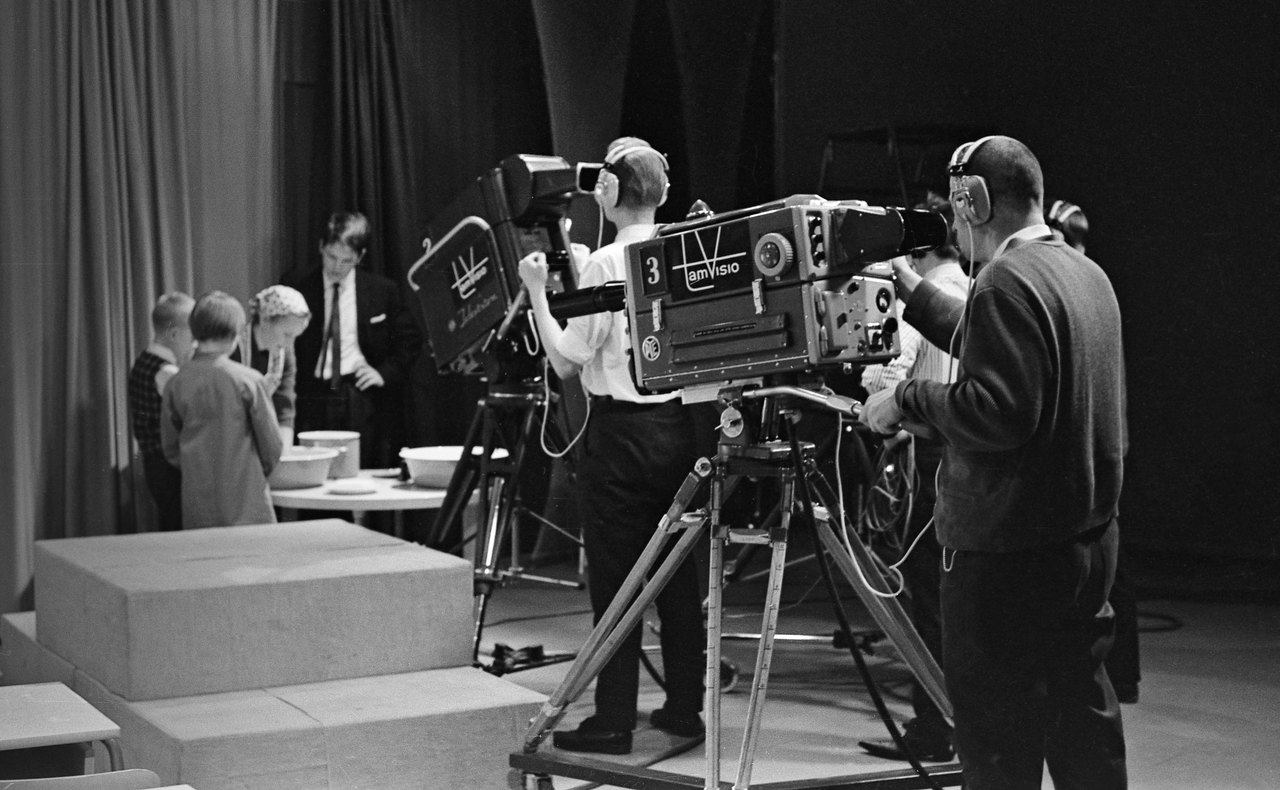
And now the ultimate injustice, in Peter’s eyes. One of his father’s advertising accounts is the “Toddle-Bike,” a little tricycle for tiny children — and who gets picked to star in the television commercial for it? Fudge! Cute, chaotic little Fudge is going to be on TV. The family goes to the studio, where Fudge, under the bright camera lights, behaves like a natural little star. Soon his adorable face is on television screens all over the city, and everyone is talking about him. For Peter, this is almost too much to bear. His maddening little brother — the pest, the menace, the tooth-loser — is now famous, while Peter is still just a fourth-grade nobody. Peter is green with jealousy. It seems desperately unfair: the worse Fudge behaves, the more attention and reward he somehow collects.

What We Will Learn
FocusWhat It Means
IronyThe family menace is rewarded with fame
Sibling RivalryPeter’s jealousy at its peak
Media (Commercials)How a TV ad is really made
Chapter Summary
PagesKey Events
pp. 76–90Fudge is chosen to star in a TV commercial for the Toddle-Bike tricycle, one of Dad’s accounts; he is a natural on camera and becomes a little celebrity — while Peter, green with jealousy, feels it is desperately unfair
💭 Before You Read · Warm-Up (not scored)

There are no wrong answers here — just think, guess, and talk:

  • Fudge misbehaves constantly, yet he becomes a TV star. Why does it feel so unfair when someone is rewarded for the wrong reasons?
  • Peter is jealous of his little brother’s fame. Is jealousy always a bad thing, or can it tell us something about what we want?
  • Predict: Peter’s frustration keeps building. What do you think might finally happen between Peter and Fudge?
Copyright Notice

This is an independent study guide created by Garden Heights Academy to support reading comprehension and literary analysis. It contains original analysis questions and does not reproduce any text from the novel. Tales of a Fourth Grade Nothing is a work by Judy Blume. This guide is not affiliated with, authorized by, or endorsed by the author or any associated rights holder.
Part 1
Vocabulary
Study 10 key words from pages 76–90, then answer each question.
🧠Knowledge Bank · Making a Television Commercial
Film Production · CommercialsA commercial may last thirty seconds and still take days to make. It begins on paper as a script and a storyboard, a comic strip of every planned shot. A casting session then picks the faces, and in the 1970s an advertisement for a toy often wanted a genuine preschooler rather than a trained actor, because real delight cannot be faked. Filming happens in a studio under hot lights, with a director calling for the same few seconds again and again until one take is right. Afterwards editors cut the best pieces together, add music, and adjust the color. Thirty seconds of finished film can swallow a week of work and a great deal of money, which is worth remembering the next time an advertisement looks completely effortless.
commercialn.p.77
A short advertisement on TV or radio
“Fudge starred in a TV commercial.”
televisionn.p.76
A device (and medium) that shows programs and ads
“Fudge appeared on television.”
cameran.p.80
A device that records pictures or film
“Fudge smiled into the camera.”
starn.p.81
The main, most famous performer
“Fudge became the little star of the ad.”
famousadj.p.84
Known by many people
“Suddenly Fudge was famous.”
jealousyn.p.86
An unhappy feeling of wanting what another has
“Peter was filled with jealousy.”
unfairadj.p.88
Not right or just
“It seemed terribly unfair to Peter.”
adorableadj.p.82
Very cute and charming
“Fudge looked adorable on screen.”
sulkv.p.87
To be silent and gloomy because you are upset
“Peter went off to sulk.”
resentv.p.88
To feel bitter about something unfair
“Peter began to resent all the fuss over Fudge.”
1A ‘commercial’ is —Pages 76–90
2A ‘camera’ is a tool that —Pages 76–90
3Fill in each blank with the correct word.Pages 76–90
Word choices:jealousyresentkindnessjoy- some words will not be used
Watching Fudge get all the glory fills Peter with
Peter starts to ___ his little brother’s fame .
4A ‘star’ of a show is —Pages 76–90
5To feel ‘proud’ is to feel pleased with something you did.Pages 76–90
6Someone ‘famous’ is —Pages 76–90
7Fill in each blank with the correct word.Pages 76–90
Word choices:unfairsulkfaircheer- some words will not be used
Peter thinks it is deeply
When things go against him, Peter tends to .
8Something ‘adorable’ is —Pages 76–90
9‘Television’ is —Pages 76–90
10To ‘grumble’ is to praise loudly and happily.Pages 76–90
Part 2
Comprehension
How well do you understand pages 76–90?
🧠Knowledge Bank · Tracking the Main Idea
Reading Strategy · Main IdeaA long book is more than a pile of episodes; one repeated thought runs underneath them, and readers call it the main idea. You find it through repetition rather than drama. Ask which feeling keeps returning however the scenery changes, and which character keeps landing in the same position chapter after chapter. When the same ache turns up at a dinner, at a playground, at a party, and now on a television set, the pattern is a signpost and not a coincidence. Try compressing what you have noticed into one sentence of your own words; if that sentence covers most of the book, you have probably found it. Doing this turns a reader from somebody following events into somebody tracing an argument.
1What is the ‘Toddle-Bike’?Pages 76–90
2Who is chosen to star in the Toddle-Bike ad?Pages 76–90
3How does Fudge behave in front of the camera?Pages 76–90
4The commercial makes Fudge a little famous.Pages 76–90
5Write the numbers 1–5 in the boxes to show the correct order across Part 6. Number 1 = what happens first.Pages 76–90
  • The finished commercial makes Fudge famous.
  • Fudge misbehaves in front of the camera.
  • Fudge is chosen because he is adorable.
  • Peter watches, feeling jealous and left out.
  • An ad company needs a cute toddler for the ad.
6Peter feels jealous of Fudge’s new fame.Pages 76–90
7How does Peter feel about Fudge’s fame?Pages 76–90
8Why does it feel unfair to Peter?Pages 76–90
9Why did Fudge get the part?Pages 76–90
10What pattern is really bothering Peter?Pages 76–90
Part 3
Literary Elements
Understanding HOW and WHY Judy Blume tells the story across pages 76–90.
🧠Knowledge Bank · Irony and the Unfair Reward
Literary Craft · IronyIrony is the gap between what ought to happen and what actually does. Literature has run on that gap for thousands of years, from Greek tragedy to modern comedy, because a reversal seizes attention in a way a fair outcome never can. Situational irony is the branch at work here: the impossible child is handed the reward while the cooperative one is not even considered. A twist by itself would only be clever, so skilled writers pair it with an emotion the reader already owns. Nearly everybody has watched the wrong person collect the prize and has had to keep a polite face while burning. The reversal makes you shake your head; the borrowed feeling makes you lean in. Together they can give a thirty-second toy advertisement a real sting.
📚 Literary Devices in This Part · definitions & examples
Irony here is the painful gap between what should happen (good Peter rewarded) and what does (naughty Fudge rewarded). Peter’s first-person voice makes his jealousy a relatable emotion. This unfair pattern also drives the book’s theme of the overlooked older sibling.
1It is unfair that Fudge the troublemaker is rewarded — this gap is —Pages 76–90
2Irony is a gap between what is deserved and what happens.Pages 76–90
3Fill in each blank with the correct word.Pages 76–90
Word choices:ironythemehumorsetting- some words will not be used
Fudge, the troublemaker, being rewarded is
The big idea of feeling small and overlooked is a .
4Feeling like ‘a fourth-grade nothing’ is the book’s big idea, or —Pages 76–90
5A theme is a big idea a whole book explores.Pages 76–90
6Fill in each blank with the correct word.Pages 76–90
Word choices:themeironyhumormood- some words will not be used
The gap between deserved and given is
The book’s big idea about feeling small is a .
7That the naughty child gets the reward is an example of —Pages 76–90
8Peter’s feeling of being a ‘nothing’ is the book’s main —Pages 76–90
9Fill in each blank with the correct word.Pages 76–90
Word choices:ironythemehumorplot- some words will not be used
The unfair gap of Fudge being rewarded is
The big idea of feeling overlooked is the .
10The irony of Fudge’s reward mainly makes Peter feel —Pages 76–90
Part 4
Think Deeper
Four deeper challenges — no single-word recall. Read, weigh the evidence, and reason it through.
🧠Knowledge Bank · The Squeaky Wheel Problem
Behavioral Science · Reward SignalsAn old proverb says the squeaky wheel gets the grease, and behavioral scientists have a less charming name for the same effect: attention follows noise, so noise gets reinforced. Every household, classroom, and office runs some version of this. The loud member is answered because answering stops the noise, and the quiet member is left alone because leaving him alone costs nothing today. Over time the arrangement teaches an unfortunate lesson about how a person gets what he needs. The remedy is not for the quiet one to start shrieking. It is for the adults in charge to notice deliberately and in advance, since attention handed out only during emergencies becomes a reward for producing emergencies. Cooperation nobody ever acknowledges eventually stops feeling worth the effort.
1Claim: “Peter feels the sting of injustice when Fudge gets the spotlight.” — choose the two details that best prove it.Claim & Evidence
2Shows Peter’s sense of injustice, or just a detail of the scene? Tap each item to send it left or right.Sort into two
◄ Peter’s sense of injusticeJust a detail ►
3Match each cause to its result. For each cause, pick its result.Cause & Effect
Father has the Toddle-Bike account
The company picks a star
Fudge gets the spotlight
Peter watches Fudge shine
4Fill both blanks to complete the reasoning.Build the Argument
Fudge starring in the commercial shows that , which means that .
Part 5
Standardized Test
Key Details & Inference — SAT & TOEFL-style practice
🎯 You already have the skills from the sections above — this is just a fun way to meet real SAT & TOEFL-style questions. Read the passage (the highlighted words are tested below), then answer the questions below. Tap an answer to select it, then tap it again to confirm — you can change your choice until you confirm.

The cheerful thirty-second commercial you see on television looks effortless — but making one is a surprising amount of work. It begins not with a camera but with an idea, written down as a script and drawn out as a storyboard, a comic-strip plan showing every shot before filming starts. Next comes casting: choosing the actors, who may be adults, children, or even animals, depending on what the ad needs. On filming day, everyone gathers in a studio bright with lights and crowded with equipment, where a director guides the action. Here is the surprising part: the same few seconds of action may be filmed over and over, dozens of times, until every detail looks perfect. Then editors take all that footage and carefully trim it down, choosing the best moments, adding music and words, and polishing the tiny film until it shines. All of this — hours, sometimes days of effort — produces an advertisement that flashes by in seconds. Knowing how much craft goes into every ad reminds us that the bright, happy images on our screens are carefully built to catch our attention and, in the end, to sell us something.

Original passage written for Garden Heights — not a quotation from the novel.
1A TV “commercial” is —TOEFL · Factual Information
2A “storyboard” is —TOEFL · Factual Information
3A “shot” in filming is —SAT · Words in Context
4The same action is filmed over and over until it looks “perfect,” meaning —SAT · Words in Context
5Who guides the action on filming day?TOEFL · Factual Information
6Editors “trim” the footage, meaning they —SAT · Words in Context
7The passage says a finished commercial lasts only —SAT · Inference
8What can the reader infer about the smooth ads we watch?SAT · Inference
9The passage mainly wants readers to see that ad images are —SAT · Rhetorical Purpose
10This TOEFL task lists six sentences; choose the THREE that best capture the passage’s main ideas. The other three do not belong — they state minor details or ideas the passage does not present.TOEFL · Prose Summary
Part 6 · Optional
Creative Writing
A bonus challenge to practice your English. Take your time and have fun with it.
About This Section

This writing task is optional and is not part of your auto-graded score. The feedback below checks only the basics — length, spelling, and grammar — not whether your ideas are right or wrong. It is meant for classroom discussion and creative practice, so feel free to use your imagination!

Writing Task — Part 6 “When I Felt Jealous”

Peter feels jealous of his little brother’s fame. Write about a time you felt jealous of someone — a sibling, a friend, a classmate. What made you feel that way, and what did you do about it? (It’s a normal feeling — be honest!) Write at least 40 words.

You can start with: “One time I felt really jealous was when…”
0 / 40 words minimum
🗣 Teach It · Just for Fun (optional)

No right or wrong — close the screen and tell someone nearby why Fudge gets famous and how it makes Peter feel. Can’t find anyone? Tell yourself out loud. The moment you teach it, you truly understand it.


Garden Heights Academy

Part 6 Complete!

You finished pages 76–90 of Tales of a Fourth Grade Nothing.

Here are your auto-graded results:

-
points out of 100
Your Writing

Your writing was checked automatically for length, spelling, grammar, and whether you included the key parts of the scene. Scroll back to Part 5 anytime to read your feedback and improve your work.

Move on to Part 7 →

Independent study guide by Garden Heights Academy. Not affiliated with or endorsed by the author or any rights holders. Contains original analysis only; no text from the novel is reproduced.