New here? Just sign up with Google — your account includes Matilda, our gift book, forever.
What Happens in Part 5
A wave of excitement sweeps through Room 13: Miss Mason announces a drawing contest. The girls are to design and color dresses, the boys are to draw motorboats, and the very best drawing in each group will win a shining medal. At once the class begins to buzz. Peggy, who draws beautifully, is sure to win the girls’ medal — everyone says so, and everyone expects it. Maddie, who cannot draw nearly so well, knows she has little chance. Nobody thinks for a moment of quiet Wanda Petronski, who has not been in her seat lately. Yet a contest about dresses, of all things, is about to give Wanda a way to be seen at last — and to show the class something none of them guessed she had.
What We Will Learn
Focus
What It Means
Plot (Rising Action)
How events build toward the big turning point — the contest sets it up
Suspense
The tense wondering the author creates — who will win the medal?
Imagery
Word-pictures that let us see the dresses and the drawings
Chapter Summary
Chapter
Key Events
Ch. 4 — The Contest
Miss Mason announces a drawing contest: the girls will design dresses, the boys motorboats, and the best in each group wins a medal. The class buzzes, certain that Peggy will win the girls’ medal. No one thinks of absent Wanda — though a contest about dresses is about to change everything.
💭 Before You Read · Warm-Up (not scored)
There are no wrong answers here — just think, guess, and talk:
Is being good at something mostly luck, or mostly practice? What do you think, and why?
Everyone expects Peggy to win. Why can it be unfair to decide the winner before a contest even starts?
Predict: Wanda has been teased about dresses. How might a contest about dresses turn out for her?
Copyright Notice
This is an independent study guide created by Garden Heights Academy to support reading comprehension and literary analysis. It contains original analysis questions and does not reproduce any text from the novel. The Hundred Dresses is a work by Eleanor Estes. This guide is not affiliated with, authorized by, or endorsed by the author or any associated rights holder.
Part 1
Vocabulary
Study 10 key words from Chapter 4, then answer each question.
🧠Knowledge Bank · How Artists Really Work
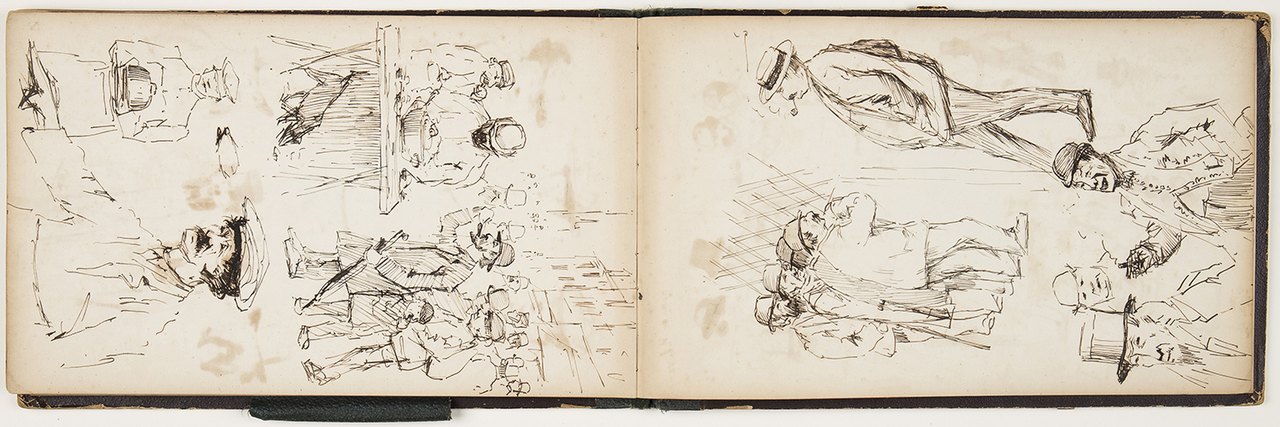
Art · Skill and PracticeA contest can make talent look like magic, as though certain people were simply born able to draw. Working artists describe something slower. They observe closely, noticing how a sleeve folds or how light sits on cloth, then they sketch the same shape many times and throw most attempts away. Fashion designers work this way too, filling books with rough figures long before a single garment is chosen. They rehearse a finished piece in the imagination first, seeing color and shape before a pencil moves. Skill of that kind is invisible from outside, because the practice happens privately and only a finished piece is ever shown. Anyone judging a drawing is therefore judging months of quiet, patient work.
contestn.Ch.4
A competition to find who is best
“Miss Mason announced a drawing contest.”
announcev.Ch.4
To tell news to everyone
“She announced the contest to the class.”
medaln.Ch.4
A prize you can wear, given to a winner
“The best drawing would win a medal.”
designv.Ch.4
To plan how something will look
“The girls would design dresses.”
sketchv.Ch.4
To draw quickly with simple lines
“She began to sketch a dress.”
talentn.Ch.4
A natural skill at something
“Peggy had a real talent for drawing.”
imaginationn.Ch.4
The power to picture new things in the mind
“Wanda used her imagination.”
carefuladj.Ch.4
Taking great care; not careless
“She was careful with every line.”
entryn.Ch.4
Something you enter into a contest
“Each entry was pinned to the wall.”
eageradj.Ch.4
Keen and full of excitement
“The class was eager to begin.”
1A ‘contest’ is —Ch.4
2To ‘announce’ something is to —Ch.4
3Fill in each blank with the correct word.Ch. 4
Word choices:medaldesignentryeager- some words will not be used
A prize you can wear, given to a winner, is a .
To plan how something will look is to it.
4To ‘sketch’ is to —Ch.4
5A ‘talent’ is a natural skill at something.Ch.4
6Your ‘imagination’ is —Ch.4
7Fill in each blank with the correct word.Ch. 4
Word choices:carefultalentcontesteager- some words will not be used
Taking great care and not being careless means being .
Being keen and full of excitement means being .
8An ‘entry’ in a contest is —Ch.4
9To ‘design’ a dress is to —Ch.4
10To be ‘eager’ is to be bored and to have no interest at all.Ch.4
Part 2
Comprehension
How well do you understand Chapter 4?
📚Knowledge Bank · Watching a Story Build
Reading Skill · Rising TensionApproaching its biggest moment, a story tightens on purpose. An author raises the stakes, names a prize, sets a deadline, and then makes the reader wait. All three moves appear in this part, and each one adds a little tension. A good habit at such a point is to ask what every character stands to win or lose, including the ones nobody is thinking about just now. Ask as well what a reader knows that the class does not. Holding those questions while events stack up is how you feel the shape of a whole book, and it is what makes a delay worth the wait.
1What does Miss Mason announce to the class?Ch.4
2What are the girls asked to draw?Ch.4
3What are the boys asked to draw?Ch.4
4What is the prize for the best drawing?Ch.4
5Write the numbers 1–5 in the boxes to show the order of events in Part 5. Number 1 = what happens first.Ch. 4
A medal will go to the best in each group.
The class is sure Peggy will win the medal.
The girls will draw dresses; the boys, motorboats.
Miss Mason announces a drawing contest.
No one gives a thought to absent Wanda.
6Who does the class expect to win the girls’ medal?Ch.4
7How does Maddie feel about her own chances?Ch.4
8How does the class feel about the contest?Ch.4
9The class talks eagerly about Wanda’s chances in the contest.Ch.4
10The best drawing in each group will be given a medal.Ch.4
Part 3
Literary Elements
Understanding HOW and WHY Eleanor Estes tells the story in Chapter 4.
🎭Knowledge Bank · Rising Action and the Art of Waiting
Literary Craft · Suspense and ImageryStructure has a name for the stretch of a story that climbs: rising action, the chain of events carrying a book toward its biggest moment. Climbing works only when a reader cares about an outcome and cannot yet see it, and that mixture of caring and not knowing is suspense. Writers create it cheaply and well by promising a result at a fixed later time, which is why contests, races and trials appear in so many novels. Running alongside is imagery, language aimed at the senses, so color, cloth and light arrive as pictures instead of statements. A reader who notices such tools stops reading words and starts watching.
📚 Literary Devices in This Part · definitions & examples
Rising action is the build-up of events that leads toward a story’s big moment (the contest is announced). Suspense is the tense feeling of not-yet-knowing (who will win the medal?). Imagery is language that paints a picture for the senses (the colorful, carefully drawn dresses).
1The contest being announced, building toward the big moment, is part of the story’s —Ch.4
2Suspense is the tense feeling of not yet knowing what will happen.Ch.4
3Fill in each blank with the correct word.Ch. 4
Word choices:suspenseimageryrhymeindex- some words will not be used
The tense wondering about who will win is .
Word-pictures of the colorful dresses are .
4Language that paints a picture for the senses is called —Ch.4
5Imagery uses only numbers and never any word-pictures.Ch.4
6Fill in the blank with the correct word.Ch. 4
Word choices:suspenserhymesetting- some words will not be used
The nervous wait to learn the winner keeps the reader in .
7Why does the author leave Wanda out of the contest talk?Ch.4
8The class’s certainty that Peggy will win mainly adds to the story’s —Ch.4
9Fill in the blank with the correct word.Ch. 4
Word choices:imageryrhymeplot- some words will not be used
Describing dresses so we can almost see their colors is .
10Announcing the contest mostly serves to —Ch.4
Part 4
Think Deeper
Four deeper challenges — no single-word recall. Read, weigh the evidence, and reason it through.
💭Knowledge Bank · Who Gets Overlooked in a Contest
Social Studies · Fairness and Hidden AbilitySchools hold contests partly because a contest is blind to reputation. Ordinary attention flows toward the children a group has already decided are gifted, and once that decision is made the group stops looking elsewhere; teachers call the result a self-fulfilling expectation. A judged entry behaves differently, since the work arrives ahead of the name and gets weighed on its own. That is why open competitions, and blind auditions where musicians play behind a screen, keep turning up ability nobody had counted, especially among the poor and the newly arrived. Notice how confidently a class can predict a winner. Confidence is not evidence, and a quiet person is easily underestimated.
1Claim: “The drawing contest gives everyone something exciting to hope for.” — choose the two details that best prove it.Claim & Evidence
2Shows what the contest offers, or just a detail? Tap each item to send it left or right.Sort into two
◄ What the contest offersJust a detail ►
3Match each cause to its result. For each cause, pick its result.Cause & Effect
Miss Mason plans a contest→
Girls will design dresses→
A medal is the prize→
The contest is set→
4Fill both blanks to complete the reasoning.Build the Argument
The contest matters to the story because , which means that .
Part 5
Standardized Test
How Artists Really Work — SAT & TOEFL-style practice
🎯 You already have the skills from the sections above — this is just a fun way to meet real SAT & TOEFL-style questions. Read the passage (the highlighted words are tested below), then answer the questions below. Tap an answer to select it, then tap it again to confirm — you can change your choice until you confirm.
People often say an artist is simply ‘born with a gift,’ as if fine drawing were a kind of magic. The truth is more encouraging. Artists get better mainly by working. They observe the world closely — the fold of a sleeve, the exact shade of a color — and they draw the same things many times until the lines come right. A big part of the work happens in the mind, too: an artist pictures an idea in the imagination before a single line is drawn. Practice and imagination together can carry a person far, even one with no money for lessons or fine materials. That is a hopeful thought. It means a hidden talent can grow quietly, unseen, in someone the world has overlooked — until, one day, a chance comes to reveal it.
Original passage written for Garden Heights — not a quotation from the novel.
1According to the passage, how do artists mainly get better?TOEFL · Factual Information
2To “observe” the world closely means to —SAT · Words in Context
3Where does a big part of an artist’s work happen?TOEFL · Factual Information
4“Imagination” in the passage means the power to —SAT · Words in Context
5What can practice and imagination do together?TOEFL · Factual Information
6Why does the passage call this a ‘hopeful thought’?TOEFL · Factual Information
7To “reveal” a hidden talent means to —SAT · Words in Context
8What does the passage say about being ‘born with a gift’?TOEFL · Factual Information
9What is the passage mainly about?TOEFL · Rhetorical Purpose
10This passage connects to Part 5 because Wanda’s talent is —TOEFL · Rhetorical Purpose
Part 6 · Optional
Creative Writing
A bonus challenge to practice your English. Take your time and have fun with it.
About This Section
This writing task is optional and is not part of your auto-graded score. The feedback below checks only the basics — length, spelling, and grammar — not whether your ideas are right or wrong. It is meant for classroom discussion and creative practice, so feel free to use your imagination!
Writing Task — Part 5 “Design Your Entry”
The class is entering a drawing contest. Imagine you are entering too. Describe the dress (or anything else) you would design and color. What would it look like? Use bright word-pictures — colors, shapes, patterns — so a reader can almost see it. Write at least 40 words.
You can start with: “For the contest, I would design a…”
0 / 40 words minimum
🗣 Teach It · Just for Fun (optional)
No right or wrong — close the screen and tell someone nearby what the contest is, and why real talent comes more from practice and imagination than from luck. Can’t find anyone? Tell yourself out loud. The moment you teach it, you truly understand it.

Part 5 Complete!
You finished Chapter 4 of The Hundred Dresses.
Here are your auto-graded results:
-
points out of 100
Your Writing
Your writing was checked automatically for length, spelling, and grammar. Scroll back to Part 6 anytime to read your feedback and improve your work.
Independent study guide by Garden Heights Academy. Not affiliated with or endorsed by the author or any rights holders. Contains original analysis only; no text from the novel is reproduced.