New here? Just sign up with Google — your account includes Matilda, our gift book, forever.
The Outsiders · Garden Heights
Part 1
for The Outsiders · Part 1 · Chapters 1–2
8 Parts40 min
What Happens in Part 1
Jumped by Socs and rescued by his gang, fourteen-year-old Ponyboy introduces the greasers, then meets Cherry Valance at the drive-in.
The ambushPonyboy Curtis, fourteen, walks home alone from a Paul Newman movie and is trailed by a red Corvair full of Socs — the rich West Side crowd who jump East Side greasers for entertainment. Five of them pin him down and one flashes a blade before his screams bring the gang running: his brothers Darry and Sodapop, plus Steve Randle, Two-Bit Mathews, Dallas Winston, and Johnny Cade.
The Curtis familyThe Curtis parents died in an auto wreck eight months back; twenty-year-old Darry quit college and works two jobs to keep his brothers from a boys' home, riding Ponyboy so hard he mistakes worry for dislike. Movie-star-handsome Sodapop, sixteen and done with school, pumps gas, smooths every quarrel, and means to marry Sandy. Dally, arrested at ten, schooled on New York streets, is the genuine hard case; Johnny, sixteen and beaten at home, is the gentle boy the gang protects.
Coke in the faceThe next night Dally sneaks Johnny and Ponyboy under the Nightly Double fence and aims dirty talk at two Soc girls who left their boyfriends over liquor. Cherry Valance throws a Coke in his face, and when Dally pushes further it is Johnny — who worships him — who tells him to leave the girls alone. Dally stalks off, Two-Bit joins them, and Cherry walks with Ponyboy to the concession stand, easier to talk to than any girl he knows.
Cherry's confessionAt the stand Cherry explains why Johnny flinches at every shadow: four months ago, Socs in a blue Mustang — one wearing heavy rings — caught him alone in a vacant lot and beat him half to death. Shaken, Cherry insists that not all Socs are like that, and that her side of town has troubles Ponyboy never imagined.
What We Will Learn
Section
What you will practice
Vocabulary
Labels, class, and cool heads: asset, disgrace, rivalry, nonchalantly, incredulous…
Literary Elements
First-person narration through Ponyboy’s eyes, characterization built portrait by portrait, and the colloquial diction that gives the book its voice
Cross-Curricular
Urban history — how rail lines, wages, and school zones split a mid-century American city into two teenage nations
Chapter Summary
Ch.
What happens
Chapter 1
Jumped — Walking home alone from the movies, Ponyboy is trailed by a red Corvair and jumped by five Socs, until his gang chases them off. He introduces the greasers one by one — strict Darry, sunny Sodapop, cocky Steve, joking Two-Bit, dangerous Dally, and gentle, battered Johnny — and explains how an auto wreck left three brothers raising themselves.
Chapter 2
The Nightly Double — Dally, Johnny, and Ponyboy sneak into the drive-in, where Dally torments two Soc girls until Cherry Valance douses him with a Coke and Johnny, of all people, tells him to stop. Cherry and Ponyboy hit it off, and he tells her how a blue Mustang full of Socs — one with heavy rings — beat Johnny in a vacant lot four months ago.
Part 1
Vocabulary
Study 10 key words from Chapters 1–2, then answer each question.
🏷Knowledge Bank · The Names Teenagers Wore
Linguistics · Labels and ClassEvery word in this part’s list does sorting work. In the mid-1960s, American teenagers really were divided by names like these. Soc — pronounced sohsh, short for Socials — was genuine Oklahoma slang for the children of the country-club class, and greaser, a much older insult, had settled onto working-class boys, named for the oiled-back hair a boy could style at home for free. Linguists call a name that one group pins on another an exonym — a label assigned from outside — and exonyms about class are rarely neutral. An asset, a disgrace, a hood, a delinquent: each word quietly announces which side of town deserves trust and which deserves watching. Notice that none of these labels describes anything a particular boy has actually done. They describe his address, his father’s paycheck, and his haircut, and they travel ahead of him into every classroom and every job interview. The five strangers in the Corvair have never met Ponyboy. They are not attacking a person; they are attacking a label.
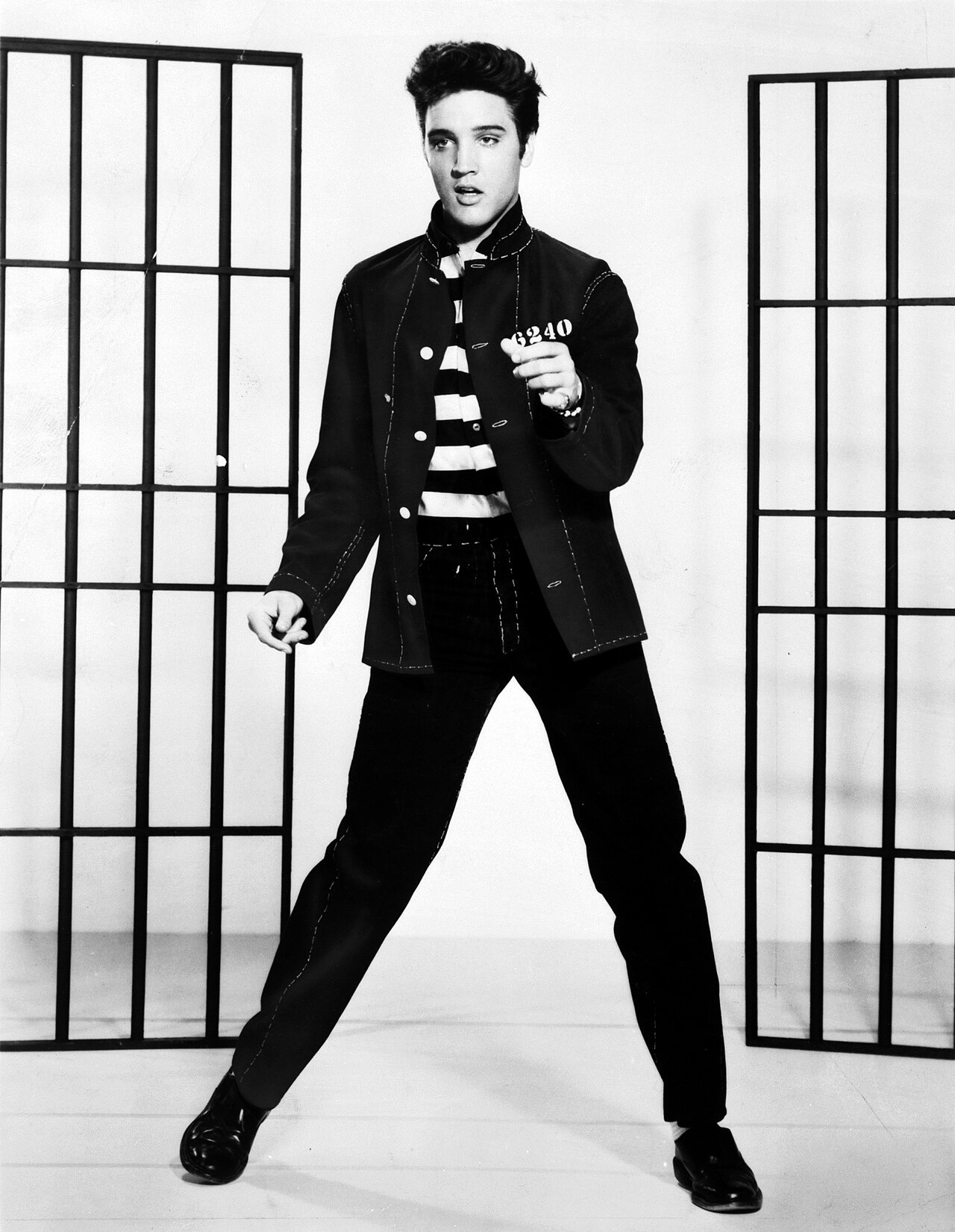
Visual AidThe haircut that named a class
Publicity photograph for the film Jailhouse Rock, 1957, showing Elvis Presley and the swept-back, oiled hair that The Names Teenagers Wore traces inside the word greaser: a style a boy could build at home for free with a comb and a jar of pomade. The jail-bar set behind him is a movie prop, not a prison. The picture shows the idol whose look working-class boys copied — it shows no one from the novel, and it does not claim Elvis was a greaser. Notice how much engineering the “cheap” style actually takes: the Knowledge Bank’s point is that the label judged the haircut, never the work behind it.
Elvis Presley in a Metro-Goldwyn-Mayer publicity photograph for Jailhouse Rock, 1957; Library of Congress, New York World-Telegram & Sun Collection. Source: Wikimedia Commons, File:Elvis Presley promoting Jailhouse Rock.jpg, public domain.
assetn.Ch.1
Something useful or valuable to have
“Darry’s size was an asset on any construction crew.”
disgracen.Ch.1
Something that brings shame or dishonor
“Johnny’s father treated him as a disgrace instead of a son.”
rivalryn.Ch.1
A long-running contest or competition between groups
“The rivalry between greasers and Socs ran along class lines, not personal ones.”
savvyv.Ch.1
Slang: to understand (often asked as a question)
“Ponyboy ends his explanations to the reader with a quick ‘Savvy?’”
quiveringadj.Ch.1
Shaking slightly, especially from fear or emotion
“Ponyboy was still quivering after the Corvair pulled away.”
hoodn.Ch.1
Slang for hoodlum — a young street criminal
“To the West Side, every boy with long greased hair was a hood.”
nonchalantlyadv.Ch.2
In a calm, unbothered way, as if nothing matters
“Dally answered the girls nonchalantly, as if rudeness cost him nothing.”
incredulousadj.Ch.2
Unable or unwilling to believe something
“Ponyboy was incredulous when quiet Johnny told Dally to stop.”
roguishlyadv.Ch.2
In a playful, mischievous way
“Two-Bit grinned roguishly and dropped into the seat behind the girls.”
wincedv.Ch.2
Drew back or flinched, as if from pain or fear
“Johnny winced whenever a car slowed down beside him.”
ⓘ The vocabulary words in this list are selected to help you understand and complete this workbook. Some may not appear verbatim in the original novel.
🧠Knowledge Bank question
1According to the Knowledge Bank, a label such as hood works as an exonym because it ___.Ch.1
2A ‘disgrace’ is something that brings shame or dishonor.Ch.1
3A ‘rivalry’ is ___.Ch.1
4In 1960s slang, asking ‘Savvy?’ means asking ‘Do you ___?’Ch.1
5Fill in each blank with the correct word.Ch.1
Word choices:quiveringhoodassetrivalry- some words will not be used
Ponyboy was still after the Corvair pulled away.
The West Side saw no difference between a greaser and a .
6Doing something ‘nonchalantly’ means doing it ___.Ch.2
7An ‘incredulous’ person fully believes what they have just seen or heard.Ch.2
8Grinning ‘roguishly’ means grinning ___.Ch.2
9If you ‘winced’, you flinched as if something hurt or frightened you.Ch.2
10Fill in each blank with the correct word.Ch.2
Word choices:nonchalantlyincreduloussavvydisgrace- some words will not be used
Dally leaned back and spoke , as if nothing could reach him.
Ponyboy was when Johnny stood up to Dally.
Part 2
Comprehension
Show you understood what happens in Chapters 1–2.
🚂Knowledge Bank · The Wrong Side of the Tracks
Geography · How Cities SplitThe gang’s world has a geography, and it is a real one. Mid-century American cities were usually cut in two by their own railroads. Factories, warehouses, and stockyards rose along the tracks, because freight moved by rail; the cheapest housing crowded beside them so workers could walk to their shifts; and the smoke drifted downwind across those same streets, day after day. Families with money simply bought their way upwind, and the phrase the wrong side of the tracks entered American speech to describe everyone left behind. The novel never names its city, but S. E. Hinton (author) modeled it on Tulsa, Oklahoma, which called itself the Oil Capital of the World: petroleum fortunes built mansions and country clubs on one side of town while the other side pumped the gas and swung the hammers for hourly pay. So when Ponyboy says the Socs belong to the West Side and the greasers to the East, he is not describing a schoolyard grudge. He is reading a map drawn long before his birth by rail, wind, and wages.
Visual AidA city cut in two by its rails
Structure diagram of the map the Knowledge Bank reads in The Wrong Side of the Tracks: factories rise along the rail line, the cheapest housing crowds beside them so workers can walk to their shifts, smoke drifts downwind across those same streets, and money buys its way upwind. A whole city is simplified to one strip and two sides — real neighborhoods bend, mix, and overlap, and real wind shifts. The drawing maps no actual street in the novel’s unnamed city; it shows the machine that sorted mid-century American towns. Notice that no person appears in it: the sorting ran on rail, wind, and wages.
Industrial-era city sorting along rail corridors and prevailing winds, as described in standard urban histories of American railroad towns. Drawn for Garden Heights Academy.
🧠Knowledge Bank question
1The Knowledge Bank explains that when Ponyboy assigns the two gangs to the East and West Sides, he is really ___.Ch.1
2What car trails Ponyboy before he is jumped?Ch.1
3Ponyboy lives with his parents and his two older brothers.Ch.1
4Why is twenty-year-old Darry raising his brothers?Ch.1
5Write the numbers 1–5 in the boxes to show the correct order of events. Number 1 = what happens first.Chapters 1–2
Cherry flings her Coke in Dally’s face.
The gang comes running and chases off the Socs.
Ponyboy tells Cherry how the Socs hurt Johnny.
Dally, Johnny, and Ponyboy slip into the drive-in.
A red Corvair trails Ponyboy on his walk home.
6Sodapop has quit school and works at a gas station.Ch.1
7Why are Cherry and Marcia sitting without their boyfriends?Ch.2
8Why is it shocking when Johnny tells Dally to stop?Ch.2
9Johnny walked away from the blue Mustang beating without a scratch.Ch.2
10Who attacked Johnny in the vacant lot four months earlier?Ch.2
Part 3
Literary Elements
Understanding HOW and WHY S. E. Hinton tells the story across Chapters 1–2.
💼Knowledge Bank · Two Kinds of Collar
Economics · Work and FuturesMid-century Americans sorted jobs by an imaginary shirt. White-collar men — managers, lawyers, accountants — worked at desks for salaries, and a salary kept arriving through a sick week, a slow season, even a funeral. Blue-collar men worked with their bodies for hourly wages, and an hourly wage stops the moment the work does. That one difference decided almost everything about a family’s future. When the Curtis parents die, there is no salary, no pension, and no cushion; there is only Darry, trading a college scholarship for a roofing job and a second shift, because in 1965 fewer than one American adult in ten held a college degree and nobody on the East Side expected to join them. Sodapop’s dropping out is not laziness — it is arithmetic. Keep this economy in mind when you weigh the two gangs: the Socs risk nothing when they cruise, because their futures are insured, while a greaser who loses one fight, one job, or one guardian can lose everything.
First-Person Point of View
Everything comes through Ponyboy’s eyes and voice — the reader knows his thoughts, and only his, from the first sentence.
Characterization
Chapter 1 is a portrait gallery: S. E. Hinton (author) builds each greaser through looks, habits, history, and how the others treat him.
Colloquial Diction
The narration runs on slang and plain talk — the informal wording tells you who is speaking and which side of town raised him.
🧠Knowledge Bank question
1According to the Knowledge Bank, the crucial difference between a salary and an hourly wage was that a salary ___.Ch.1
2Characterization includes what a character says, does, and how others react to him.Ch.1
3Ponyboy pausing to describe each gang member one by one is an example of ___.Ch.1
4Ponyboy narrates in everyday street slang. This informal word choice is called ___.Ch.1
5A first-person narrator can directly report every other character’s private thoughts.Ch.2
6Fill in each blank with the correct literary term.Ch.1
Word choices:first-personcharacterizationrhymeindex- some words will not be used
Telling the story through Ponyboy’s own eyes is narration.
Listing Dally’s arrests and cold stare builds his .
7What is one limit of this book’s narration?Ch.2
8The slang in the narration helps show which side of town Ponyboy comes from.Ch.1
9Placing gentle Johnny beside hardened Dally in one scene is an example of ___.Ch.2
10Fill in each blank with the correct literary term.Ch.2
Word choices:colloquialcontrastmetercaption- some words will not be used
Slang like ‘tuff’ gives the narration a voice.
Putting quiet Johnny beside hardened Dally creates .
Part 4
Think Deeper
Four deeper challenges — no single-word recall. Read, weigh the evidence, and reason it out.
⚖Knowledge Bank · Born on a Side
Sociology · The Class LineSociologists have a name for what Part 1 shows: social reproduction — the way a city quietly passes its class divisions from parents to children. The machinery is ordinary. Housing prices sort families onto sides of town; school zones then sort their children into different buildings; clubs, sports, and cars cost money, so even the fun gets sorted. By the teenage years, adults have learned to read the sorting at a glance and to treat one boy as college material and another as trouble — and boys who are treated as trouble, decade after decade, tend to oblige. That is why the hostility between greasers and Socs feels so automatic: five strangers in a Corvair need no reason to jump Ponyboy beyond his haircut, because the city has already told them what he is. Yet the same night at the drive-in proves the sorting is not the whole truth. Weigh each clash in Part 1 twice — once as a choice the boys make, and once as a script handed down by the city.
Picture a fourteen-year-old walking home from the movies with his hands in his pockets, doing nothing wrong at all. A red Corvair slows to match his pace. He does not know the five boys inside, and they do not know him — and that is exactly the point, because in this city nobody needs an introduction to know which side you are on. His haircut says it. His street says it. Within a minute he is on the ground with a blade at his throat, screaming for brothers who arrive just in time. Part 1 is a tour of the line that runs through Ponyboy Curtis’s town: the East Side gang that raised him after his parents died, the West Side money that hunts him for sport, and one strange night at a drive-in when a red-haired girl from the other side of the line sits down, starts talking, and turns out to be a person. Then Ponyboy tells her what a blue Mustang once did to the smallest member of his gang, and the night stops feeling friendly.
Original passage written for Garden Heights — not a quotation from the novel.
1Claim: “Part 1 argues that the war between greasers and Socs is drawn by class, not by personal grudges.” — choose the two details that best prove it.Claim & Evidence
2Shows the class line at work, or Shows the gang as a family? Tap each detail to send it left or right.Sort into two
◄ Shows the class line at workShows the gang as a family ►
3Match each cause to its result. For each cause, pick its result.Cause & Effect
The Curtis parents die in an automobile wreck→
A red Corvair slows beside a boy walking alone→
Cherry’s boyfriend brings liquor to the drive-in→
Rings tear into Johnny in a vacant lot→
🧠Knowledge Bank question
4Fill both blanks to complete the reasoning.Build the Argument
The Knowledge Bank argues that the greaser–Soc hostility feels automatic because , and the drive-in scene matters because it proves .
Part 5
Standardized Test
The Other Side of the Tracks · Reading & Vocabulary · SAT & TOEFL-style practice
Read the passage — the highlighted words are tested — then answer. Tap an answer, then tap it again to confirm.
SATCentral Ideas — the passage's main point
SATInference — a conclusion the passage implies
SATAuthor’s Purpose — what the author wants to achieve
SATWords in Context — a word's meaning in this passage
TOEFLFactual Information — a fact stated in the passage
TOEFLVocabulary — a tested word's meaning here
The Other Side of the Tracks
In the American cities of the 1950s and 1960s, a map of the streets was also a map of money. Factories and rail yards clustered together, because freight moved by train, and the cheapest houses crowded around them so that workers could walk to their shifts. Smoke and soot drifted downwind, so families who could afford it built their homes upwind, on the far side of the rail line. That is where an old American expression comes from: to grow up poor was to come from the wrong side of the tracks.
The divide was about work as much as address. On one side lived white-collar men — managers, lawyers, salesmen — whose salaries kept arriving through a sick week and whose children were expected to go to college. On the other side, most fathers and many teenagers did manual work for hourly wages, and when a factory cut its shifts or a parent was injured, the paycheck simply stopped. There was no cushion, so sons often left school early to earn, and leaving school narrowed a boy’s prospects.
Teenagers did not invent this divide or its rivalry, but they wore both. A student’s address decided his school, his clothes signaled his side of town at a glance, and each side coined labels for the other that could sound as permanent as a birthmark. In one affluent oil city of the era, the west side called the east side ‘greasers,’ and the east side answered with ‘Socs,’ short for Socials; an east-side boy could simply be dismissed as a hood, a criminal in the making. The labels measured a parent’s bank account, never a boy’s character — but to a fourteen-year-old walking home alone, they could feel like fate.
Original passage written for Garden Heights — not a quotation from the novel.
1What is the main idea of the passage?SAT · Central Ideas
2According to the passage, why did the cheapest houses crowd near the factories?TOEFL · Factual Information
3The passage says wealthier families built their homes upwind in order to ___.TOEFL · Factual Information
4The passage suggests that a poor-side boy who stayed in school was ___.SAT · Inference
5According to the passage, what happened when a factory cut shifts or a parent was hurt?TOEFL · Factual Information
6Why does the author compare the labels to a birthmark?SAT · Author’s Purpose
7It can be inferred that in the oil city, the poorer families lived ___.SAT · Inference
8In the passage, rivalry most nearly means ___.SAT · Words in Context
9In the passage, manual is closest in meaning to ___.TOEFL · Vocabulary
10In the passage, hood most nearly means ___.SAT · Words in Context
Part 6 · Optional
Creative Writing
A bonus challenge to practice your English. Take your time and have fun with it.
About This Section
This writing task is optional and is not part of your auto-graded score. The feedback below checks only the basics — length, spelling, and grammar — not whether your ideas are right or wrong. It is meant for classroom discussion and creative practice, so feel free to use your imagination!
Writing Task — Part 1 “The Label They Gave You”
The Socs in the red Corvair know nothing about Ponyboy except his haircut and his side of town — and that is enough for them. Write about a time someone judged you by a label — your age, your clothes, your neighborhood, your grades — before knowing you, or a time you caught yourself judging someone else that way. Describe what the label was, what the truth was, and what happened when the two met. 6–10 sentences. End with what you wish the other person had asked you first.
You can start with: “They had decided what I was before I said a single word...”
0 / 40 words minimum
🗣 Teach It · Just for Fun (optional)
No right or wrong — close the screen and tell someone nearby what happened in this part. Can’t find anyone? Tell yourself out loud. The moment you teach it, you truly understand it.
Independent study guide by Garden Heights. Not affiliated with or endorsed by S. E. Hinton. Contains original analysis only; no text from the novel is reproduced. Reference text: This workbook follows S. E. Hinton’s classic text (the standard Puffin edition sold worldwide). Revised 2023 UK editions change some wording and may not match the vocabulary studied here.