The Outsiders cover
Garden Heights

The Outsiders

This workbook is for Garden Heights members. Sign in to continue.

Sign in with Google →
New here? Just sign up with Google — your account includes Matilda, our gift book, forever.
The Outsiders · Garden Heights

Part 7

for The Outsiders · Part 7 · Chapters 10–11
8 Parts40 min
What Happens in Part 7

Grief drives Dally to a police bullet under a streetlight, and Ponyboy collapses into days of delirium and denial.

Walking numbJohnny's death knocks something loose. Ponyboy leaves the hospital on foot, numb and bleeding, wandering streets he barely sees and repeating that Johnny is not dead — cannot be — until a stranger pulls over and drives him home. There he delivers the double blow: Johnny is dead, and Dally, who could not stand to hear it, has bolted. Then the phone rings: Dally has robbed a grocery store, the police are after him, and he needs somewhere to hide.

Under the streetlightThe gang races to the vacant lot, but police cars arrive almost as soon as Dally does. Under a streetlight he raises the gun the gang knows he keeps unloaded, and the officers, who cannot know that, fire. In the instant before passing out, Ponyboy understands: Johnny was the only thing in the world Dally loved, and Dally always got what he wanted — this time, to be gone.

Days of deliriumPonyboy's own body gives out at last: a kick from the rumble left a concussion, and shock and exhaustion finish the job — days sick, feverish, and delirious, hardly knowing where he is. Surfacing, he finds Soda beside the bed, learns how long he has been out, frets over what he said in delirium and whether he asked for Darry, and cannot look at the Gone with the Wind Johnny left him.

Randy's visitBedridden, listless and thin, he awaits the court hearing that will decide his family's future. In one of Soda's old yearbooks he finds Bob Sheldon's picture and wonders for the first time who Bob really was — whether anyone misses him. When Randy visits and talks of his father, the hearing, the fountain, Ponyboy tells him, flat and certain, that he himself killed Bob and Johnny is not dead; Darry sends him home: the doctor says Ponyboy must not be upset.

What We Will Learn
SectionWhat you will practice
VocabularyThe language of shock and recovery: numb, daze, delirious, concussion, denial
Literary ElementsAn unreliable narrator made unreliable by grief, a climax under a streetlight, and the irony of an empty gun causing a real death
Cross-CurricularThe psychology of grief and shock — the body’s alarm system, denial as protection, and why sleep and time are real medicine
Chapter Summary
Ch.What happens
Chapter 10Under the Streetlight — Numb with denial, Ponyboy wanders home from the hospital, gets a ride from a stranger, and tells the gang that Johnny is dead. Dally phones after robbing a grocery store; at the vacant lot he raises his unloaded gun at the police and is shot dead. Ponyboy collapses — concussion, shock, exhaustion — into days of fever and delirium.
Chapter 11The Visitor — Confined to bed before the hearing, Ponyboy finds Bob’s picture in one of Soda’s old yearbooks and wonders for the first time who Bob really was. Randy calls on him to talk about the hearing, and Ponyboy insists that he himself killed Bob and that Johnny is alive. Darry ends the visit: the doctor has warned against upsetting him.
Part 1
Vocabulary
Study 10 key words from Chapters 10–11, then answer each question.
Knowledge Bank · Running on Autopilot
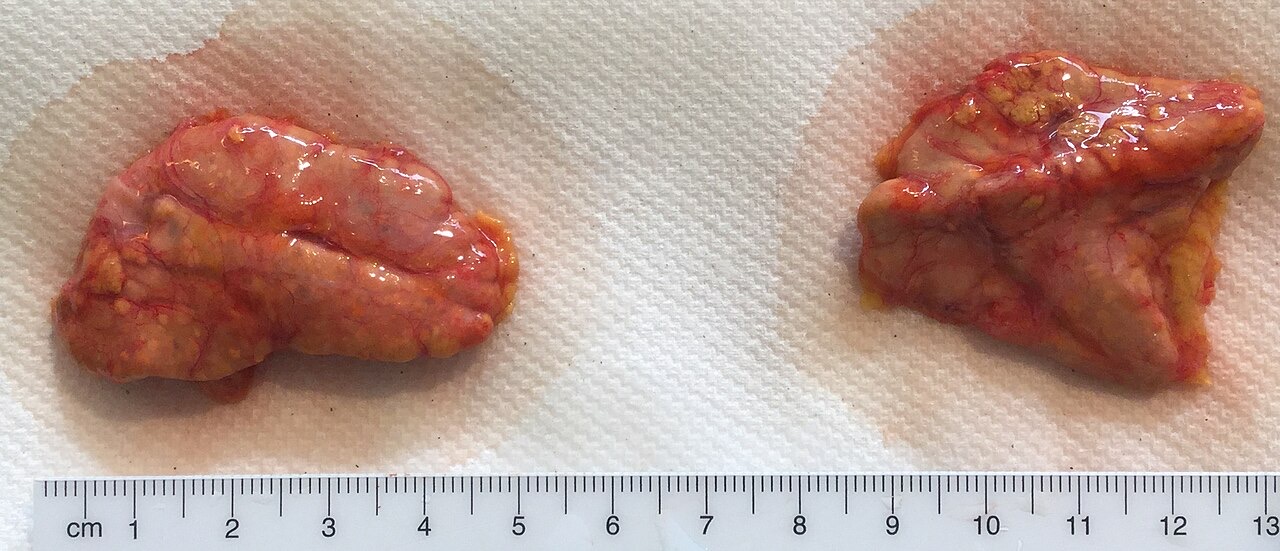
Biology · The Stress ResponseWhen Ponyboy leaves the hospital, he does not sob or scream. He drifts, hardly feeling the sidewalk, telling himself a dead friend is alive. Medicine has a name for this state. When the brain registers a catastrophe, a gland above each kidney floods the body with adrenaline — a hormone that speeds the heart and readies the muscles — while other circuits turn feeling down the way a hand turns down a volume knob. The result is numbness: a person walks, answers questions, even accepts a ride from a stranger, all on autopilot, while the terrible fact waits outside the door of the mind. This is not weakness and it is not madness. It is triage — emergency sorting of what the system can handle now and what must wait — and it usually fades over hours or days. The vocabulary of Part 7, from numb and daze to delirious, is really one long, exact description of shock.
Visual AidThe glands behind the flood
Two small glossy orange-tan human glands laid on white surgical paper above a centimeter ruler; each gland is roughly five centimeters across
Clinical photograph of the two human adrenal glands, removed and measured at a routine autopsy — the pair of organs Running on Autopilot locates above each kidney. Each is about five centimeters across and weighs only a few grams, yet within seconds of a catastrophe these two flood the whole body with adrenaline. The photograph shows healthy glands at true scale against the ruler; it shows nothing of grief or of any character, and the number-dulling circuits that turn feeling down are in the brain, beyond any camera. Notice the size against the ruler: the hardware of the body’s entire alarm system would fit in a child’s palm — which is the Knowledge Bank’s point about how fast the flood can arrive.
Human adrenal glands at autopsy, with centimeter scale; photograph by Mikael Häggström, M.D. Source: Wikimedia Commons, File:Adrenal glands.jpg, CC0.
numbadj.Ch.10
Unable to feel anything, in body or in feeling
“Ponyboy walked out of the hospital numb from head to heart.”
dazen.Ch.10
A confused state in which the world seems unreal and far away
“He drifted through the dark streets in a daze.”
deliriousadj.Ch.10
Confused and wild-minded from fever or illness
“For days he was delirious, hardly knowing where he was.”
concussionn.Ch.10
A brain injury caused by a blow to the head
“A kick in the rumble had left him with a concussion.”
exhaustionn.Ch.10
The state of having almost no strength left
“Shock and exhaustion finished what the kick had started.”
defiancen.Ch.10
Open, fearless resistance to authority
“Dally faced the police with defiance instead of surrender.”
bluffn.Ch.10
A show of strength meant to fool others
“Raising the empty gun was a bluff the police could not read.”
listlessadj.Ch.11
Without energy or interest in anything
“Ponyboy lay listless in bed, leaving his food untouched.”
guardiann.Ch.11
An adult legally responsible for a child’s care
“The hearing would decide whether Darry stayed their guardian.”
denialn.Ch.11
Refusing to accept that something painful is true
“His calm denial worried Darry more than tears would have.”

ⓘ The vocabulary words in this list are selected to help you understand and complete this workbook. Some may not appear verbatim in the original novel.

🧠Knowledge Bank question
1The Knowledge Bank explains that the numbness Ponyboy feels after the hospital is really ___.Ch.10
2Someone in a ‘daze’ sees everything sharply and clearly.Ch.10
3A ‘bluff’ is ___.Ch.10
4A ‘concussion’ is an injury to the ___.Ch.10
5Fill in each blank with the correct word.Ch.10–11
Word choices:defiancelistlessbluffguardian- some words will not be used
Dally went down with blazing in his face.
Ponyboy lay in bed, hardly touching his food.
6A ‘guardian’ is an adult who is legally responsible for a child’s care.Ch.11
7‘Denial’ means refusing to ___.Ch.11
8‘Exhaustion’ is the state of having almost no strength left.Ch.10
9Fill in each blank with the correct word.Ch.10–11
Word choices:guardiandazedenialexhaustion- some words will not be used
Darry is the boys’ legal .
Ponyboy drifted home from the hospital in a .
10Someone ‘delirious’ is ___.Ch.10
Part 2
Comprehension
Show you understood what happens in Chapters 10–11.
🛡Knowledge Bank · The Lie That Protects
Psychology · Denial and GriefTwice in these chapters Ponyboy says things that are flatly untrue — that Johnny is not dead, and that he himself killed Bob — and he is not lying. Psychologists call this denial: when a fact is unbearable, the mind refuses delivery, the way a house refuses a package too heavy for the floor. Denial has a real job. Grief is not just sadness; it is information the brain must rebuild itself around, and taking it in all at once can overwhelm sleep, appetite, and thought. A protective mind therefore lets the truth in on a schedule — an hour of knowing, then a retreat into not-knowing — until the person is strong enough to hold it steadily. Notice that Ponyboy’s rewrite is precise: by taking the blame himself, he keeps Johnny innocent, which keeps Johnny worth grieving. Denial is rarely random. It edits the exact fact that hurts most, and it loosens its grip with rest and time.
🧠Knowledge Bank question
1According to the Knowledge Bank, Ponyboy's claim that he killed Bob is precise because ___.Ch.10
2What does Ponyboy tell the gang in the living room?Ch.10
3Dally phones the Curtis house after robbing a grocery store.Ch.10
4Where does the gang run to meet Dally after his call?Ch.10
5Write the numbers 1–5 in the boxes to show the correct order of events. Number 1 = what happens first.Chapters 10–11
  • The police shoot Dally under the streetlight.
  • Dally phones the house after robbing a grocery store.
  • Ponyboy collapses and spends days sick and delirious.
  • Randy visits, and Ponyboy claims he killed Bob.
  • Ponyboy tells the gang that Johnny has died.
6The gun Dally raises at the police is fully loaded.Ch.10
7Why does Ponyboy decide the police did exactly what Dally wanted?Ch.10
8What does the doctor say caused Ponyboy’s collapse?Ch.10
9Darry ends Randy’s visit because the doctor warned against upsetting Ponyboy.Ch.11
10What does Ponyboy insist when Randy brings up the killing?Ch.11
Part 3
Literary Elements
Understanding HOW and WHY S. E. Hinton tells the story across Chapters 10–11.
🎭Knowledge Bank · A Fog Over the Page
Authorial Craft · Narrating ShockHow do you write numbness without boring the reader? S. E. Hinton (author) solves it with technique, not announcement. During the walk home the narration goes strange: sentences flatten, details arrive in the wrong order of importance — a stranger’s question, the glare of a light — and enormous facts are stated as if they were small ones. This is dissociation — a sense of being detached from your own experience — rendered from the inside. Hinton also lets the narration break its contract with the reader. Up to now Ponyboy has been a careful reporter; suddenly he tells Randy a version of the fountain killing that we watched happen differently. An unreliable narrator is usually a trick an author plays on readers, but here it is a symptom the reader can diagnose. The gap between what we know and what the narrator can bear to say becomes the truest measurement of his pain.
Unreliable narrator
Grief bends Ponyboy’s reporting: he tells Randy a version of the fountain killing that the reader watched happen differently.
Climax
Dally under the streetlight, raising a gun everyone in the gang knows is empty, is the part’s moment of highest tension.
Irony
An unloaded gun causes a real death, and the toughest greaser of all is the one destroyed by heartbreak.
🧠Knowledge Bank question
1The Knowledge Bank explains that Ponyboy's unreliable narration differs from the usual device because it is ___.Ch.11
2An unreliable narrator’s account can differ from what really happened.Ch.11
3Dally raising the unloaded gun under the streetlight works as the part’s ___.Ch.10
4The climax of a story is the quiet wrapping-up that comes after the conflict is settled.Ch.10
5Fill in each blank with the correct literary term.Ch.10
Word choices:climaxironyflashbacksimile- some words will not be used
The shooting under the streetlight is the part’s .
An empty gun causing a real death is .
6The gang knows the gun is empty, but the police do not. This gap is ___.Ch.10
7Situational irony occurs when events turn out the opposite of what is expected.Ch.10
8Why does S. E. Hinton (author) write the walk home in short, drifting, dreamlike lines?Ch.10
9Fill in each blank with the correct literary term.Ch.10–11
Word choices:unreliabledramaticomniscientstatic- some words will not be used
Ponyboy’s denial makes him an narrator.
The reader knowing the gun is empty while the police do not creates irony.
10Dally’s death is situational irony because ___.Ch.10
Part 4
Think Deeper
Four deeper challenges — no single-word recall. Read, weigh the evidence, and reason it out.
💡Knowledge Bank · Maps, Not Marching Orders
Psychology · The Stages DebateIn 1969, psychiatrist Elisabeth Kübler-Ross published a famous five-stage model of how people face terrible loss: denial, anger, bargaining, depression, acceptance. The list spread everywhere — hospitals, movies, classrooms — and it fits Part 7 temptingly well, since Ponyboy is plainly camped in denial. But researchers who followed mourners over months found something messier: people skip stages, repeat them, feel two at once, or grieve hard without visibly passing through any of them. Most psychologists now read the model as a map of common territory, not marching orders — a description of what grief often looks like, never a law about what it must look like. That distinction matters for reading this book. Ponyboy’s fever, his lost days, his edited memory of the fountain are not steps on a schedule he must complete; they are one particular boy’s route through grief. Judge his recovery by where he ends, not by the order of his stages.
Visual AidMaps, not marching orders
Maps, not marching ordersA sequence diagram. Five boxes in a row joined by arrows: denial, anger, bargaining, depression, acceptance. Beneath them, dashed arrows show what mourners actually do: one skips from denial all the way to depression, one circles back from bargaining to anger, and a bracket joins anger and bargaining labeled holding two stages at once. Notes say the model was published in 1969 for the dying, the lower arrows illustrate common detours rather than data, and the list is a map of common territory, never marching orders.FIVE STAGES ON PAPER — MESSIER ROUTES IN LIFEDENIALANGERBARGAININGDEPRESSIONACCEPTANCEsome mourners skip whole stagessome circle back and repeator hold two stages at oncethe model was published in 1969 for the dying; the lower arrows illustrate common detours, not dataa map of common territory, never marching orders — judge Ponyboy by where he ends
Sequence diagram contrasting the tidy five-stage list of 1969 with what Maps, Not Marching Orders reports from later research: mourners skip stages, circle back, or hold two at once. The top row states the famous model exactly; the dashed arrows below are illustrations of common detours, not measurements of anyone’s grief, and the diagram does not claim Ponyboy must visit any box at all. Notice that both layers sit on the same five words: the model is useful as a map of common territory — the Knowledge Bank’s verdict — and misleading the moment it is read as a schedule.
Elisabeth Kübler-Ross, On Death and Dying (1969), and later longitudinal grief research, as summarized in the Knowledge Bank. Drawn for Garden Heights Academy.

Picture a boy walking home from a hospital at night with no memory of deciding to walk. Behind him, a friend has just died; ahead of him, a living room full of people who do not know yet. He is not crying. He is not feeling much of anything, and that is the frightening part — he keeps telling himself, in a calm interior voice, that the dead boy is fine. Before this night ends he will say the words out loud to the gang, hear a phone ring, run to a vacant lot, and watch the wildest of them all raise a gun he knows is empty at a line of armed police. Then his own body will hand in its resignation. Part 7 is about what happens after the worst thing — how a mind blows a fuse to keep from burning down, and how slowly, through fever, sleep, and stubborn denial, it lets the truth back in.

Original passage written for Garden Heights — not a quotation from the novel.
1Claim: “Part 7 argues that Ponyboy’s strange talk and lost days are protection, not madness.” — choose the two details that best prove it.Claim & Evidence
2The body reacting to shock, or The mind rewriting facts? Tap each detail to send it left or right.Sort into two
◄ The body reacting to shockThe mind rewriting facts ►
3Match each cause to its result. For each cause, pick its result.Cause & Effect
Johnny dies in the hospital
Dally raises an unloaded gun at armed police
A rumble kick, smoke, and days of strain pile up
Randy brings up Bob and the hearing
🧠Knowledge Bank question
4Fill both blanks to complete the reasoning.Build the Argument
The Knowledge Bank argues that the five-stage model is a map of common territory rather than marching orders because , which shows that .
Part 5
Standardized Test
The Mind’s Circuit Breaker · Reading & Vocabulary · SAT & TOEFL-style practice
The Mind’s Circuit Breaker

When something terrible happens, the body answers before the mind has a vote. A gland above each kidney releases adrenaline — a hormone that speeds the heart and readies the muscles — and within seconds a person can run, lift, or fight far beyond normal limits. But the same alarm narrows everything else: hearing dulls, time seems to stretch or skip, and a person may drift through the scene in a daze, feelings simply switched off. Doctors call this an acute stress reaction, and the numbness that comes with it is not weakness; it is the mind pulling a circuit breaker so the whole system does not burn out.

Memory takes strange damage in those hours. Because attention has narrowed to a few urgent details, what gets recorded is fragmented — a face but not the words, a sound but not the order things happened in. Stranger still, the mind may refuse the central fact outright, and a person will say, sincerely, that the lost friend is fine. Psychologists see this denial as a buffer: the truth is let in a little at a time, at a speed the person can survive, rather than all at once.

Recovery runs on unglamorous fuel. Deep sleep clears the body's exhaustion and gives the brain time to file the scattered pieces, retelling the story to a patient listener slowly stitches them into order, and simple time does work nothing else can. A famous model describes grief in five stages, from denial to acceptance, but researchers stress that the stages are a description of what many people feel, not a law about what everyone must feel in sequence. Most mourners drift back and forth among them — and the drifting, too, is normal.

Original passage written for Garden Heights — not a quotation from the novel.
1What is the main idea of the passage?SAT · Central Ideas
2According to the passage, adrenaline is released by ___.TOEFL · Factual Information
3The passage says that during an acute stress reaction, feelings can ___.TOEFL · Factual Information
4The passage suggests that a mourner who says a dead friend is alive is most likely ___.SAT · Inference
5According to the passage, which activity helps stitch scattered memories into order?TOEFL · Factual Information
6Why does the author compare numbness to pulling a circuit breaker?SAT · Author’s Purpose
7The passage implies that someone who skips a grief stage is ___.SAT · Inference
8In the passage, daze most nearly means ___.SAT · Words in Context
9In the passage, exhaustion most nearly means ___.TOEFL · Vocabulary
10In the passage, fragmented most nearly means ___.TOEFL · Vocabulary
Part 6 · Optional
Creative Writing
A bonus challenge to practice your English. Take your time and have fun with it.
About This Section

This writing task is optional and is not part of your auto-graded score. The feedback below checks only the basics — length, spelling, and grammar — not whether your ideas are right or wrong. It is meant for classroom discussion and creative practice, so feel free to use your imagination!

Writing Task — Part 7 “The Fact You Couldn’t Face”

After the worst night of his life, Ponyboy’s mind protects him by refusing the truth — he tells himself, and others, that Johnny is alive. Write about a time your mind pushed away news you were not ready for — a loss, a move, a failure, a goodbye — or a time you watched someone else do it. Describe what you told yourself, how the truth finally arrived, and what helped you carry it. 6–10 sentences. End with one thing you would tell someone whose mind is still saying ‘no.’

You can start with: “At first I was sure there had been a mistake...”
0 / 40 words minimum
🗣 Teach It · Just for Fun (optional)

No right or wrong — tell someone nearby what happened in this part. Can’t find anyone? Tell yourself out loud. The moment you teach it, you truly understand it.

Garden Heights

Part 7 Complete!

You finished Chapters 10–11 of The Outsiders.

Here are your auto-graded results:

-
points out of 100
🗣 Teach It · Just for Fun (optional)
Move on to Part 8 →

Independent study guide by Garden Heights. Not affiliated with or endorsed by S. E. Hinton. Contains original analysis only; no text from the novel is reproduced. Reference text: This workbook follows S. E. Hinton’s classic text (the standard Puffin edition sold worldwide). Revised 2023 UK editions change some wording and may not match the vocabulary studied here.