The Secret Garden cover
Garden Heights

The Secret Garden

This workbook is for Garden Heights members. Sign in to continue.

Sign in with Google →
New here? Just sign up with Google — your account includes Matilda, our gift book, forever.
The Secret Garden · Garden Heights

Part 1

for The Secret Garden · Part 1 · Chapters 1–4
8 Parts40 min
What Happens in Part 1

Orphaned by cholera in India, unloved Mary Lennox is sent to a locked-up manor on the Yorkshire moor.

A child nobody wantsMary Lennox is born in India to English parents who barely look at her. Her father is always busy or unwell; her mother wanted parties, not a daughter. Handed at birth to an ayah ordered to keep her out of sight, Mary rules the servants with tantrums. By nine she is thin, sallow, unpleasant, and no one in the household has ever loved her.

Cholera empties the houseOne hot morning Mary is left with a strange servant and overhears whispering: cholera has broken out. Her ayah dies in the night. The house fills with panic, then wailing, then nothing — everyone who can run, runs. Forgotten, Mary spends a day and night alone in the bungalow, watching a small snake glide over the matting. Officers searching the abandoned house are astonished to find a living child. Both her parents are dead.

Journey to MisselthwaiteAt an English clergyman's home the children taunt her with a rhyme about Mistress Mary, quite contrary, and a boy named Basil tells her she is being shipped to an uncle in England. In London she is handed to Mrs. Medlock, housekeeper of Misselthwaite Manor, who warns her on the night train about a six-hundred-year-old house, a hundred locked rooms, and an uncle, Archibald Craven, who will not want to see her.

The walled gardenThey drive miles across the dark moor, and at the manor Mary is ordered to stay in her rooms. Next morning a cheerful Yorkshire housemaid, Martha Sowerby, is amazed that Mary cannot dress herself, and talks of her brother Dickon, who tames wild creatures. Martha lets slip that one garden has been locked ten years, its key buried. Outside, Mary meets gruff Ben Weatherstaff and a robin, and finds an ivy-covered wall with no door.

What We Will Learn
SectionWhat you will practice
VocabularyWords from a colonial household and a cold journey north: disagreeable, cholera, ayah, tyrannical, moor
Literary ElementsCharacterization that begins with a child nobody likes, an allusion buried in a nursery rhyme, and foreshadowing planted in a locked door
Cross-CurricularBritish India and cholera — how an English family’s household in India was staffed and run, and how a waterborne disease could empty it in two days
Chapter Summary
Ch.What happens
Chapter 1There Is No One Left — Mary Lennox, nine years old and disliked by everyone, is raised in India by servants ordered to keep her quiet. Cholera sweeps the household, her ayah and both parents die, and the survivors flee. Forgotten in the empty bungalow, Mary is found a day later by officers who did not know a child lived there.
Chapter 2Mistress Mary Quite Contrary — Placed with an English clergyman’s family, Mary is taunted with a nursery rhyme by a boy named Basil, who tells her she is being sent to an uncle in Yorkshire. She sails to England, is handed over in London to Mrs. Medlock, and hears on the train about Misselthwaite Manor and its hundred locked rooms.
Chapter 3Across the Moor — The train reaches a small northern station in the evening, and a carriage carries Mary for miles over the dark moor. Mrs. Medlock explains what a moor is; Mary decides she dislikes it. At the manor an elderly manservant delivers the master’s orders, and Mary is put in a room with a fire and a supper and told not to wander.
Chapter 4Martha — Martha Sowerby throws back the curtains on a gray moor and an astonished Mary, who has never dressed herself. Martha talks of her mother, of her brother Dickon and his tame wild creatures, and of a garden locked for ten years since Mrs. Craven died. Sent outdoors, Mary finds Ben Weatherstaff, a robin, and a wall of ivy with no door.
Part 1
Vocabulary
Study 10 key words from Chapters 1–4, then answer each question.
🏠Knowledge Bank · Rank Inside a Bungalow
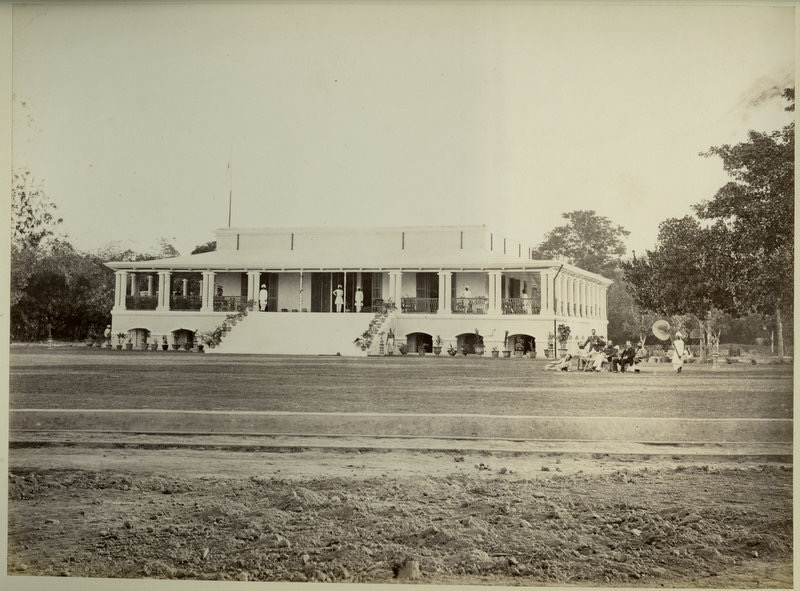
Sociology · The Colonial HouseholdThe words around Mary in Chapter 1 are not decoration; they are a map of who outranked whom. A bungalow was a low, wide house with deep shaded rooms and a covered veranda, set inside a walled yard called a compound. Inside it an English family employed a staff so specialized that each person did one job and would not do another: a cook, a table servant, a laundryman, a gardener, a watchman at the gate, and, for the children, an ayah. The lady of the house was addressed as memsahib, from an English word plus an Urdu one meaning master, and her orders passed down through a head servant rather than to each worker directly. Because wages were low and staffs were large, an ordinary English family lived in India with more servants than a wealthy family kept in England. That is why nobody in the book teaches Mary to button her own shoes. Her rudeness has an address, and the address is a colonial compound.
Visual AidThe house Mary was raised inside
An 1870s photograph of a long, low white bungalow in India with a deep pillared veranda across its whole front, servants in white standing under the arches, and a group of people seated on the grass at one end
Photograph of an English family’s bungalow in India, taken in the 1870s — the building the Knowledge Bank takes apart. One low, wide story; deep shaded rooms behind a veranda that runs the full front; a walled yard, the compound, around it. The small white figures under the arches are staff, and a household this size hired a specialist for each job, an ayah among them. The camera cannot photograph rank, which is what the Knowledge Bank is really about, and the house is not the Lennox bungalow: that one belongs to Frances Hodgson Burnett (author).
British bungalow in India with servants, 1870s; unknown photographer. Source: Wikimedia Commons, File:British bungalow in India with servants in the 1870s.jpg, public domain.
disagreeableadj.Ch.1
Unpleasant to be around; bad-tempered
“Every servant agreed that the child was disagreeable.”
choleran.Ch.1
A severe disease, spread by dirty water, that empties the body of fluid
“Cholera moved through the servants’ quarters in a single night.”
ayahn.Ch.1
An Indian nursemaid employed by a European family
“Mary was handed to an ayah before she could walk.”
verandan.Ch.1
A roofed open porch running along the side of a house
“The grown-ups sat talking on the veranda in the heat.”
tyrannicaladj.Ch.1
Ruling others harshly; bossy and demanding
“A tyrannical child gets her way and is still not happy.”
contraryadj.Ch.2
Stubbornly doing the opposite of what is wanted
“Mrs. Medlock had never met so contrary a passenger.”
drearyadj.Ch.2
Dull and gloomy; without brightness or cheer
“The dreary station was gray with rain and coal smoke.”
moorn.Ch.3
High open land covered with rough grass and low shrubs
“The carriage ran for miles with nothing but moor on either side.”
sulkyadj.Ch.4
Silently bad-tempered; sullen and resentful
“Mary answered in a sulky voice and turned to the window.”
surlyadj.Ch.4
Gruff and unfriendly in manner
“The old gardener gave her a surly look and kept digging.”

ⓘ The vocabulary words in this list are selected to help you understand and complete this workbook. Some may not appear verbatim in the original novel.

🧠Knowledge Bank question
1The Knowledge Bank explains that a bungalow kept a cook, a gardener, a watchman, and an ayah because ___.Ch.1
2‘Cholera’ is a disease that spreads mainly through ___.Ch.1
3An ‘ayah’ was an Indian nursemaid hired to look after European children.Ch.1
4A ‘veranda’ is best described as ___.Ch.1
5Fill in each blank with the correct word.Ch.1
Word choices:tyrannicalcholeramoorsurly- some words will not be used
The sickness in the compound was .
A child rules the adults who serve her.
6Someone who is ‘contrary’ agrees easily with whatever is suggested.Ch.2
7A place called ‘dreary’ would feel ___.Ch.2
8A ‘moor’ is ___.Ch.3
9A ‘sulky’ person is cheerful and full of talk.Ch.4
10Fill in each blank with the correct word.Ch.4
Word choices:surlysulkyayahveranda- some words will not be used
The old gardener answered in a way.
Mary sat in a silence at the window.
Part 2
Comprehension
Show you understood what happens in Chapters 1–4.
💧Knowledge Bank · Death by Dehydration
Medicine · What Cholera DoesThe disease that empties Mary’s household is caused by Vibrio cholerae, a bacterium — a single-celled organism far too small to see — that is swallowed in water or food fouled by the waste of someone already sick. In the small intestine it releases a poison, called a toxin, that forces the lining of the gut to pour out fluid. A patient can lose more than a quart an hour. What actually kills is not the germ but the loss: dehydration thickens the blood, weakens the pulse, chills the skin, and can end a healthy adult’s life within a day of the first symptom. Untreated, severe cholera kills about half of the people who catch it. Treated in time, it kills fewer than one in a hundred, because the cure is mostly clean water with salt and sugar in it. In 1900 nobody in a bungalow had that cure, which is why Burnett (author) can empty an entire house between one afternoon and the next morning.
Visual AidSevere cholera, in numbers
Severe cholera, in numbersTwo horizontal bars on one scale of deaths per hundred cases: untreated cholera, as in 1900, about fifty of every hundred die; treated in time with fluids, fewer than one of every hundred, drawn as a sliver. An axis below is ticked at 0, 25, 50, 75 and 100. Notes say a patient can lose more than a quart of fluid in one hour, that what kills is the loss rather than the germ, and that the cure is mostly clean water with salt and sugar, which no bungalow had in 1900.SEVERE CHOLERA: WHAT THE DISEASE COSTS, IN NUMBERSuntreated, as in 1900about 50 of every 100 dietreated in time with fluidsfewer than 1 of every 1000255075100deaths per 100 casesFLUID A PATIENT CAN LOSE IN ONE HOUR: MORE THAN A QUARTwhat kills is the loss, not the germ — thickened blood, a weak pulse, cold skin, sometimes inside a daythe cure is mostly clean water with salt and sugar in it, and in 1900 no bungalow had it
Measure diagram of the figures the Knowledge Bank gives: severe cholera left untreated kills about half of the people who catch it, while the same illness treated in time kills fewer than one in a hundred. Both bars sit on one scale so their lengths can be compared directly; the numbers are rounded, and the drawing shows no timeline of a single case. It does not claim that any character’s death happened at a particular hour. Notice which bar is almost invisible — and that the difference between the two is mostly clean water with salt and sugar in it.
Case-fatality figures for severe cholera treated and untreated, and fluid-loss rates, as summarized in the Knowledge Bank and in standard public-health accounts of oral rehydration. Drawn for Garden Heights Academy.
🧠Knowledge Bank question
1According to the Knowledge Bank, what actually kills a cholera patient is ___.Ch.1
2What work does Mary’s father do in India?Ch.1
3Mary is surprised to learn that both of her parents have died.Ch.1
4How does Mrs. Medlock describe Misselthwaite Manor on the train?Ch.2
5Write the numbers 1–5 in the boxes to show the correct order of events. Number 1 = what happens first.Chapters 1–4
  • Officers searching the empty bungalow discover Mary alive.
  • A long train journey carries her north through England.
  • A housemaid opens the curtains on her first Yorkshire morning.
  • Sickness moves through the compound and the household breaks apart.
  • Mary stays for a while with an English clergyman’s family.
6What does Mrs. Medlock tell Mary about her uncle?Ch.2
7Mr. Craven asks to meet Mary as soon as she reaches the manor.Ch.3
8What surprises Martha most about Mary on the first morning?Ch.4
9Martha tells Mary that her brother Dickon spends his time on the moor with animals.Ch.4
10What does Martha reveal about one of the gardens?Ch.4
Part 3
Literary Elements
Understanding HOW and WHY Frances Hodgson Burnett tells the story across Chapters 1–4.
🎭Knowledge Bank · A Heroine Nobody Likes
Authorial Craft · Opening With an Unpleasant ChildMost stories for young readers introduce someone worth rooting for. Burnett (author) does the opposite: her first page hands us a child who is sallow, cross, and friendless, and the narrator states it flatly instead of hinting. That is a deliberate act of characterization, and it buys the book two things. First, it makes cause visible — every unpleasant habit Mary owns is traced to an adult who was paid to indulge her, so her behavior reads as damage rather than nature. Second, it sets a baseline that later chapters can measure against, which is why a novel about a garden can also be a novel about growth. The taunting rhyme in Chapter 2 works the same way: an allusion to a nursery verse everyone already knows, used to name her fault and to plant the word garden long before there is one. Notice how much of Part 1 is quiet foreshadowing.
Characterization
Burnett (author) opens with a heroine readers are told plainly is thin, sour, and unloved — and then shows exactly which adults made her that way.
Allusion
The nursery rhyme about Mistress Mary, quite contrary, is borrowed from outside the novel; it names Mary’s fault and quietly promises a garden.
Foreshadowing
A door nobody opens, a key buried in the ground, and a robin flying over a wall are placed early because the plot will come back for all three.
Setting
Heat, glare, and servants are traded for wind, gray sky, and empty miles, so the landscape changes at exactly the moment the child’s life does.
🧠Knowledge Bank question
1According to the Knowledge Bank, Burnett (author) opens with an unpleasant child in order to ___.Ch.1
2Borrowing the nursery rhyme about Mistress Mary is an example of ___.Ch.2
3Foreshadowing is a hint planted early about something that matters later.Ch.4
4The move from a hot bungalow to a windy moor mainly changes the story’s ___.Ch.3
5Fill in each blank with the correct literary term.Ch.2
Word choices:allusioncharacterizationrhyme schemetable of contents- some words will not be used
A borrowed nursery verse is an .
Listing Mary’s sour habits is .
6An allusion is a reference to something outside the story that readers are expected to recognize.Ch.2
7Mentioning a garden locked for ten years at the end of Part 1 mainly works as ___.Ch.4
8Which detail does the most work as characterization?Ch.1
9Setting means only the year in which a story was published.Ch.3
10Fill in each blank with the correct literary term.Ch.4
Word choices:settingforeshadowingfootnotepreface- some words will not be used
The robin flying over the wall is .
Wind and gray moorland make up the .
Part 4
Think Deeper
Four deeper challenges — no single-word recall. Read, weigh the evidence, and reason it out.
Knowledge Bank · Why a Compound Emptied in a Day
Epidemiology · How an Outbreak MovesCholera does not spread person to person by touch; it spreads through what a community drinks. That single fact explains the shape of the disaster in Chapter 1. A household drawing from one well or tank could be struck all at once rather than one by one, and servants living crowded together in quarters behind the house were usually hit first and hardest. Nineteenth-century India had no reliable sanitation system separating waste from drinking water in most towns, and before the 1880s doctors blamed bad air rather than water, so the standard response was flight. People who could leave left, and their leaving carried the disease along the roads with them. Cities eventually answered with piped water, sewers, and quarantine rules at ports and pilgrim sites, which is why the disease retreated from wealthy countries first. In Mary’s bungalow none of that exists yet, and so an ordinary house becomes, within two days, entirely empty.

Picture a low white house in India with the shutters closed against a glaring morning. Inside it a nine-year-old girl has been raised by people who were paid to keep her quiet, and who did it by giving her everything she screamed for. Her mother goes to parties. Her father works and is tired. The girl has never dressed herself, never been told no, and never once been liked. Then, in a single night, a sickness moves through the servants’ quarters and through the house, and the adults who arranged her whole life stop existing. Nobody remembers to come for her. She wakes in an empty bungalow with a snake sliding across the matting and officers shouting in the hall, and she is genuinely surprised to learn that she is an orphan. What follows is a journey in reverse: heat to cold, glare to fog, servants to strangers. Part 1 carries her across an ocean, up the length of England, and out onto a black moor at night, and leaves her at a window in a house with a hundred locked rooms — where a housemaid mentions, quite casually, that one of the gardens has been shut for ten years.

Original passage written for Garden Heights — not a quotation from the novel.
1Claim: “Part 1 shows that Mary’s unpleasantness was produced by the adults around her rather than born in her.” — choose the two details that best prove it.Claim & Evidence
2The world Mary loses, or The world Mary enters? Tap each detail to send it left or right.Sort into two
◄ The world Mary losesThe world Mary enters ►
3Match each cause to its result. For each cause, pick its result.Cause & Effect
Cholera reaches the servants’ quarters
Officers search the abandoned bungalow
Mrs. Medlock talks for miles on the train
Martha mentions a garden shut for ten years
🧠Knowledge Bank question
4Fill both blanks to complete the reasoning.Build the Argument
According to the Knowledge Bank, a whole compound could fall ill on the same day because , which shows that .
Part 5
Standardized Test
Cholera in British India · Reading & Vocabulary · SAT & TOEFL-style practice
Cholera in British India

Cholera is a disease of dirty water. It is caused by Vibrio cholerae, a bacterium — a single-celled organism far too small to see — that survives in water and food contaminated by the waste of someone already infected. Once swallowed, the bacteria settle in the small intestine and release a poison that forces the gut lining to pour out fluid. The result is not an ordinary stomach upset but a flood: a grown adult can lose more than a quart of water an hour.

What kills is dehydration. Water and salts leave faster than anyone can replace them, so the blood thickens, the pulse fades, and the skin turns cold. Untreated, severe cholera kills roughly half the people who develop it, sometimes within a day of the first symptom. The modern treatment is plain: clean water mixed with salt and sugar, or a salt solution fed into a vein. With that fluid given in time, fewer than one patient in a hundred dies.

Cholera was endemic in the delta of the Ganges — always present, even between outbreaks — and from 1817 it traveled outward along trade routes, pilgrim roads, and marching armies until it had circled the globe. British India suffered worst of all: official counts record millions of deaths across the nineteenth century. Nobody knew the cause for decades: John Snow, a London physician, traced an outbreak of 1854 to one public water pump, and Robert Koch identified the bacterium in 1883. Until then a household drawing from one well had one defense: to scatter and run. In an English bungalow it meant the children were carried out to the shaded veranda along the front of the house, then sent away with an ayah, the Indian nursemaid who dressed and fed them.

Original passage written for Garden Heights — not a quotation from the novel.
1What is the main idea of the passage?SAT · Central Ideas
2According to the passage, cholera is caused by ___.TOEFL · Factual Information
3The passage says the modern treatment for cholera is mainly ___.TOEFL · Factual Information
4Who identified the bacterium that causes cholera?TOEFL · Factual Information
5The passage suggests that a household sharing one well was ___.SAT · Inference
6It can be inferred that cholera spread so widely after 1817 because ___.SAT · Inference
7Why does the writer compare untreated and treated death rates?SAT · Author’s Purpose
8In the passage, contaminated most nearly means ___.SAT · Words in Context
9In the passage, veranda most nearly means ___.TOEFL · Vocabulary
10In the passage, ayah most nearly means ___.TOEFL · Vocabulary
Part 6 · Optional
Creative Writing
A bonus challenge to practice your English. Take your time and have fun with it.
About This Section

This writing task is optional and is not part of your auto-graded score. The feedback below checks only the basics — length, spelling, and grammar — not whether your ideas are right or wrong. It is meant for classroom discussion and creative practice, so feel free to use your imagination!

Writing Task — Part 1 “Somewhere You Did Not Choose”

Mary is moved from a hot Indian bungalow to a cold Yorkshire manor without anyone asking her opinion. Write about a place you were sent to or moved to without choosing it — a new school, a relative’s house, a trip, a new town. Describe what the place looked and sounded like, what you expected, and how the reality differed. 6–10 sentences. End with one thing that place taught you.

You can start with: “Nobody asked me whether I wanted to go...”
0 / 40 words minimum
🗣 Teach It · Just for Fun (optional)

No right or wrong — close the screen and tell someone nearby what happened in this part. Can’t find anyone? Tell yourself out loud. The moment you teach it, you truly understand it.

Garden Heights

Part 1 Complete!

You finished Chapters 1–4 of The Secret Garden.

Here are your auto-graded results:

-
points out of 100
🗣 Teach It · Just for Fun (optional)
Move on to Part 2 →

Independent study guide by Garden Heights. Not affiliated with or endorsed by Frances Hodgson Burnett. Contains original analysis only; no text from the novel is reproduced. Reference text: This workbook follows Frances Hodgson Burnett’s classic text (the standard Puffin edition sold worldwide). Revised 2023 UK editions change some wording and may not match the vocabulary studied here.