
Part 4
Mary discovers her hidden cousin Colin, becomes his one visitor, and then quarrels with him fiercely.
The hidden boyA week of rain shuts Mary indoors. Awake at midnight and out of temper, she follows the fretful crying through the tapestry door and finds a boy in a brocade-hung bed. He is Colin Craven, her uncle's son and her own age; neither child knew the other existed. He says he is always ill, expects to die, and that his father cannot look at him because his mother died the day he was born.
A shared secretMary asks blunt questions instead of soft ones, and Colin likes it. Then she slips: working out their ages, she mentions the garden door locked and the key buried ten years ago. Colin, who has never wanted anything, wants that garden and plans to have servants dig up the key. Horrified, Mary sells him something better — a secret no adult knows. He shows her his mother's portrait behind a rose-colored curtain, and she sings him to sleep in Hindustani.
Cousins and plansTerrified Martha is protected when Colin orders her to fetch Mary whenever he sends. Mary compares him aloud to a boy rajah giving orders, talks about Dickon until he laughs, and they realize they are cousins; Dr. Craven and Mrs. Medlock cannot stop it. When the sun returns Mary finds Dickon in the garden with a fox cub and a rook. He says Colin would stop hunting for lumps on his back if he had buds to watch.
The quarrelMary stays out all day and returns to find Colin has spent the afternoon working himself up. The quarrel is loud and even: he threatens to have Dickon banned, she calls him selfish, and when she refuses to believe he is dying he sits bolt upright in healthy rage and throws a pillow. The nurse laughs, saying being stood up to is the best thing that ever happened to him. A parcel from Mr. Craven cools Mary's anger.
| Section | What you will practice |
|---|---|
| Vocabulary | The words of a shut-up house and a waking garden: fretful, brocade, invalid, herbaceous, hysterics… |
| Literary Elements | Parallel plotting, a foil built out of a boy who is never indoors, and the dramatic irony of a secret the reader shares with only one character |
| Cross-Curricular | The walled kitchen garden — brick that stores heat, fruit trained flat on a south-facing wall, hotbeds and glasshouses, the head gardener’s year, and why ten years of neglect leaves a garden wild but alive |
| Ch. | What happens |
|---|---|
| Chapter 13 | I Am Colin — Rain and wind keep Mary awake, and under the noise she hears the crying a third time. She follows it with a candle through the tapestry door and finds a boy in a carved bed hung with brocade. He is Colin Craven, her cousin, ten years old, hidden from the household because he will not be looked at and because his father cannot bear the sight of him. Mary lets slip that the garden has been locked for ten years, Colin instantly demands that the key be dug up, and she saves the secret only by persuading him that a secret is worth more. He shows her his mother’s portrait behind its silk curtain, and Mary sings him to sleep. |
| Chapter 14 | A Young Rajah — Mary tells Martha, who is frightened she will be sent home. That afternoon Colin summons Mary, orders Martha to bring her whenever he wants her, and promises to dismiss Mrs. Medlock if she interferes. Mary tells him he gives orders exactly like a boy rajah she once saw covered in jewels. She refuses to discuss his dying and talks about Dickon and the moor instead, until the two of them are laughing like ordinary children and discover they are cousins. Dr. Craven and Mrs. Medlock arrive, alarmed, and find that Colin has decided Mary makes him better and that nobody dares argue. |
| Chapter 15 | Nest Building — After another week of rain the sky clears. Mary, who has spent hours every day with Colin and has been quietly testing whether he can keep a secret, is outdoors at sunrise and finds Dickon already working in the garden with his fox cub Captain and his rook Soot. Crocuses are open, the gray wall is turning green, and the robin is building. Mary tells Dickon about Colin. Dickon says a boy watching buds break would have no time left over for watching his own spine, and they begin to plan how his carriage might be wheeled inside without anyone finding out. |
| Chapter 16 | ‘I Won’t!’ Said Mary — Mary sends word that she is too busy to visit and spends the whole day digging. Colin waits, watches the clock, and is put back to bed. The quarrel that evening is furious: he threatens to have Dickon banned, she refuses to be dragged into his room, they trade the word selfish, and when she says outright that she does not believe he is dying he sits up and throws his pillow. Mary leaves for good — she thinks. The nurse, listening in the corridor, is delighted. Then a parcel of presents from Mr. Craven cools Mary’s temper, and she remembers what is really underneath Colin’s rages. |
ⓘ The vocabulary words in this list are selected to help you understand and complete this workbook. Some may not appear verbatim in the original novel.
- Colin and Mary discover that they are cousins and laugh about it.
- Mary and Dickon sit still while the robin carries a twig to his nest.
- Mary carries a candle down the dark corridors toward the crying.
- Colin has Mary pull the cord that uncovers his mother’s picture.
- Colin throws his pillow and Mary marches out of his room.
Picture a corridor at two in the morning, one candle, and a house so large that a ten-year-old has to stop and count her turns. Rain is hammering the windows and the wind is roaring in the chimneys, and underneath both there is a sound that is neither: a child crying, somewhere behind a door hung with tapestry. Mary has already found one thing this house locked away and refused to discuss. Now she pushes open a second door and finds a boy in a carved four-posted bed, ivory-white, with enormous gray eyes, who has spent ten years being obeyed by everyone and looked at by no one. Part 4 is what happens when two spoiled, lonely children are finally put in the same room — and when the second one starts demanding that the servants dig up a key.
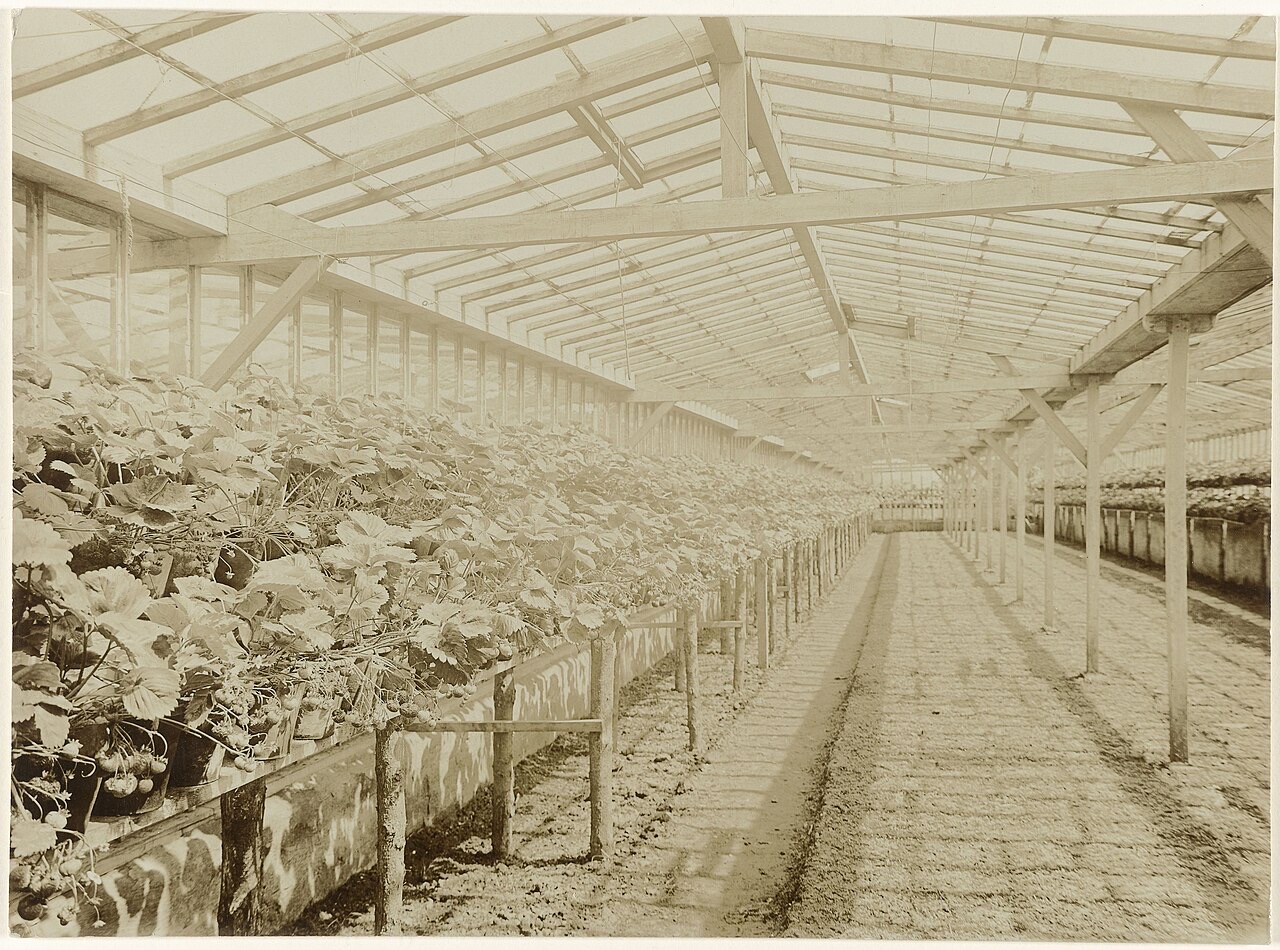
On a large English estate a hundred and fifty years ago, most of what the household ate grew inside a brick wall enclosing one to four acres. Nobody could change the English climate, so a gardener who wanted early fruit was obliged to build shelter: the wall was raised not to hide the garden but to warm it. Brick absorbs sunshine all day and releases that heat slowly after dark, so soil along a south-facing wall runs several degrees Fahrenheit warmer than open field. The wall also breaks the wind, which strips warmth from young leaves.
Gardeners used every inch of that warmth. Peaches, apricots, and pears were trained flat against the brick by a method called espalier — the branches tied out sideways along wires so that no leaf shades another. Against the warmest walls an estate might raise glasshouses, and beneath them hotbeds: pits packed with fresh stable manure, which gives off steady heat as it rots and can hold a frame near seventy-five degrees Fahrenheit in February. With that borrowed heat a head gardener could ripen melons in a cold county, and the richest estates grew pineapples under glass.
The work never paused. Winter meant pruning and manuring; spring meant sowing in succession, two weeks apart, so that peas and lettuce came in waves; autumn meant lifting roots into dry sand. A head gardener planned a year ahead and directed a staff of a dozen or more. When such a garden is abandoned, it does not die. Bulbs multiply underground, herbaceous plants with soft stems die back and rise again from their roots, unpruned roses throw long canes into the trees, and brambles take the paths, so that ten years later the walls still enclose a living tangle.
“Fruit trained that way ripens earlier than the same variety left standing in the open.”
This writing task is optional and is not part of your auto-graded score. The feedback below checks only the basics — length, spelling, and grammar — not whether your ideas are right or wrong. It is meant for classroom discussion and creative practice, so feel free to use your imagination!
Writing Task — Part 4 “The Secret You Decided to Keep”
Mary could have told Colin about the garden that first night, and she almost did. Instead she talked him out of digging up the key, because a secret shared with one person is worth more than a gate held open for everybody. Write about a time you decided to keep something to yourself — a plan, a place, a piece of news, a thing you had made. Explain what it was, who you kept it from, why you decided that, and what it cost you to stay quiet. 6–10 sentences. End by saying whether you would make the same choice again.
No right or wrong — close the screen and tell someone nearby what happened in this part. Can’t find anyone? Tell yourself out loud. The moment you teach it, you truly understand it.

Part 4 Complete!
You finished Chapters 13–16 of The Secret Garden.
Here are your auto-graded results:
Independent study guide by Garden Heights. Not affiliated with or endorsed by Frances Hodgson Burnett. Contains original analysis only; no text from the novel is reproduced. Reference text: This workbook follows Frances Hodgson Burnett’s classic text (the standard Puffin edition sold worldwide). Revised 2023 UK editions change some wording and may not match the vocabulary studied here.