New here? Just sign up with Google — your account includes Matilda, our gift book, forever.
The Secret Garden · Garden Heights
Part 6
for The Secret Garden · Part 6 · Chapters 21–23
8 Parts40 min
What Happens in Part 6
Insulted by Ben Weatherstaff, Colin stands for the first time and begins working the garden himself.
Face above the wallOn an ordinary afternoon Dickon describes the robins feeding their young while Colin, outdoors daily now, talks about a force he calls the Magic — in the garden, in the seeds, and in himself. Then a furious face rises above the wall. Ben Weatherstaff, on a ladder, shakes his fist and demands to know how Mary got into a locked garden, then blunders into village gossip about a crippled child with a crooked back.
Colin stands upThe insult does what a decade of nursing could not. Colin tears off his coverings, tells Mary and Dickon to help him, and stands straight, ordering Ben to look at him. The old man weeps, swears the boy is thin but not deformed, and blesses him. Taking charge as master of the house, Colin sends him round to enter properly by the door.
Ben's own secretInside, Ben confesses that he has climbed that wall twice a year to prune the roses, because Colin's mother asked him to care for them before she died, until rheumatism — painful, stiff joints — stopped him two years ago. Colin walks to a tree, picks up Mary's trowel, and digs for the first time in his life. Ben fetches a rose from the greenhouse; Colin plants it himself, laughing as the sun sets.
The Magic experimentEveryone is sworn to secrecy until Colin can walk and run like any boy and surprise his father. Overruling Doctor Craven, he announces that the Magic will be tested as a scientific experiment, like electricity or steam. Daily the group sits cross-legged in a circle — Mary, Dickon, Ben, and Dickon's animals — while Colin chants that the Magic is making him strong. Ben will not chant but sits anyway. Then Colin walks round the garden, leaning on Dickon's arm.
What We Will Learn
Section
What you will practice
Vocabulary
Anger, ritual, and effort: indignant, totter, ceremony, chant, exertion…
Literary Elements
The climax a whole novel has been aiming at, the Magic as a repeated motif, the planted rose as symbol, and the dramatic irony of a household grieving for a healthy boy
Cross-Curricular
Fresh air as medicine — sanatoria, open-air schools, sunlight and vitamin D, and what modern evidence actually supports about daylight, movement, and recovery
Chapter Summary
Ch.
What happens
Chapter 21
Ben Weatherstaff — Dickon talks about the robins feeding their young and Colin talks about the Magic. Ben’s furious face rises over the wall on a ladder; his blundering questions about crooked legs and a crooked back enrage Colin, who throws off his coverings and stands. Ben weeps and blesses him, and Colin orders the old man to come round and enter by the door.
Chapter 22
When the Sun Went Down — Inside the garden Ben confesses that he climbed the wall twice a year to prune the roses for Colin’s mother until rheumatism stopped him. Colin walks to a tree, digs with a trowel for the first time, and plants a rose from the greenhouse before the light fails, laughing on his feet at sunset.
Chapter 23
Magic — Doctor Craven warns Colin against going out again and is overruled. Colin declares that the Magic will be tested as a scientific experiment; the group sits cross-legged in a circle with Dickon’s animals while Colin chants, Ben refusing to chant but staying. Colin then walks the whole way round the garden.
Part 1
Vocabulary
Study 10 key words from Chapters 21–23, then answer each question.
🏠Knowledge Bank · Houses Built Around Air
Architecture · Buildings Made for AirOnce doctors decided that outdoor air was the treatment, architects had to redesign the hospital. A sanatorium — a residential hospital built for months of rest — looked less like a ward and more like a hotel with one wall missing. Buildings were set on a slope with a southern orientation, so that every room caught the low winter sun. Along the front ran a wide veranda, an open roofed platform where patients lay in reclining chairs wrapped in blankets and fur bags for six or eight hours a day, sometimes in air well below freezing. Windows were built to stay open, and sleeping porches were bolted onto ordinary houses so families could copy the method at home. Even the furniture was specialized: the long adjustable chair became so closely tied to the treatment that people simply called it a cure chair. The whole structure was, in effect, a machine for delivering sunlight and ventilation as cure.
Visual AidA building made for air
Structure diagram of the architecture the Knowledge Bank describes: a ward block with windows built to stay open, and in front of it a roofed veranda, open at the sides, where patients lay in long adjustable chairs for six or eight hours a day. The building is reduced to blocks, the slope and the southern orientation are stated in words rather than drawn, and two chairs stand in for a row of them. It is a generic sanatorium, not any real hospital and not a place in the novel. Notice that the veranda, not the ward, is where the treatment happened.
Sanatorium planning — southern orientation, open-air verandas, reclining cure chairs and windows built to stay open — as set out in the Knowledge Bank and in standard histories of the open-air treatment. Drawn for Garden Heights Academy.
indignantadj.Ch.21
Angry at something that feels unfair or insulting
“Colin turned indignant the moment Ben pitied his legs.”
trespassv.Ch.21
To go onto someone’s land without permission
“Ben accused Mary of trespassing in a locked garden.”
totterv.Ch.21
To stand or move unsteadily, close to falling
“A boy who has not walked in years may totter at first.”
defiancen.Ch.21
A bold refusal to obey or to give in
“He threw the rug onto the grass in plain defiance.”
solemnadj.Ch.22
Serious and formal, with no joking in it
“The planting of the rose was a solemn business.”
twilightn.Ch.22
The dim light in the sky after the sun has set
“They finished the work in the last of the twilight.”
ceremonyn.Ch.23
A formal set of actions carried out the same way each time
“The circle under the tree became a daily ceremony.”
chantv.Ch.23
To repeat words aloud in a steady, rhythmic way
“The children chanted the same sentence over and over.”
experimentn.Ch.23
A careful test done to find out whether an idea holds
“Colin insisted on calling the whole thing an experiment.”
exertionn.Ch.23
Hard physical effort
“Ten steps cost him more exertion than a mile costs Mary.”
ⓘ The vocabulary words in this list are selected to help you understand and complete this workbook. Some may not appear verbatim in the original novel.
🧠Knowledge Bank question
1According to the Knowledge Bank, patients lay on a sanatorium veranda for six or eight hours a day with no exertion at all, and the long adjustable chair they used came to be called ___.Ch.21
2To ‘trespass’ is to go onto someone’s land without permission.Ch.21
3To ‘totter’ is to move ___.Ch.21
4Fill in each blank with the correct word.Ch.22
Word choices:solemntwilightdefianceceremony- some words will not be used
Planting the rose was a moment for all four of them.
They finished in the last of the .
5A ‘ceremony’ is a set of actions performed ___.Ch.23
6A scientist runs an ‘experiment’ in order to ___.Ch.23
7To ‘chant’ is to repeat words aloud in a steady, rhythmic way.Ch.23
8Fill in each blank with the correct word.Ch.21–23
Word choices:defianceexertiontotterceremony- some words will not be used
Colin threw off his rug in open .
Standing that long took real .
9Colin’s daily standing and walking practice is best described as ___.Ch.23
10‘Indignant’ and ‘grateful’ describe the same feeling.Ch.21
Part 2
Comprehension
Show you understood what happens in Chapters 21–23.
🧠Knowledge Bank · What Stillness Costs the Body
Physiology · Bed RestColin has spent years lying down, and the novel is right that this alone would weaken him. Doctors now call the effect deconditioning. Muscle that is never loaded starts to shrink within days, and strict bed rest can cost a healthy adult roughly one percent of leg-muscle strength per day over the first weeks — a wasting doctors call atrophy. Bone behaves the same way, because bone is living tissue that rebuilds itself in answer to the forces pressing on it; without standing and walking, mineral density falls. The circulation adapts too, which is why a long-term patient who sits up quickly feels dizzy and faint. None of this requires a disease underneath it, and none of it is imaginary. That is exactly why hospitals now push early mobilization, getting patients onto their feet within a day or two of surgery. A body kept still does not politely wait for instructions; it adapts.
🧠Knowledge Bank question
1The Knowledge Bank explains that bone weakens during long bed rest because ___.Ch.22
2What does Colin demand of Ben, Mary, and Dickon once he is on his feet?Ch.22
3Ben stopped climbing over the wall about two years ago because of rheumatism — painful, stiff joints.Ch.22
4What name do the children give the force Colin believes is making him strong?Ch.21
5Write the numbers 1–5 in the boxes to show the correct order of events. Number 1 = what happens first.Chapters 21–22
Ben asks whether the boy has crooked legs and a crooked back.
Colin sets a rose into the soil as the sun goes down.
An angry face rises above the top of the garden wall.
Colin pushes off his coverings and stands on his own feet.
Ben comes round and enters the garden by the door.
6Who takes part in the daily circle under the tree for Colin’s experiment?Ch.23
7Ben Weatherstaff joins in the chanting under the tree.Ch.23
8In his speech, Colin compares the Magic to other invisible forces such as ___.Ch.23
9Doctor Craven warns Colin that he stayed out too long and should not go again.Ch.23
10Why does Colin insist that nobody be told he is getting stronger?Ch.23
Part 3
Literary Elements
Understanding HOW and WHY Frances Hodgson Burnett tells the story across Chapters 21–23.
🎭Knowledge Bank · The Chapter the Book Was Aiming At
Narrative Craft · ClimaxBurnett (author) has been loading this moment since the first locked door, and here she fires it. The climax of a story is its point of highest tension, where built-up pressure finally breaks, and it arrives when a boy who has been carried everywhere pushes off his rug and stands. Notice how she stages it. The push comes not from kindness but from insult, because anger gets Colin upright when a decade of coaxing never could. Around that scene she keeps two other tools running. One is a repeated word, the Magic, said aloud again and again until it becomes a motif — a detail that returns often enough to carry meaning of its own. The other is a gap in knowledge: readers watch a healthy boy perform an illness while the household grieves, which is dramatic irony. And the rose pressed into the earth at sunset is her plainest symbol.
Climax
The point of highest tension that the earlier chapters have been building toward — here, a boy who has been carried everywhere getting to his feet.
Motif
A word or image that keeps returning and gathers meaning as it does. The Magic is spoken aloud so often that it becomes the children’s private vocabulary.
Symbolism
An object standing for a larger idea: the rose Colin plants at sunset is a living thing he puts into the ground on the first evening he can stand.
Dramatic irony
The reader knows something the characters do not. We watch a healthy boy act out an illness while the household still grieves over him.
🧠Knowledge Bank question
1The Knowledge Bank explains that Burnett (author) stages the climax so that Colin gets to his feet because of ___.Ch.21
2A word or image that keeps returning and gathers meaning is called a ___.Ch.23
3Symbolism is when an object in a story also stands for a larger idea.Ch.22
4The rose Colin plants at sunset works mainly as a ___.Ch.22
5Fill in each blank with the correct literary term.Ch.21–23
Word choices:climaxmotifsymbolindex- some words will not be used
Colin standing for the first time is the of this stretch.
The word Magic repeating from scene to scene is a .
6Readers know Colin can stand while the household still believes he is dying. That gap is ___.Ch.23
7A motif is a detail that appears only one time in a whole book.Ch.23
8The garden coming back to life alongside Colin is an example of ___.Ch.22
9Fill in each blank with the correct literary term.Ch.21–23
Word choices:symbolismironymotifpreface- some words will not be used
A locked garden that opens as a boy heals is .
Knowing more than the characters do creates dramatic .
10The climax is the moment of highest tension that earlier chapters build toward.Ch.21
Part 4
Think Deeper
Four deeper challenges — no single-word recall. Read, weigh the evidence, and reason it out.
🏫Knowledge Bank · Classrooms With No Walls
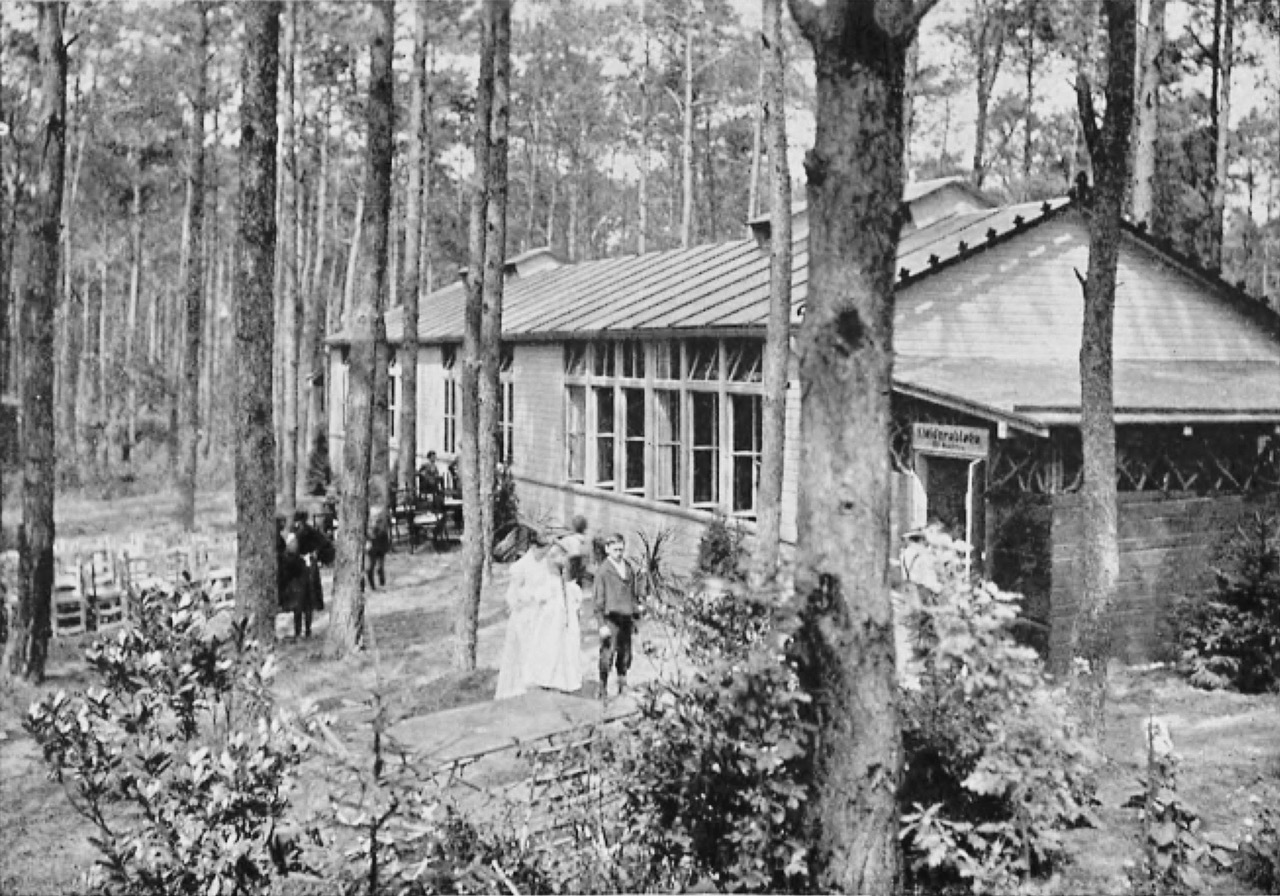
Public Health · Open-Air SchoolsThe fresh-air idea did not stay inside hospitals. In 1904 a school opened in a pine wood outside Berlin for children thought to be at risk of tuberculosis, and the model spread quickly; Providence, Rhode Island, opened an American version in 1908, and within twenty years hundreds of open-air schools were running across Europe and North America. Lessons were held outdoors, or indoors in rooms whose windows never closed. Pupils wore sitting-out bags against the cold, ate supervised meals, rested on cots at midday, and were weighed regularly to prove the method worked. Some of it was sound, since crowded unventilated classrooms really do spread infection and better ventilation lowers the transmission of airborne disease. But the enthusiasm ran ahead of the evidence. Children were labeled delicate on thin grounds, poverty was treated as a medical condition, and gains that came mostly from regular meals were credited to the cold. A confident movement can outrun its own proof.
Visual AidThe first school with no walls
Photograph published in 1904 of the forest school for sickly children at Charlottenburg, in the pine woods outside Berlin — the first school of its kind, and the one the Knowledge Bank names. Notice what a school built on this theory looks like: timber pavilions, banks of windows, and furniture standing outdoors among the trees. It is a magazine halftone, so the grain is coarse and no face is readable, and it shows the buildings on one day rather than the lessons, the cots or the weighing that the Knowledge Bank describes. Nothing here proves the method worked.
Waldschule für kränkliche Kinder, Charlottenburg, near Berlin, 1904; published in Berliner Leben, August 1904, Zentral- und Landesbibliothek Berlin. Source: Wikimedia Commons, File:Charlottenburg waldschule fuer kraenkliche kinder 1904-1.png, public domain.
Picture a walled garden in the last week of a Yorkshire spring, so thick with green that the wall itself has almost disappeared. Three children are inside it, and one of them has spent his whole life being carried. Then a head comes up over the top of the wall — an old gardener on a ladder, purple with fury, demanding to know what a girl is doing in a place that has been locked for ten years. He stops mid-shout. He has seen the boy in the chair, and what comes out of his mouth next is ten years of village gossip about a crippled child with a crooked back. It is not meant to wound, and it does what a decade of doctors and nurses could not. The coverings go on the grass. Two children take an arm each. And a boy who has been told all his life that his back is crooked stands up straight on the grass and orders a grown man to look at him. Part 6 is the hinge of the whole novel — and what follows is stranger still, because the children decide that whatever is happening to them must be studied like a science, and they invent a daily ceremony to do it.
Original passage written for Garden Heights — not a quotation from the novel.
1Claim: “In Part 6, Colin’s recovery is driven by anger and effort, not by rest.” — choose the two details that best prove it.Claim & Evidence
2Real physical work, or Ritual and belief? Tap each detail to send it left or right.Sort into two
◄ Real physical workRitual and belief ►
3Match each cause to its result. For each cause, pick its result.Cause & Effect
Ben’s face appears over the wall→
Colin stands and orders Ben to look→
Ben is let in through the garden door→
Colin calls the Magic an experiment→
🧠Knowledge Bank question
4Fill both blanks to complete the reasoning.Build the Argument
The Knowledge Bank explains that the open-air schools deserve some credit because , and yet the movement went wrong because .
Part 5
Standardized Test
The Open-Air Cure · Reading & Vocabulary · SAT & TOEFL-style practice
Read the passage — the highlighted words are tested — then answer. Tap an answer, then tap it again to confirm.
SATCentral Ideas — the passage's main point
SATInference — a conclusion the passage implies
SATAuthor’s Purpose — what the author wants to achieve
SATWords in Context — a word's meaning in this passage
TOEFLFactual Information — a fact stated in the passage
TOEFLProse Summary — the three sentences that sum it up
TOEFLVocabulary — a tested word's meaning here
The Open-Air Cure
Before antibiotics, doctors facing tuberculosis — a bacterial disease that usually attacks the lungs — had almost nothing to offer but air. In 1854 the German physician Hermann Brehmer opened a mountain rest home where patients lay outdoors for hours a day; Edward Trudeau opened an American version at Saranac Lake in 1885. Such places were called sanatoria: residential hospitals built around rest, heavy meals, and outdoor air. Patients lay wrapped in blankets on open verandas even in winter. The daily routine was fixed to the minute, and doctors called it a regimen.
Sunlight got a branch of the movement to itself. In the Swiss Alps, Auguste Rollier treated tuberculosis of the bones and joints with measured doses of mountain sun, and by the 1920s his clinics were famous across Europe. No experiment had yet shown why the sun sometimes worked. The answer came in the same decade: ultraviolet light on human skin makes vitamin D, which controls how much calcium the body absorbs and how well it builds bone. Rickets, a childhood disease that softens growing bones, was common in smoky cities, and what had been prescribed on instinct turned out to have real chemistry behind it.
The movement also overreached. Fresh air did not cure tuberculosis; streptomycin, the first drug that worked against it, did that after 1944, and the sanatoria emptied within a generation. Cold verandas and long sunbathing sessions were pressed on children who were simply thin or poor, and repeated heavy sun exposure damages skin. Yet the underlying instinct was not foolish: modern trials show that moving patients early after surgery shortens hospital stays, that daylight helps regulate sleep, and that even a modest amount of daily exertion measurably speeds recovery.
Original passage written for Garden Heights — not a quotation from the novel.
1What is the main idea of the passage?SAT · Central Ideas
2According to the passage, sanatoria were ___.TOEFL · Factual Information
3The passage says Auguste Rollier treated tuberculosis of the ___.TOEFL · Factual Information
4The passage suggests the sanatoria emptied after the 1940s because ___.SAT · Inference
5According to the passage, vitamin D controls how the body ___.TOEFL · Factual Information
6Why does the writer mention streptomycin?SAT · Author’s Purpose
7In the passage, regimen most nearly means ___.SAT · Words in Context
8Prose Summary (TOEFL).The passage traces the open-air cure from mountain sanatoria to what modern evidence actually supports. This TOEFL task lists six sentences; choose the THREE that best capture the passage’s main ideas. The other three do not belong — they state minor details or ideas the passage does not present.TOEFL · Prose Summary
9In the passage, experiment most nearly means ___.SAT · Words in Context
10In the passage, exertion most nearly means ___.TOEFL · Vocabulary
Part 6 · Optional
Creative Writing
A bonus challenge to practice your English. Take your time and have fun with it.
About This Section
This writing task is optional and is not part of your auto-graded score. The feedback below checks only the basics — length, spelling, and grammar — not whether your ideas are right or wrong. It is meant for classroom discussion and creative practice, so feel free to use your imagination!
Writing Task — Part 6 “The Thing That Finally Made You Move”
Colin gets to his feet because someone said the wrong thing at the right moment — not because anyone encouraged him. Write about a time when frustration, anger, or being underestimated pushed you to do something you had been avoiding. Describe what was said or what happened, what you did about it, and whether the result lasted. 6–10 sentences. End by saying whether encouragement would have worked better.
You can start with: “Someone said it without meaning to be cruel, and it stuck...”
0 / 40 words minimum
🗣 Teach It · Just for Fun (optional)
No right or wrong — close the screen and tell someone nearby what happened in this part. Can’t find anyone? Tell yourself out loud. The moment you teach it, you truly understand it.
Independent study guide by Garden Heights. Not affiliated with or endorsed by Frances Hodgson Burnett. Contains original analysis only; no text from the novel is reproduced. Reference text: This workbook follows Frances Hodgson Burnett’s classic text (the standard Puffin edition sold worldwide). Revised 2023 UK editions change some wording and may not match the vocabulary studied here.