New here? Just sign up with Google — your account includes Matilda, our gift book, forever.
The Wednesday Wars · Garden Heights
Part 1
for The Wednesday Wars · Part 1 · September and October
8 Parts40 min
What Happens in Part 1
Left alone with his teacher every Wednesday, Holling survives chores, a cream puff disaster, escaped rats, and his first Shakespeare.
The Wednesday problemGary D. Schmidt (author) opens seventh grade at Camillo Junior High on Long Island, where roll call sorts families north and south. Holling Hoodhood fits neither: he lives mid-town in the spotless Perfect House and is Presbyterian. So Wednesday afternoons, when classmates leave for Hebrew school and catechism, he alone remains, costing Mrs. Baker her free time. Certain she hates him, he pounds erasers and washes boards.
The cream puff disasterHis father, who runs Hoodhood and Associates, orders him to cause no trouble while the firm bids to remodel Baker Sporting Emporium, owned by Mrs. Baker's family. Then Holling carries trays of cream puffs, baked by school cook Mrs. Bigio for the Wives of Vietnam Soldiers, and leaves them by open windows. Sent out with erasers, he watches chalk dust drift in and coat every pastry. Mrs. Bigio is humiliated; his father guesses who did it.
Rats and ShylockIn October Mrs. Baker hands him the rat cage holding Sycorax and Caliban, a gift from her husband, Lieutenant Tybalt Baker. Holling panics and lets them loose; they vanish into the coat room, radiators, and ceiling tiles while the custodian and principal chase them, and the principal orders silence. With the cage empty, Wednesday work begins with The Merchant of Venice. Expecting boredom, Holling instead argues that Shylock is a man boxed in by expectations.
The bakery bargainMeanwhile the Emporium job narrows to his father's firm and Kowalski and Associates, and Holling's sister announces she is a flower child, which their father forbids during his award campaign. Short three dollars at Goldman's bakery, Holling is quizzed on Shakespeare, wins half off, and must join a holiday production. The cream puffs finally reach school, where the escaped rats eat every one, and the class rules he still owes them.
What We Will Learn
Section
What you will practice
Vocabulary
School, shame, and a bargain: catechism, resentment, humiliation, commotion, bargain…
Literary Elements
A first-person narrator who exaggerates on purpose, comic hyperbole, and dramatic irony that lets readers see what Holling cannot
Cross-Curricular
Civics and recent history — released time, the Wednesday afternoon that emptied American classrooms, and the draft running underneath the news of 1967
Chapter Summary
Ch.
What happens
September
The Boy Who Stays Behind — On the first day of seventh grade at Camillo Junior High, Mrs. Baker calls the roll and the town divides itself: north side to Hebrew school, south side to catechism. Holling Hoodhood, Presbyterian and living in the middle of town, is the only student left on Wednesday afternoons, and he becomes certain his teacher hates him. Chores follow — erasers, chalkboards, errands — while his father warns him not to endanger the firm’s bid on Baker Sporting Emporium. Then Holling carries Mrs. Bigio’s cream puffs up to the third-floor windows, pounds a box of erasers outside, and watches the chalk dust drift in and settle on every one of them.
October
Rats, Shylock, and a Bakery Bargain — Owing his class a replacement batch of pastries, Holling is first assigned to clean the cage of Mrs. Baker’s rats, Sycorax and Caliban. They escape into the coat room, the radiators, and the ceiling, and Mr. Guareschi orders the whole business kept quiet. Mrs. Baker then starts Wednesday Shakespeare with The Merchant of Venice, and Holling, expecting boredom, argues instead that Shylock is trapped by other people’s expectations. At Goldman’s Best Bakery he is three dollars short until Mr. Goldman tests his Shakespeare and trades a discount for a promise. The rats eat the cream puffs anyway.
Part 1
Vocabulary
Study 10 key words from September and October, then answer each question.
📚Knowledge Bank · Why the Room Emptied
Civics · Church, State, and SchoolHolling is left alone on Wednesday afternoons because of a real American practice called released time. It began in Gary, Indiana, in 1914, when a school district agreed to excuse students for an hour of religious instruction arranged by their own families. The idea spread, and by the late 1940s roughly two million children were being released from class each week. Then the courts stepped in. In 1948 the Supreme Court struck down a program that held religion classes inside public school rooms, ruling that a government school may not lend its own building to any faith. Four years later the same Court approved a New York plan in which students simply walked off campus and came back when the hour ended. That second ruling is why Holling’s classmates head north to a temple and south to a parish church instead of splitting into groups down the hall. Every Wednesday, the front door of his school quietly carries out a decision made by nine judges.
Visual AidHow Wednesday afternoon got its rule
Sequence diagram of the four moments the Knowledge Bank on released time lines up: a district in Gary, Indiana excuses students in 1914; about two million children are being released weekly by the late 1940s; the Supreme Court rejects religion classes held inside school rooms in 1948; and in 1952 it approves a plan where students simply walk off campus. Decades are compressed into four panels, and the many state and local variations are left out. The drawing does not claim to show Camillo Junior High or any real school — it shows why the front door, and not a hallway, is where the class divides.
Released-time religious instruction and the two Supreme Court rulings (1948 and 1952) as summarized in the Knowledge Bank. Drawn for Garden Heights Academy.
catechismn.September
A course of religious instruction, often taught by question and answer
“Half the class walked to the parish church for catechism.”
immaculateadj.September
Perfectly clean and without a single mark
“His father kept the Perfect House immaculate at all times.”
resentmentn.September
A bitter feeling about being treated unfairly
“Holling nursed a quiet resentment every Wednesday afternoon.”
errandn.September
A short trip made to carry or fetch something for someone
“Mrs. Baker sent him on one errand after another.”
humiliationn.September
The shame of being made to look foolish in front of others
“The ruined pastries were a public humiliation for Mrs. Bigio.”
grittyadj.September
Full of tiny hard particles, like sand or dust
“The cream puff he tasted was unmistakably gritty.”
commotionn.October
A noisy, confused disturbance
“The escaped rats caused a commotion in the coat room.”
custodiann.October
A person who cleans and takes care of a building
“Mr. Vendleri, the custodian, arrived with his tools.”
emporiumn.October
A large store that sells many different kinds of goods
“The family owned a sporting goods emporium in town.”
bargainn.October
An agreement in which each side gives something to the other
“Mr. Goldman offered a bargain: a discount for a promise.”
ⓘ The vocabulary words in this list are selected to help you understand and complete this workbook. Some may not appear verbatim in the original novel.
🧠Knowledge Bank question
1According to the Knowledge Bank, why do Holling’s classmates leave the building for catechism and Hebrew school instead of meeting in separate rooms down the hall?September
2A room that is ‘immaculate’ is perfectly clean.September
3‘Resentment’ is a bitter feeling that someone ___.September
4An ‘errand’ is a short trip made ___.September
5Fill in each blank with the correct word.September
Word choices:humiliationgrittyerrandcatechism- some words will not be used
Chalk dust made every pastry to the tongue.
The ruined trays were a public for the cook.
6Something described as ‘gritty’ is full of ___.September
7A ‘commotion’ is a quiet, orderly moment.October
8A ‘custodian’ is a person who ___.October
9Fill in each blank with the correct word.October
Word choices:emporiumbargaincustodianresentment- some words will not be used
The Baker family owned a sporting goods .
Mr. Goldman offered Holling a he could not refuse.
10An ‘emporium’ is a large store selling many kinds of goods.October
Part 2
Comprehension
Show you understood what happens in September and October.
🔍Knowledge Bank · Numbers on the Evening News
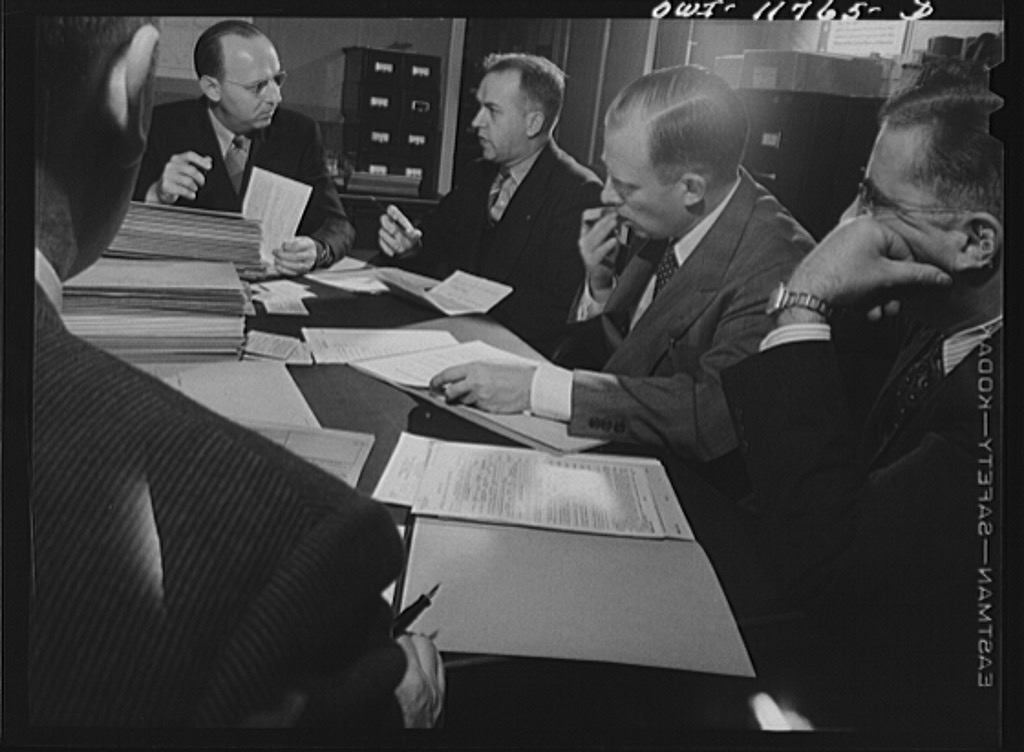
History · The Draft in 1967The cream puffs in Part 1 are baked for a gathering of soldiers’ wives, and that small detail names the largest fact of the year. In 1967 the United States was fighting in Vietnam, and it filled its army partly by conscription — a draft requiring young men to register at eighteen and to serve if called. There was no lottery yet; the birthday drawing did not begin until December 1969. Instead, several thousand local boards of civilian volunteers decided who went, granting deferments for college, for certain jobs, and for family hardship. Roughly 230,000 men were drafted during 1967, and by the end of that year about 485,000 American troops were serving in Vietnam. Three television networks carried the war into living rooms every evening, casualty counts included. For a seventh grader in a comfortable Long Island town, none of this was distant news. It was the reason a woman on his own street watched every day for the mail.
Visual AidThe room where the choosing was done
Photograph of a local Selective Service board in session at Ephrata, Pennsylvania — a banker, a justice of the peace, a hat manufacturer, an attorney and one full-time clerk, working through stacks of forms. This is the machinery the Knowledge Bank on the 1967 draft describes: no lottery yet, just several thousand boards of civilian volunteers deciding who was deferred and who was called. The picture was made in 1942, during the Second World War, because the system in it is the same one still running twenty-five years later; the men shown are not Holling’s neighbors, and the file edge markings come from the original negative.
Local Selective Service Board Number 5, Ephrata, Lancaster County, Pennsylvania, 1942; photograph by Marjory Collins, U.S. Office of War Information, Library of Congress FSA/OWI Collection (digital id fsa.8d10641). Source: Wikimedia Commons, file "Draft Board Number 5" (LC fsa.8d10641), public domain.
🧠Knowledge Bank question
1According to the Knowledge Bank, how were men chosen for military service in 1967?September
2Why does Holling’s father warn him not to annoy Mrs. Baker?September
3Holling lives in a house his father is proud to call perfect.September
4How are the cream puffs ruined?September
5Write the numbers 1–5 in the boxes to show the correct order of events. Number 1 = what happens first.September–October
The escaped rats eat the cream puffs from the bakery box.
Mrs. Baker calls the roll and Holling learns he will stay on Wednesdays.
Holling carries trays of cream puffs up to the classroom windows.
Sycorax and Caliban get loose in the coat room and the ceiling.
Chalk dust from the pounded erasers settles over the pastries.
6Mrs. Baker begins Wednesday Shakespeare with The Merchant of Venice.October
7What does Holling argue about Shylock?October
8How does Holling get the cream puffs he cannot fully afford?October
9Mr. Guareschi wants the news of the escaped rats spread through the school.October
10By the end of October, what do Holling’s classmates decide?October
Part 3
Literary Elements
Understanding HOW and WHY Gary D. Schmidt tells the story across September and October.
🎭Knowledge Bank · A Narrator Who Overstates
Literary Craft · Comic ExaggerationHyperbole is deliberate exaggeration, and it is the engine of Part 1’s comedy. Holling does not report that his teacher seems annoyed; he reports, as settled fact, that she hates him. He treats a box of erasers as a weapon and a Wednesday afternoon as a battlefield. Notice that Gary D. Schmidt (author) never steps in to correct the exaggeration. The novel is narrated entirely by Holling, so the overstatement reaches us straight, and the humor comes from the gap between his enormous language and the ordinary events underneath it. That gap does a second job as well. Hyperbole is how real twelve-year-olds actually experience embarrassment and unfairness — at full volume — so the exaggeration is also honest characterization. When the voice later describes something genuinely serious, the same habit of overstating will make the quieter sentences land with sudden weight.
Hyperbole
Deliberate exaggeration for effect. Holling reports his teacher’s hatred as a settled fact, which is funny precisely because the reader can see it is oversized.
Dramatic Irony
The reader understands something the narrator does not. We can see why a teacher might dread a lost afternoon long before Holling considers it.
First-Person Narration
Holling tells his own story using I and me, so every fact reaches us already colored by a twelve-year-old’s certainty.
🧠Knowledge Bank question
1The Knowledge Bank explains that Holling’s hyperbole is funny because ___.September
2The story is told by Holling himself, using I and me. This is ___.September
3Hyperbole means exaggerating on purpose for effect.September
4Readers can see why a teacher might dread a lost afternoon while Holling cannot. That gap is ___.September
5A first-person narrator can report every other character’s private thoughts.October
6Fill in each blank with the correct literary term.September
Word choices:hyperboleironysettingrhyme- some words will not be used
Calling one afternoon a war is .
Knowing more than the narrator knows is dramatic .
7Which detail most clearly shows Holling’s narration is unreliable about Mrs. Baker?October
8Dramatic irony happens when the reader knows something a character does not.October
9Why does Gary D. Schmidt (author) let Holling exaggerate instead of correcting him?October
10Fill in each blank with the correct literary term.October
Word choices:narratorhyperboleepiloguefootnote- some words will not be used
Holling is the of his own school year.
Treating erasers as weapons is .
Part 4
Think Deeper
Four deeper challenges — no single-word recall. Read, weigh the evidence, and reason it out.
💡Knowledge Bank · A Building Full of Baby Boomers
Education · The Postwar Junior HighCamillo Junior High is a particular kind of school with a particular history. The junior high was invented in the early twentieth century as a bridge, gathering seventh, eighth, and ninth graders into their own building so that older children could change classes and study subjects in more depth without being thrown in with high school seniors. After the Second World War, the design met a wave. The birth rate surged from 1946 onward, and by the mid-1960s that boom had reached adolescence, so districts built quickly: long tiled corridors, banks of radiators, coat rooms, and classrooms sized for two dozen desks. Rooms like Mrs. Baker’s were still chalk-and-eraser rooms, cleaned by hand at the end of the day, which is exactly why a teacher had chores to assign. Understanding the building explains the plot: the trays, the windows, the coat room, and the ceiling tiles are all standard equipment of a crowded suburban school.
Picture a seventh-grade classroom on the third floor of a Long Island junior high in the fall of 1967. It is one o’clock on a Wednesday, and the room is emptying. Half the class walks north to a temple for Hebrew school; the other half walks south to a church for catechism. One boy is still in his seat. He is Presbyterian, he lives in the exact middle of town, and there is nowhere for him to go — which means his teacher has nowhere to go either. Holling Hoodhood does the arithmetic and reaches the only conclusion a twelve-year-old can reach: Mrs. Baker hates his guts. What follows is a war fought with chalkboard erasers, a hospital-quiet coat room, two escaped rats, and a tray of ruined pastries that the whole town hears about by suppertime. Part 1 is a boy convinced he has an enemy, in a year when everyone’s attention is somewhere else entirely.
Original passage written for Garden Heights — not a quotation from the novel.
1Claim: “Part 1 shows that Holling’s reading of Mrs. Baker is wrong from the start.” — choose the two details that best prove it.Claim & Evidence
2Real 1967 background, or Holling’s own trouble? Tap each detail to send it left or right.Sort into two
◄ Real 1967 backgroundHolling’s own trouble ►
3Match each cause to its result. For each cause, pick its result.Cause & Effect
Holling is the only Presbyterian left in the room→
Chalk dust drifts through the open classroom windows→
Holling panics while moving the rat cage→
Mr. Goldman is impressed by Holling’s Shakespeare→
🧠Knowledge Bank question
4Fill both blanks to complete the reasoning.Build the Argument
The Knowledge Bank explains that Mrs. Baker has chores to hand out because , and her building was crowded because .
Part 5
Standardized Test
Released Time in Public Schools · Reading & Vocabulary · SAT & TOEFL-style practice
Read the passage — the highlighted words are tested — then answer. Tap an answer, then tap it again to confirm.
SATCentral Ideas — the passage's main point
SATInference — a conclusion the passage implies
SATAuthor’s Purpose — what the author wants to achieve
SATWords in Context — a word's meaning in this passage
TOEFLFactual Information — a fact stated in the passage
TOEFLVocabulary — a tested word's meaning here
Released Time in Public Schools
For much of the twentieth century, an American school week could pause in the middle. Under a plan known as released time, a school district excused students for an hour or two of religious instruction arranged by their families, then took them back. The practice began in Gary, Indiana, in 1914, when a superintendent struck a bargain with local churches and synagogues, letting them teach children during school hours. Taking part was always voluntary, and the school itself taught nothing about religion, but the timetable bent around it.
The arrangement spread, and by the late 1940s about two million students were leaving class for it each week. Its legality reached the Supreme Court twice. In 1948 the justices struck down a program in Champaign, Illinois, because the religion classes met inside public school rooms; a secular government, the Court held, may not hand its own classrooms to religious teachers. Four years later the Court examined a New York City plan in which students walked off school grounds for their lessons, and let it stand. The difference between the two rulings was a doorway.
After 1952, released time survived by moving off campus, and in many towns Wednesday afternoon became the chosen hour. Catholic children walked to a parish church for catechism, Jewish children to a synagogue for Hebrew school, and children of other faiths, or of none, stayed behind with whichever teacher was assigned. The custom was widespread enough in the 1960s that a classroom could shrink to a handful of students, or even to one, and the few who stayed sometimes nursed a quiet resentment about being left. It has faded a great deal since then, though a few districts still excuse students this way today.
Original passage written for Garden Heights — not a quotation from the novel.
1What is the main idea of the passage?SAT · Central Ideas
2According to the passage, where did released time begin?TOEFL · Factual Information
3About how many students were leaving class for released time by the late 1940s?TOEFL · Factual Information
4Why did the Court strike down the Champaign program in 1948?TOEFL · Factual Information
5It can be inferred from the passage that the New York plan survived because ___.SAT · Inference
6Why does the author end the second paragraph by mentioning a doorway?SAT · Author’s Purpose
7According to the passage, what did children who did not take part do?TOEFL · Factual Information
8As used in the passage, voluntary most nearly means ___.SAT · Words in Context
9In the passage, bargain most nearly means ___.TOEFL · Vocabulary
10In the passage, resentment most nearly means ___.TOEFL · Vocabulary
Part 6 · Optional
Creative Writing
A bonus challenge to practice your English. Take your time and have fun with it.
About This Section
This writing task is optional and is not part of your auto-graded score. The feedback below checks only the basics — length, spelling, and grammar — not whether your ideas are right or wrong. It is meant for classroom discussion and creative practice, so feel free to use your imagination!
Writing Task — Part 1 “The Afternoon Everyone Else Left”
Holling is the one person still in the room when everybody else has somewhere to go, and he decides that means the adult in charge must hate him. Write about a time you were the one left out, left behind, or left over — or a time you were sure someone disliked you and later found out you had read them wrong. Describe what you believed, what you did about it, and what actually turned out to be true. 6–10 sentences. End with what changed your mind, or what would have.
You can start with: “Everyone else had somewhere to be, and I did not...”
0 / 40 words minimum
🗣 Teach It · Just for Fun (optional)
No right or wrong — close the screen and tell someone nearby what happened in this part. Can’t find anyone? Tell yourself out loud. The moment you teach it, you truly understand it.
Part 1 Complete!
You finished September and October of The Wednesday Wars.
Independent study guide by Garden Heights. Not affiliated with or endorsed by Gary D. Schmidt. Contains original analysis only; no text from the novel is reproduced. Reference text: This workbook follows Gary D. Schmidt’s classic text (the standard Puffin edition sold worldwide). Revised 2023 UK editions change some wording and may not match the vocabulary studied here.