New here? Just sign up with Google — your account includes Matilda, our gift book, forever.
The Wednesday Wars · Garden Heights
Part 3
for The Wednesday Wars · Part 3 · December
8 Parts40 min
What Happens in Part 3
Cast as Ariel in yellow tights, Holling discovers that a hero can disappoint and a teacher can rescue.
Cast as ArielDecember opens in ordinary misery: a week of standardized tests, holiday decorations everywhere, and Mrs. Baker quietly refusing every wreath colleagues offer. Then the month tilts. Mr. Goldman, baker and director of the Long Island Shakespeare Company, casts Holling as Ariel in a holiday Tempest, and the costume waiting for him is bright yellow tights with white feathers sewn across the seat.
Rehearsing the partHolling begs to be released. His father refuses, calculating what the appearance is worth to the family business; his sister Heather objects only for her own high-school reputation. So Holling rehearses, telling classmates Ariel is a warrior and spreading a rumor that the show runs for hours. Mrs. Baker works his lines with him after school, telling him to keep every speech balanced on a knife's edge. Somewhere in rehearsal the embarrassment becomes a spirit desperate for freedom.
Curtain callMrs. Baker has announced that Mickey Mantle will sign baseballs at Baker Sporting Emporium on performance day, the only thing keeping Holling upright. His parents drop him at the theater and drive home for a television special. At the curtain call he sees Danny Hupfer, Meryl Lee, and Mai Thi crying in the front row, Danny having surrendered his place in the Mantle line to stay.
Repaired by a teacherThe boys race across town, Holling still in feathers, and reach the counter in time. Mantle refuses to sign for a boy dressed like that; Danny leaves his own signed ball behind and walks out beside his friend. A bus driver hands Holling a new baseball. Mrs. Baker then brings Yankees Joe Pepitone and Horace Clarke to throw with the boys, and Pepitone leaves his jacket on Holling's shoulders. Doug discards the note he was saving. Macbeth comes next.
What We Will Learn
Section
What you will practice
Vocabulary
Stages, nerves, and loyalty: extravaganza, rehearsal, mortified, anguish, gratitude…
Literary Elements
Allusion — a boy in tights carrying a four-hundred-year-old part — plus situational irony when the idol disappoints and the enemy rescues, and characters used as foils for one another
Cross-Curricular
Theater production — how a script becomes a performance through casting, blocking, rehearsal, and costume, from the all-male companies of Shakespeare’s London to a community stage on Long Island
Chapter Summary
Ch.
What happens
December · The Announcements
Tests and Tinsel — Mr. Guareschi announces a week of standardized tests and the building fills with holiday decorations, all of which Mrs. Baker refuses for her own room. She also tells the class that Mickey Mantle will be signing baseballs at Baker Sporting Emporium — news that turns every seventh grader in the room into a planner.
December · The Costume
Yellow Tights — Mr. Goldman casts Holling as Ariel in a holiday production of The Tempest, and the costume is bright yellow tights with white feathers across the seat. Holling pleads to be let out of it. His father sees a chance to please a local businessman, and Heather objects only on behalf of her own reputation, so the answer is no.
December · The Coaching
On a Knife’s Edge — Holling calls Ariel a warrior when his classmates ask, and spreads a rumor that the show runs for hours so that nobody will come. Meanwhile Mrs. Baker drills him after school, telling him to keep every line balanced on a knife’s edge — and the part quietly stops being a costume and starts being a character.
December · The Performance
The Front Row — Holling’s parents drop him at the theater and go home to watch a television Christmas special. He gets through the play convinced no one he knows is out there, until the curtain call shows him Danny Hupfer, Meryl Lee Kowalski, and Mai Thi in the front row, in tears — Danny having sacrificed his place in the Mantle line.
December · The Emporium
A Hero Up Close — The boys race across town with Holling still in feathers and reach the signing table in time. Mickey Mantle looks at the yellow tights, says he does not sign for boys dressed that way, and turns away. Danny leaves his own signed ball behind and walks out with Holling; on the bus a driver hands over a new ball and a Merry Christmas.
December · The Repair
What a Teacher Can Fix — Mrs. Baker produces new equipment and brings Yankees Joe Pepitone and Horace Clarke out to throw with Holling, Danny, and Doug Swieteck, and Pepitone leaves his jacket with Holling. Doug throws away the Number 166 note he had been hoarding, and Mrs. Baker sets Macbeth for January.
Part 1
Vocabulary
Study 10 key words from December, then answer each question.
🧥Knowledge Bank · What a Costume Says
Theater Design · CostumeA costume is an argument the audience settles before a single word is spoken. Designers start by asking what a character is rather than what the character wears: a spirit of air needs a silhouette — the outline a body makes against the light — that looks lighter than a human being, so the design reaches for close-fitting cloth, pale colors, and feathers that keep moving after the actor stops. Every choice also has to survive use. Stage fabric is picked for how it behaves under hot lamps and how fast it can come off during a quick-change, the thirty-second swap made in the dark just offstage. Color is chosen for distance, because a shade that reads as elegant up close can vanish from the back row. That is the trouble with the tights Holling is handed. Onstage the yellow works exactly as designed; on a public bus, surrounded by people who never bought a ticket, the same costume becomes pure humiliation.
extravaganzan.December
A large, showy entertainment put on for a crowd
“The theater company advertises its holiday extravaganza all over town.”
tempestn.December
A violent windstorm
“The play opens with a tempest that wrecks a ship against an island.”
rehearsaln.December
A practice run of a play, held before any audience sees it
“Holling learns the part slowly, one long rehearsal at a time.”
mortifiedadj.December
So embarrassed that a person wants to disappear
“Holling is mortified by the feathers stitched across the seat of his tights.”
anguishn.December
Severe pain of the mind or heart
“The thought of his friends in the audience fills Holling with anguish.”
cuen.December
The signal that tells an actor exactly when to speak or move
“Holling waits in the wings for the cue that sends him onstage.”
dignityn.December
Calm self-respect that other people can see
“Danny walks out of the store with more dignity than the famous man behind the counter.”
loyaltyn.December
Faithful support that does not quit when it costs you
“Giving up his place in line is Danny’s plainest act of loyalty.”
idoln.December
A person admired so much that admiration becomes worship
“Meeting his idol in person turns out to be the worst part of the day.”
gratituden.December
The feeling of being thankful for what someone did
“Holling can barely speak his gratitude when the bus driver hands over the ball.”
ⓘ The vocabulary words in this list are selected to help you understand and complete this workbook. Some may not appear verbatim in the original novel.
🧠Knowledge Bank question
1According to the Knowledge Bank, why do the yellow tights that work perfectly onstage leave Holling mortified on a public bus?December
2A ‘tempest’ is a violent windstorm.December
3Someone who is ‘mortified’ feels ___.December
4Fill in each blank with the correct word.December
Word choices:rehearsalanguishgratitudetempest- some words will not be used
The play opens with a that wrecks a ship.
Holling learns his lines one long at a time.
5In a theater, a ‘cue’ is ___.December
6‘Anguish’ means a light, passing annoyance.December
7A person’s ‘idol’ is someone he or she ___.December
8Fill in each blank with the correct word.December
Word choices:loyaltydignityidolcue- some words will not be used
Danny gives up his place in line out of to his friend.
He walks out of the store with his intact.
9‘Gratitude’ is the feeling of ___.December
10Someone with ‘dignity’ keeps a calm kind of self-respect.December
Part 2
Comprehension
Show you understood what happens in December.
🧠Knowledge Bank · Learning It by Heart
Cognitive Science · MemoryActors do not memorize a script the way students memorize a list. Research on memory shows that words attached to movement and intention stick far better than words alone, an effect psychologists call enactment — the memory boost that comes from physically doing something while learning it. That is why rehearsal happens on foot. An actor crossing to a window while speaking ties the line to a place, a step, and a reason, so recall arrives through the body rather than through effort. Actors also work in chunks, learning a speech as a chain of thoughts, each one triggered by the last few words another character says. That trigger is why a forgotten line usually returns the instant somebody feeds the phrase just before it. Mrs. Baker’s after-school drilling is exactly this kind of practice, and it explains why Holling ends up understanding Ariel more deeply than any silent reader could. He did not study the part. He simply rehearsed.
Visual AidHow a line gets into an actor
Sequence diagram of the contrast the Knowledge Bank on memory draws: silent reading leaves words alone on a page, while rehearsal on foot ties each chunk to a cue, a step and a reason, so the line comes back through the body. Four stages stand in for a process that is messier and much more repetitive than this, and the drawing does not claim that reading silently teaches nothing. Notice where the chain starts — not with the actor’s own line, but with somebody else’s last few words.
Enactment effects and cue-chained chunking in actors’ memory, as described in the Knowledge Bank and in research on memory for text. Drawn for Garden Heights Academy.
🧠Knowledge Bank question
1The Knowledge Bank explains that actors rehearse on their feet because ___.December
2Why does Holling’s father refuse to let him quit the play?December
3Holling spreads a rumor that the play lasts for hours so his classmates will stay away.December
4What advice from Mrs. Baker finally unlocks the role for Holling?December
5Write the numbers 1–5 in the boxes to show the correct order of events. Number 1 = what happens first.December
Danny, Meryl Lee, and Mai Thi turn up in the front row in tears.
Mickey Mantle refuses to sign a ball for a boy in tights.
Mrs. Baker announces the Mickey Mantle signing at the sporting store.
Holling is handed yellow tights with feathers and told he cannot quit.
Joe Pepitone leaves his jacket with Holling after a throwing session.
6Holling’s parents stay to watch the whole performance.December
7What does Danny Hupfer give up in order to watch the play?December
8How does Mickey Mantle react to Holling at the store?December
9A bus driver gives Holling a brand-new baseball on the way home.December
10How does Mrs. Baker repair the damage Mantle does?December
Part 3
Literary Elements
Understanding HOW and WHY Gary D. Schmidt tells the story across December.
📜Knowledge Bank · Half a Play on Paper
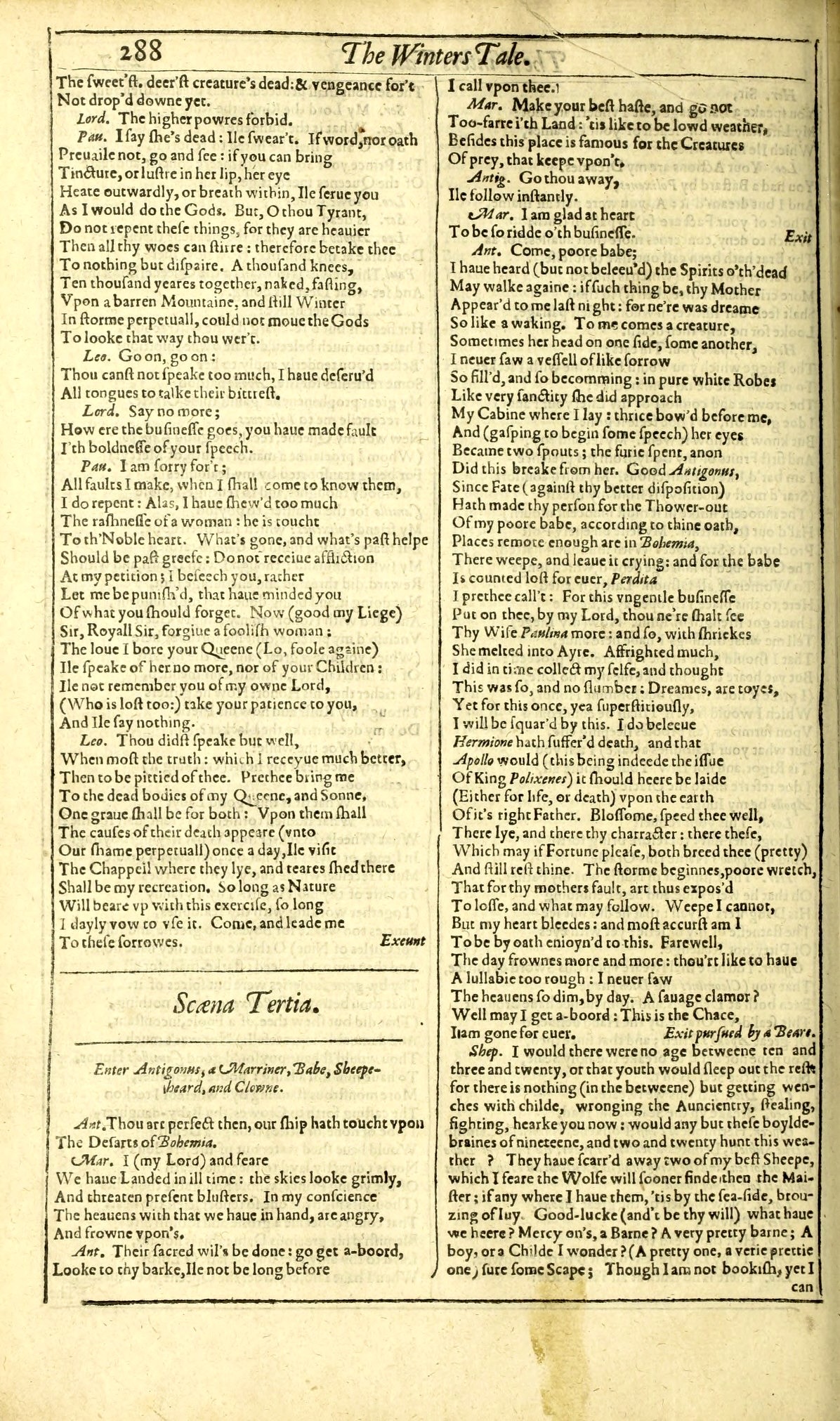
Literary Craft · Dramatic TextA printed play is deliberately incomplete. Shakespeare gave his companies speech and almost nothing else: the earliest texts carry only a scattering of stage directions, no descriptions of faces, no notes on tone. Everything a novelist would state outright must instead be supplied by performers as subtext — the intention running underneath a line, which the words alone never fix. One sentence can be delivered as a plea, a threat, or a joke, and each choice rewrites the scene around it. Editors of modern editions add most of the directions readers now see; the phrase telling one character to exit pursued by a bear is famous precisely because such notes are so rare. Gary D. Schmidt (author) builds the whole month out of that gap. Holling reads Ariel as an insult until Mrs. Baker makes him try the lines as something poised and dangerous, and suddenly a costume he hated contains a prisoner begging for release. Nothing on the page changed. What changed was the choice.
Visual AidA stage direction, printed at last
Photograph of page 288 of a seventeenth-century folio of Shakespeare’s collected plays, open at The Winter’s Tale. Look at the right column: the speech ends and a single italic line says the character exits pursued by a bear. That is the whole direction — and it is famous, the Knowledge Bank on dramatic text points out, precisely because such notes are so rare. Everything else on this page is speech. No faces, no tones, no stage business; the performers supplied all of it. The scan is of an early folio, not of the 1623 first edition, and the page is not from The Tempest, the play Holling is made to read.
Page 288 of an early folio of Shakespeare’s collected plays, The Winter’s Tale, Act III Scene 3, showing the direction “Exit pursued by a Beare”; scan via the Internet Archive. Source: Wikimedia Commons, File:Shakespeare First Folio - The Winter's Tale - Act III Scene 3 - Exit pursued by a bear.jpg, public domain.
Allusion
A reference to another well-known work — the whole month leans on The Tempest, and Holling’s life keeps rhyming with the part he plays.
Situational Irony
The opposite of what everyone expects — the baseball hero turns cruel while the teacher Holling believed hated him turns rescuer.
Foil
A character placed beside another to sharpen the contrast — Danny’s loyalty makes Mantle’s coldness impossible to miss.
🧠Knowledge Bank question
1According to the Knowledge Bank, why is the famous stage direction about a bear so well known?December
2The baseball hero turning cruel while the feared teacher turns kind is ___.December
3An allusion is a reference to another well-known work or figure.December
4Danny’s loyalty set beside Mantle’s coldness makes Danny ___.December
5Fill in each blank with the correct literary term.December
Word choices:allusionfoilstanzarhyme- some words will not be used
Every mention of Ariel and Prospero works as an .
Danny stands beside Mantle in the story as a .
6Situational irony means events turn out just the way everyone predicted.December
7Holling saying the whole world will see the feathers is an example of ___.December
8A foil is a character who is nearly identical to the hero in every way.December
9Ariel’s longing for freedom mirroring Holling’s own life is ___.December
10Fill in each blank with the correct literary term.December
Word choices:ironyhyperboleallusionfoil- some words will not be used
Saying everyone alive will see him is .
The cruel idol and the kind teacher create .
Part 4
Think Deeper
Four deeper challenges — no single-word recall. Read, weigh the evidence, and reason it out.
🗣Knowledge Bank · Why Speaking It Teaches It
Performance Studies · Text and VoiceReading a play silently and speaking it aloud are two different acts of understanding. A silent reader can skate over a sentence whose meaning is unsettled; a performer cannot, because every line must be given a speed, a volume, and an intention before it can leave the mouth at all. Shakespeare’s verse makes those decisions physical. His usual line runs on five soft-strong beats, a pattern called iambic pentameter, so a speech tells an actor where the breath falls and which syllables carry weight before anyone discusses meaning. Studies of classroom performance find the same result again and again: students who stage scenes recall more of the language and read difficult passages with more confidence than students who only annotate them. Holling is the demonstration. He learns what captivity and release feel like not by studying Ariel but by standing in the wings and saying the words aloud.
A boy stands in the wings of a community theater in bright yellow tights with white feathers stitched across the seat, waiting for the line that will send him onstage. He has spent two weeks praying that nobody he knows buys a ticket. He has even started a rumor that the show runs for hours, hoping to scare his friends away. Across town, on the same afternoon, the greatest name in baseball is signing balls at a sporting goods store, and every seventh grader in Camillo Junior High means to be in that line. In December, Holling Hoodhood discovers two things on the same day. The first is that a part he was humiliated to accept can hold him so completely that strangers cry in the front row. The second is that heroes printed on a baseball card can turn out small in person, while a friend who gives up his place in line, a bus driver with a spare ball under the dashboard, and a teacher nobody thought was on his side can turn out enormous.
Original passage written for Garden Heights — not a quotation from the novel.
1Claim: “In December, the people who act most honorably are not the ones Holling expected to admire.” — choose the two details that best prove it.Claim & Evidence
2Belongs to the play, or Belongs to the baseball day? Tap each detail to send it left or right.Sort into two
◄ Belongs to the playBelongs to the baseball day ►
3Match each cause to its result. For each cause, pick its result.Cause & Effect
Holling is handed yellow tights with feathers→
Mrs. Baker coaches him to stay on a knife’s edge→
Danny gives up his place in the signing line→
Mickey Mantle refuses to sign for a boy in tights→
🧠Knowledge Bank question
4Fill both blanks to complete the reasoning.Build the Argument
The Knowledge Bank explains that speaking a line teaches more than reading it because , and the verse itself helps because .
Part 5
Standardized Test
From Page to Stage · Reading & Vocabulary · SAT & TOEFL-style practice
Read the passage — the highlighted words are tested — then answer. Tap an answer, then tap it again to confirm.
SATCentral Ideas — the passage's main point
SATInference — a conclusion the passage implies
SATAuthor’s Purpose — what the author wants to achieve
SATWords in Context — a word's meaning in this passage
TOEFLFactual Information — a fact stated in the passage
TOEFLVocabulary — a tested word's meaning here
From Page to Stage
A play script is an unfinished thing. Shakespeare handed his company the words his characters speak and little else, so the look of a storm and the space between two bodies onstage had to be invented by the performers. Turning that skeleton into an evening of theater follows an order that has barely changed in four hundred years. It begins with casting, when a director watches actors audition and decides which voice belongs to which role. Almost nothing about the set or the costumes is settled until the cast is chosen.
Rehearsals come next, and they are far less glamorous than outsiders imagine. Early sessions are spent on blocking, the mapped-out pattern of where each actor stands, walks, and turns, while the words are still being learned. Actors repeat their lines aloud until the rhythm settles into the body, and a director may spend an hour on a single ambiguous sentence that could be delivered three different ways. Each speech is also learned by its cue, the words from another actor that tell a performer to begin. Costumes and lighting usually arrive last, during a frantic stretch that theater people call technical rehearsal.
Only an audience finishes the job. A costume that looked preposterous under bare work lights, and left its wearer mortified, can turn believable once a story is running, and a joke worn out in rehearsal can suddenly land. This is why teachers urge students to perform Shakespeare instead of only reading him, because speaking a line forces choices a silent reader never has to make. Reading a play tells you what happens; performing it tells you what the words weigh. Directors often call opening night the evening a production finally learns what it is.
Original passage written for Garden Heights — not a quotation from the novel.
1Which sentence best states the main idea of the passage?SAT · Central Ideas
2According to the passage, a production begins with ___.TOEFL · Factual Information
3The passage defines blocking as the pattern of ___.TOEFL · Factual Information
4According to the passage, costumes and lighting usually arrive ___.TOEFL · Factual Information
5It can be inferred that two actors could read the same line and ___.SAT · Inference
6Why does the author mention a joke worn out in rehearsal that suddenly lands?SAT · Author’s Purpose
7The passage suggests that a silent reader of a play ___.SAT · Inference
8As used in the passage, ambiguous most nearly means ___.SAT · Words in Context
9In the passage, cue most nearly means ___.TOEFL · Vocabulary
10In the passage, mortified most nearly means ___.TOEFL · Vocabulary
Part 6 · Optional
Creative Writing
A bonus challenge to practice your English. Take your time and have fun with it.
About This Section
This writing task is optional and is not part of your auto-graded score. The feedback below checks only the basics — length, spelling, and grammar — not whether your ideas are right or wrong. It is meant for classroom discussion and creative practice, so feel free to use your imagination!
Writing Task — Part 3 “The Costume You Did Not Choose”
Holling is handed a role he never asked for and a costume he is sure will ruin him — and then discovers, somewhere in rehearsal, that the part fits him better than he wanted to admit. Write about a time you were pushed into something you were embarrassed by or certain you would fail: a performance, a team, a job, a class. Describe exactly what you dreaded, what actually happened, and what you learned that you could not have learned by staying out of it. 6–10 sentences. End with the one thing you would tell someone standing where you stood.
You can start with: “I was sure it would be a disaster when...”
0 / 40 words minimum
🗣 Teach It · Just for Fun (optional)
No right or wrong — close the screen and tell someone nearby what happened in this part. Can’t find anyone? Tell yourself out loud. The moment you teach it, you truly understand it.
Independent study guide by Garden Heights. Not affiliated with or endorsed by Gary D. Schmidt. Contains original analysis only; no text from the novel is reproduced. Reference text: This workbook follows Gary D. Schmidt’s classic text (the standard Puffin edition sold worldwide). Revised 2023 UK editions change some wording and may not match the vocabulary studied here.