
New here? Just sign up with Google — your account includes Matilda, our gift book, forever.
What Happens in Part 5
Now the stories tip fully into the surreal — the strange, dreamlike, impossible. First, Jenny drinks prune juice and, oddly, begins to read a story completely in reverse, back to front. Then a substitute teacher arrives while Mrs. Jewls is away, and the whole class plays a marvelous trick: every single student claims to be named Benjamin, throwing the poor substitute into total confusion. Finally comes the most famous impossibility of all. Allison somehow ends up in the classroom on the nineteenth floor — the floor that does not exist — taught by Miss Zarves, the teacher who is not real. There she is trapped in endless, pointless busywork until she finds a clever way to escape back to the world that makes sense. These chapters are pure fantasy, bending the rules of reality into a wonderful, dreamlike knot.
What We Will Learn
Focus
What It Means
Surrealism & Fantasy
Reality bending into a dreamlike knot
The Unreal Made Real
Allison’s trip to the impossible nineteenth floor
A Classic Prank
Every student claiming to be Benjamin
Chapter Summary
Chapter
Key Events
Ch. 17–19
Jenny drinks prune juice and begins reading a story in reverse; the class fools a substitute teacher by all claiming to be named Benjamin; and Allison is trapped in the impossible nineteenth-floor classroom of the unreal Miss Zarves, doing endless busywork until she escapes
💭 Before You Read · Warm-Up (not scored)
There are no wrong answers here — just think, guess, and talk:
Allison ends up in a classroom that does not exist, taught by a teacher who is not real. Why can impossible, dreamlike events be so fascinating to read?
The class fools the substitute by all claiming to be Benjamin. Why do you think a class enjoys pulling a trick like that together?
Predict: Allison escapes the unreal nineteenth floor. How do you think the strange rules of that place might work?
Copyright Notice
This is an independent study guide created by Garden Heights Academy to support reading comprehension and literary analysis. It contains original analysis questions and does not reproduce any text from the novel. Wayside School Is Falling Down is a work by Louis Sachar. This guide is not affiliated with, authorized by, or endorsed by the author or any associated rights holder.
Part 1
Vocabulary
Study 10 key words from Chapters 17–19, then answer each question.
🧠Knowledge Bank · How Sound Reaches You
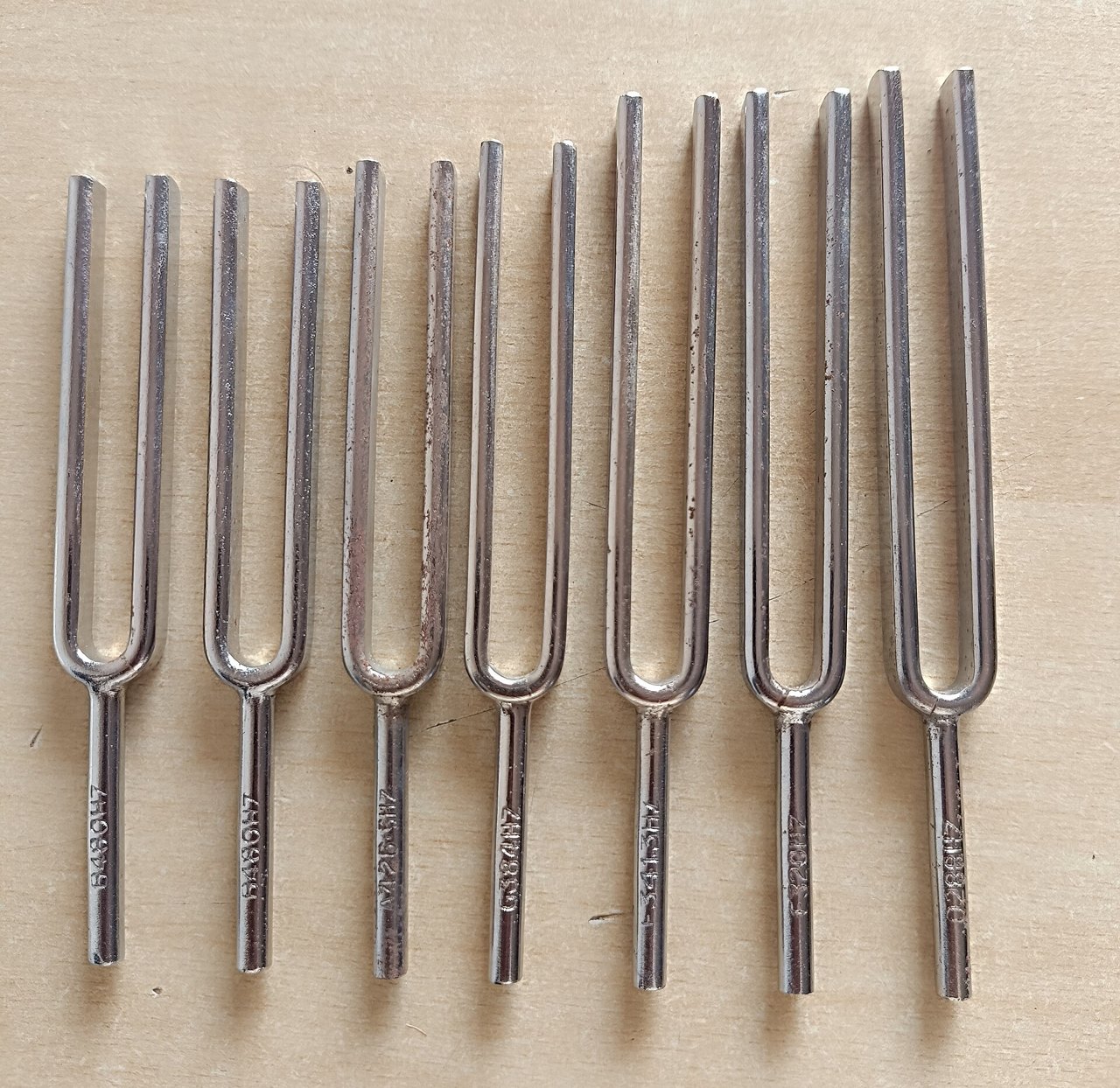
Physics of Sound · Vibration and MusicWayside is a loud place: bells, voices and a classroom full of racket. All of it is real physics. A sound begins when something vibrates, and the shaking spreads outward through the air as waves of squeezed and stretched air until it reaches the tiny drum inside your ear. Vibrations that arrive jumbled and random we call noise; vibrations that follow a steady pattern of beats and pitches we call music. So the difference between a lovely tune and an unbearable din is really a matter of order, the same pattern-making that lives inside mathematics. Sound explains something small and sad here as well, because a voice can be buried under a big enough wave of noise. Listening for the pattern under a sound is a lifelong skill.
reluctantadj.Ch.17
Not wanting to do something
“Jenny is reluctant to drink prune juice.”
prunen.Ch.17
A dried plum
“Her mother makes her drink prune juice.”
queasyadj.Ch.17
Feeling sick in the stomach
“She arrives late and queasy.”
substituten.Ch.18
A teacher filling in for another
“A gentle substitute comes to class.”
gentleadj.Ch.18
Soft and kind in manner
“The substitute is gentle and patient.”
claimv.Ch.18
To say something is true or yours
“Everyone claims to be Benjamin.”
sillyadj.Ch.19
Foolish and giggly
“Allison gets a bad case of the sillies.”
vanishv.Ch.19
To disappear completely
“Allison seems to vanish from the room.”
invisibleadj.Ch.19
Unable to be seen
“She becomes invisible to her class.”
nonexistentadj.Ch.19
Not existing; not real
“The nineteenth floor is nonexistent.”
1Someone ‘reluctant’ is —Ch.17
2A ‘substitute’ teacher is one who —Ch.18
3Fill in each blank with the correct word.Chs. 17–19
Word choices:prunequeasygentleclaim- some words will not be used
At breakfast, Jenny’s mother makes her drink juice.
By the time she reaches class, Jenny feels quite .
4Someone ‘gentle’ is —Ch.18
5Something ‘silly’ is foolish and giggly.Ch.19
6To ‘claim’ something is to —Ch.18
7Fill in each blank with the correct word.Chs. 17–19
Word choices:vanishinvisibleprunegentle- some words will not be used
In her fit of the sillies, Allison seems to from the room.
To her classmates she becomes completely .
8Something ‘nonexistent’ is —Ch.19
9To feel ‘queasy’ is to feel —Ch.17
10Being ‘reluctant’ means being eager and glad to do something.Ch.17
Part 2
Comprehension
How well do you understand Chapters 17–19?
🧠Knowledge Bank · When the Rules Change
Reading Skill · Tracking Story RulesUntil now this book has been silly but broadly possible. Here it tips over into the genuinely strange, and a careful reader notices the moment a story changes its own rules. Jenny reads an entire tale backward. A girl walks into a classroom on a floor the building does not have, taught by someone the school insists is not there. These are not exaggerations of ordinary life; they are impossible, and impossibility asks for a different kind of attention. The missing nineteenth story was a passing joke in the earlier book, and now it opens into a full strange adventure, a reward for anyone who remembered. Keep asking how far an event bends reality, and the strangest chapters stop being confusing and start being fantasy.
1Why does Jenny arrive at class feeling awful?Ch.17
2What word does dazed Jenny keep repeating?Ch.17
3What does Benjamin finally do in ‘The Substitute’?Ch.18
4How do the other students ruin Benjamin’s moment?Ch.18
5Write the numbers 1–5 in the boxes to show the correct order across Part 5. Number 1 = what happens first.Chs. 17–19
A gentle substitute teacher arrives.
Allison gets the sillies and vanishes to the 19th floor.
Jenny arrives late and queasy, saying ‘What?’
The whole class claims to be Benjamin Nushmutt.
Jenny is made to drink prune juice at breakfast.
6What happens to Allison in ‘A Bad Case of the Sillies’?Ch.19
7What is strange about the classroom Allison reaches?Ch.19
8Why is Benjamin’s honest moment especially frustrating for the reader?Ch.18
9The substitute easily learns exactly which student is the real Benjamin.Ch.18
10With Allison’s chapter, the book turns from ordinary silliness toward real fantasy.Ch.19
Part 3
Literary Elements
Understanding HOW and WHY Louis Sachar tells the story across Chapters 17–19.
🧠Knowledge Bank · When Reality Bends
Literary Craft · The SurrealThe surreal is a special flavor of fantasy in which the ordinary rules of the world quietly dissolve, the way they do in dreams. Exaggeration only makes things bigger; surreal writing makes them impossible, and does it calmly, never pausing to apologize or explain. A story told from its last word back to its first, a corridor leading somewhere no corridor could go, a class nobody outside can find: none of it is accounted for, and that refusal is the point. Even so, a dream has its own logic, and so does this one, with events following each other by a floating, sideways sense that feels right while you are inside it. Surreal stories free the imagination completely, and their pleasure lies in surrender.
📚 Literary Devices in This Part · definitions & examples
Dramatic irony is when the reader knows something a character does not (we know Benjamin’s real name). Fantasy is a story with impossible, magical elements (a floor that does not exist). A running gag is a joke repeated across the book — Benjamin’s name again.
1We know Benjamin’s real name while the substitute does not. This is —Ch.18
2Dramatic irony is when the reader knows something a character does not.Ch.18
3Fill in each blank with the correct word.Chs. 17–19
Word choices:dramatic ironyfantasyrhymeindex- some words will not be used
Knowing the truth the teacher misses gives us .
A classroom that cannot really exist is a mark of .
4A story with a floor that cannot exist and a teacher who is not real is —Ch.19
5Benjamin’s ever-blocked name is a running gag that returns yet again here.Ch.18
6Fill in the blank with the correct word.Chs. 17–19
Word choices:running gagrhymesetting- some words will not be used
Benjamin’s name, blocked again and again, is the book’s best .
7Why does dramatic irony make the prank scene stronger?Ch.18
8The shift to the impossible 19th floor changes the book’s —Ch.19
9Fill in the blank with the correct word.Chs. 17–19
Word choices:fantasyrhymeplot- some words will not be used
A nonexistent floor and an unreal teacher belong to the world of .
10Dramatic irony mostly makes the reader feel —Ch.18
Part 4
Think Deeper
Four deeper challenges — no single-word recall. Read, weigh the evidence, and reason it through.
🧠Knowledge Bank · The Wish to Be Noticed
Thinking & Character · Being OverlookedUnder the strangeness of this part runs a very human ache: the wish to be seen, counted and known to be real. Sachar makes that feeling literal. He imagines a place for the people nobody remembers, a room whose lessons no one checks and whose class no one misses, and the joke turns quietly cold once you notice how closely it resembles the ordinary experience of being overlooked. Almost everyone has sat in a crowded room feeling invisible. Because the situation here is impossible, we can look straight at that feeling, laugh, and still carry the point home with us. Noticing the quiet people around you is a small act with a large kindness inside it, and being truly seen is one of our deepest needs.
1Claim: “These stories slip into a strange, dreamlike world.” — choose the two details that best prove it.Claim & Evidence
2Shows the surreal, impossible turn, or just a detail? Tap each item to send it left or right.Sort into two
◄ The surreal turnJust a detail ►
3Match each cause to its result. For each cause, pick its result.Cause & Effect
Jenny drinks prune juice→
The reading runs backward→
Impossible things happen→
Logic falls away→
4Fill both blanks to complete the reasoning.Build the Argument
Jenny reading backward shows that these stories , which means that .
Part 5
Standardized Test
The Missing Thirteenth Floor — SAT & TOEFL-style practice
🎯 You already have the skills from the sections above — this is just a fun way to meet real SAT & TOEFL-style questions. Read the passage (the highlighted words are tested below), then answer the questions below. Tap an answer to select it, then tap it again to confirm — you can change your choice until you confirm.
Wayside School has a classroom on a floor that does not exist — and, strangely, real life has something similar. Step into the elevator of many tall buildings and you may notice the buttons jump straight from 12 to 14, as if there were no thirteenth floor at all. Of course, the floor is really there; the builders simply gave it a different number. Why? Because of an old superstition that the number thirteen brings bad luck. To avoid worrying certain guests, many hotels and office towers quietly omit the label ‘13’ and call that floor ‘14’ instead. There is no real danger, of course, and no missing space — only a missing name. It is a small, harmless way to reassure people who feel uneasy. So the next time an elevator seems to skip a floor, remember: the floor has not vanished at all. Like Wayside’s impossible nineteenth story, it is a reminder that people can agree to pretend something is not there, even when it plainly is.
Original passage written for Garden Heights — not a quotation from the novel.
1In many tall buildings, the elevator buttons jump from 12 to —TOEFL · Factual Information
2Is the ‘thirteenth floor’ really missing from the building?TOEFL · Factual Information
3A “superstition” is —SAT · Words in Context
4Which number does the superstition say brings bad luck?TOEFL · Factual Information
5To “omit” the label ‘13’ means to —SAT · Words in Context
6Why do builders change the floor’s number?TOEFL · Factual Information
7Changing the number is a harmless way to “reassure” people, meaning to —SAT · Words in Context
8What does the passage suggest about the ‘missing’ floor?SAT · Inference
9What is the passage’s main purpose?TOEFL · Rhetorical Purpose
10This passage connects to Chapter 19 because both feature —TOEFL · Rhetorical Purpose
Part 6 · Optional
Creative Writing
A bonus challenge to practice your English. Take your time and have fun with it.
About This Section
This writing task is optional and is not part of your auto-graded score. The feedback below checks only the basics — length, spelling, and grammar — not whether your ideas are right or wrong. It is meant for classroom discussion and creative practice, so feel free to use your imagination!
Writing Task — Part 5 “A Dreamlike Place”
Allison visits a classroom that cannot exist. Invent your own impossible, dreamlike place and describe what it is like — what strange rules does it have? Or write about the most vivid dream you can remember. Write at least 40 words.
You can start with: “My impossible, dreamlike place would be…”
0 / 40 words minimum
🗣 Teach It · Just for Fun (optional)
No right or wrong — close the screen and tell someone nearby about the impossible nineteenth floor and the unreal Miss Zarves. Can’t find anyone? Tell yourself out loud. The moment you teach it, you truly understand it.

Part 5 Complete!
You finished Chapters 17–19 of Wayside School Is Falling Down.
Here are your auto-graded results:
-
points out of 100
Your Writing
Your writing was checked automatically for length, spelling, grammar, and whether you included the key parts of the scene. Scroll back to Part 5 anytime to read your feedback and improve your work.
Independent study guide by Garden Heights Academy. Not affiliated with or endorsed by the author or any rights holders. Contains original analysis only; no text from the novel is reproduced.