New here? Just sign up with Google — your account includes Matilda, our gift book, forever.
Where the Red Fern Grows · Garden Heights
Part 2
for Where the Red Fern Grows · Part 2 · Chapters 4–5
8 Parts40 min
What Happens in Part 2
Billy walks all night to town for his pups and fights to bring them safely home.
The night walkWord finally comes to the store that the pups shipped from Kentucky are waiting at the railroad depot, and that the price has dropped five dollars apiece, so ten dollars of Billy's two years of nickels comes back into his hands. Grandpa talks of arranging a ride to town in a week or so; Billy cannot stand the thought of his pups in a crate for days, packs a gunny sack of food, and walks the hills all night.
A boy in townTahlequah stuns him: so many houses, so many people, store windows crammed with things to buy. He catches sight of his own reflection, barefoot, patched, and shaggy, and understands for the first time how different he looks. Schoolyard children stare and snicker at the hillbilly boy until he escapes down the street. At the depot the kindly station agent brings out a crate holding two fat red pups.
The marshal steps inBilly puts the pups in his sack and starts home, but a gang of town boys crowds in, jeering and calling him names. When their leader stomps on his bare foot and another pulls a pup's ears, Billy finally fights. He is getting the worst of it when the town marshal wades in, scatters the gang, hears his story, and buys him his first bottle of soda pop.
Cave and two namesFree of the town, Billy camps in a cave with a fire at its mouth. In the dark a mountain lion screams from the mountain, and the little boy pup plants himself at the entrance, growling his small defiance, while the girl pup stays close and watchful. In the morning Billy heads for the old fishermen's camp and the two names carved inside a heart that will christen Old Dan and Little Ann.
What We Will Learn
Section
What you will practice
Vocabulary
The road to town and back: depot, provisions, bewildered, marshal, prowl…
Literary Elements
Retrospective narration — a grown man remembering his boyhood — external conflict in a town full of strangers, and characterization done through action instead of labels
Cross-Curricular
Depression-era economics — what fifty dollars was worth in the 1930s, how country kids earned real cash, and how mail order and the railroad reached remote farms
Chapter Summary
Ch.
What happens
Chapter 4
Ten Dollars Back — Word reaches Grandpa’s store that the pups are at the Tahlequah depot, and because the kennel’s price dropped five dollars a pup, Billy gets ten dollars back. Unable to wait for a ride, he packs food in a gunny sack, slips away in the night, and walks the hills to town, where store windows, crowds, and mocking schoolyard kids give the country boy his first taste of being a stranger.
Chapter 5
Two Pups in a Gunny Sack — The kindly station agent hands over the crate, and Billy starts home with two red pups in his gunny sack. Town boys jeer, stomp his bare foot, and pull a pup’s ears until Billy fights; the marshal breaks it up, takes the boy’s side, and buys him his first bottle of soda pop. Camping in a cave that night, Billy hears a mountain lion scream — and watches his boy pup guard the entrance, growling defiance, while the girl pup stays watchful and the fire keeps the danger away.
Part 1
Vocabulary
Study 10 key words from Chapters 4–5, then answer each question.
📚Knowledge Bank · The Town’s Front Door
History · The Railroad DepotA century ago, the busiest building in most American country towns was not the courthouse or the bank — it was the railroad depot. The depot was the one place where the town touched the rest of the world. Passengers bought tickets there, but the real traffic was freight: mail sacks, machinery, barrels of flour, catalog packages, and crates of live cargo, from baby chicks to hunting dogs. Running it all was the station agent, one of the most trusted figures in town. He sold tickets, tapped out messages on the telegraph, kept the freight room in order, and signed packages over to whoever came to claim them — which is why a boy with the right name could walk up to a stranger and walk away with a crate. Before trucks and paved highways, nearly everything a farm family owned but did not make had passed, at some point, through the doors of a station.
Visual AidA country depot, track side to town side
Plan diagram of the building the Knowledge Bank describes: rails and platform on one side, three rooms behind them — waiting room, agent’s office with its bay window onto the track, and the freight room where crates were held until someone claimed them. Room sizes here are chosen for clarity, not measured from any surviving depot, and the stockyard, water tank and privy that stood beside most stations are left out. The drawing shows the general arrangement of a small-town depot; it is not the station at Tahlequah, which Wilson Rawls (author) never describes room by room.
Layout of American small-town combination depots (waiting room, agent's bay office, freight room) as described in standard railroad-station histories. Drawn for Garden Heights Academy.
depotn.Ch.4
A railroad station where passengers and freight are handled
“The pups were waiting in a crate at the depot in town.”
provisionsn.Ch.4
A supply of food gathered and packed for a journey
“Billy packed provisions in a gunny sack before slipping into the dark.”
bewilderedadj.Ch.4
Completely confused by strange new surroundings
“The crowds and the store windows left the country boy bewildered.”
tauntv.Ch.4
To mock someone with insulting words in order to hurt them
“The schoolyard kids taunted the barefoot stranger.”
freightn.Ch.5
Goods hauled from place to place by train or wagon
“Crates of freight were stacked along the depot platform.”
marshaln.Ch.5
An officer who keeps the law in a town
“The marshal pushed through the crowd and stopped the fight.”
commotionn.Ch.5
A noisy, confused disturbance
“The commotion in the alley brought people running.”
whimperv.Ch.5
To make low, soft, crying sounds
“The frightened pups began to whimper inside the sack.”
prowlv.Ch.5
To move around quietly and secretly, hunting for something
“Something big had come down the mountain to prowl in the dark.”
wearyadj.Ch.5
Very tired after long effort
“The miles of hills left Billy weary but too happy to care.”
ⓘ The vocabulary words in this list are selected to help you understand and complete this workbook. Some may not appear verbatim in the original novel.
🧠Knowledge Bank question
1According to the Knowledge Bank, a boy could walk up to the depot and leave with a crate because the station agent ___.Ch.4
2‘Provisions’ are supplies of food packed for a journey.Ch.4
3‘Bewildered’ means ___.Ch.4
4To ‘taunt’ someone is to ___.Ch.4
5Fill in each blank with the correct word.Ch.4
Word choices:provisionsbewilderedtauntprowl- some words will not be used
He packed in a gunny sack for the long walk.
The bright store windows left the country boy .
6A town ‘marshal’ is a traveling salesman who visits farms.Ch.5
7‘Commotion’ means ___.Ch.5
8To ‘whimper’ is to make soft, crying sounds.Ch.5
9Fill in each blank with the correct word.Ch.5
Word choices:prowlwearyfreightmarshal- some words will not be used
A big cat had come down the mountain to in the dark.
The long miles left Billy but happy.
10‘Freight’ is ___.Ch.5
Part 2
Comprehension
Show you understood what happens in Chapters 4–5.
🔍Knowledge Bank · A Store in Your Mailbox
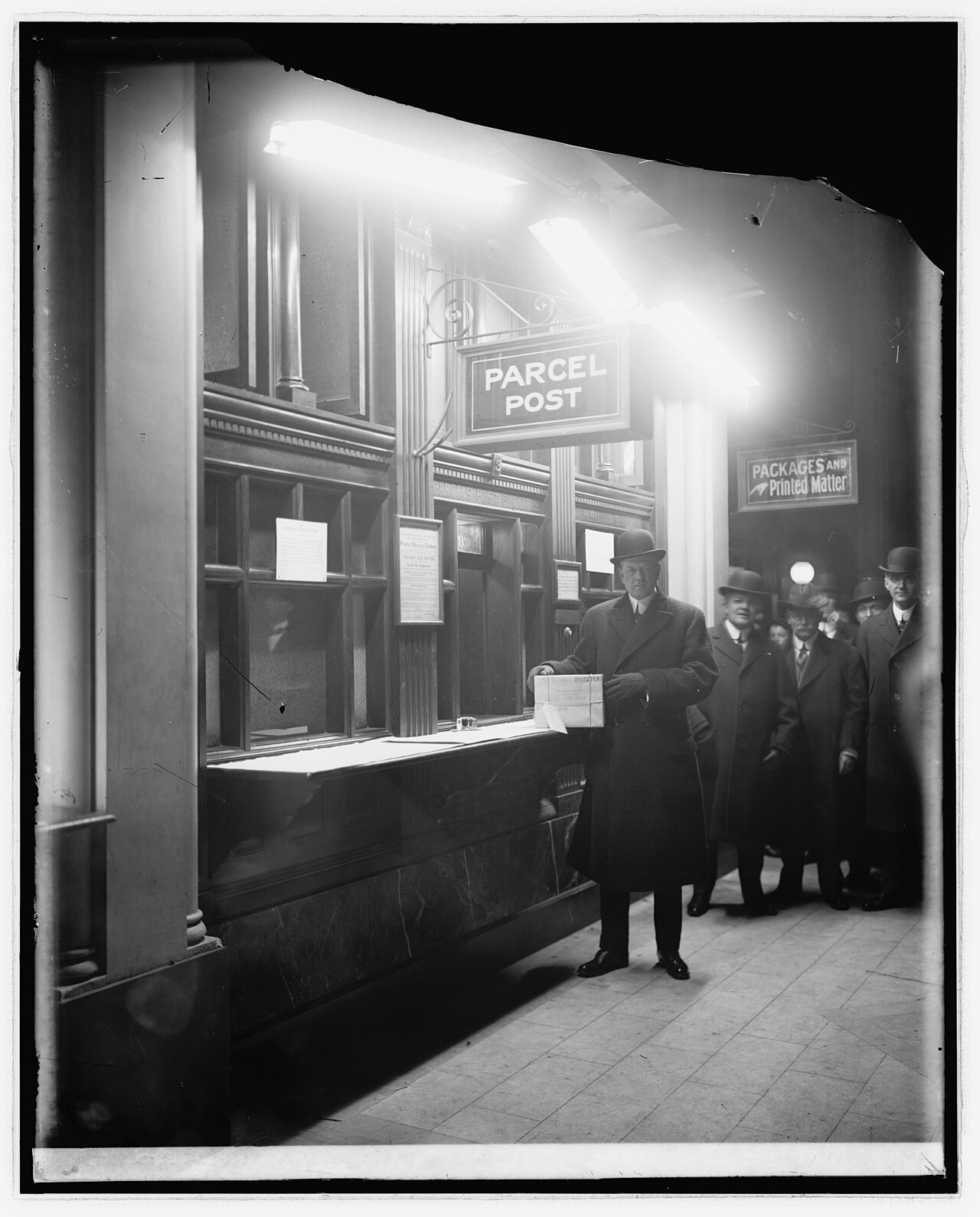
Economics · Mail-Order AmericaHow does a family a full day’s ride from the nearest city buy anything? A hundred years ago, America’s answer was the mail-order catalog. Big companies printed books hundreds of pages thick, listing tens of thousands of items — overalls, stoves, guitars, rifles, and even complete kits for building a house. A farm family could study the pictures by lamplight, write out an order, and send it off with the money. Two inventions made the system work. Rural free delivery brought mail to farm lanes that had never seen a mail carrier, and in 1913 the new parcel post service — mail service for packages — let those same routes carry actual goods, not just letters. Heavier shipments rode the rails to the nearest depot. That is how a magazine advertisement, a letter, and a small stack of coins could bring two hounds from a Kentucky kennel to a boy standing on a country platform.
Visual AidThe day packages became mail
Photograph made at the opening of the United States parcel post service in 1913: Postmaster General Frank Hitchcock stands at a window newly lettered PARCEL POST, a wrapped and addressed package in his hands, with officials looking on. The Knowledge Bank names this service as the second half of what made mail order work — rural free delivery had already reached the farm lanes, and from 1913 those same routes could carry goods and not only letters. The picture records a ceremony in a city post office, not a country one, and nothing in the frame belongs to this novel; what it shows is the day a package first counted as mail.
Opening of parcel post service, 1913, with Postmaster General Frank H. Hitchcock; National Photo Company Collection, U.S. Library of Congress (LCCN 2016852637). Source: Wikimedia Commons, file “Opening up Parcel Post, 1913” (LCCN2016852637.jpg), public domain.
🧠Knowledge Bank question
1The Knowledge Bank explains that catalog ordering reached farm lanes only after two changes: rural free delivery and ___.Ch.4
2Why does Grandpa hand Billy ten dollars back?Ch.4
3Billy waits for his grandfather to arrange a wagon ride before going after the pups.Ch.4
4What does Billy carry on his night walk to town?Ch.4
5Write the numbers 1–5 in the boxes to show the correct order of events. Number 1 = what happens first.Chapters 4–5
Grandpa counts ten dollars of change back into Billy’s hand.
A mountain lion screams outside Billy’s cave in the night.
Billy slips away in the night and walks the hills to town.
Billy collects the crate of pups at the railroad depot.
Word reaches Grandpa’s store that the pups are at the depot.
6The station agent at the depot treats Billy kindly and hands over the pups.Ch.5
7How does the fight with the town boys end?Ch.5
8Where does Billy spend the night on the way home?Ch.5
9The scream of a mountain lion frightens both pups into total silence.Ch.5
10What does the marshal do after breaking up the fight?Ch.5
Part 3
Literary Elements
Understanding HOW and WHY Wilson Rawls tells the story across Chapters 4–5.
🎭Knowledge Bank · The Man Inside the Boy’s Story
Literature · Retrospective NarrationThis novel is told in retrospective narration: a grown man looks back and narrates his own boyhood. That choice quietly changes everything on the page. The narrator knows how every adventure ends, so when he lingers on a detail — a can of coins, a carved heart on a tree — readers can feel that the detail will matter, long before the boy in the story can. The gap between the two also creates the book’s special warmth. The boy walking into Tahlequah feels only excitement and shame; the man remembering it can see how small the town really was and how brave the walk really was, and his affection colors the telling. Watch for moments when the narrator’s grown-up voice breaks through the boy’s — a sentence of judgment or sorrow the child could never have formed. Those are the seams where the story is stitched to memory.
Retrospective Narration
A grown man tells the story of his own boyhood, so every scene carries two voices — the boy living it and the man remembering it.
External Conflict
The trouble in Part 2 comes from outside Billy: a town full of strangers, a ring of mocking boys, and a scream on the mountain in the dark.
Indirect Characterization
Wilson Rawls (author) never labels the pups; he lets one answer a scream and the other stay watchful, and readers learn their natures from action.
🧠Knowledge Bank question
1According to the Knowledge Bank, when the grown narrator pauses over a small detail such as a carved heart on a tree, readers sense that ___.Ch.4
2External conflict is a struggle between a character and an outside force.Ch.5
3The fight in the alley is best described as ___.Ch.5
4Fill in each blank with the correct literary term.Ch.5
Word choices:characterizationconflictrhymesetting- some words will not be used
Showing the pups’ natures through action is indirect .
Billy against the mocking town boys is an external .
5What do readers learn when the boy pup growls back at the lion’s scream?Ch.5
6In indirect characterization, the writer directly lists a character’s traits.Ch.5
7One power of retrospective narration is that the narrator ___.Ch.4
8The two voices in this book are the boy living the events and the man remembering them.Ch.4
9Fill in each blank with the correct literary term.Ch.5
Word choices:retrospectivesuspenseimagerydialogue- some words will not be used
A narrator looking back on his own past is .
The scream in the dark outside the cave builds .
10Wilson Rawls (author) shows Little Ann’s watchfulness instead of stating it. This technique is ___.Ch.5
Part 4
Think Deeper
Four deeper challenges — no single-word recall. Read, weigh the evidence, and reason it out.
💡Knowledge Bank · One Badge, One Town
Civics · The Town MarshalThe officer who rescues Billy carries a title worth knowing. A town marshal was a small community’s entire police force — one man, hired or elected by the town itself, responsible for everything from stray livestock to street fights. He was different from a county sheriff, who answered to voters across a whole county and spent much of his time on roads and farms far from any main street. A marshal’s beat was a few blocks long, and that changed how the job worked: he policed neighbors, not strangers, and his real tools were his eyes, his reputation, and his judgment. Notice how the marshal in this novel uses those tools. He reads the scene in seconds — one ragged country boy, two frightened pups, a ring of town kids — and decides where the blame sits without a single arrest. In a town too small for a courtroom, fairness often came down to the character of one man wearing one badge.
Picture an old baking-powder can, so heavy with coins that it takes two hands to lift. Every nickel in it was earned the slow way — a bucket of berries, a can of worms, a string of minnows sold to fishermen, a winter hide stretched and dried and carried to a country store. Two years of that, and the can finally holds fifty dollars. Now imagine what a boy will do when the reward for all that patience is sitting in a crate at a railroad depot, twenty miles of hills away, and the grown-ups are talking about waiting until next week. He will not wait. He will pack food in a gunny sack, slip out into the dark, and walk all night. Part 2 is the story of that walk: the first sight of a town, the sting of being laughed at, a fistfight over two frightened puppies, a night in a cave with something screaming on the mountain — and, waiting just up the trail toward home, two names carved inside a heart on a tree.
Original passage written for Garden Heights — not a quotation from the novel.
1Claim: “Part 2 shows that Billy earns his dogs twice — once with money and once with grit.” — choose the two details that best prove it.Claim & Evidence
2At home in the hills, or A stranger in town? Tap each detail to send it left or right.Sort into two
◄ At home in the hillsA stranger in town ►
3Match each cause to its result. For each cause, pick its result.Cause & Effect
The kennel lowers its price by five dollars a pup→
Billy cannot bear another week of waiting→
Town boys grab at the frightened pups→
A scream rips the dark outside the cave→
🧠Knowledge Bank question
4Fill both blanks to complete the reasoning.Build the Argument
According to the Knowledge Bank, a town marshal could settle a street fight without arresting anyone because , and that mattered because .
Part 5
Standardized Test
Fifty Dollars, Two Years · Reading & Vocabulary · SAT & TOEFL-style practice
Read the passage — the highlighted words are tested — then answer. Tap an answer, then tap it again to confirm.
SATCentral Ideas — the passage's main point
SATWords in Context — a word's meaning in this passage
SATInference — a conclusion the passage implies
SATAuthor’s Purpose — what the author wants to achieve
TOEFLFactual Information — a fact stated in the passage
TOEFLVocabulary — a tested word's meaning here
TOEFLProse Summary — the three sentences that sum it up
Fifty Dollars, Two Years
During the Great Depression of the 1930s, cash was scarce in the American countryside. A hired farmhand who earned a dollar a day was doing well, and many families went weeks without seeing a coin. Prices were small to match: candy cost a penny, soda a nickel, and sturdy shoes about two dollars. Fifty dollars was a small fortune — more than a month of a grown man’s wages, and worth well over a thousand of today’s dollars.
Children who wanted money had to earn it, and the countryside offered real ways. In summer a child could sell live bait — minnows, crawfish, and worms — to fishermen, or sell wild blackberries by the bucket. Winter paid even better, because a trapline — a route of animal traps checked each morning — produced hides that the general store would buy and ship north to the fur houses. The store sat at the center of this economy, part market and part bank: families with no cash could barter, trading eggs, butter, or hides for flour, salt, and other provisions.
Money alone could not buy what a remote farm could not reach, and that is where mail and rail came in. Beginning in 1913, the parcel post service — mail service for packages — let companies ship goods straight to country customers, and thick catalogs offered thousands of items, from overalls to house kits. Orders written at a store traveled by rail, and the goods came back as freight to the nearest depot, making that small station a doorway to the whole country. Even live cargo rode the rails: crates of baby chicks, and now and then a pair of hound pups addressed to a child who had saved for two years.
Original passage written for Garden Heights — not a quotation from the novel.
1What is the main idea of the passage?SAT · Central Ideas
2According to the passage, a hired farmhand who was doing well earned about ___.TOEFL · Factual Information
3As used in the passage, scarce most nearly means ___.SAT · Words in Context
4The passage says winter traplines paid well because general stores would ___.TOEFL · Factual Information
5In the passage, provisions most nearly means ___.TOEFL · Vocabulary
6The passage suggests that a family that went weeks without seeing a coin would most likely ___.SAT · Inference
7According to the passage, what did the parcel post service begun in 1913 allow?TOEFL · Factual Information
8In the passage, freight most nearly means ___.SAT · Words in Context
9Prose Summary (TOEFL).The passage explains how Depression-era country families earned money and reached goods from far away. This TOEFL task lists six sentences; choose the THREE that best capture the passage’s main ideas. The other three do not belong — they state minor details or ideas the passage does not present.TOEFL · Prose Summary
10Why does the author include the prices of candy, soda, and shoes?SAT · Author’s Purpose
Part 6 · Optional
Creative Writing
A bonus challenge to practice your English. Take your time and have fun with it.
About This Section
This writing task is optional and is not part of your auto-graded score. The feedback below checks only the basics — length, spelling, and grammar — not whether your ideas are right or wrong. It is meant for classroom discussion and creative practice, so feel free to use your imagination!
Writing Task — Part 2 “Something Worth the Wait”
Billy spends two years filling a can with coins before his dream arrives at the depot — and then he cannot wait one more week. Write about a time you worked or waited a long time for something you truly wanted. Describe how you earned it or waited for it, the moment it finally came, and whether it matched what you had imagined. 6–10 sentences. End by telling whether the waiting made the reward better or worse.
You can start with: “For two years, one picture stayed in the back of my mind...”
0 / 40 words minimum
🗣 Teach It · Just for Fun (optional)
No right or wrong — close the screen and tell someone nearby what happened in this part. Can’t find anyone? Tell yourself out loud. The moment you teach it, you truly understand it.
Part 2 Complete!
You finished Chapters 4–5 of Where the Red Fern Grows.
Independent study guide by Garden Heights. Not affiliated with or endorsed by Wilson Rawls. Contains original analysis only; no text from the novel is reproduced. Reference text: This workbook follows Wilson Rawls’s classic text (the standard Puffin edition sold worldwide). Revised 2023 UK editions change some wording and may not match the vocabulary studied here.